
Bundling Forces for Future Online Computing: Introducing the CDO Project
by S. Baron, V. Barroso, E. Gamberini, E. Meschi, N. Neufeld, and W. Vandelli.
Within the CERN Experimental Physics (EP) department, the systems responsible for controlling detectors, acquiring data, and managing real-time computing have historically grown within experiment-specific silos. From the large LHC collaborations to smaller setups, expert groups have independently developed and operated their own Controls, Data Acquisition (DAQ), and Online computing infrastructures.
Today, as we stand on the threshold of the High-Luminosity LHC (HL-LHC) era and look ahead toward future facilities, rapid technological convergence has made these boundaries obsolete. High-throughput networking, containerised orchestration, and cloud-native observability are now common challenges shared by all experiments. To address these opportunities, the EP department has formally launched the Controls, Data Acquisition, and Online Computing (CDO) Project.
By uniting the expertise spread across ALICE, ATLAS, CMS, LHCb, EP-DT, and EP-ESE, CDO aims to identify common engineering challenges, foster technological convergence, and build reusable, maintainable solutions.
LS3: An Opportunity for Major Overhauls
The launch of the CDO project aligns directly with the beginning of Long Shutdown 3 (LS3). Over the next three to four years, the shutdown will provide a window for major technical overhauls across the experiments. To make the most of this period, the CDO project is initially focusing on five core Work Packages (WPs). These packages represent “low-hanging fruits”—pragmatic, high-impact areas of collaborative engineering designed to mature and deliver production-ready results within the timescale of LS3:
- DAQ Networking: Operating at the terabit-per-second scale for Run 4, this WP focuses on standardizing off-the-shelf platforms under CERN’s upcoming data center network contract. The team is evaluating Remote Direct Memory Access (RDMA) technologies like RoCEv2 and Ultra Ethernet to produce shared configuration guidelines, performance best practices, and validation toolsets using realistic DAQ traffic.
- Observability: This WP aims to build a coherent Observability platform for DAQ systems that not only consolidates technologies across experiments but goes beyond traditional monitoring to help users understand abnormal events in the complex environments of modern online systems. This effort also includes exploratory work on intelligent anomaly detection, root-cause analysis and agentic operations via the use of new AI techniques.
- Orchestration: This WP captures accumulated expertise across EP to establish robust, air-gapped Kubernetes (K8s) cluster deployment guides. The team is benchmarking large-scale deployment strategies, developing secure multi-tenancy access stacks integrated with CERN Group Management System, and prototyping a potential “DAQ-Kubernetes Integration Framework” for declarative run-control.
- Technology Transfer to Small-Medium Experiments (SMEs): SME experiments need modern, sustainable CDO setups but often lack development resources. This WP is building an active inventory of mature technologies from the LHC experiments to establish recommended reference solutions per technical domain, ensuring long-term, low-maintenance support for the broader EP community.
- Common Electronics: Bridging hardware, firmware and software, this package addresses common detector interfaces, timing distribution, and low-latency trigger integration. Standardizing these electronics interfaces facilitates modular upgrades that can be maintained collectively across different experiments.
Bridging Engineering Challenges and Long-Term R&D
These five initial work packages are by no means exclusive. While they address the immediate engineering demands of the LS3 overhauls, the CDO project is designed to expand its coverage over time, particularly into exploratory areas of research.
To ensure a seamless bridge between immediate operational needs and future innovations, the former WP9 (DAQ) within the EP R&D programme is being embedded directly into the CDO project structure. By linking these areas, early R&D projects (such as hardware evaluations, new processing architectures, and AI applications in DAQ) can easily transition into actual engineering work for the experiments.
A Modern Collaborative Structure
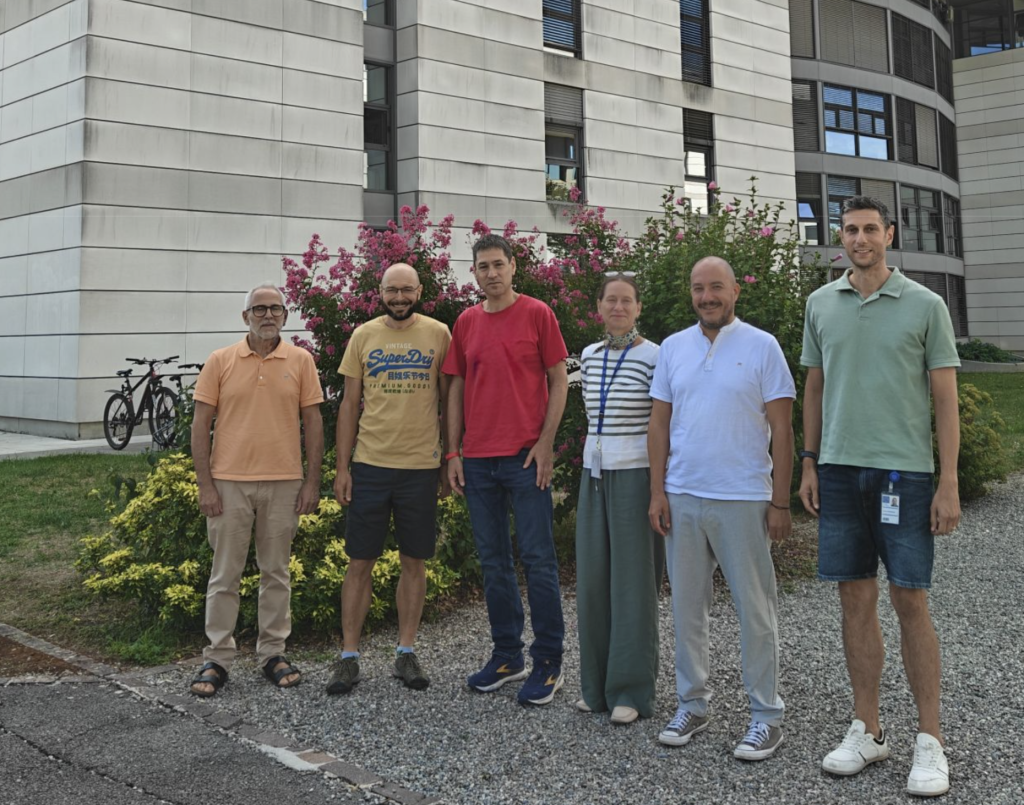
CDO is designed as a project rather than a new administrative unit. Human and material resources contribute to WPs while remaining formally integrated within their home EP groups. The project is guided by a Project Office (PO) composed of staff representatives from each major experiment and department group, with high-level strategy governed by a Supervisory Board (SB) chaired by the EP Department Head.
This lean, highly cooperative model ensures that CDO does not duplicate effort, but rather serves as a central hub where engineers and physicists share real-world operational experiences, steer immediate LS3 upgrades, and co-develop the next generation of online software.
Get Involved!
The CDO project thrives on contributions, open discussion, and shared engineering challenges. All CERN personnel working within controls, DAQ, or online software are highly encouraged to participate.
- Explore our website: ep-dep-project-cdo.web.cern.ch
- Join our community: Subscribe to the mailing list at ep-dep-cdo-members@cern.ch
- Join our meetings: Browse upcoming topical presentations and project reviews on our Indico Category.
- Contact us: via the email address ep-dep-cdo-po@cern.ch if you have questions or suggestions for new Work Packages which could be handled in a unified way.