
FoCal Moves Toward Construction After a Successful Beam Test
Introduction
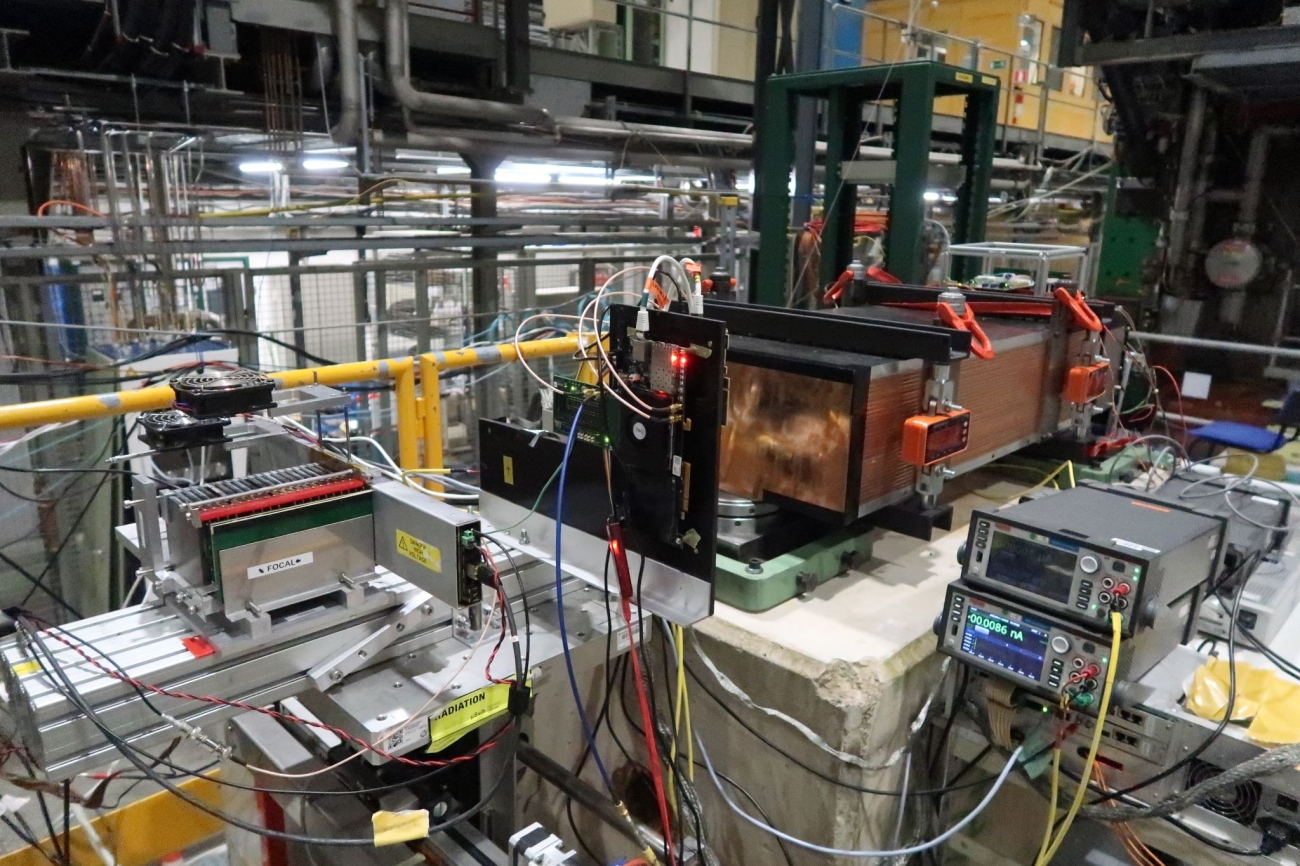
Our recent beam test campaign for the ALICE Forward Calorimeter (FoCal) marked an important turning point for the project. After years of development toward a highly granular forward calorimeter, FoCal has now demonstrated the performance and maturity required to move confidently into construction. The tests carried out at the SPS North Area in September and October brought together teams from across the collaboration and allowed the detector concept to be evaluated under realistic experimental conditions.
Why gluons and small x matter
FoCal is motivated by one of the most compelling open questions in quantum chromodynamics: how gluons behave when their densities become extremely high. Gluons mediate the strong force that binds quarks inside hadrons, and their collective dynamics generate almost all of the mass of visible matter. As collisions probe smaller and smaller momentum fractions, described by the variable x, the number of gluons grows rapidly. At sufficiently small x these gluons are expected to overlap and recombine, creating a regime where the growth of gluon density slows and new collective behaviour may emerge. This possible transition, often referred to as saturation, has never been conclusively observed yet represents one of the most intriguing frontiers in the study of the strong interaction.
FoCal is designed to explore this region by extending ALICE’s reach to very forward rapidities, where partons carry as little as one millionth of the momentum of the incoming proton or nucleus. This is where saturation effects are expected to be strongest. The detector will be the first at the LHC designed explicitly to access this deep small-x regime. By measuring direct photons, neutral mesons, and jets at such forward angles, FoCal will probe gluon dynamics in a region not accessible to existing LHC detectors.
FoCal’s measurements will also complement the future science program of the Electron–Ion Collider (EIC) in the United States. While the EIC will investigate the small-x regime through precision electron–ion scattering, FoCal probes the same domain at the highest energies available in hadronic and photon-induced collisions at the LHC. Together these approaches form a multi-method global program—spanning the LHC, ultra-peripheral collisions, and the EIC—that will allow the community to develop a unified picture of gluon behaviour across systems and scales.
FoCal will also strengthen ALICE’s capability to study ultra-peripheral collisions, in which intense electromagnetic fields act as photon beams. These photon-induced interactions provide a clean probe of gluon structure at very low x, and FoCal’s fine granularity is ideal for capturing their distinctive signatures.
From concept to a coherent detector
The FoCal Technical Design Report has already been formally approved by CERN and the ALICE Collaboration, marking a major milestone for the project. Yet FoCal remains a technically ambitious instrument. It must integrate fine-grained silicon sensors, fast and complex readout electronics, precise mechanical structures, and highly efficient cooling systems within a compact forward geometry. Ensuring that these many components operate together as an integrated detector is a significant challenge, and continued beam tests have been essential.
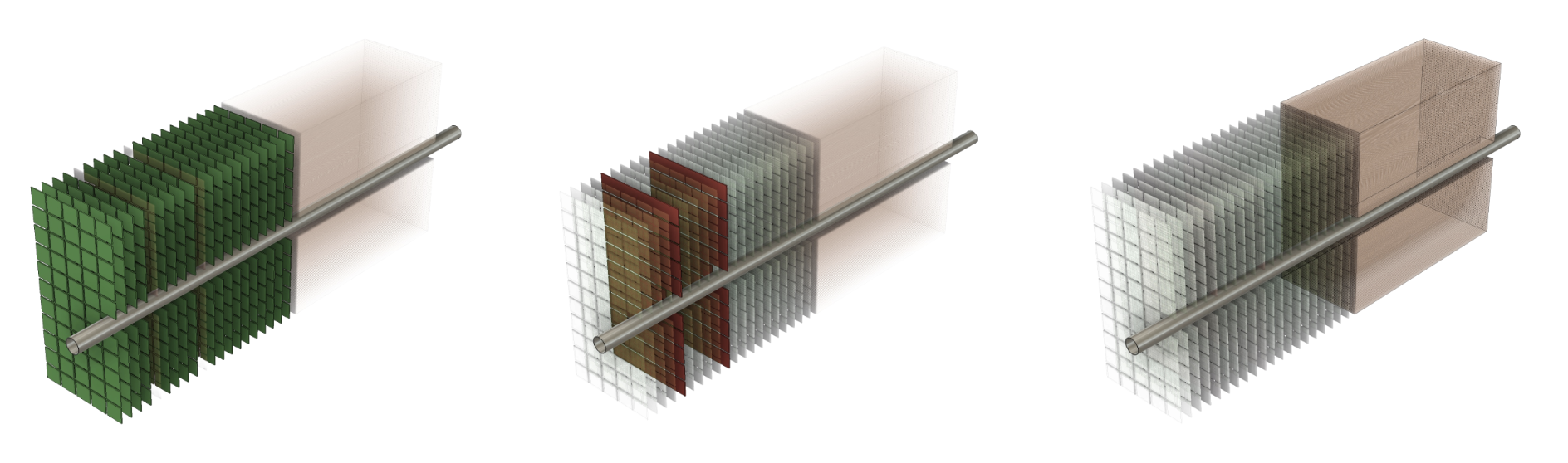
During the September and October campaigns, prototype modules using p-type sensors produced at SCL and tested by the NISER team in India performed with impressive stability and signal quality. Tests of the final pad-sensor design from HPK, read out with the latest HGCROC3 ASIC and operated with the KCU105 board, demonstrated that the pad-layer readout chain is ready for production. Additional configurations using SCL sensors with the HGCROC2 behaved consistently, reinforcing confidence in the chosen technologies.
Important progress was also made on the pixel-readout chain. New firmware and improvements in data-acquisition software enhanced synchronization, calibration procedures, and data-quality monitoring. These refinements are essential to ensuring that the high-granularity pixel layers can sustain the demanding data rates expected during LHC operation.
The hadronic section of FoCal advanced significantly as well. The latest FoCal-H prototype performed as expected, validating the mechanical design and shower-profiling concept for production. Meanwhile, the cooling system for FoCal-E has completed its qualification and is now ready for fabrication, achieving one of the most challenging engineering milestones of the project.
A global collaboration
FoCal’s progress reflects the strength of its international community. More than thirty institutes from Europe, Asia, and the Americas contribute sensors, electronics, firmware, simulation tools, software, and operational support. The United States groups are fully integrated into this global effort.
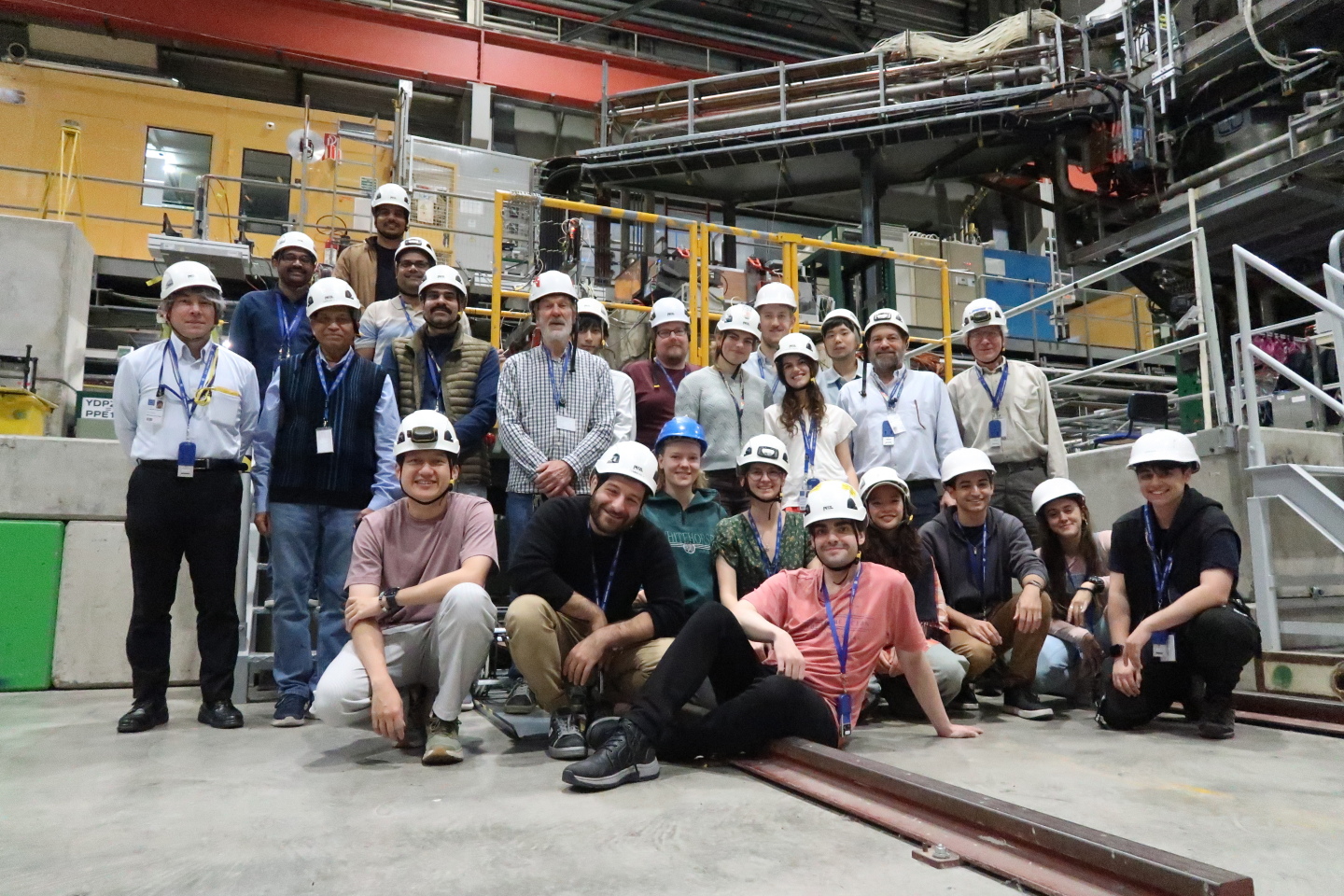
The University of Kansas has been especially active within this landscape. Our team has contributed to simulation studies, pixel-calorimetry development, readout strategies, and the coordination of several beam-test campaigns. During the recent tests, KU researchers worked on commissioning, calibration, and data-quality monitoring, helping to ensure smooth operations and high-quality data.
These activities have created excellent opportunities for students and early-career researchers. Many are contributing not only to hardware development but also to the expanding use of artificial-intelligence and machine-learning techniques within the project. These methods are becoming increasingly important for calibration, pattern recognition, and future physics analyses, and students have played a meaningful role in shaping them.
Early phases of ALICE-USA involvement were supported by the Department of Energy and DOE EPSCoR programs, which helped establish the foundations for American participation. As FoCal approaches construction, the collaboration has submitted a proposal to the National Science Foundation’s Mid-Scale Research Infrastructure program. This reflects the community’s commitment to a long-term role in FoCal and acknowledges that sustained participation depends on a combination of scientific talent, international collaboration, and the resources needed to support them.
Looking ahead
Looking further ahead, the period leading up to Long Shutdown 3 will be particularly important for FoCal. As the 2026 shutdown approaches, the collaboration will focus on finalizing the testing and validation of the remaining subsystem prototypes. The performance of newly developed instrumentation, the latest sensor productions, and the evolving data-acquisition software will be studied in detail during the months preceding the shutdown. Test campaigns at the PS and SPS in 2026 have already been scheduled with the goal of addressing the remaining open questions before entering full production and, ultimately, operating the detector with all FoCal subsystems integrated. A significant effort will also be devoted to developing a data-acquisition infrastructure fully aligned with the ALICE O2 framework and to integrating the prototypes within the lpGBT-based readout architecture. These activities will mark important steps toward a fully integrated FoCal detector.
With the beam tests now complete and construction approaching, FoCal is entering a decisive new phase. The detector will extend ALICE’s reach into the smallest-x region ever explored at a collider and deepen our understanding of gluon behaviour at extreme densities. In concert with the future EIC program and the growing use of photon-induced processes at the LHC, FoCal will help build a unified global effort to map the structure of gluon-dominated matter.


