
Quantum Science and Technologies and High-Energy Physics
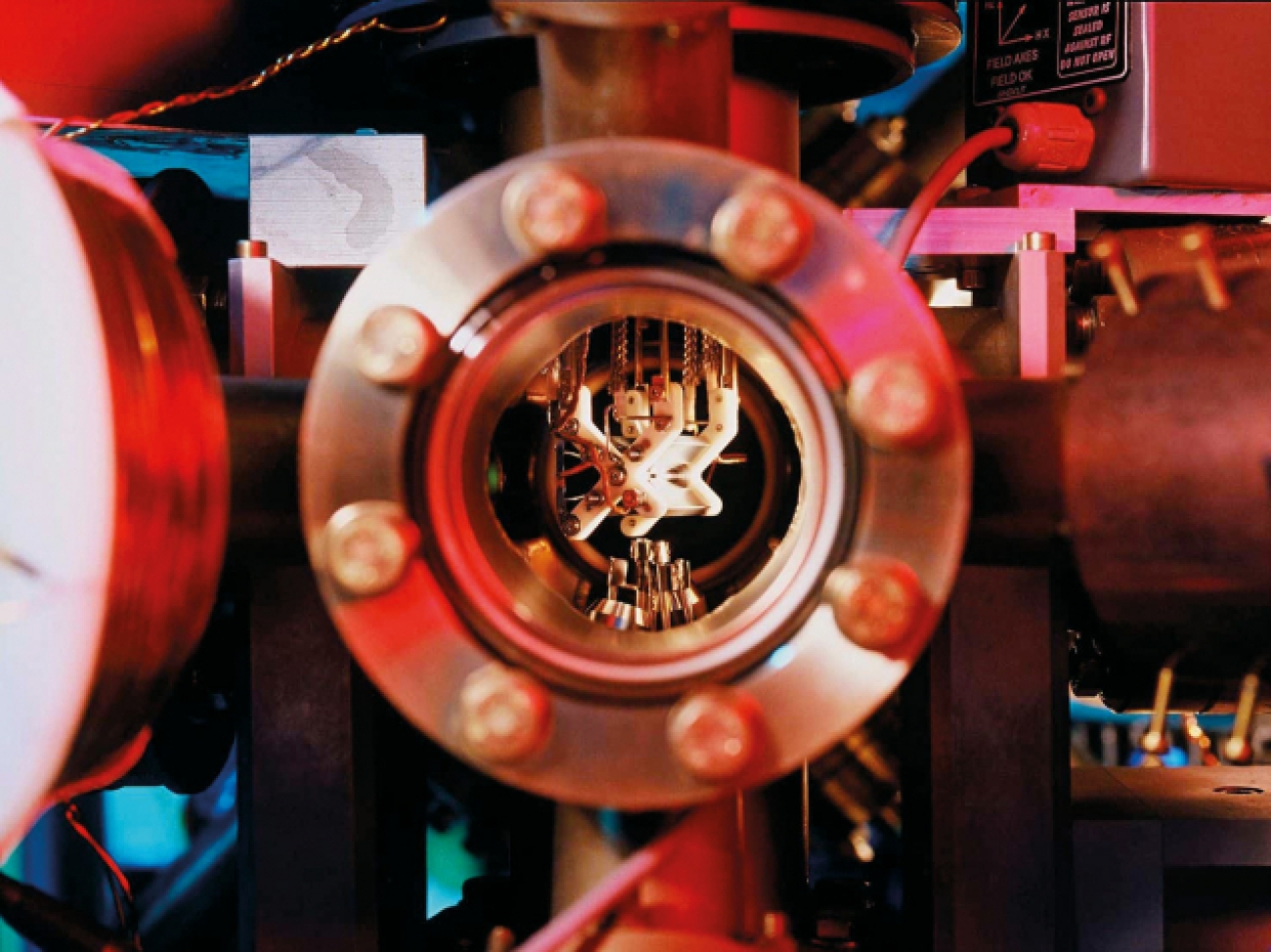
Trapped ions: A quantum simulator at the University of Innsbruck. Credit: C Lackner/Innsbruck
On 27–28 October 2025, CERN hosted the Symposium on Quantum Science and Technologies and High-Energy Physics (HEP), co-organised through the CERN Quantum Technology Initiative (QTI) (https://indico.cern.ch/event/1565747/). The event brought together experts from quantum information science, AMO physics, condensed-matter physics, lattice field theory, and the HEP community.
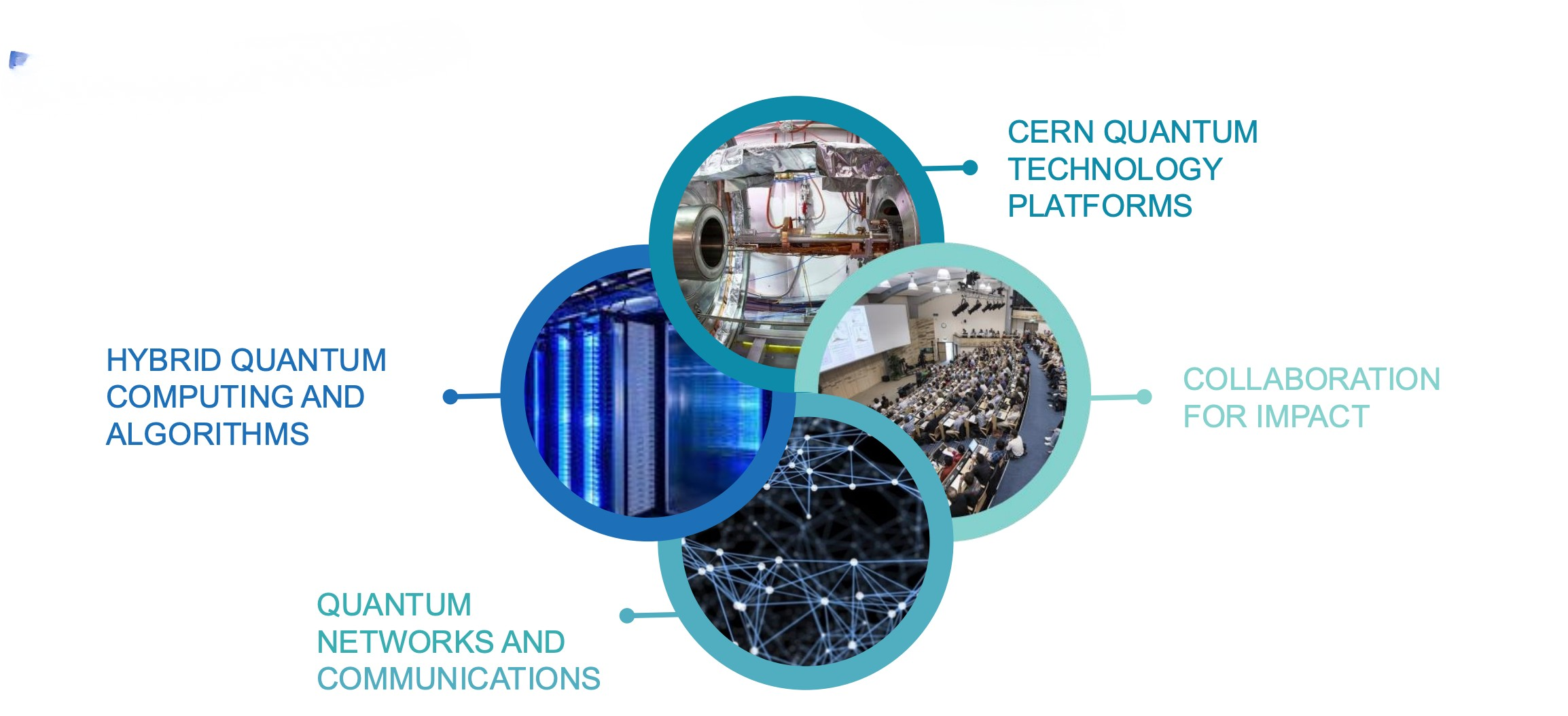
The meeting highlighted both the scientific opportunities offered by quantum technologies and CERN’s unique position to shape this emerging field. What emerged clearly is that quantum simulation is rapidly maturing into a strategic tool for addressing some of the most difficult problems in fundamental physics, and CERN has the expertise and infrastructure required to play a leading role in this effort.
A major theme of the symposium was the scientific rationale for quantum simulation in HEP. Presentations showcased how quantum information concepts (quantum computing, tensor networks, entanglement diagnostics, quantum information geometry) are increasingly central to understanding quantum field theories, strongly coupled plasmas, and aspects of quantum gravity. Several talks focused on real-time dynamics and non-perturbative regimes in gauge theories, where classical computation is fundamentally limited. In heavy-ion physics, discussions ranged from entanglement-based descriptions of the quark–gluon plasma to quantum-transport and thermalization phenomena that are natural targets for analog and digital quantum simulators.
A second recurring message was the need for codesign: hardware and algorithms that target concrete physics problems must be developed together. Drawing on past successes in lattice gauge theory, speakers emphasised that quantum-simulation hardware for HEP will require tight integration of theoretical insight, algorithmic development, and engineering constraints. This point was especially underscored in the context of lattice field theory and multiscale physics. Codesign is viewed as essential to ensuring that emerging quantum technologies are aligned with the scientific priorities of the HEP community. This is fully consistent within CERN-QTI, where several activities already pursue coordinated development of algorithms, architectures, and physics targets.
A clear conclusion of the meeting was that CERN possesses unique technological strengths that could enable it to become a global hub for quantum simulation. Two opportunities stood out. First, CERN’s world-class expertise in trapping, cooling, and precision control of charged particles—built through decades of antimatter research in the AD/ELENA complex—could support trapped-ion quantum-simulation prototypes. Such systems could be used for analog simulations of gauge theories, coherent-control experiments for HEP-motivated Hamiltonians, and detector-relevant decoherence studies. Second, CERN’s deep institutional know-how in superconducting RF cavities, cryogenics, resonators, and fast readout electronics offers a credible path toward superconducting-circuit-based simulators tailored to QCD-motivated problems, such as real-time dynamics in strongly interacting matter. Few laboratories worldwide combine these two infrastructures under one roof.
The symposium’s discussion sessions highlighted broad enthusiasm across both the experimental and theoretical communities. Detector-R&D groups expressed strong interest in exploring quantum devices as next-generation particle detectors, while antimatter teams identified clear entry points for developing prototype ion-trap simulators. Young researchers, in particular, emphasised the importance of training opportunities and hands-on access to early-stage quantum-hardware platforms.
Building on this momentum, the symposium highlighted unique opportunities for CERN. Its central conclusions, namely the emergence of quantum simulations in high-energy physics as a key application driving the development of quantum technology, as well as the need for codesign of hardware and algorithms, are perfectly aligned with CERN's expertise and mission. These avenues naturally extend and reinforce the research lines within CERN-QTI.
By leveraging existing infrastructure and expertise, and by coordinating efforts across departments and with international partners, CERN can play a defining role in the development of quantum technologies for fundamental physics in the coming decade. CERN is in an optimal position to become a leading player in the development of ion-trap and superconducting-circuit quantum simulators, and in applications of these techniques to solve long-standing problems in quantum field theory (specifically QCD) and other areas of particle physics.
Acknowledgements: The author would like to thank Michele Grossi (CERN), Clara Murgui (UAB/IFAE/CERN), Enrique Rico Ortega (CERN), and Sofia Vallecorsa (CERN) for their comments and input that helped finalise this article.


