
Triple Higgs Frontiers: Mapping the Higgs self-couplings at the 2025 HHH workshop
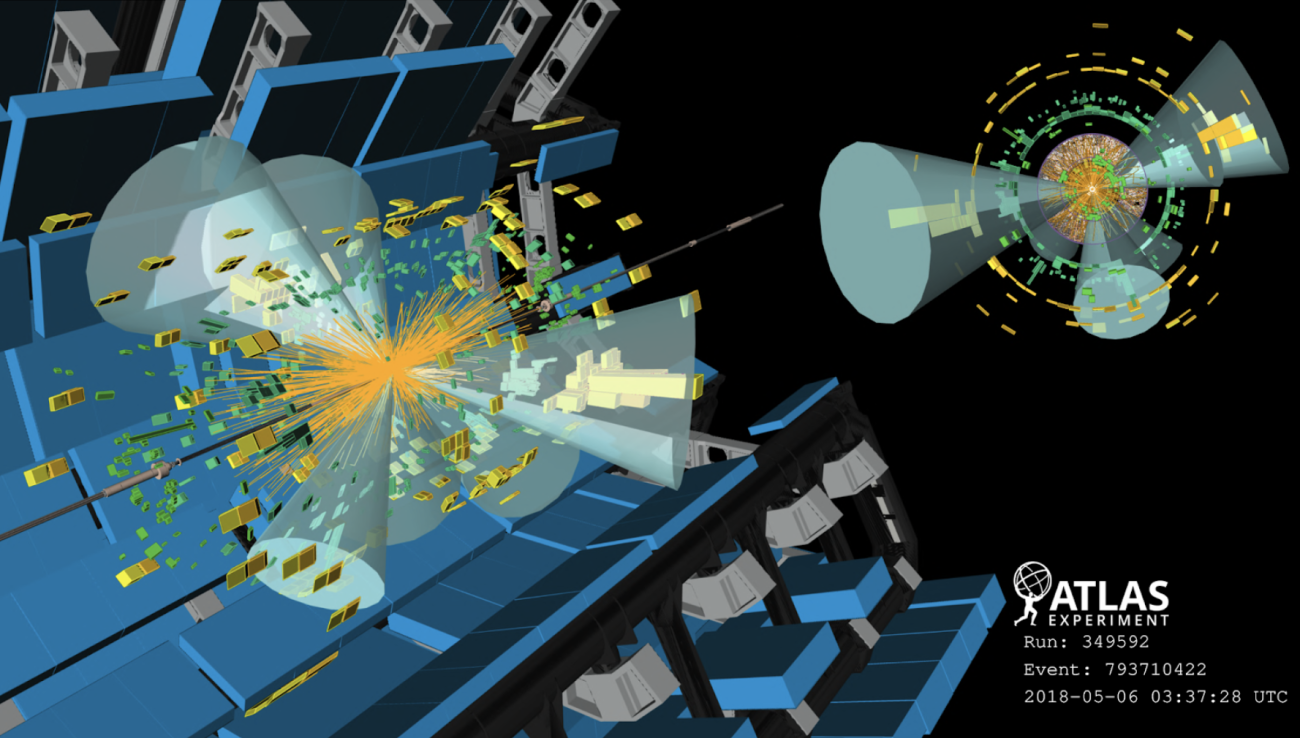
More than a decade after the discovery of the Higgs boson, attention is shifting from finding the Higgs to mapping its self-interactions. These self-couplings determine the shape of the Higgs potential, and with it the stability of our vacuum and the early Universe. Di-Higgs production (HH) is finally coming within reach of observation at the LHC, offering a first direct handle on the trilinear self-coupling λ₃. Triple-Higgs production (HHH), in contrast, is so rare in the Standard Model that about three hundred events are expected at the High-Luminosity LHC (HL-LHC). Yet HHH is precisely the process that opens a window onto the quartic self-coupling λ₄ : one of the most crucial unknown parameters of the Higgs potential.
In practice, the community probes the self-couplings through a hierarchy of processes. Precision measurements of single-H production and decay, combined with differential observables, constrain λ₃ indirectly. Searches for Higgs boson pairs, HH, provide the first direct sensitivity: the gluon-fusion HH cross-section is about a permille of single-H production at the LHC, and ATLAS and CMS now combine many channels to set bounds on the modifier κλ = λ₃/λ₃SM at the level of roughly –1.2 < κλ < 7.5. HL-LHC projections indicate that κλ could ultimately be measured with a precision of order 30%. Triple-Higgs production is several orders of magnitude rarer still, about 300 times rarer than HH production, but uniquely sensitive to the quartic coupling λ₄ in addition to λ₃.
The first dedicated HHH searches have now been performed at the LHC. In 2024, ATLAS published a search for HHH→6b using 126 fb⁻¹ of √s = 13 TeV data, targeting both non-resonant Standard-Model tri-Higgs production and scenarios with heavy scalar resonances cascading into three Higgs bosons. No excess was observed, and an upper limit of 59 fb was set on the SM HHH cross-section, turning HHH into an experimental observable with concrete bounds for the first time. In 2025, CMS has presented complementary first results in multi-Higgs final states such as HHH→6b and HHH→4b2γ, setting inclusive limits of 42 fb on the cross-section times branching ratio, corresponding to 570 times the Standard Model prediction. These pioneering analyses rely heavily on advanced multivariate techniques, including deep and attention neural networks tailored to six-b-jet final states as well as boosted topologies.
The broader HHH programme was crystallised in the first HHH workshop, held in Dubrovnik in July 2023, and in the subsequent HHH white paper. That document laid out the physics case for HHH studies at the LHC and future colliders, emphasizing the complementarity between HH and HHH, the sensitivity to both λ₃ and λ₄, and the connections to cosmology and electroweak phase transitions. It also identified the experimental and theoretical bottlenecks: tiny signal rates, challenging multi-jet backgrounds, and the need for precise Standard Model predictions across a wide range of collider energies.
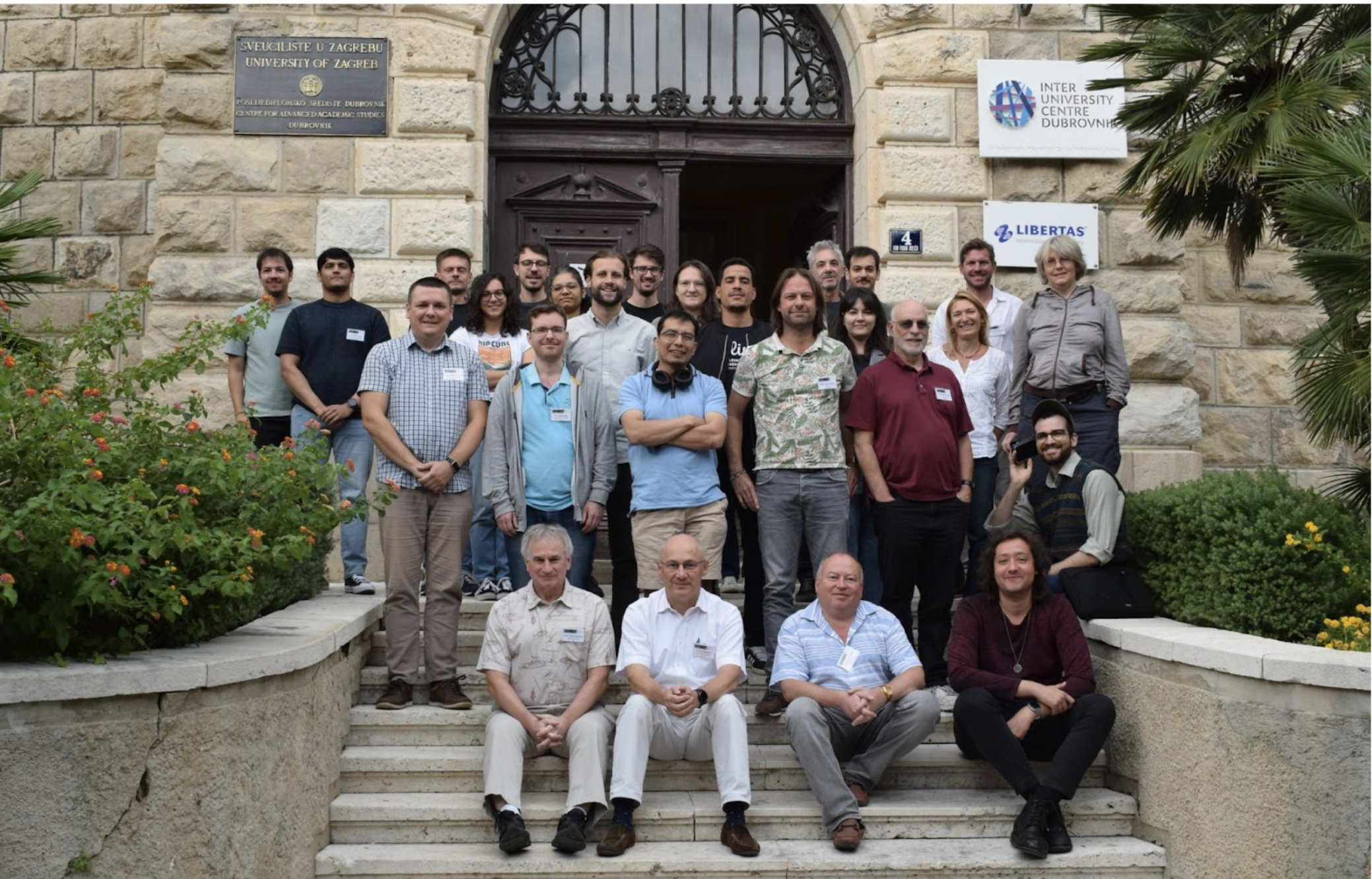
Figure 1: 2025 HHH workshop picture, with an attendance of about 30 participants. Perfect size for a focused workshop.
The HHH workshop held in the medieval town of Dubrovnik from 29 September to 1 October 2025 built on this foundation. Bringing together about 30 participants, experimentalists from ATLAS, CMS, and several theory groups, its aim was to take stock of the rapidly evolving landscape, including the first experimental HHH searches. It also sought to chart a roadmap for the coming HL-LHC era and beyond. The three-day programme combined overview talks with focused sessions on experiment, theory, tools, and future directions, with ample time for informal discussion in the historic old town overlooking the Adriatic.
On the theory side, several talks revisited the Standard Model predictions for HH and HHH at the HL-LHC, including higher-order corrections and PDF and scale uncertainties, and discussed how to consistently propagate these into future self-coupling measurements. Others explored the reach of effective-field-theory frameworks and concrete models, from extended scalar sectors to Higgs-portal scenarios, which can enhance HH and HHH rates well beyond their SM values while remaining compatible with current single-H measurements. A recurring theme was the strong correlation between what can be learned from HH and from HHH: in many EFT scenarios the two processes probe orthogonal parameter combinations, making a combined interpretation essential to disentangle λ₃, λ₄, and possible new operators.
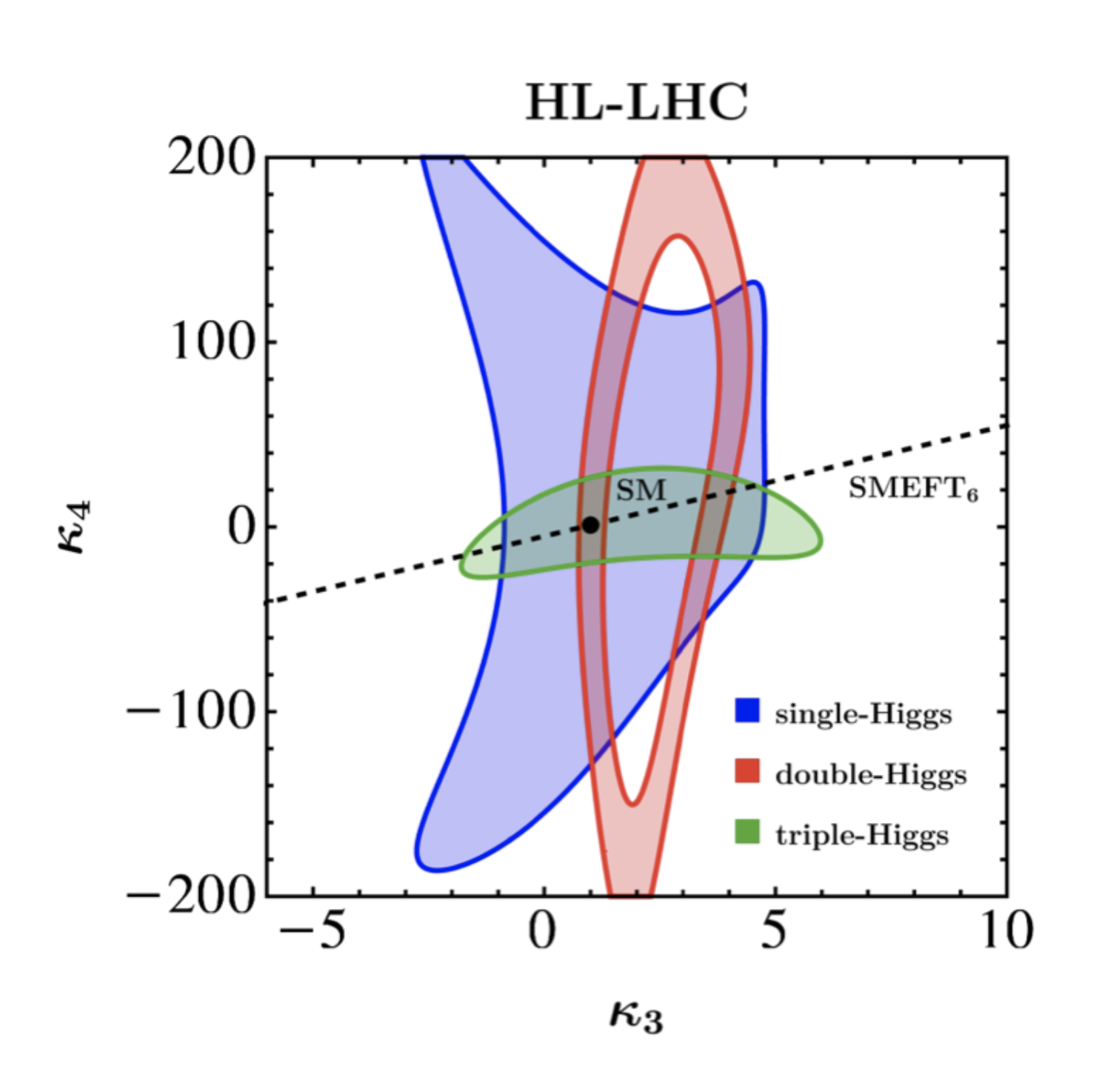
Figure 2: HL-LHC projections of constraints achievable via single-H, HH and HHH measurements at the LHC.
The experimental sessions in Dubrovnik showcased how quickly the field is moving. ATLAS and CMS reported on their latest HH combinations and the resulting constraints on κλ from a wide range of decay channels, including bbγγ, bbττ, bbVV and multi-lepton final states. Both experiments discussed their first HHH searches and the outlook for Run 3, including the impact of improved b-tagging, boosted-jet reconstruction, dedicated HH and HHH triggers and a novel jet-charge tagger, introduced specifically to improve searches for HHH. The HHH analyses constrain modifications to the trilinear coupling to -7 < κλ < 12, competitive with the limits from the HH measurements, while probing, for the first time, the physically meaningful constraints on the quartic coupling.
All of this takes place against the backdrop of the 2026 Update of the European Strategy for Particle Physics (ESPP). The Physics Briefing Book, released in October 2025, identifies the exploration of the Higgs sector, in particular the measurement of HHH processes, as a central pillar of the physics case for HL-LHC. The Dubrovnik discussions fed directly into this process, helping to clarify what level of sensitivity to λ₃ and λ₄ is realistically achievable at the HL-LHC, what additional information future hadron and lepton colliders can provide, and what detector and computing developments are needed to get there.
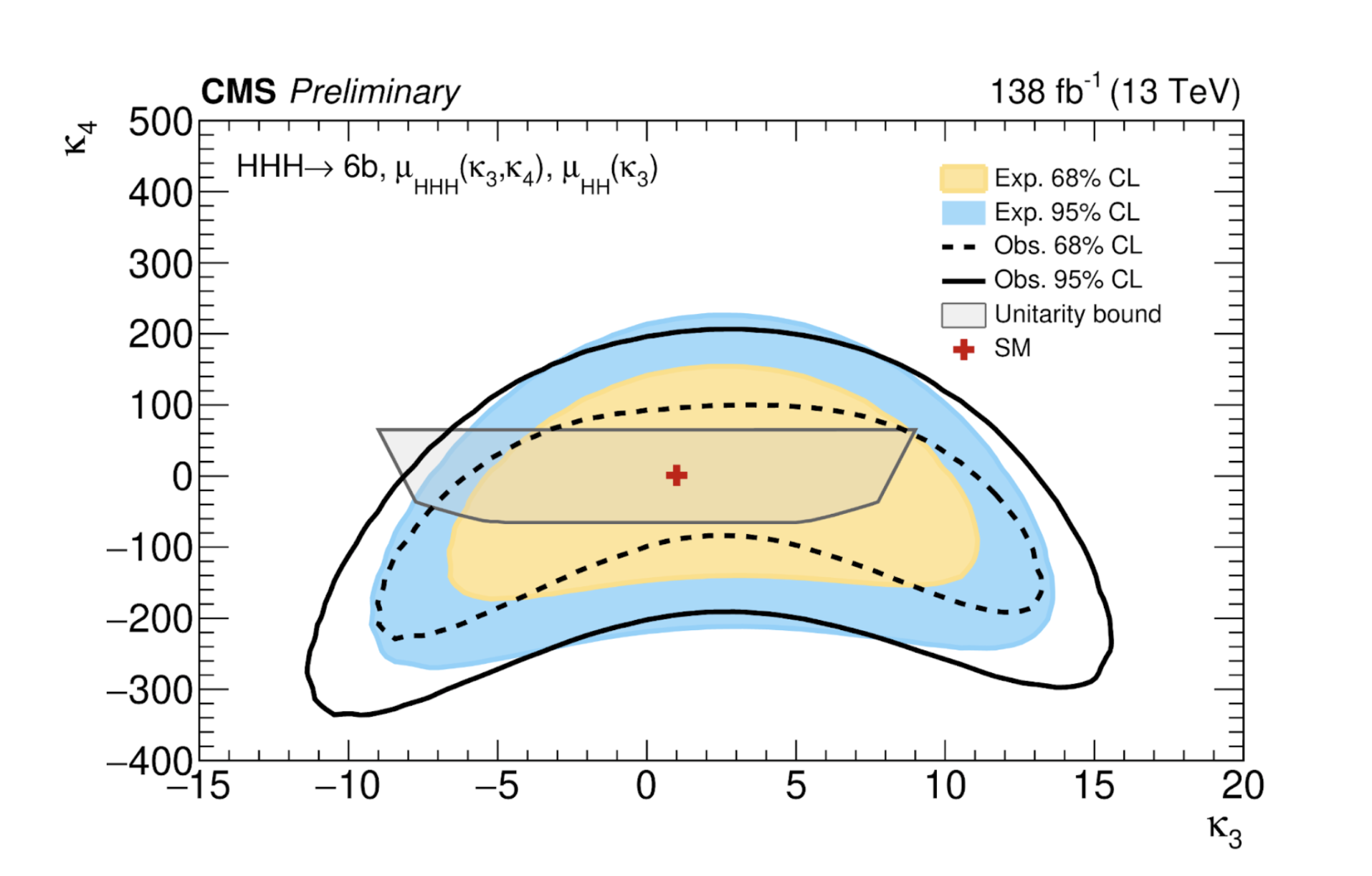
Figure 3: Trilinear and quartic coupling constraints obtained by the CMS experiment. The unitarity bound delimits theoretically possible values, probed for the first time experimentally.
HHH production in the Standard Model will remain an extremely rare process at the LHC, and a direct observation may ultimately require a future collider. But as the HHH workshop in Dubrovnik underscored, the field has already moved from “is this even measurable?” to concrete strategies, first limits, and planned global fits that link single-H, HH and HHH into a coherent picture of the Higgs potential. With HL-LHC data on the horizon and the 2026 European Strategy update taking shape, the community is laying the groundwork for the day when even the rarest Higgs self-interaction becomes an experimental observable.
Further readings:
- Ulrich Haisch, Aparna Sankar and Giulia Zanderighi, “A new probe of the quartic Higgs self-coupling,” preprint arXiv:2505.20463 [hep-ph] (2025)
- Hamza Abouabid et al., “HHH Whitepaper,” Eur. Phys. J. C 84, 1183 (2024), arXiv:2407.03015 [hep-ph]
- ATLAS Collaboration, “A search for triple Higgs boson production in the 6b final state using pp collisions at √s = 13 TeV with the ATLAS detector,” Phys. Rev. D 111 (2025) 032006, arXiv:2411.02040 [hep-ex]
- CMS Collaboration, “Search for nonresonant triple Higgs boson production in the six b-quark final state in proton-proton collisions at √s = 13 TeV,” CMS-PAS-HIG-24-012, CERN, 2025. https://cds.cern.ch/record/2898134
- CMS Collaboration, “Search for triple Higgs production in Run 2 data of CMS using 4b2γ final state,” CMS-PAS-HIG-24-015, CERN, Geneva (2025).
- “HHH workshop,” Dubrovnik, Croatia, 14–16 July 2023, CERN Indico event 1232581. Available at: https://indico.cern.ch/event/1232581
- “HHH workshop,” Dubrovnik, Croatia, 29 September–1 October 2025, CERN Indico event 1387239. Available at: https://indico.cern.ch/event/1387239


