
FCC Week 2026: from scientific ambition to an integrated design
by Panos Charitos (CERN)
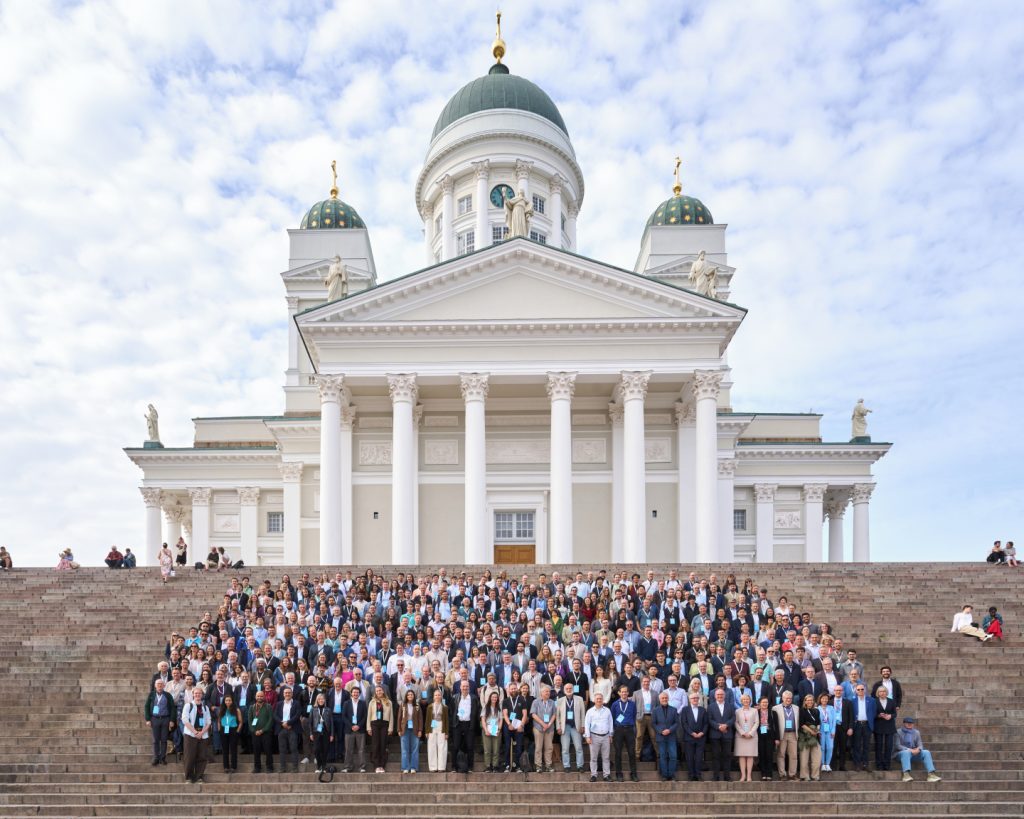
This year’s annual conference brought together 656 participants in Helsinki to examine how the Future Circular Collider study can move from feasibility demonstration towards a coherent reference design. With its primary focus on FCC-ee, the meeting presented a project in which physics goals, accelerator parameters, detector concepts, theory, software, and the machine-detector interface are increasingly being developed as parts of a single system.
From 8 to 12 June, scientists, engineers, industry representatives and policymakers from 38 countries gathered at the University of Helsinki for 66 sessions, 265 oral presentations and 47 posters.
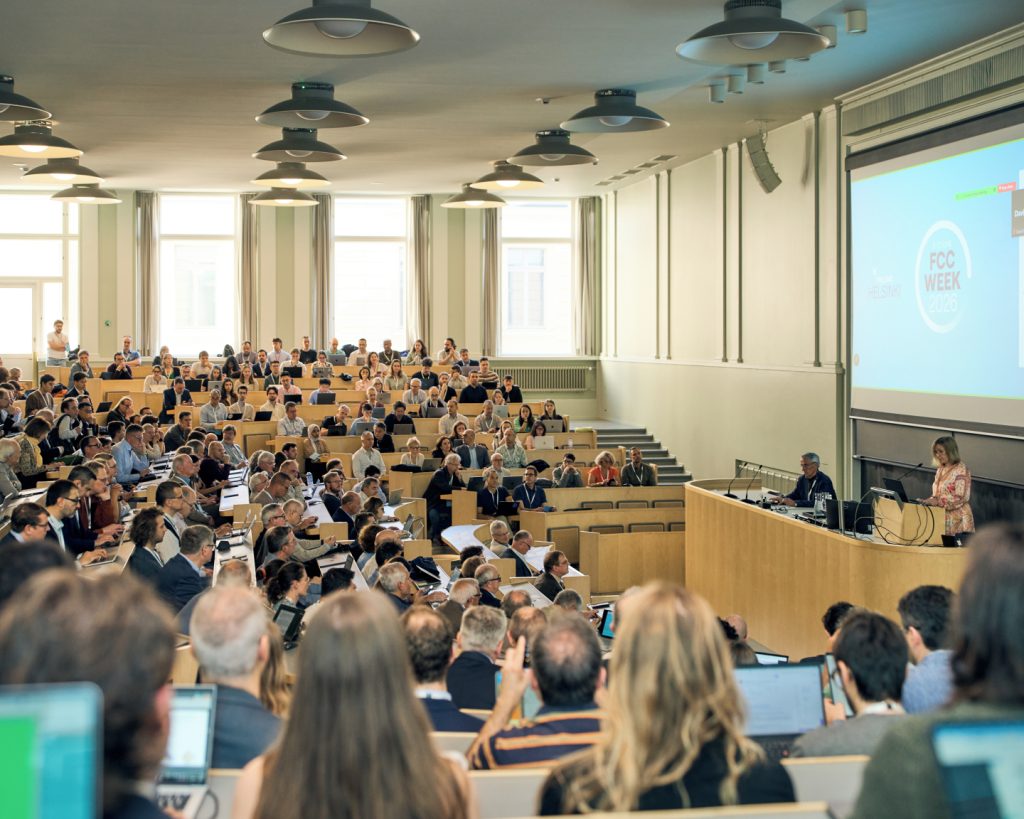
The opening placed the FCC within a wider discussion of Europe’s scientific ambition and capacity for long-term cooperation. Paula Eerola, president of the Research Council of Finland, reflected on CERN as a place where scientific responsibility is carried across borders and generations. CERN Director-General Mark Thomson described the coming years as a critical period in which CERN will deliver the High-Luminosity LHC while advancing FCC-ee as a possible next flagship project. Costas Fountas, president of the CERN Council, underlined the increasing alignment between CERN’s Member States, the Laboratory and the particle-physics community. European Commissioner Valdis Dombrovskis linked CERN’s model of international cooperation to Europe’s competitiveness, its technological capacity and the ability to invest over the long term.
A precision programme with broad discovery reach
The scientific case for FCC-ee is often summarised in terms of the Higgs boson, but the programme discussed in Helsinki was considerably broader. The proposed runs at the Z resonance, the W-pair threshold, the Higgs-production maximum, and near the top-quark threshold would produce exceptionally large and well-controlled datasets. Current studies envisage around six trillion Z bosons and hundreds of millions of W-pair events, which will improve statistical precision by 3 orders of magnitude. These datasets would probe the Standard Model as an interconnected framework at an unprecedented level of accuracy. Electroweak, Higgs, flavour, QCD and top measurements would reinforce one another. The top-threshold run, for example, would determine the top-quark mass, width, Yukawa coupling and strong coupling in a uniquely controlled environment. Its value extends beyond top physics: a precise top mass is needed to exploit the projected W-mass precision, while top electroweak couplings would strengthen the interpretation of Higgs measurements and future hadron-collider data. Noteworthily, the large data samples could also allow the detection of rare decays, e.g. of the Z boson into the so far elusive right-handed heavy neutrinos.
FCC-ee would be a major flavour facility. Its very large samples, clean initial state, excellent vertex reconstruction, and near-complete angular coverage would enable studies of beauty, charm, and tau decays, including channels involving neutrinos. Many remain statistically limited, making luminosity and preservation of the full running programme central to the flavour case. The discussions stressed that requirements for vertexing, particle identification, and hermeticity must be incorporated before detector designs are finalised.
In addition, FCC-ee would serve as a precision-QCD machine, with the potential for a per-mille-level determination of the strong coupling constant. Reanalysis of archived LEP data with modern theory and simulation tools can help refine methods and preserve expertise in prepsaration for the FCC-ee.
Precision as a route to new physics
FCC-ee’s discovery potential would not depend solely on directly producing new particles. Heavy particles or new interactions can alter measured quantities through quantum effects, leaving correlated deviations across electroweak, Higgs, flavour and top observables. Global analyses could use such patterns to probe physics well beyond the machine’s direct reach.
Direct searches would complement this programme. The enormous Z and Higgs samples and clean collision environment would provide sensitivity to long-lived particles, heavy neutral leptons, axion-like particles, dark photons and other hidden-sector states. Detector studies are already responding. A full-simulation study of standalone muon reconstruction for displaced particles found that the present three-layer baseline would not suffice for all signatures; lever arm and magnetic return field mattered more than extremely fine intrinsic resolution. Calorimeter studies of photon and neutral-pion separation are similarly informing searches for axion-like particles.
The projected precision also creates a major theoretical challenge. For the W-boson mass, studies contrasted a possible experimental uncertainty of about 0.24 MeV with a current theoretical uncertainty of several MeV. The top-threshold programme faces a similar imbalance. Progress is being made: next-to-next-to-leading-order results for four-jet production in electron-positron collisions are now available with public code. But higher-order calculations, more accurate event generators and better control of hadronisation will require a coordinated effort lasting many years. Theory is therefore part of the project’s infrastructure, not an activity to be added later.
Accelerator design: from feasibility to optimisation
On the accelerator side, FCC Week revealed a design moving towards system-level optimisation. Recent studies indicate that an “800 MHz-only” radiofrequency configuration, instead of a combination of 400 MHz and 800 MHz, in conjunction with the new collider optics could reach the target luminosity by balancing bunch charge, vertical emittance, momentum compaction and RF voltage. This represents an attractive option, although beam lifetime, strong beam-beam effects, and possible consequences for physics still require validation.
The beam parameters are demanding. At the Higgs and top energies, present designs require vertical emittance to be more than a thousand times smaller than the horizontal emittance and, in some cases, approaching a ratio of 1:2000. Achieving this in colliding-beam operation will require exceptional control of alignment, optical correction, vibrational stability, and optics tuning.
Top-up injection is central to maintaining nearly constant luminosity. After lattice optimisation, simulations including synchrotron radiation, beam-beam interactions and beamstrahlung achieved injection efficiencies above 90%. A multipole injection kicker is also being studied as an alternative to the four-kicker bump scheme. The multipole kicker would only act on the incoming off-axis beam while leaving the circulating beam in an almost field-free region.
The FCC technical programme is beginning to bridge simulations and integrated hardware. Manufacturing drawings for 400 MHz superconducting RF cavities are nearing completion, while two cryomodule concepts are under engineering development. At 800 MHz, single-cell and multi-cell prototypes are undergoing further work, and a coordinated effort aims to deliver a first integrated FCC-ee cryomodule demonstrator by 2031.
High-efficiency RF power sources are also advancing. A single-beam klystron in China has demonstrated output above 800 kW with efficiencies up to 78%, while a separate 400 MHz tristron development at CERN targets an efficiency above 90%.
Magnet development is becoming more closely connected to manufacturability. Studies now propagate manufacturing tolerances into expected field quality, while automated winding is being explored for series production. Alignment strategies range from kilometre-scale geodetic networks to girder-level techniques targeting 10–20 micrometre uncertainties.
The vacuum system illustrates the need for global optimisation. Updated ray tracing has refined the placement of synchrotron-radiation absorbers at intervals of about 5–6 m, and the results of thermal tests agree well with simulations. Yet the impedance budget at the Z operating point remains tight, and electron-cloud effects at the Z pole have not yet been fully resolved either, in view of a larger number of photoelectrons. Surface treatments, chamber shaping, and weak magnetic fields are among the options under study.
The machine-detector interface
The interaction region is where accelerator and detector choices most directly meet. A longitudinal detector-opening scenario has been selected as the baseline, and a full-scale mock-up of the cooled central beam pipe with surrounding vertex detector has been assembled. Cooling tests found only about a 1°C rise in the central beam pipe under nominal heat load and robustness up to five times that load, while inner-vertex air cooling was effective but non-uniform.
Increasing the distance from the interaction point to the first final-focus element to 2.4 m has relieved radial overcrowding in the cryostat layout. Under the new optics, radiation loads on the superconducting final-focus coils are reduced by roughly a factor of 1.5–2.5, while thin tungsten shielding could reduce the annual dose in the most exposed quadrupole to below about 3 MGy.
However, synchrotron-radiation backgrounds have appeared as one of the most serious potential problems. Current estimates indicate that for the present optics and layout synchrotron radiation could generate unacceptable occupancies in silicon trackers, drift chambers, and time-projection chambers, unless it can be reduced by orders of magnitude or other mitigation measured are adapted. Optimised masks, revised beam-pipe geometry, shielding, and optics changes all show great promise, but a final overall solution is still to be defined.
As these topics illustrate, the interaction region serves as a defining test for the FCC integrated design.
Detector diversity, software and computing
Six detector concepts are currently under study. This diversity is an asset. It provides technological redundancy, encourages comparative optimisation and reduces dependence on any one subsystem solution.
All current vertex-detector concepts employ monolithic active pixel sensors, but differ in how they balance efficiency, timing, spatial resolution, power and material. Studies of moving the first layer closer to the beam pipe show measurable improvements in impact-parameter resolution. Calorimeter concepts range from silicon–tungsten and crystal systems to noble-liquid and dual-readout approaches, while trackers include full-silicon, drift-chamber and time-projection-chamber solutions.
Detailed simulation is becoming central. CLD full simulation is ready for physics analyses, IDEA tracking has reached its first target performance, and other concepts are implementing reconstruction in a common environment. Full simulation is now needed to expose weaknesses early, quantify beam-induced backgrounds and compare detector concepts consistently.
Key4hep has matured into a shared software platform, while FCCAnalyses is intended to host flagship analyses across detector concepts. A distributed computing model using DIRAC and Rucio is already operating, with the first large-scale production expected by the end of 2026. Building this infrastructure before formal collaborations exist allows software validation, analysis preservation and benchmarking to develop as common assets.
Industry as a design partner
The Industry & Technology Day widened the discussion from components to the innovation systems needed to deliver them. Opened by Finland’s Minister of Economic Affairs, Sakari Puisto, it brought together companies, public authorities, innovation agencies and representatives of major research infrastructures.
The central question was not simply what industry might eventually supply, but how companies could become involved early enough to shape the design. FCC-ee requirements span superconducting RF, magnets, vacuum technology, cryogenics, power electronics, precision engineering, advanced materials, civil construction and digital infrastructure. Many technologies will need to be adapted, scaled up or made more efficient; others will have to be co-developed.
Participants stressed the importance of structured workshops, technology roadmaps and industrial-liaison networks, particularly for small and medium-sized enterprises. FCC-ee cannot be designed first and industrialised afterwards: manufacturability, quality assurance and series production must influence choices while the design remains flexible.
A possible path to FCC-hh
FCC-ee is being studied as the first stage of a longer-term circular-collider programme. The same tunnel could later host a much higher-energy proton collider, FCC-hh. The Helsinki discussions treated this as a possible continuation rather than the sole justification for FCC-ee.
FCC-ee has a strong and self-contained case based on precision measurements, flavour physics and direct searches. FCC-hh would add complementary capabilities, including direct searches at mass scales of several tens of teraelectronvolts, enhanced sensitivity to rare Higgs processes and a more precise measurement of the Higgs self-coupling. FCC-ee measurements of top and Higgs properties would sharpen future hadron-collider analyses, and provide absolute cross-section measurements, valuable for calibrations, while FCC-hh could directly explore phenomena first indicated indirectly by FCC-ee.
The balanced view, therefore, is to assess FCC-ee on its own merits, while preserving the strategic value of infrastructure that could support a later hadron collider, subject to future priorities, technological readiness, and a separate feasibility assessment.
Science beyond the conference hall
FCC Week also extended beyond the formal programme. At the University of Helsinki’s Think Corner, Mark Thomson joined a public discussion on particle physics today and tomorrow, organised for the 30th anniversary of the Helsinki Institute of Physics. The week also saw the launch of CERN Alumni Helsinki, the 25th regional alumni group.
The travelling “Code of the Universe” exhibition brought particle physics into public spaces in Tampere, Jyväskylä and Lahti before continuing to Helsinki. These activities were not decorative additions. Long-term research infrastructures depend on public understanding, educational engagement and institutional trust, as well as on their ability to connect fundamental research with broader cultural questions.
From ambition to a shared design
FCC Week 2026 evidenced substantial progress in all project domains, but it also made clear how much remains to be done. For example, the latest levels of simulated ynchrotron-radiation backgrounds must be reduced dramatically. Theory precision must catch up with experimental ambition. Luminometry, detector magnets, software preservation, industrial capacity and long-term expertise all require focused investment.
The central outcome from Helsinki was the growing integration of the many strands needed to transform scientific ambition into a credible international project. Physics goals are being translated into requirements for luminosity, calibration and detector performance. Accelerator choices are being tested against lifetime, injection and backgrounds. Hardware is moving towards demonstrators. Full-scale mock-ups are being used to validate assembly and cooling. Common software and computing are already supporting studies beyond the capacity of individual institutes.
The design of a future collider, therefore, is not only about magnets, cavities, detectors and tunnels. It is also about industrial capability, public trust, international partnership, and the transfer of knowledge across generations. The most important transition may be from asking what a future collider could discover to demonstrating – step by step – how this journey of exploration could be made possible.