
Inside the LS3 decommissioning challenge at CMS
by Panos Charitos (CERN)
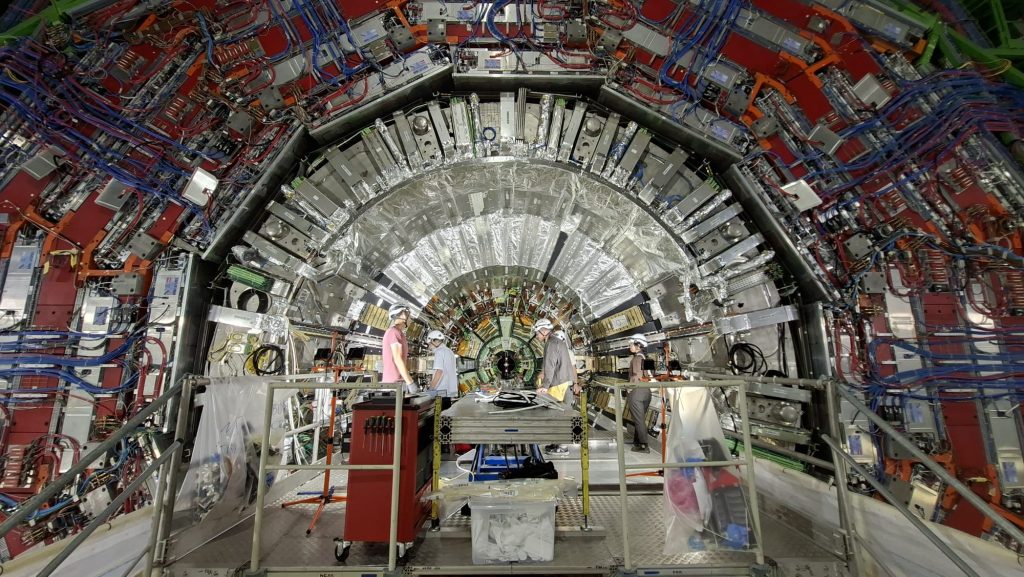
The CMS detector still looks familiar, but empty racks and cable trays reveal that its Phase-2 transformation has begun. Removing around 600 m³ of legacy services safely, traceably and without interrupting the tightly choreographed LS3 schedule is an experiment-scale project in its own right.
Walk through the CMS service cavern at Point 5 today, and you can already see the first signs of a profound transformation. Paola Tropea, CMS Technical Coordinator, and Andrea Gaddi, CMS Deputy Technical Coordinator, whose long involvement in the experiment’s infrastructure underpins the decommissioning plan, describe how the removal campaign became a project in its own right.
Racks that once housed electronics stand empty. Cables have disappeared from trays that, until recently, were densely packed. In the neighbouring experimental cavern, however, the CMS detector still looks much as it did during Run 3.
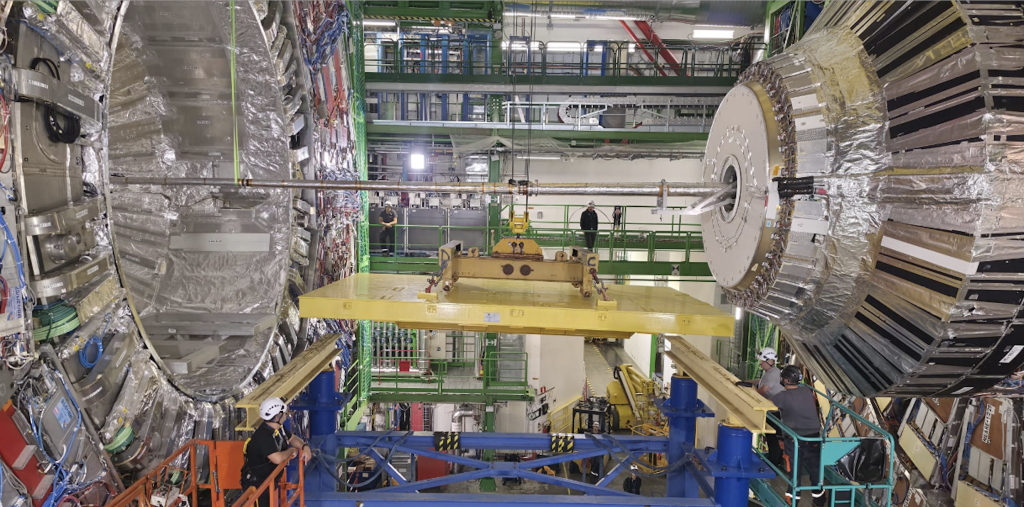
The CMS detector opened for LS3 interventions. Although its familiar structure remains visible, extensive dismantling and preparation work is already under way behind and around the detector. Credit: CMS Collaboration.
That contrast captures the first phase of one of the most demanding interventions in the experiment’s history. “Before CMS can install the detectors and infrastructure that will allow it to exploit the High-Luminosity LHC (HL-LHC), it must dismantle large parts of the existing experiment, remove their services and create a controlled path for every item leaving the underground areas”, explains Paola Tropea, CMS Technical Coordinator.
The work began within days of the end of physics operation. Two months into field activities, approximately 15–20% of the estimated service volume had already been evacuated, with no major problems reported. Yet the most intensive phase was still approaching, with around 40 people expected to work full-time at the peak, in addition to personnel and contractors from CERN support groups.
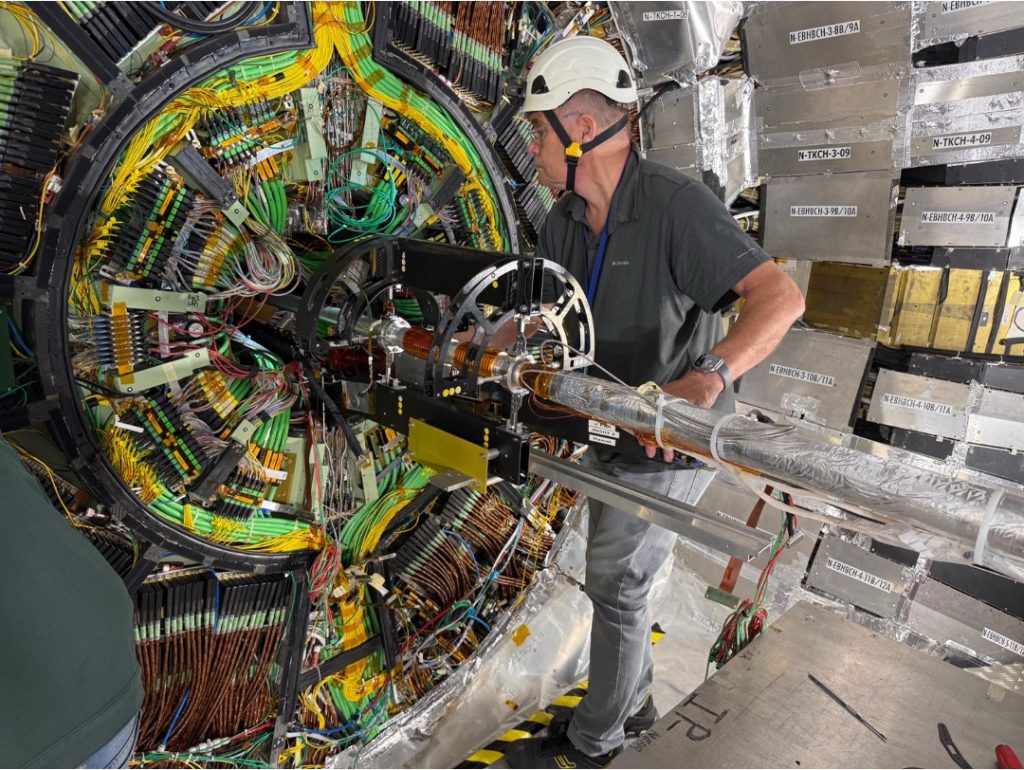
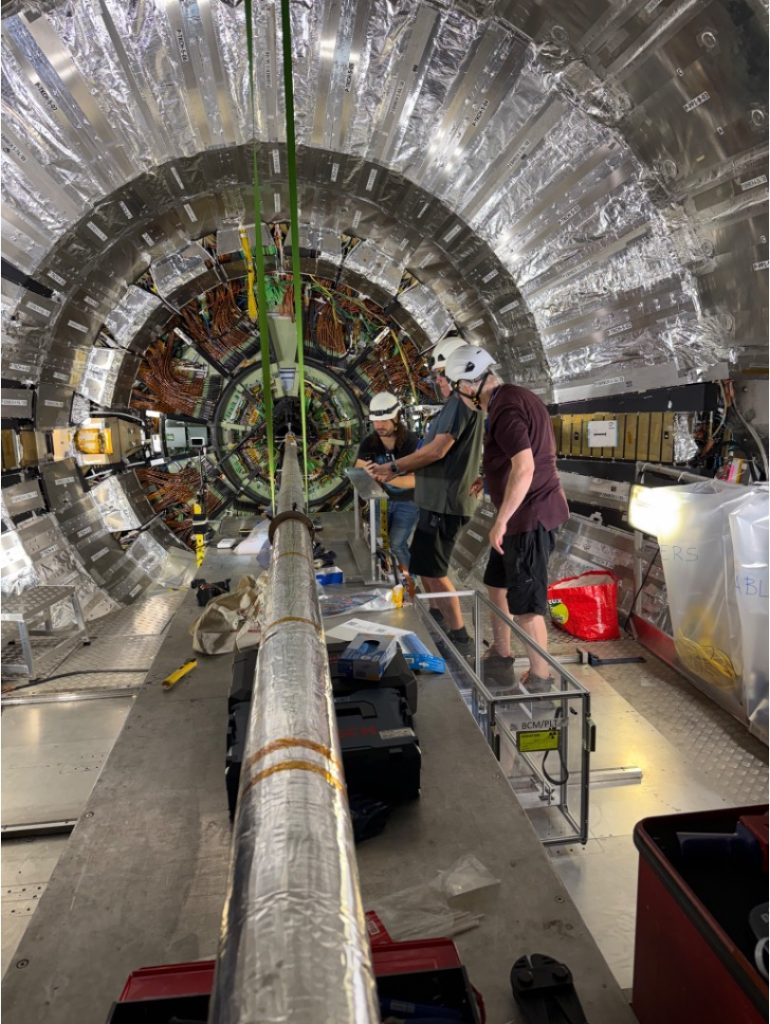
Work around the central CMS detector region. Accessing the equipment closest to the beam line requires carefully coordinated operations in a densely instrumented environment, where detector components, support structures and services occupy almost every available space. Credit: CMS Collaboration.
The hidden half of a detector upgrade
The Phase-2 upgrade is designed for the much higher particle rates, data volumes and radiation levels of the HL-LHC. CMS will replace its silicon tracker and endcap calorimeters, install a new precision-timing detector and luminosity detector, renew almost all of its electronics, extend the forward-muon system, and deploy substantially more powerful trigger and data-acquisition systems. More than 2,000 scientists, students and engineers from institutes and industrial partners in over 50 countries contribute to this transformation.
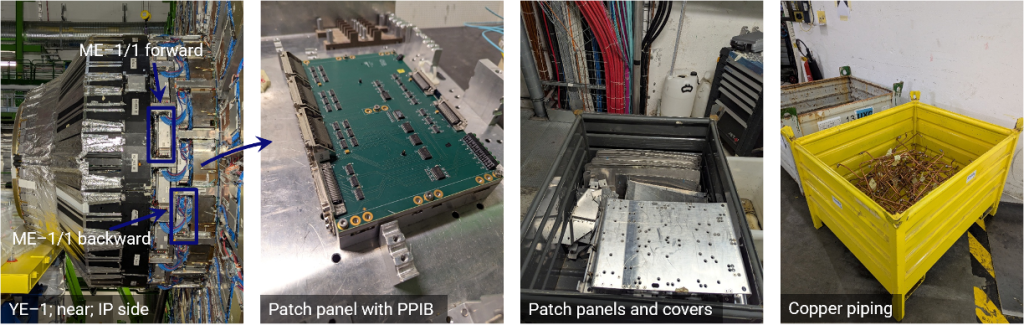
Examples of decommissioning work around the CMS endcap: the locations of the ME1/1 chambers, a removed patch panel and its interface board, recovered covers, and copper piping collected for disposal or recycling. Credit: CMS Collaboration.
Less visible is that a new detector technology almost always requires new infrastructure around it. The High-Granularity Calorimeter (HGCAL), for example, is not simply a replacement for the existing endcap calorimeters. It operates at a different temperature and relies on different cooling, powering, cabling and data services. The same applies, in different ways, across the Tracker and other Phase-2 projects.
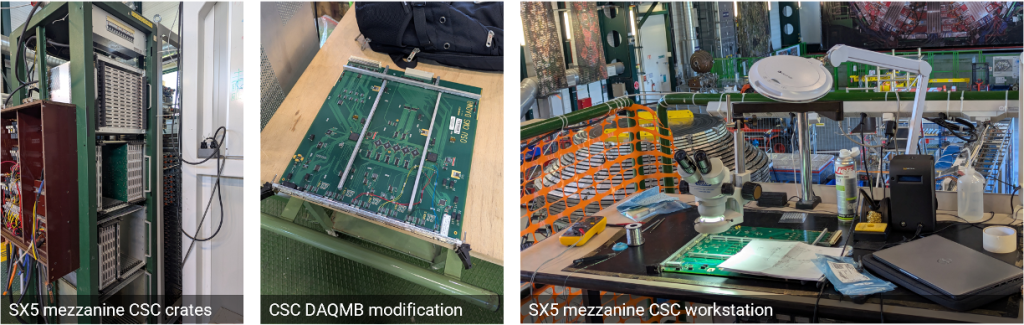
Work on the CMS cathode strip chamber system at the SX5 mezzanine, including the electronics crates, modification of a DAQ motherboard and the dedicated intervention workstation. Credit: CMS Collaboration.
The subdetector teams had been developing their replacements since the early years of the Phase-2 programme. The legacy services, however, did not initially have a single project responsible for removing them. That task naturally fell to CMS Technical Coordination, which began developing a dedicated decommissioning project with the Engineering and Integration Office around two and a half years before fieldwork began. As Gaddi notes: “People think about the upgrade as replacing one subdetector with another. But they do not necessarily think about the infrastructure and services that have to be upgraded as well.”
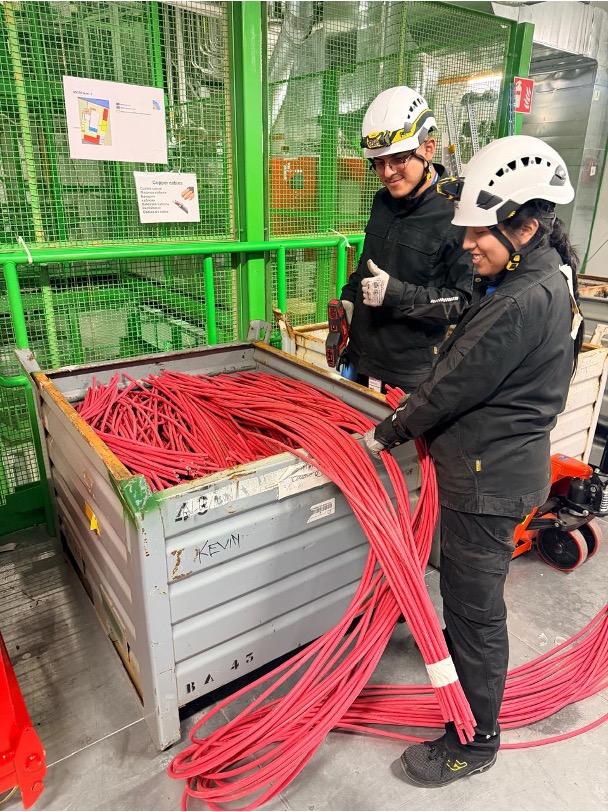
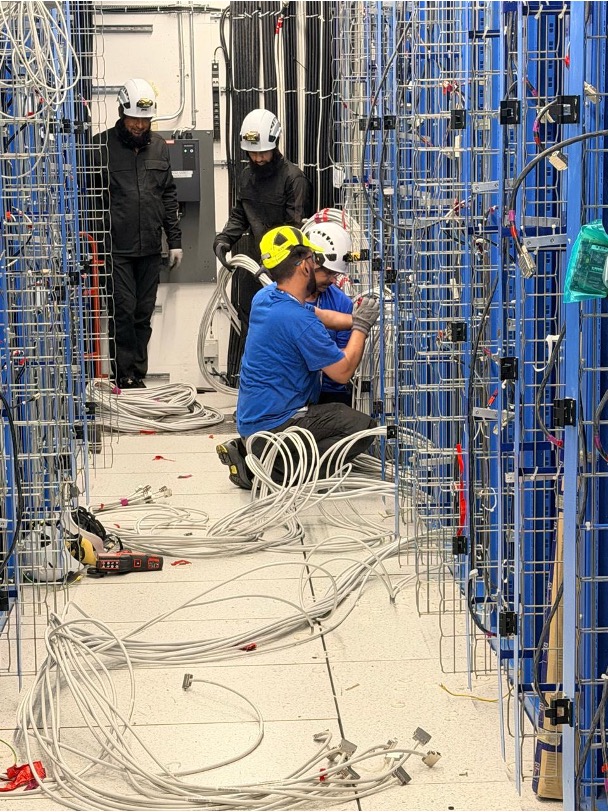
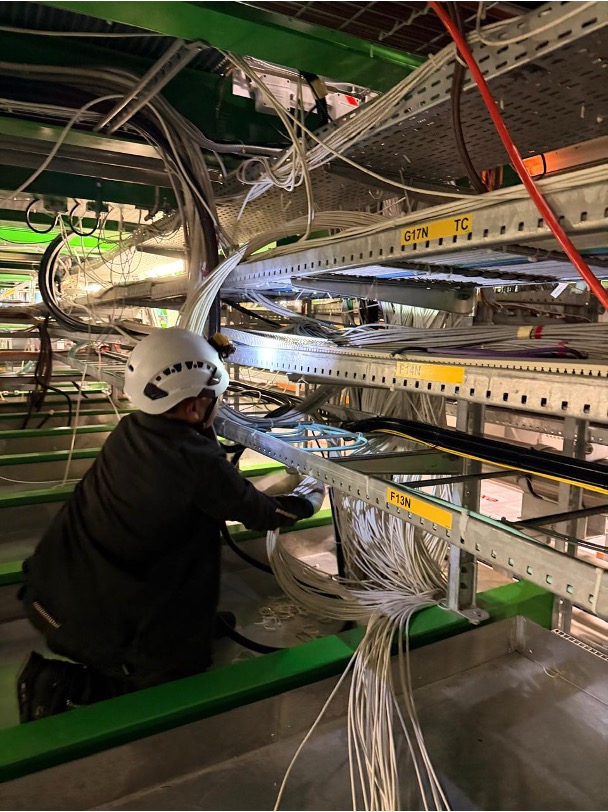
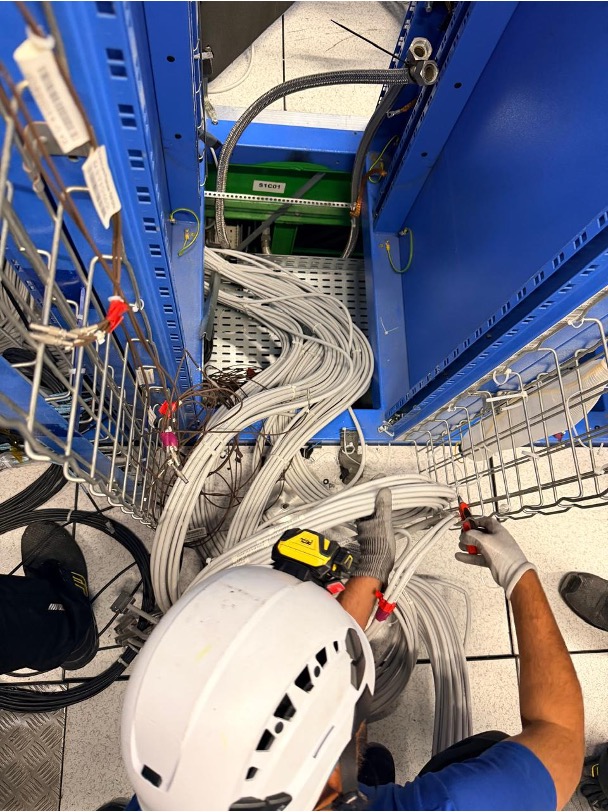
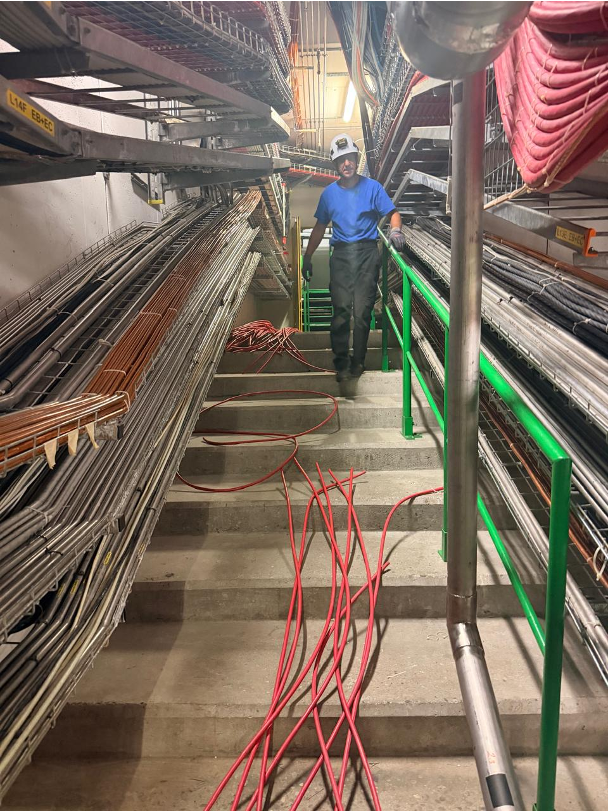
The removal of legacy services extends far beyond the detector itself. Teams trace, disconnect and extract cables from racks, trays, technical galleries and access routes, while ensuring that services required for the remaining systems are not disturbed. Credit: CMS Collaboration.
From an inherited sequence to an organised project
Broad decisions about which CMS systems to upgrade, and an initial sequence for doing so, predated the current Technical Coordination team. When Paola Tropea became CMS Technical Coordinator, it took time to understand how those decisions fit together. It also became clear that decommissioning would depend on a detailed knowledge of the detector, as it had actually been built and modified.
Gaddi brought precisely that experience. He had been responsible for substantial parts of the infrastructure design during CMS construction and later headed the Integration Office. Tropea and Gaddi therefore divided the work, with Gaddi taking a leading role in preparing and planning the decommissioning project. “The whole decommissioning project relied on a very solid knowledge of the existing detector – knowledge that Andrea had from his work on the original infrastructure,” adds Paola.
The project developed through parallel discussions within CMS, ATLAS and with the relevant CERN departments. Early assumptions, based on experience and informed estimates, allowed Technical Coordination to warn that the experiment would need extensive transport support, new storage and conditioning space, and additional personnel. As the detector designs matured, those assumptions were repeatedly refined with the relevant technical groups.
By April 2023, CMS had a sufficiently clear sequence and detailed estimates to present the project formally to its Finance Board. The technical and financial plans had to mature together because no dedicated budget line had originally been foreseen for the removal of the legacy services. Financial recognition followed within the collaboration, together with extensive discussions about how common costs should be shared among the subdetectors.
The overall budget was estimated at more than CHF 3 million. Roughly half of the cost relates to personnel and half to the infrastructure needed to perform the work. The 800 m² purpose-built surface facility alone represented an investment of almost CHF 1 million, although it will remain available for future CERN needs after the project ends.
Six hundred cubic metres, with no room for bottlenecks
The headline estimate is around 600 cubic metres of legacy services and supporting infrastructure. Crucially, this figure does not include the subdetectors themselves. It covers the pipes, electrical and optical cables, electronics crates and boards, heat exchangers, cable trays and support structures required to operate them. Large subdetectors such as the Tracker are treated as individual objects and remain the responsibility of their own project teams, with the central team providing technical and logistical support.
Around half of the estimated volume comes from the experimental cavern. It must initially be treated as potentially activated and follow procedures agreed with CERN’s HSE Radiation Protection group (HSE-RP). The volume estimates also include contingencies because removed services rarely pack efficiently: 15% for cables and fibres and 30% for metallic piping. For Gaddi, “our main concern was to make sure that there would be no bottlenecks anywhere in the chain.” At the point where an item is dismantled, three teams are already involved. CMS personnel carry out the physical removal. HSE-RP determines whether the item can leave the cavern and ensures that it remains traceable. The EN-THE handling and logistics team then transports it promptly so material does not accumulate in underground work areas and obstruct subsequent activities.
At the surface, the material enters the dedicated 800 m² facility built for the project. There, it is measured, sorted, and traced before being directed toward reuse, recycling, conventional waste treatment, or radioactive-waste conditioning. Containers and storage capacity must be available at precisely the rate demanded by the work underground.
An item removed from the detector does not automatically become waste. Ownership remains with the relevant system until the object is formally declared waste and accepted by CERN. Equipment intended for reuse must instead be appropriately packaged, stored or prepared for transport. The Equipment Management Database (EMDb), together with labels and identification codes, provides the thread connecting the original inventory to each asset’s final destination.
Twenty years of history in every cable tray
The detector completed for the first operation in 2008 was documented in detail. It then operated for almost two decades, with maintenance and two long shutdowns. New services were added, temporary solutions became permanent, and modifications were not always reflected fully in the as-built documentation. Preparing for decommissioning therefore meant reconstructing part of CMS technical history. As Tropea notes: “No matter how well you know your environment, your detector and your as-built documentation, you will have surprises.”
A cable scheduled for removal may run beneath another cable that belongs to a different system. An apparently obsolete service may still be connected to functioning equipment. Drawings, three-dimensional models and database records provide the starting point, but resolving what teams encounter in the cavern also requires fast communication and cooperation among the system owners.
The need to respond safely to the unexpected shaped how the work was organised. An early plan envisaged operating in shifts. As the schedule and risk assessment matured, CMS decided against shift working, mainly for safety reasons. The first weeks confirmed the value of that choice: procedures had to be adjusted as activity ramped up, and the relevant experts needed to be available when unforeseen situations arose.
The response from the subdetector communities has also been stronger than initially feared. Teams have provided people to remove their equipment and supervise central personnel. The more difficult cases are remnants of systems whose original teams no longer exist. At peak activity, four or five members of the decommissioning team work in the surface facility, while most of the approximately 40-person team works underground. Without procedures, additional people, and resources in key areas, the whole process could have collapsed in the first week.
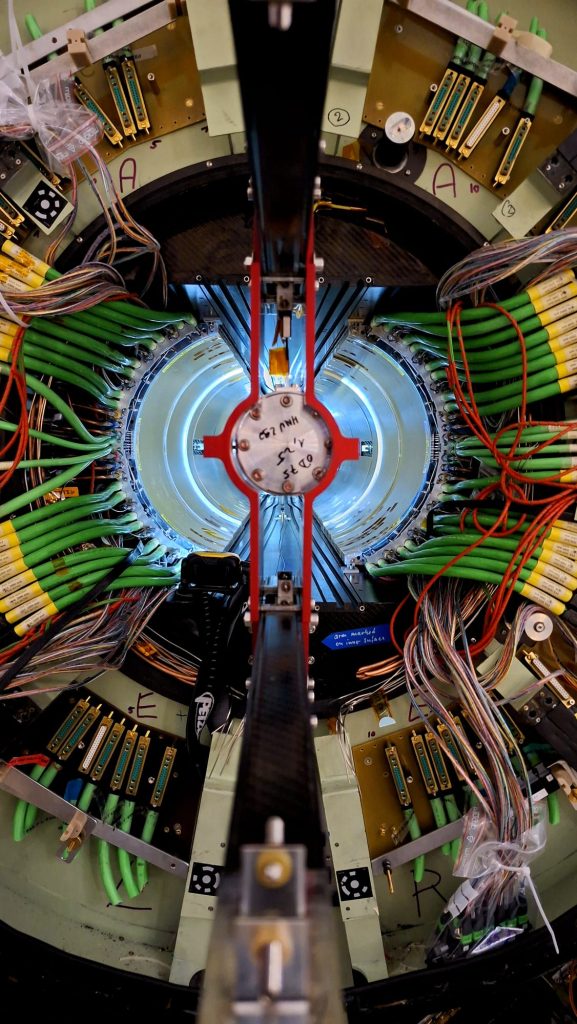
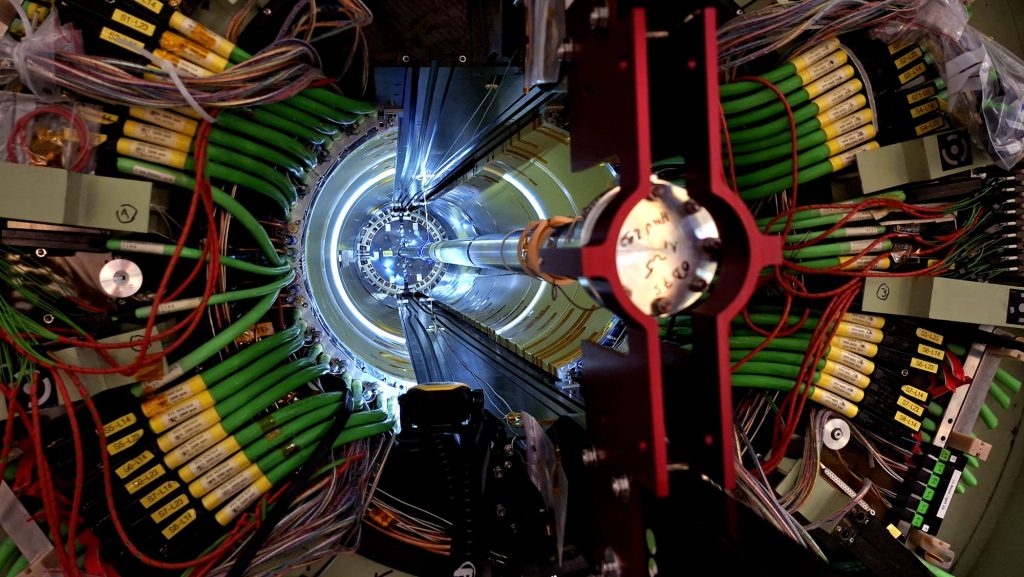
Looking along the beam axis into the CMS tracker region. Dense bundles of power, cooling and readout services surround the central opening, illustrating the intricate work required to disconnect and remove legacy detector components during LS3. Credit: CMS Collaboration.
A puzzle of removal and installation
In the service cavern, the sequence is relatively intuitive: remove as much obsolete equipment as possible, then begin filling the cleared space with the new services. Inside the experimental cavern, where systems overlap and almost every available volume is used, the transition is less linear.
For roughly 18–20 months, the dominant activity will be removal. Installation will then take over progressively. Services are routed as close as possible to their future connection points without blocking the installation of the detector itself. Once the new component is in position, the final connection may span a few centimetres or several metres, depending on the integration constraints.
There are carefully chosen exceptions. The drift-tube (DT) muon system, for example, is replacing its electronics on a one-to-one basis. The first new minicrates have now been installed on the DT chambers, and the upgraded electronics have already recorded their first cosmic-ray events. The installation campaign will continue through to 2028, ultimately equipping all 250 DT chambers with new minicrates. For a detector-environment safety system, legacy piping is being replaced immediately because removal and installation require access to the same locations. The exact sequence is therefore optimised system by system rather than imposed as a rigid rule.
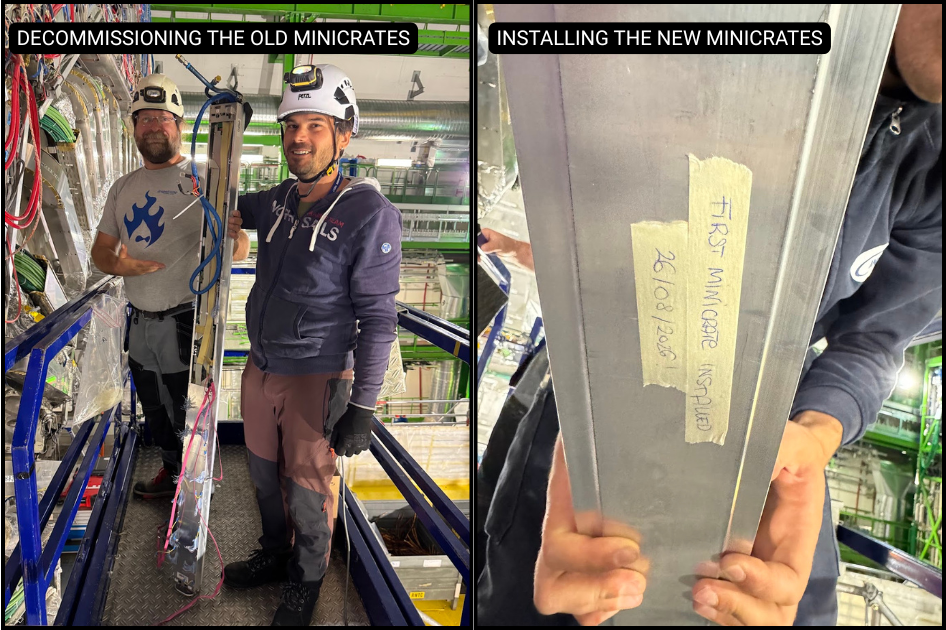
Decommissioning and installation proceed side by side in the CMS drift-tube system. During LS3, the legacy DT minicrates are being replaced one by one with new electronics for HL-LHC operation. The first upgraded chambers have already recorded cosmic-ray events with the new system. Credit: CMS Collaboration/CERN. Read more: “A new chapter for the CMS Drift Tubes”
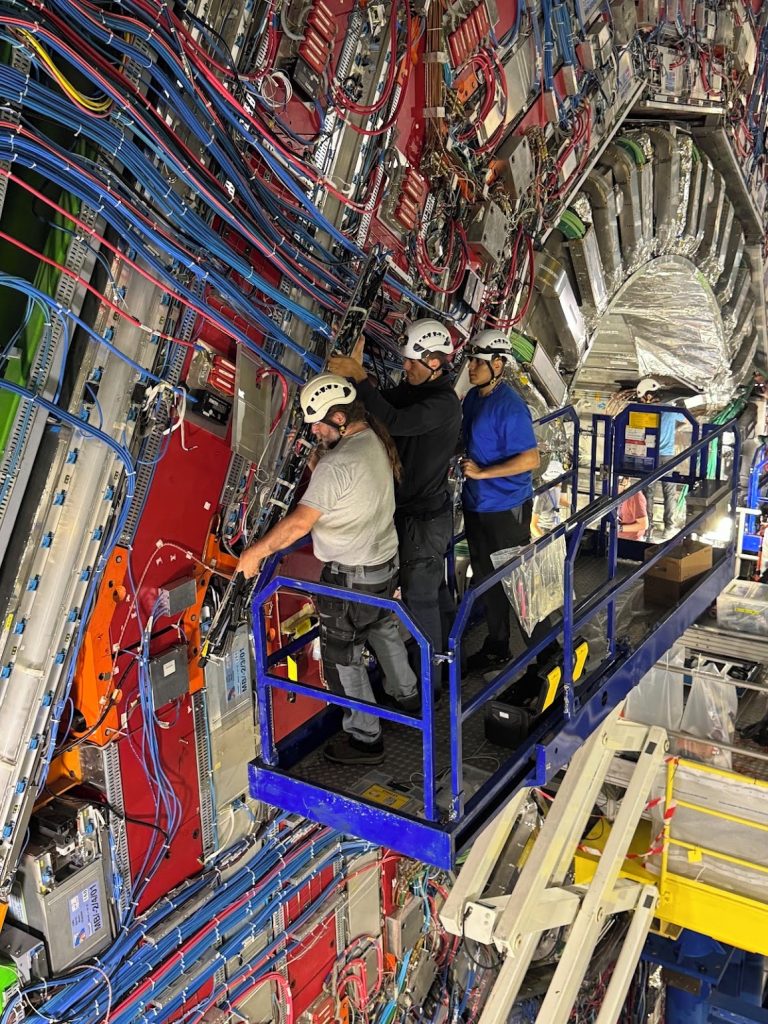
Installation of the new DT minicrates on the CMS wheel Y-2: team working on a scissor lift. (Image: CERN)
Efficiency built into the new infrastructure
The supporting infrastructure being installed for Phase 2 is not only more capable; wherever possible, it is also more efficient. CMS is replacing legacy perfluorocarbon cooling with CO₂ cooling as the common cold source for subdetectors operating below zero – a solution developed in collaboration with CERN’s EP-DT group for both the ATLAS and CMS upgraded detectors. New uninterruptible power supplies are more compact, while new cooling towers will serve the computing centre more directly and remove one heat-exchange stage. The future DAQ system will use a new generation of more energy-efficient servers.
These choices support CERN’s ISO 50001 energy-management commitments, but efficiency has another meaning inside CMS: efficient equipment generally occupies less space. In a detector where every route, rack, and service volume matters, reducing the infrastructure footprint can create room for additional capability.
Not every major CMS component will be replaced during LS3. The experiment’s superconducting solenoid is a unique piece of equipment that cannot simply be rebuilt. The work will therefore focus on consolidating the systems that support its operation. The ageing cryogenic control system—including its programmable logic controllers and associated control equipment—will be completely renewed, while targeted improvements will be made to the magnet-safety system. Planned maintenance also includes repairing a small leak identified in a regeneration heat exchanger associated with the second cryogenic turbine.
Tropea and Gaddi explain that as a precaution during the extensive work on the surrounding infrastructure, the magnet will be fully warmed up for the duration of the shutdown. Keeping it cold would risk subjecting it to unplanned thermal or electrical cycles if the cryogenic or electrical systems are interrupted. Warming it up in a controlled manner provides a safer and more stable environment for the decommissioning and installation activities taking place around it.
Making space for the next CMS
Decommissioning is sometimes imagined as installation in reverse. At CMS, it is a project in its own right, combining detector knowledge, engineering, radiation protection, databases, logistics, waste management and the coordinated work of many teams. Its success depends not only on removing equipment, but on preserving control over every component and every interface while the experiment is transformed around it.
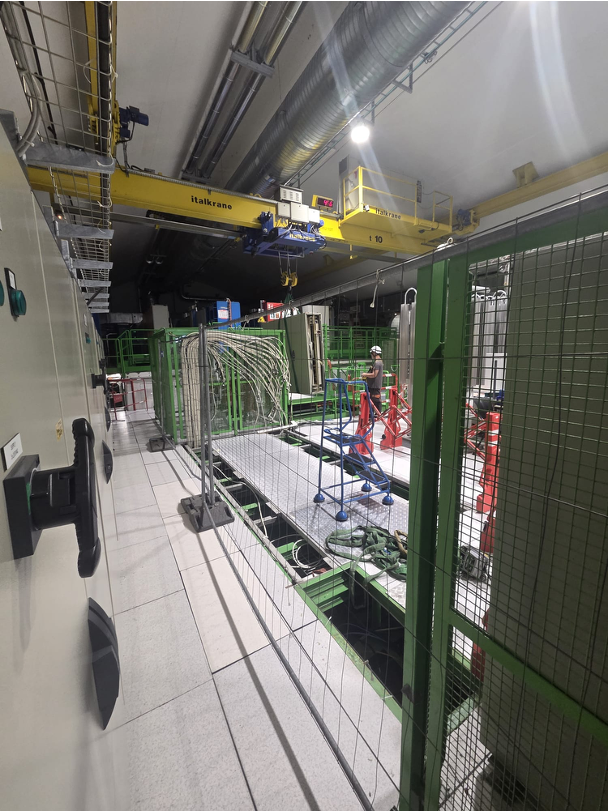
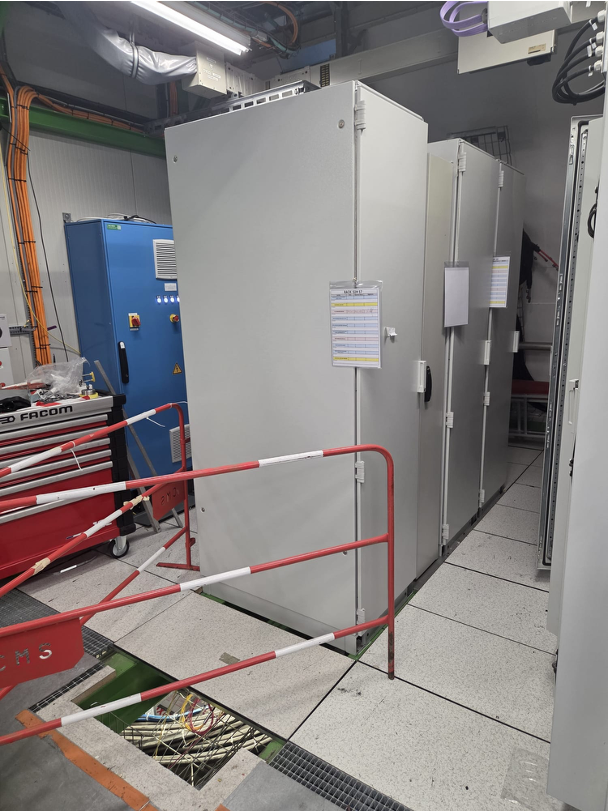
Preparing the CMS technical areas for Phase 2 involves work above and below the raised floors, around existing cabinets and within tightly controlled work zones. Every intervention must be coordinated with the wider LS3 schedule. Credit: CMS Collaboration.
The empty racks now visible at Point 5 are therefore more than evidence of what has disappeared. They are the first physical spaces created for the new CMS. Over the coming months, the emphasis will move from dismantling to installation, from tracing legacy services to connecting new detectors, and from reconstructing the experiment’s technical past to assembling the instrument that will explore the next era of LHC physics.
| IN FOCUS | HGCAL KEEPS ITS COOL: 170-tonne milestone for the future endcaps by CMS communication team |
|---|
The connection between dismantling the legacy detector and building its successor is already visible above ground. In July 2026, the first of HGCAL’s two main stainless-steel absorber structures successfully completed a demanding series of cold tests. HGCAL will replace the present CMS endcap calorimeters, using fine spatial and energy measurements together with precision timing to reconstruct particle showers in the intense HL-LHC environment. 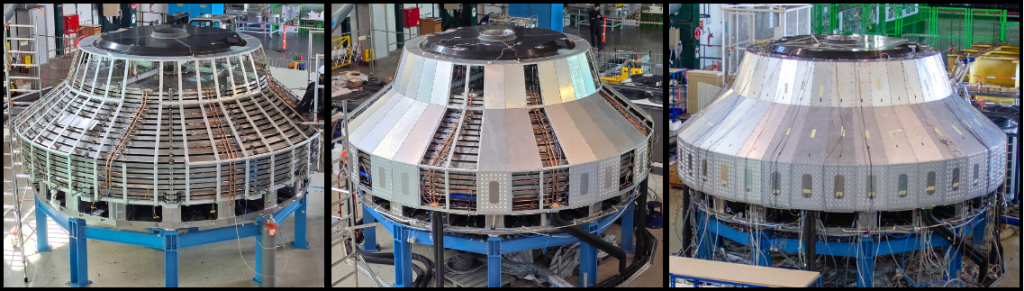 HGCAL before, during, and after the installion of the thermal screen panels. (Images: K. Rapacz and S. Hurst/CERN) During the test, 170 tonnes of steel were cooled to -35 °C in just over four days, while the exterior remained close to room temperature. A system of 408 individually regulated thermal-screen panels, together with a continuous flow of very dry air, protected the structure against condensation. No overheating, condensation or leaks were recorded. Twenty-two team members took turns monitoring the operation. The measurements will be compared with detailed simulations, providing an important validation of the thermal design before the detector’s active cassettes are installed. The milestone offers a tangible preview of the precision engineering that will follow the decommissioning work underground. 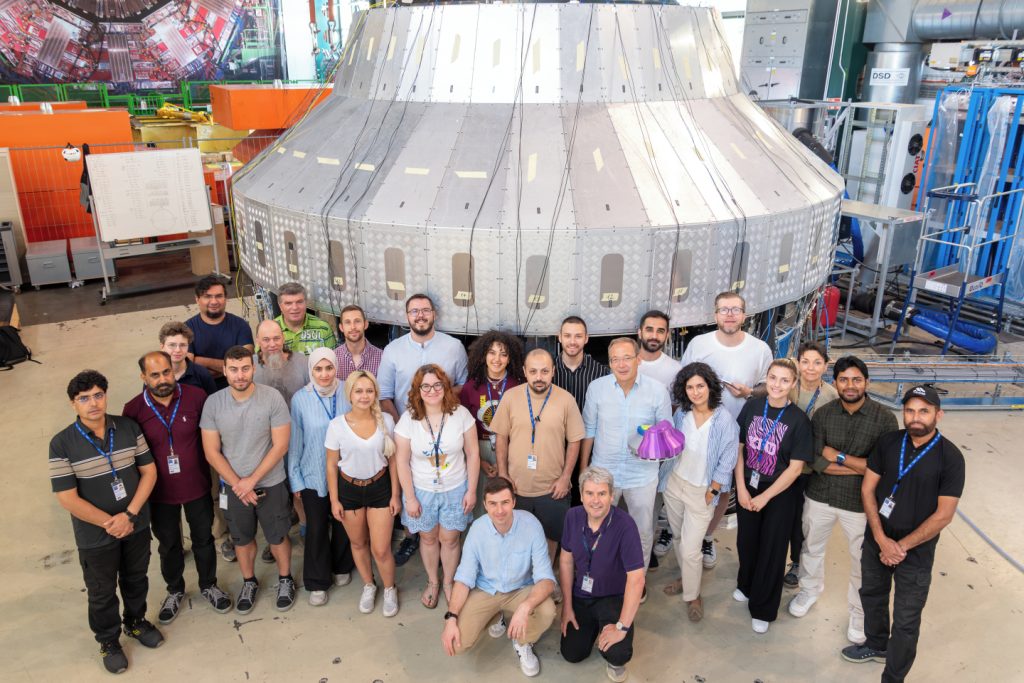 Members of the HGCAL and CMS teams involved in the Cold Tests (Image: S.Hurst/CERN) Read more: HGCAL keeps its cool in major testing milestone, CMS Experiment, 24 July 2026. https://cms.cern/news/hgcal-keeps-its-cool-major-testing-milestone Further Links: See photos from the cold tests here |