
Tag: ALICE
-
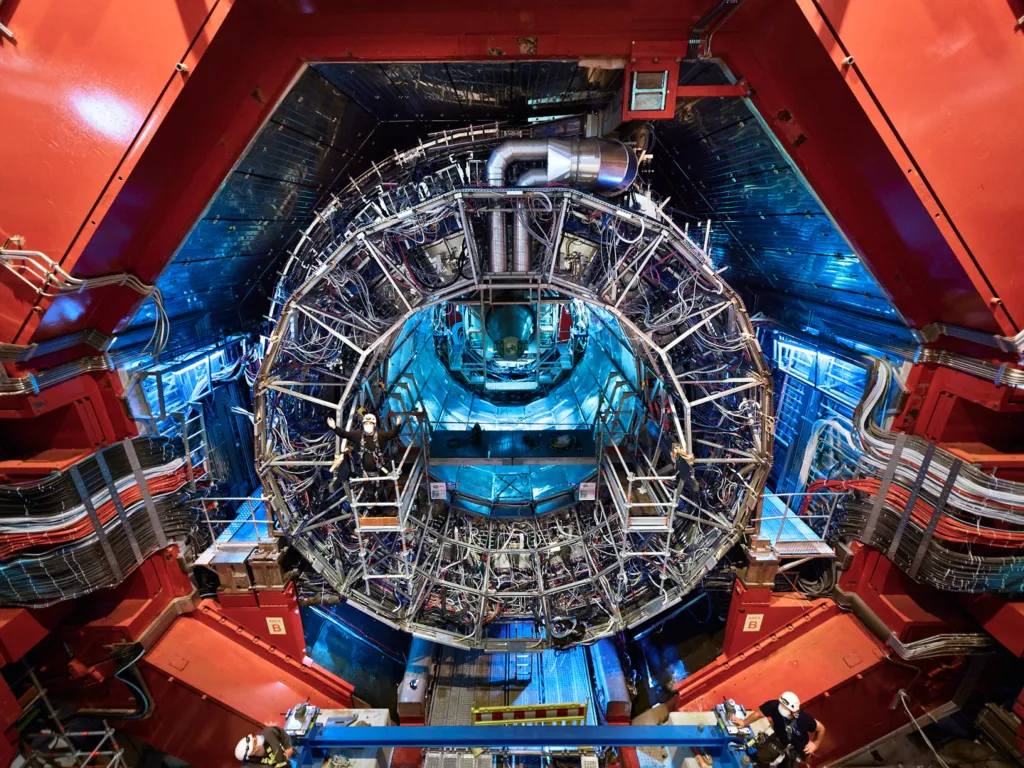
ALICE gears up towards a rich Run 3 QCD programme
ALICE gears up towards a rich Run 3 QCD programme Quantum Chromodynamics (QCD), the theory of strong interactions, is characterised by a rich phase diagram. The elementary coloured degrees of freedom of the theory, quarks and gluons, under ordinary conditions are confined in colour-neutral hadrons and get free to propagate over distances larger than the
-
CERN’s new open data policy supports open science
CERN's new open data policy supports open science The four main LHC collaborations (ALICE, ATLAS, CMS and LHCb) have unanimously endorsed a new open data policy for scientific experiments at the Large Hadron Collider (LHC), which was presented to the CERN Council today. The policy commits to publicly releasing so-called level 3 scientific data, the
-
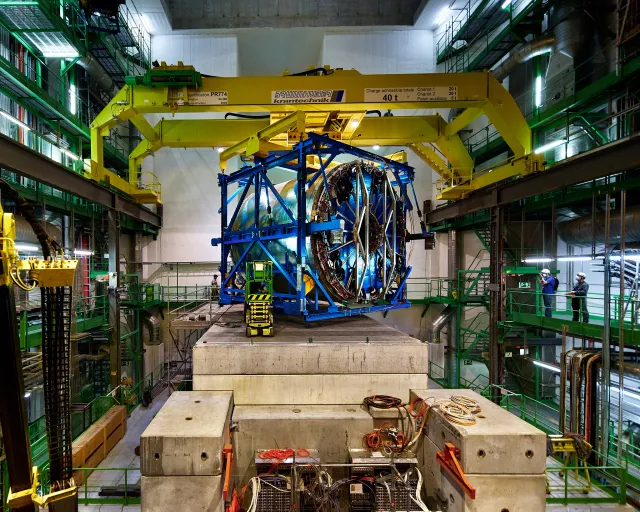
The upgraded ALICE TPC
The upgraded ALICE TPC The ALICE time projection chamber (TPC) is a big, gas-filled cylinder (with a hole in the centre to accommodate the silicon tracker), where the charge produced by ionising radiation is projected onto detectors arranged in the two endplates. Therefore, it is a true 3-dimensional tracking device which also, by recording many
-
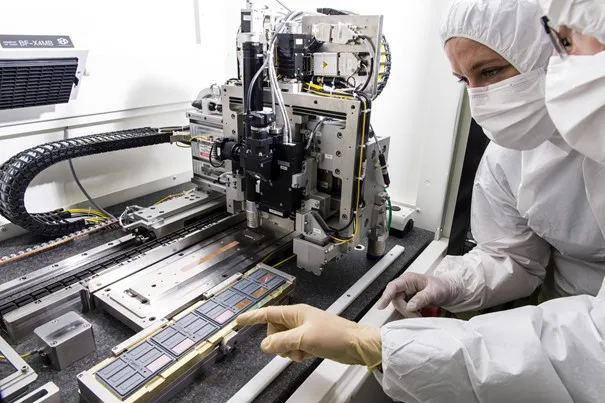
Chips on a ladder: end of production for ALICE-MFT
Chips on a ladder: end of production for ALICE-MFT After more than four years of research and development, design and manufacturing work, the MFT (Muon Forward Tracker), a new detector that will equip the ALICE experiment at the LHC, has seen its construction finalized and is currently under commissioning at CERN. In order to limit
-
LHC experiments ramp-up activities
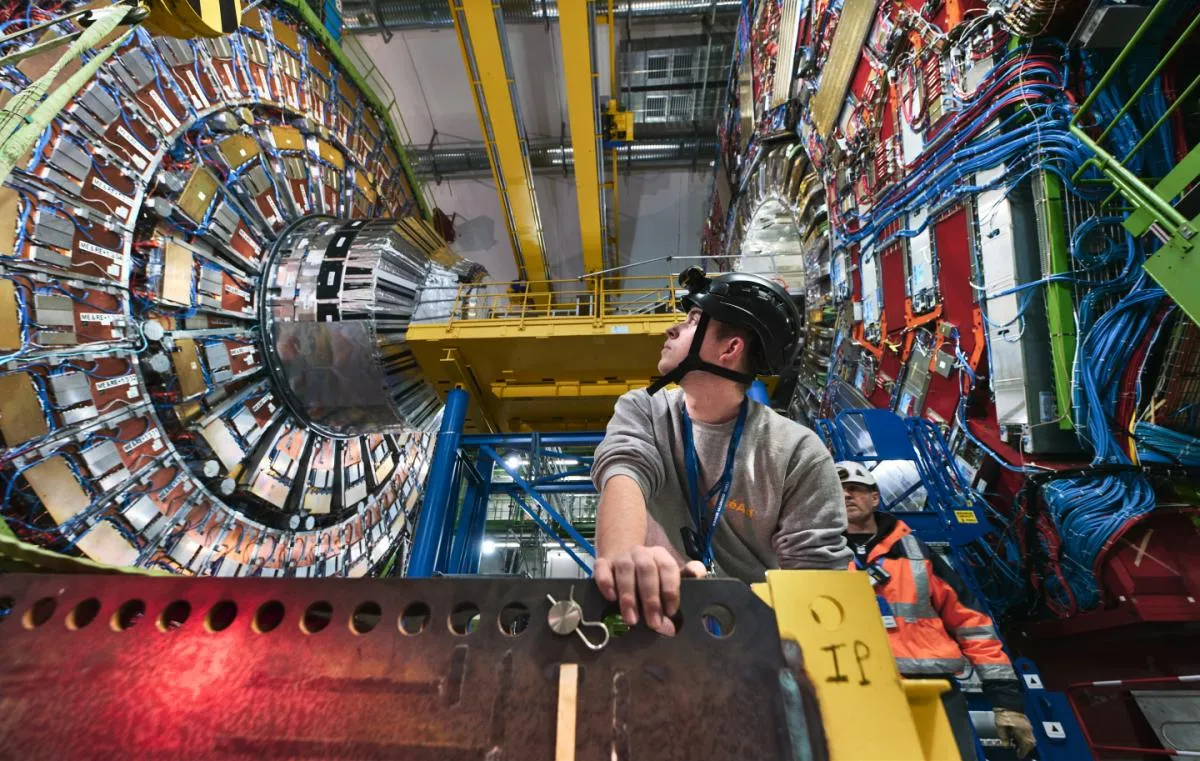
LHC experiments ramp-up activities Around the world,research centres, laboratories and universities have closed as a response to the COVID-19 pandemic — forcing an increasing number of researchers to work from home. Researchers teleworking coordinated with colleagues who had to continue working in the lab to ensure continuation of critical activities as well as a smooth
-
New physics opportunities with heavy-ion collisions at the LHC
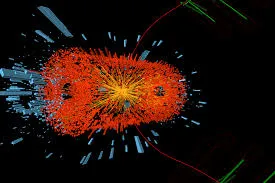
New physics opportunities with heavy-ion collisions at the LHC The LHC is the latest scientific tool in a long line of increasingly sophisticated machines built over the last 70 years to study the inner workings of our Universe and the laws governing its microscopic structure and evolution. Decades-long experimental and theoretical efforts have given rise
-
Heterogeneous computing efforts for high-energy physics experiments
Heterogeneous computing efforts for high-energy physics experiments Substantial improvements to the current experiments at the LHC are underway, and new experiments are being proposed or discussed at future energy-frontier accelerators to answer fundamental questions in particle physics. At future hadron colliders, complex silicon vertex trackers (3D and 4D) and highly granular calorimeters must operate in
-
The ALICE ITS upgrade: Pixels for quarks
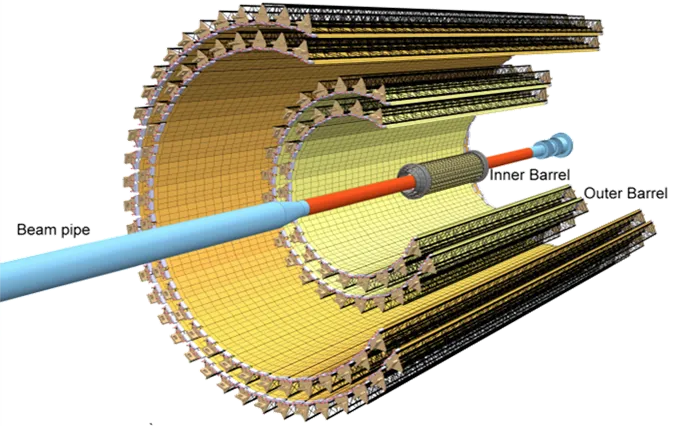
The ALICE ITS upgrade: Pixels for quarks Introduction ALICE, the heavy-ion dedicated experiment at the LHC, will soon have enhanced physics capabilities with a major upgrade of the detectors, data-taking and data-processing systems which will improve the precision of the extracted characteristics of the high density, high temperature phase of strongly interacting matter, the quark-gluon
-
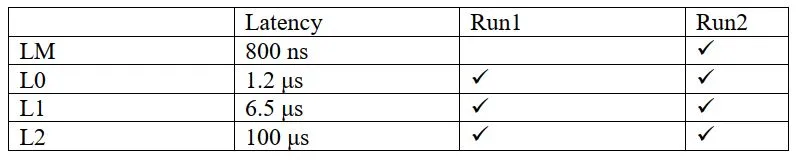
ALICE trigger system: Present and Future
ALICE trigger system: Present and Future The purpose of any trigger system is to select an event sample strongly enriched in physics processes of interest, while rejecting those not of interest, and to do so in such a way as to make efficient use of the available detectors. The prime objective of the ALICE experiment
-
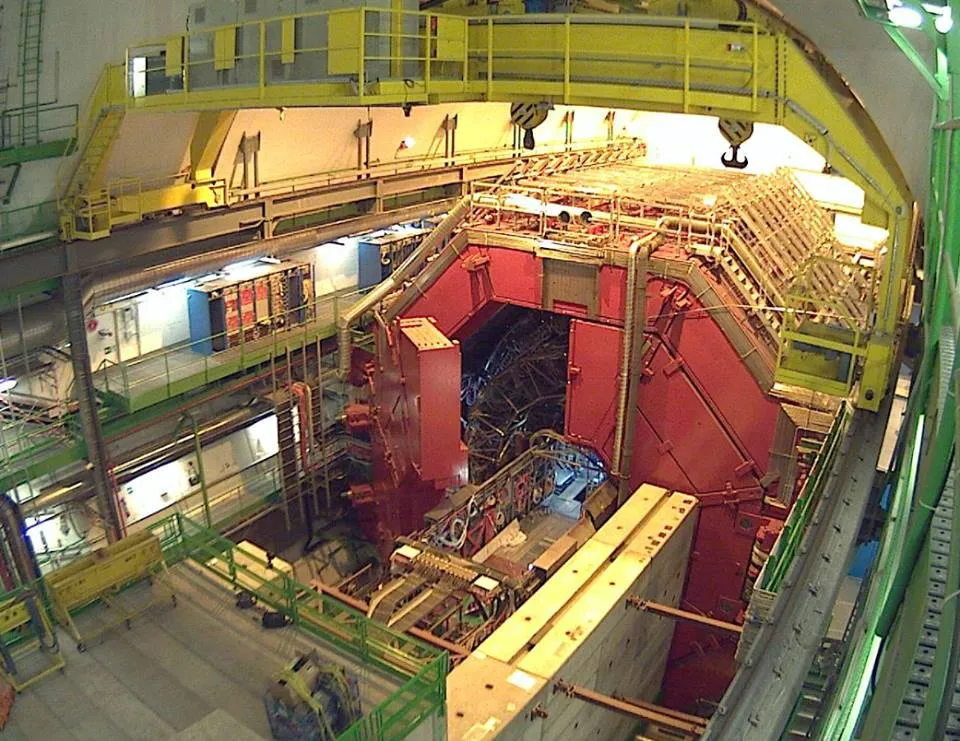
“New” ALICE coming to life during LS2
"New" ALICE coming to life during LS2 The ALICE solenoid re-opens its door as the collaboration prepares for the detector upgrade planned for LS2. At 6 a.m. on December 3, 2018, the LHC expert team switched off the engine of the biggest particle accelerator in the world, which will rest for the next two years