
Tag: BASE
-
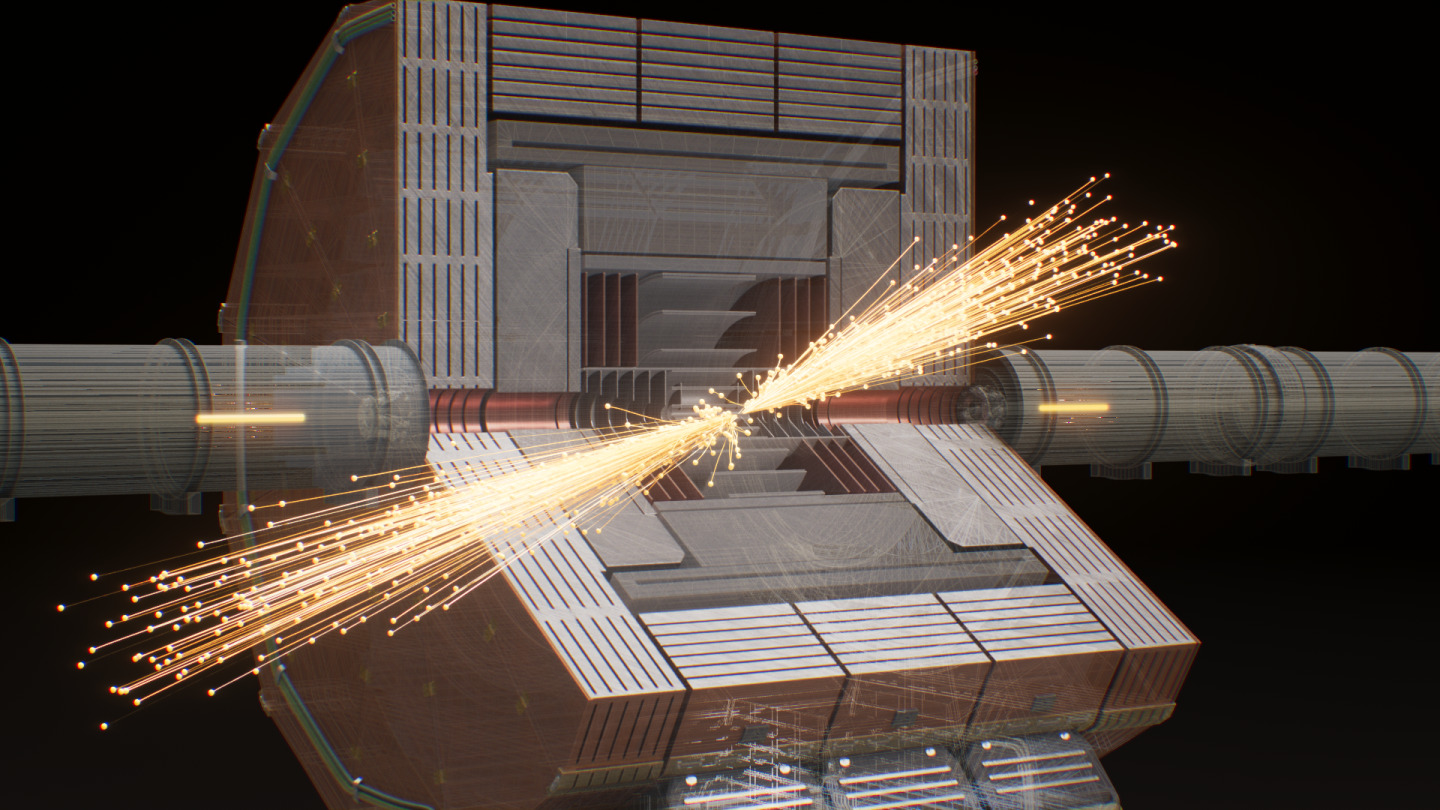
FCC Physics, Experiments and Detectors: from Strategy Update to Project Preparation
From detector concepts to future experiment collaborations, the FCC Physics, Experiments and Detectors programme is entering a new phase. Patrick Janot outlines how the Reference Design Phase will bring together physics ambitions, detector R&D and international collaboration to prepare FCC-ee for project approval and delivery.
-
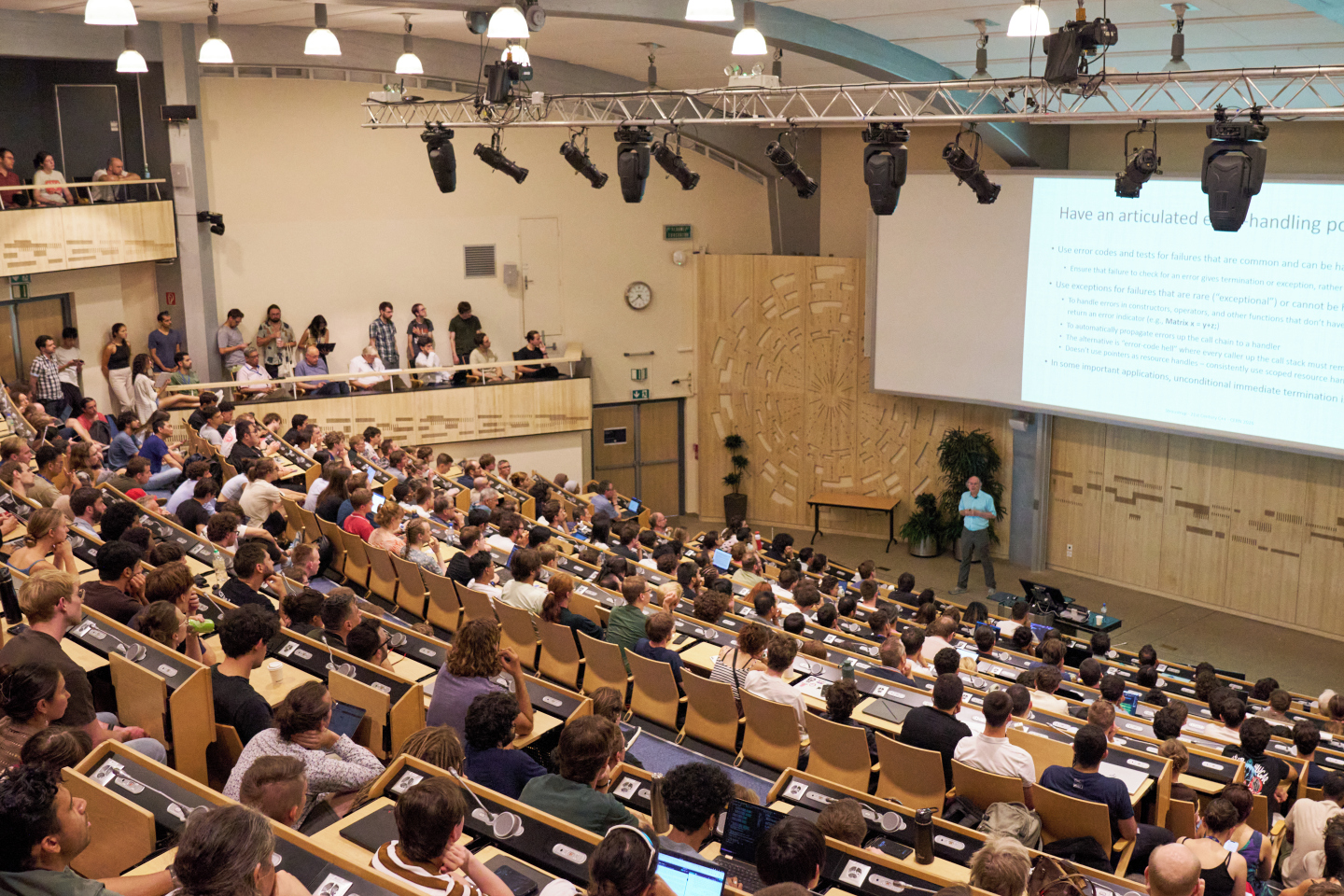
CERN STEAM Academy puts the future of scientific software centre stage
C++ creator Bjarne Stroustrup returned to CERN for a packed STEAM Academy seminar on the future of scientific software. From safer programming and simpler code to new language features and the demands of long-lived research infrastructure, he explored how C++ can continue to evolve alongside the computing challenges of modern science.
-
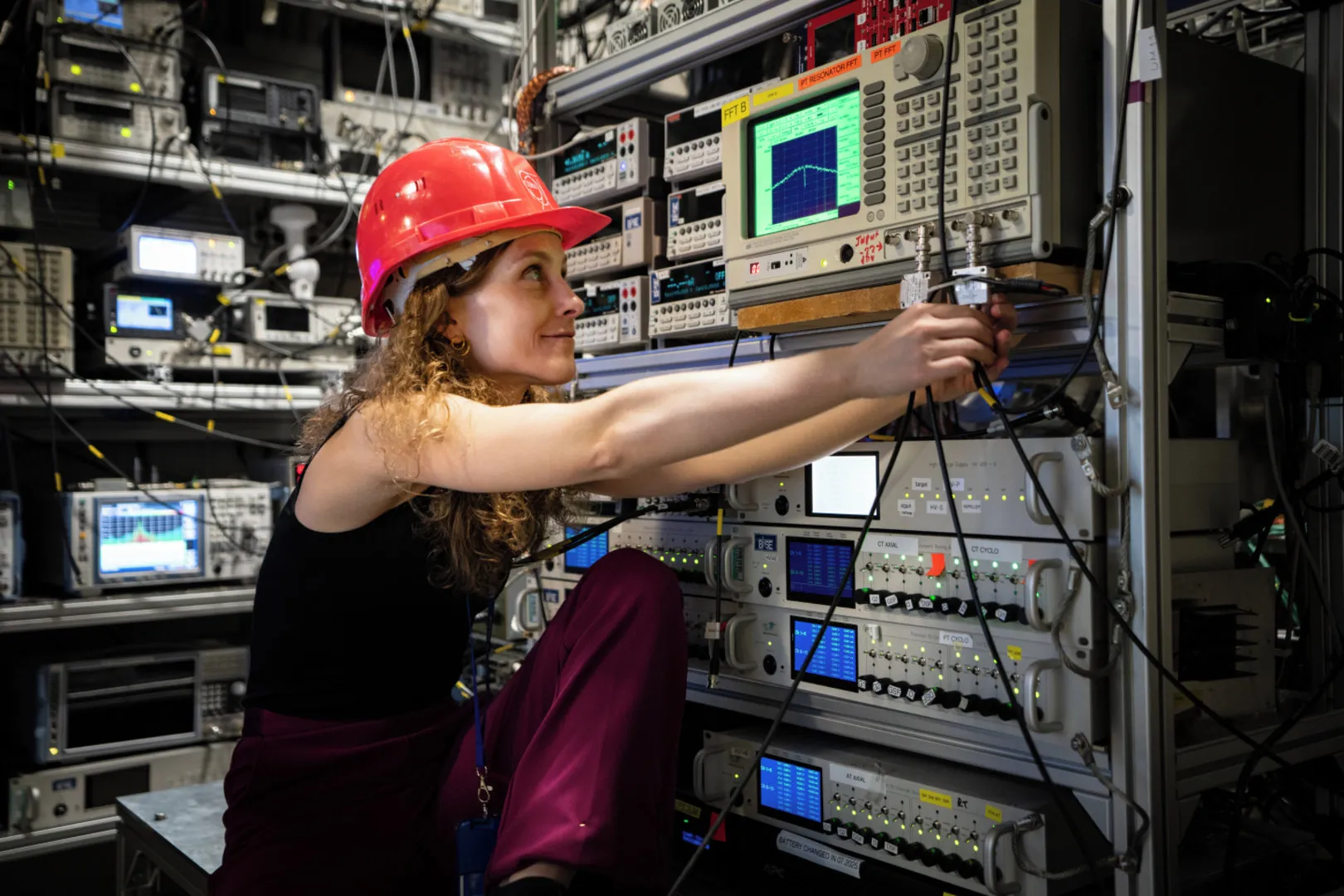
BASE experiment scientist recognised with UPAP Early Career Scientist for coherent antiproton spin spectroscopy
BASE experiment scientist recognised with UPAP Early Career Scientist for coherent antiproton spin spectroscopy Dr Barbara Maria Latacz, CERN scientist and lead author of the BASE study, works on the trap electronics used to control single antiprotons for high-precision antimatter measurements. Barbara Latacz, CERN research scientist and technical coordinator of the BASE experiment, has received
-
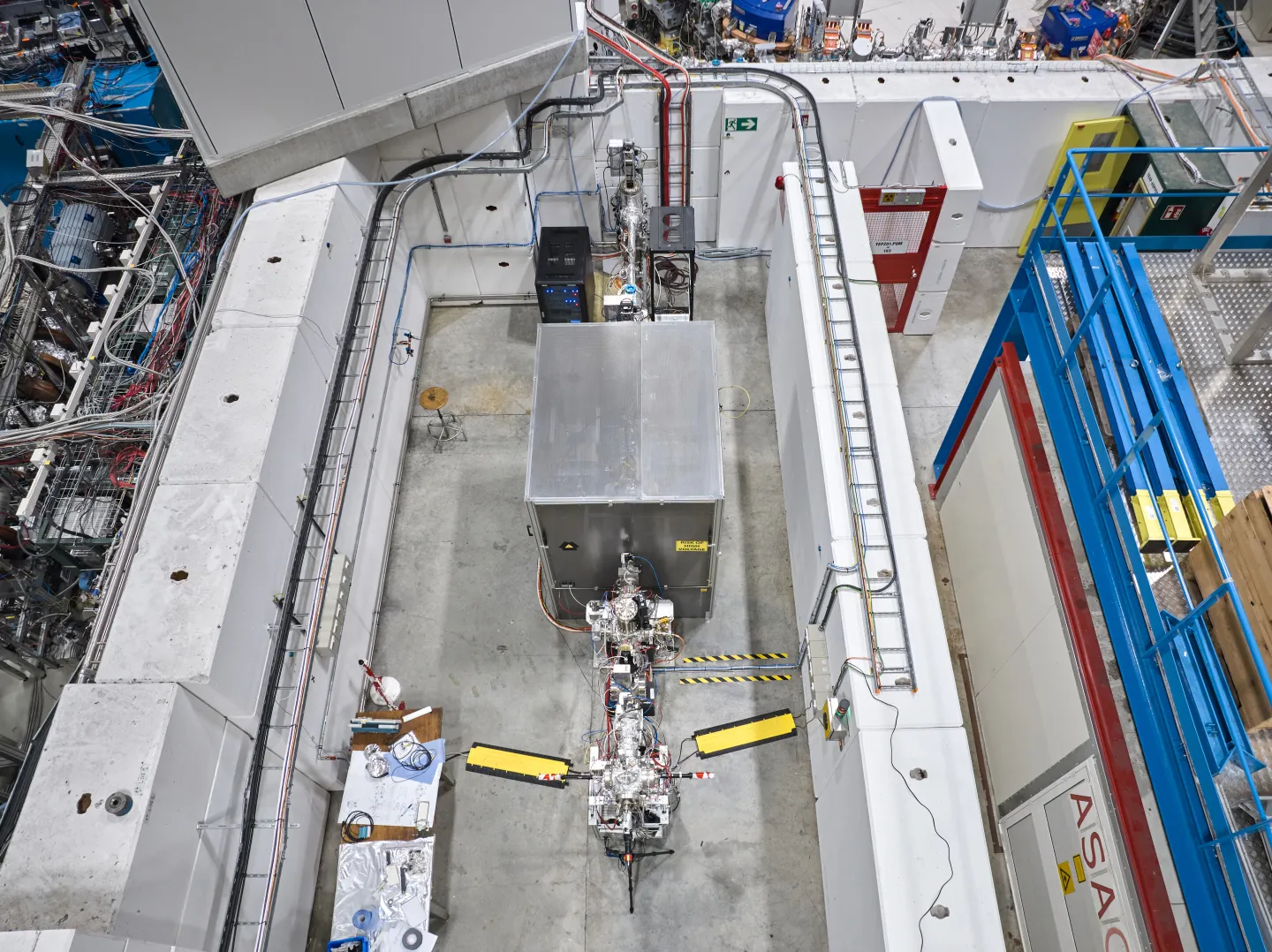
PUMA – Antiprotons as a precision probe for the tail of nuclear density
PUMA – Antiprotons as a precision probe for the tail of nuclear density Understanding the nuclear structure of atomic nuclei away from the valley of stability remains one of the central challenges of nuclear physics and astrophysics. In particular, the dilute outer regions of neutron-rich nuclei can exhibit phenomena such as neutron halos and neutron
-

New Staff Members and Fellows
New Staff Members and Fellows Maximilian Babeluk Hi, I’m Max. I recently joined the ALICE ITS3 team, where I work on sensor testing, functional verification, and in the future also chip design – particularly on MOSAIX. My main activities include testing and yield assessment across multiple integration levels (wafer probing to system tests), including data
-
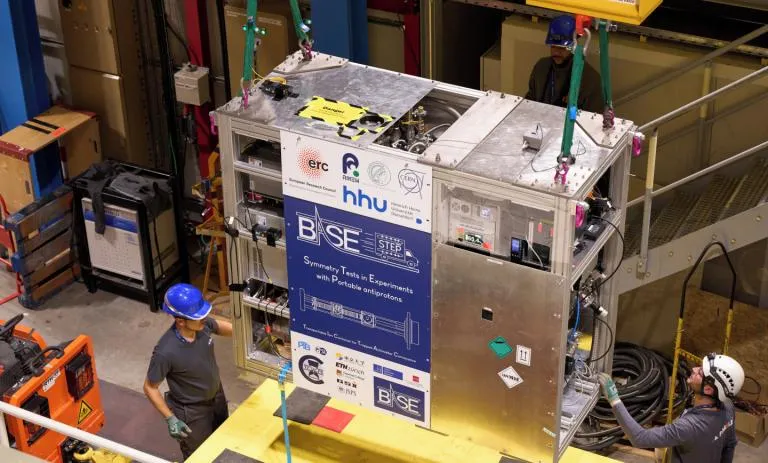
Moving antimatter beyond the lab
Moving antimatter beyond the lab For decades, antimatter experiments have been bound to a single place: the laboratory in which the particles are produced and trapped. At CERN’s Antimatter Factory, antiprotons are routinely produced, decelerated and confined in Penning traps, where electric and magnetic fields are used to store charged particles for high-precision studies. Yet
-
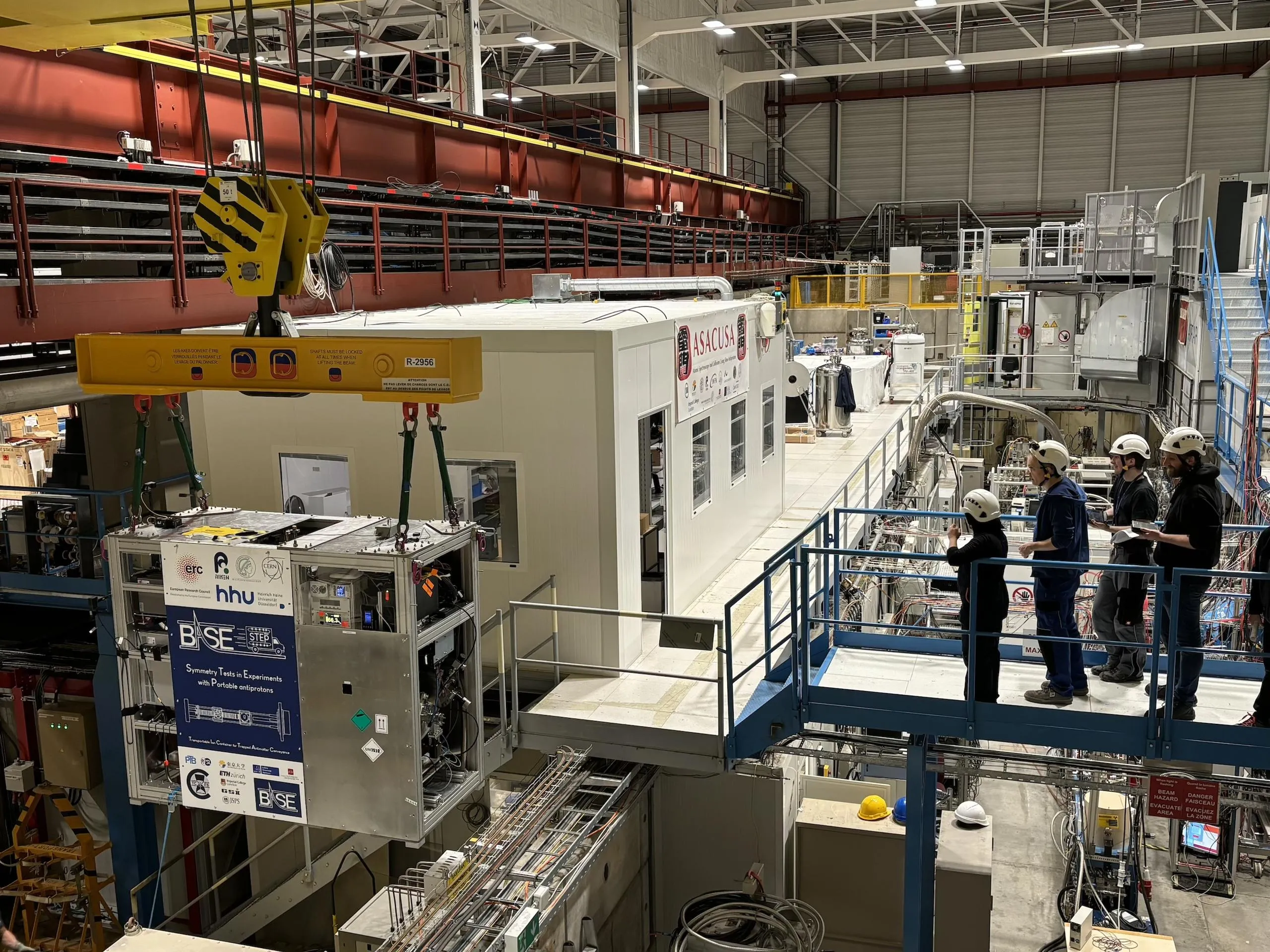
CERN’s BASE-STEP: A Leap Forward in Antimatter Transport
CERN's BASE-STEP: A Leap Forward in Antimatter Transport Antimatter, often portrayed as the elusive counterpart to ordinary matter, has long captivated the scientific community with its potential to unlock some of the universe's most profound mysteries. Yet, one of the most significant challenges in studying antimatter is its inherent instability—it annihilates upon contact with matter,
-
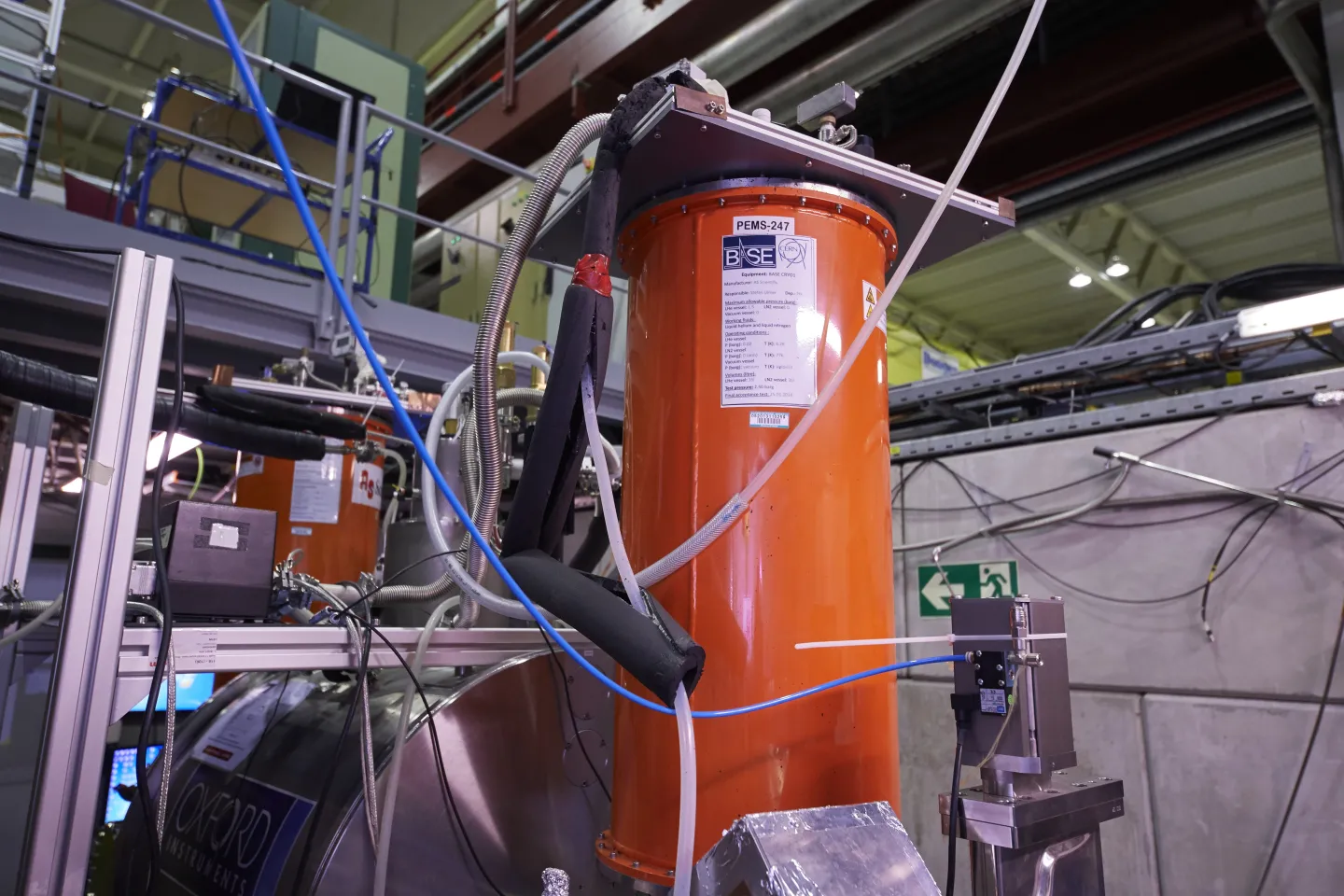
Testing CPT-symmetry and the Weak Equivalence Principle with Proton/Antiproton Clock Comparisons
Testing CPT-symmetry and the Weak Equivalence Principle with Proton/Antiproton Clock Comparisons Even though the Standard Model of Particle Physics is incredibly successful and provides extremely accurate predictions for many physical quantities and mechanisms, the model is known to be incomplete. For instance, it fails in explaining the staggering abundance of matter compared to antimatter observed
-
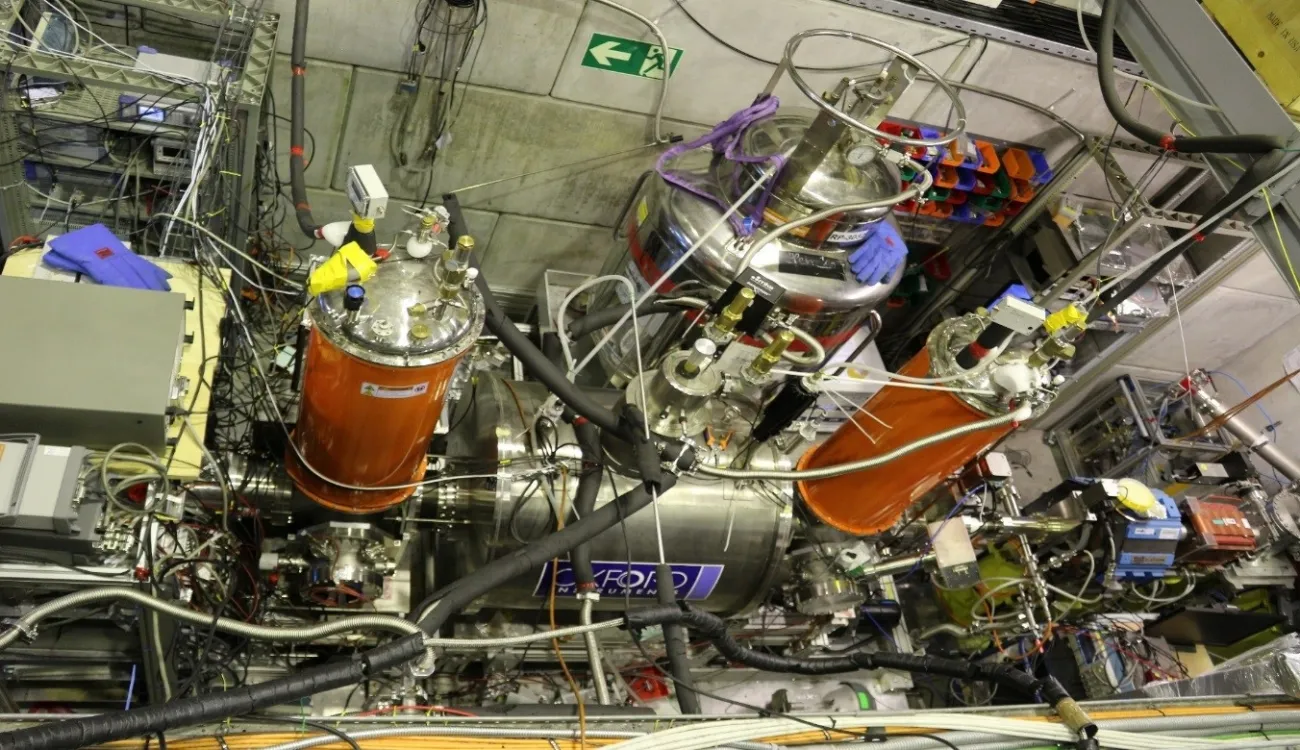
Prestigious Award for Quantum Logic Spectroscopy
Prestigious Award for Quantum Logic Spectroscopy In October, the prestigious Dissertation Prize of the Section Atoms, Molecules, Quantum Optics and Plasmas (SAMOP) of the German Physical Society was awarded to Peter Micke for his seminal work demonstrating quantum logic spectroscopy on highly charged ions (HCI) [1]. He completed his PhD in Piet O. Schmidt’s group
-
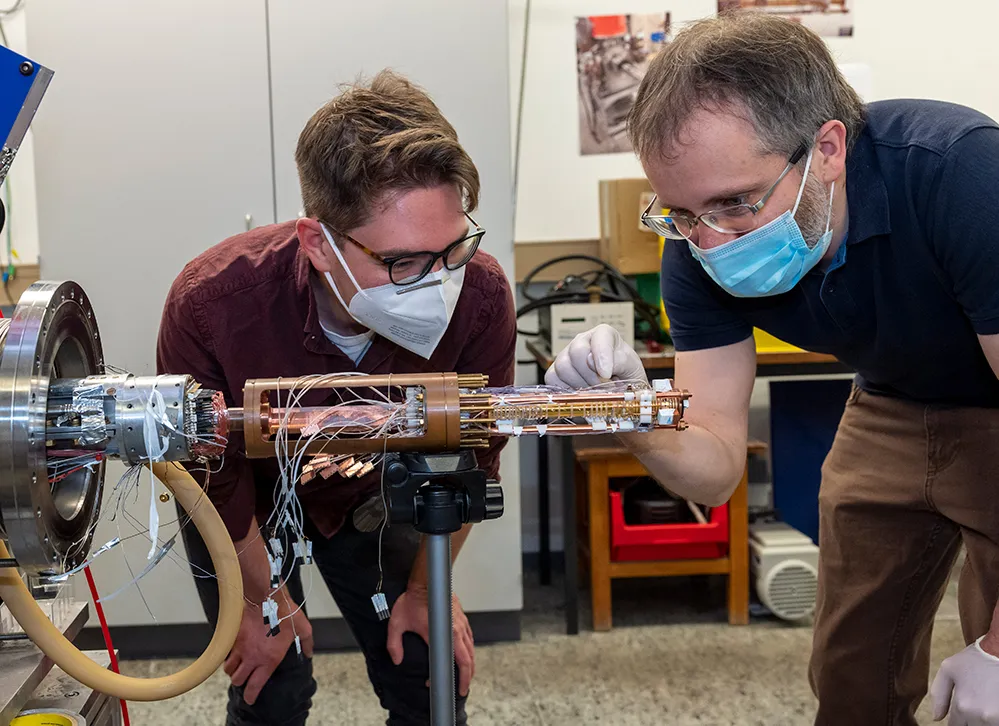
Cooling a particle from a trap away
Cooling a particle from a trap away The BASE experiment, located at CERN’s Antiproton Deccelerator (AD) performs some of the most precise measurements with antimatter in the world – namely measuring the magnetic moment and charge-to-mass ratio of a single trapped antiproton. With these measurements, BASE, along with other experiments at the AD, is attempting