
Tag: CMS
-

How to search for new physics without knowing about it?
How to search for new physics without knowing about it? BSM searches at the LHC increasingly profit from ML techniques since this approach allows more general searches that minimise the probability of missing evidence of new physics. Very recently, the ATLAS collaboration has published a novel approach [1], based on weakly unsupervised ML techniques, to
-
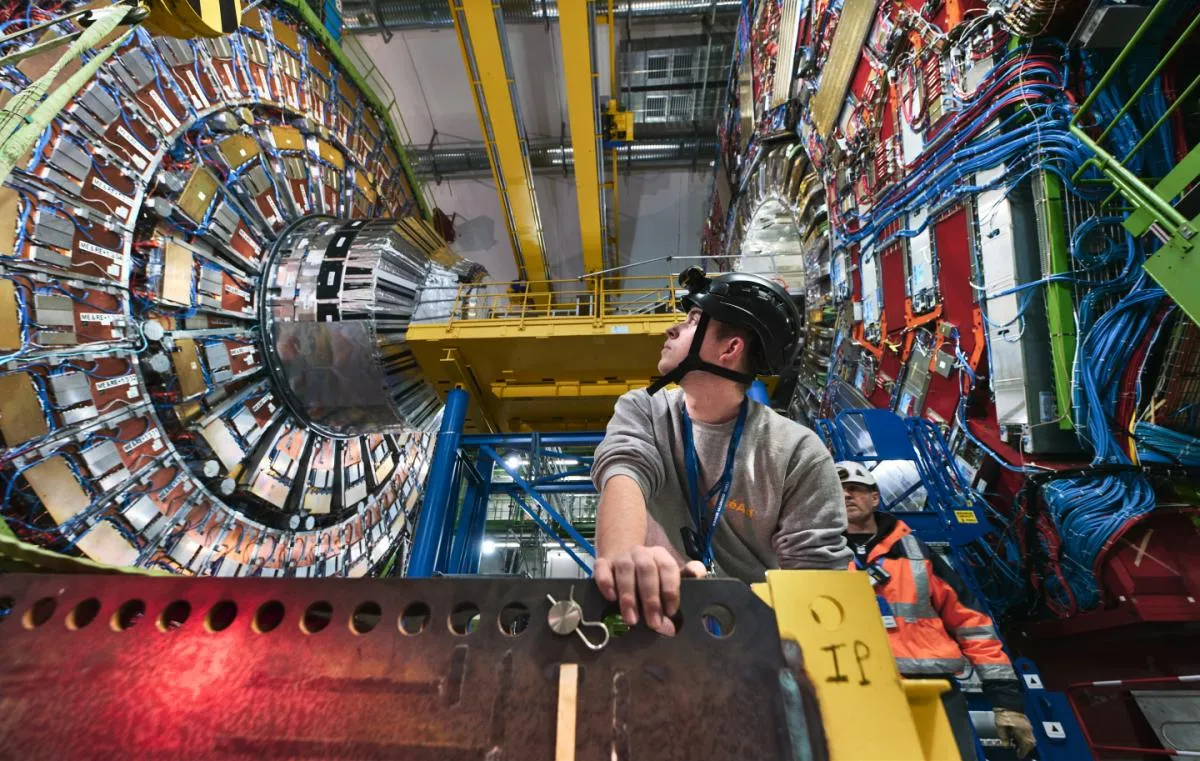
LHC experiments ramp-up activities
LHC experiments ramp-up activities Around the world,research centres, laboratories and universities have closed as a response to the COVID-19 pandemic — forcing an increasing number of researchers to work from home. Researchers teleworking coordinated with colleagues who had to continue working in the lab to ensure continuation of critical activities as well as a smooth
-
How to search for new physics without knowing about it?
How to search for new physics without knowing about it? BSM searches at the LHC increasingly profit from ML techniques since this approach allows more general searches that minimise the probability of missing evidence of new physics. Very recently, the ATLAS collaboration has published a novel approach [1], based on weakly unsupervised ML techniques, to
-
CMS tunes in searches for new physics
CMS tunes in searches for new physics The CERN LHC has produced proton-proton collisions at an unprecedented center of mass energy of 13 TeV since 2015, providing an excellent opportunity to search for new phenomena in regions that were previously inaccessible to collider experiments. While the standard model (SM) of particle physics is well established
-
CMS weighs in for the top quark
CMS weighs in for the top quark The top quark has a special position in the zoo of elementary particles, being the heaviest as well as one of the rarest fundamental particles ever sighted. With a mass of about 173 GeV, it has 40 times the mass of its partner, the bottom quark and is
-
CMS weighs in for the top quark
CMS weighs in for the top quark The top quark has a special position in the zoo of elementary particles, being the heaviest as well as one of the rarest fundamental particles ever sighted. With a mass of about 173 GeV, it has 40 times the mass of its partner, the bottom quark and is
-
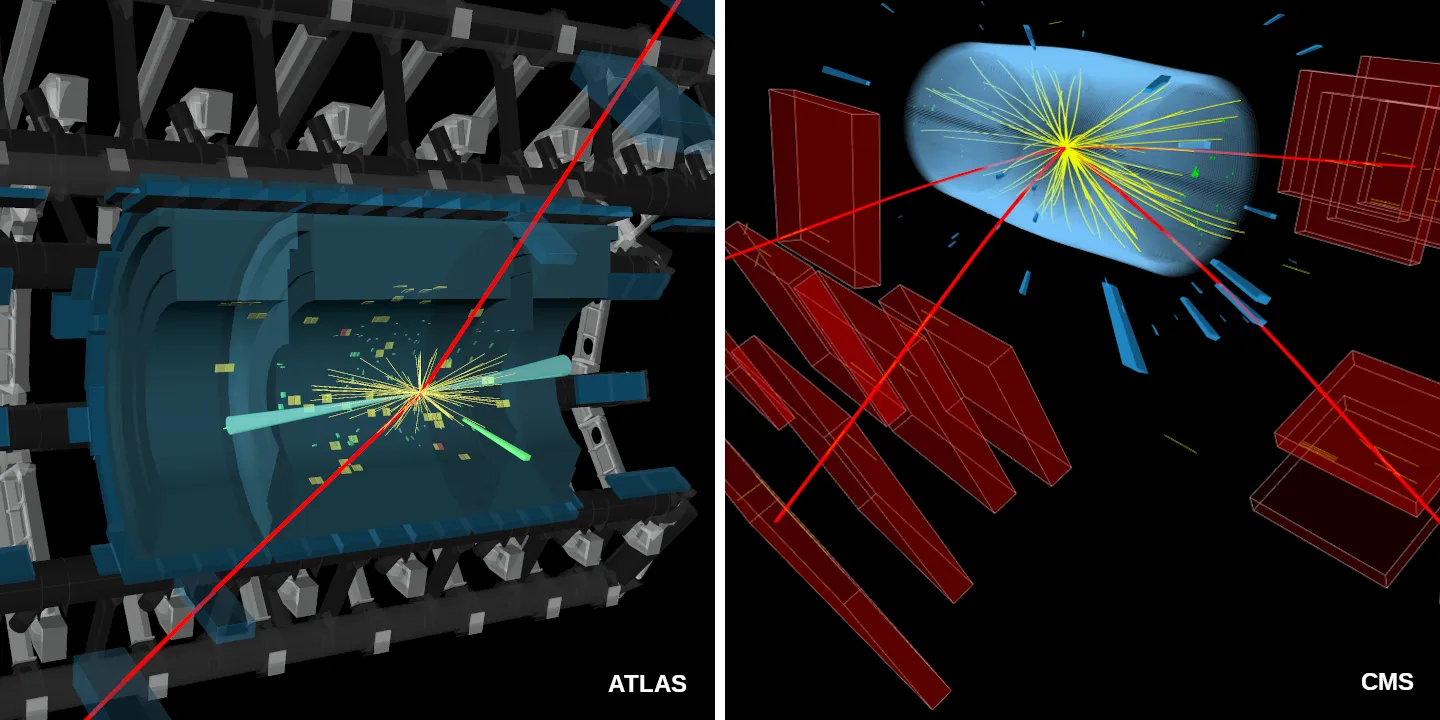
Exploring new ways to see the Higgs boson
Exploring new ways to see the Higgs boson The ATLAS and CMS collaborations presented their latest results on new signatures for detecting the Higgs boson at CERN’s Large Hadron Collider. These include searches for rare transformations of the Higgs boson into a Z boson – which is a carrier of one of the fundamental forces
-
New physics opportunities with heavy-ion collisions at the LHC
New physics opportunities with heavy-ion collisions at the LHC The LHC is the latest scientific tool in a long line of increasingly sophisticated machines built over the last 70 years to study the inner workings of our Universe and the laws governing its microscopic structure and evolution. Decades-long experimental and theoretical efforts have given rise
-
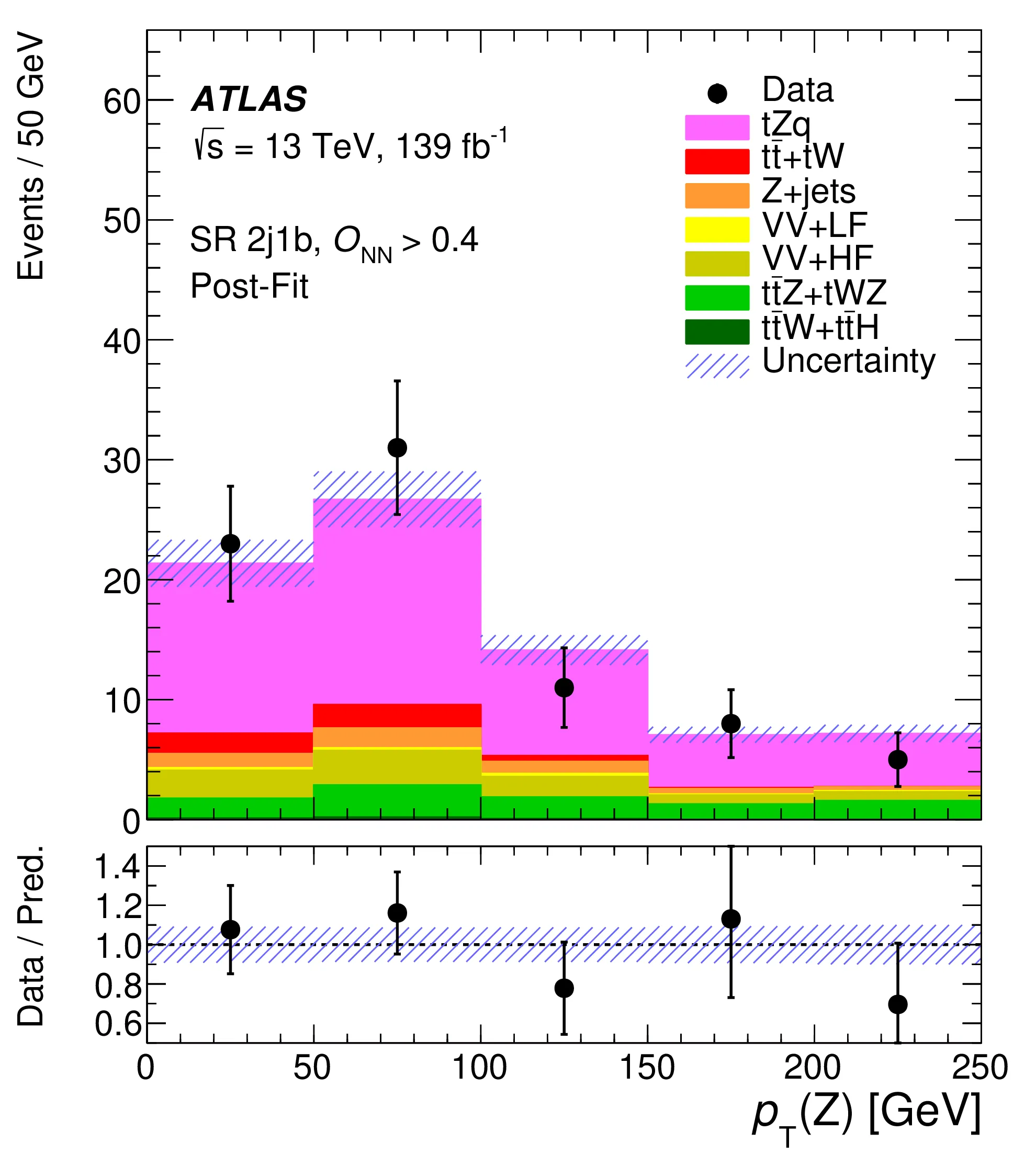
Artificial neural networks shed light on rare SM processes.
Artificial neural networks shed light on rare SM processes. In a new paper released last month, the ATLAS Collaboration reported the observation of a single top quark produced in association with a Z boson (tZq) using the full Run-2 dataset, thereby confirming earlier results by ATLAS and CMS using smaller datasets. As reported in an
-
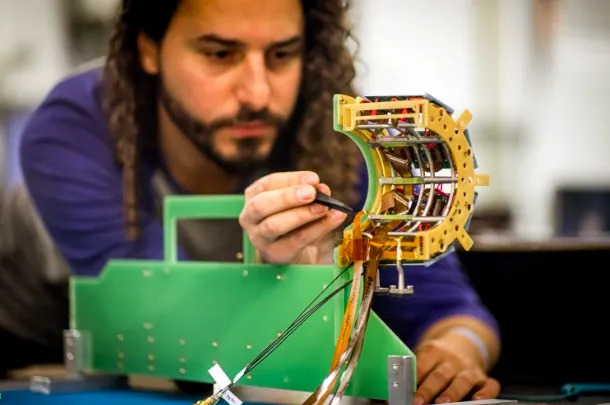
Towards high-precision luminosity for CMS in Run 3 and beyond
Towards high-precision luminosity for CMS in Run 3 and beyond Luminosity is a key parameter for any collider-based high energy physics experiment as it links the interaction rates observed in an experiment to the cross sections of physics processes. Therefore, it is a key ingredient to most major analyses performed at an experiment and the