
Tag: data
-

Rucio crosses the exabyte horizon
Rucio crosses the exabyte horizon When we last wrote in these pages about Rucio, ATLAS had just passed the half-exabyte mark and the community counted around thirty organisations. Six years on, a threshold that was then a distant projection has been crossed: both ATLAS and CMS, the two largest LHC experiments, now each manage more
-
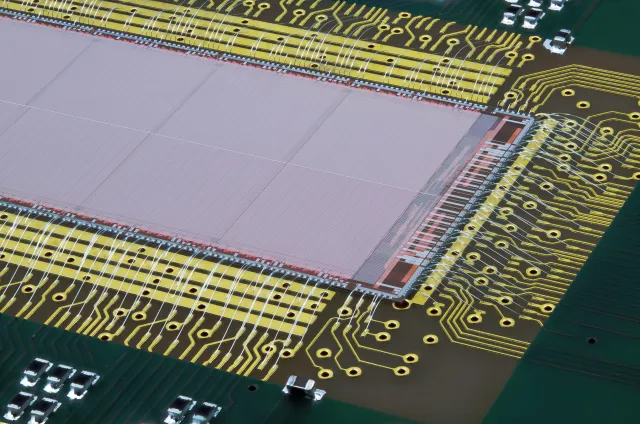
MOSAIX: Designing bent wafer-scale monolithic pixel sensors for the ALICE ITS3 upgrade
MOSAIX: Designing bent wafer-scale monolithic pixel sensors for the ALICE ITS3 upgrade The ALICE detector is preparing a major upgrade to its Inner Tracking System (ITS) during LHC long shutdown 3 (2026-2030). This upgrade, called ITS3, will replace the three innermost tracking layers with three layers of cylindrical, 50 µm thick, 27 cm long, silicon
-
Towards monitoring in Run 4 and beyond: LHC experiments exchange perspectives on data quality at the HL-LHC
Towards monitoring in Run 4 and beyond: LHC experiments exchange perspectives on data quality at the HL-LHC In March of 2026, experts from ALICE, ATLAS, CMS and LHCb gathered at CERN for a dedicated workshop on Data Quality Monitoring (DQM), bringing together developers, coordinators and detector specialists to discuss how the LHC experiments monitor the
-
Online use of AI within ALICE
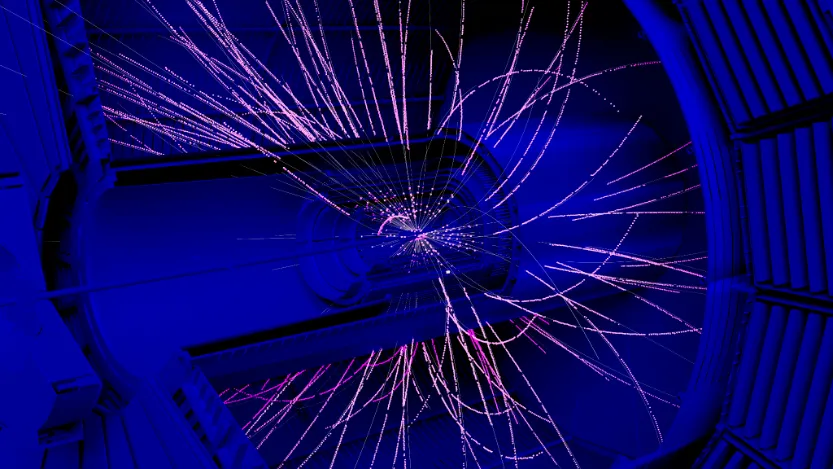
Online use of AI within ALICE A reconstructed event of particles in the ALICE TPC, with data taken with the neural network cluster finding algorithm. Pink dots are reconstructed clusters. AI applications have rapidly expanded in everyday life, and ALICE, among other high-energy physics experiments at CERN, is increasingly exploring their use in fundamental physics
-
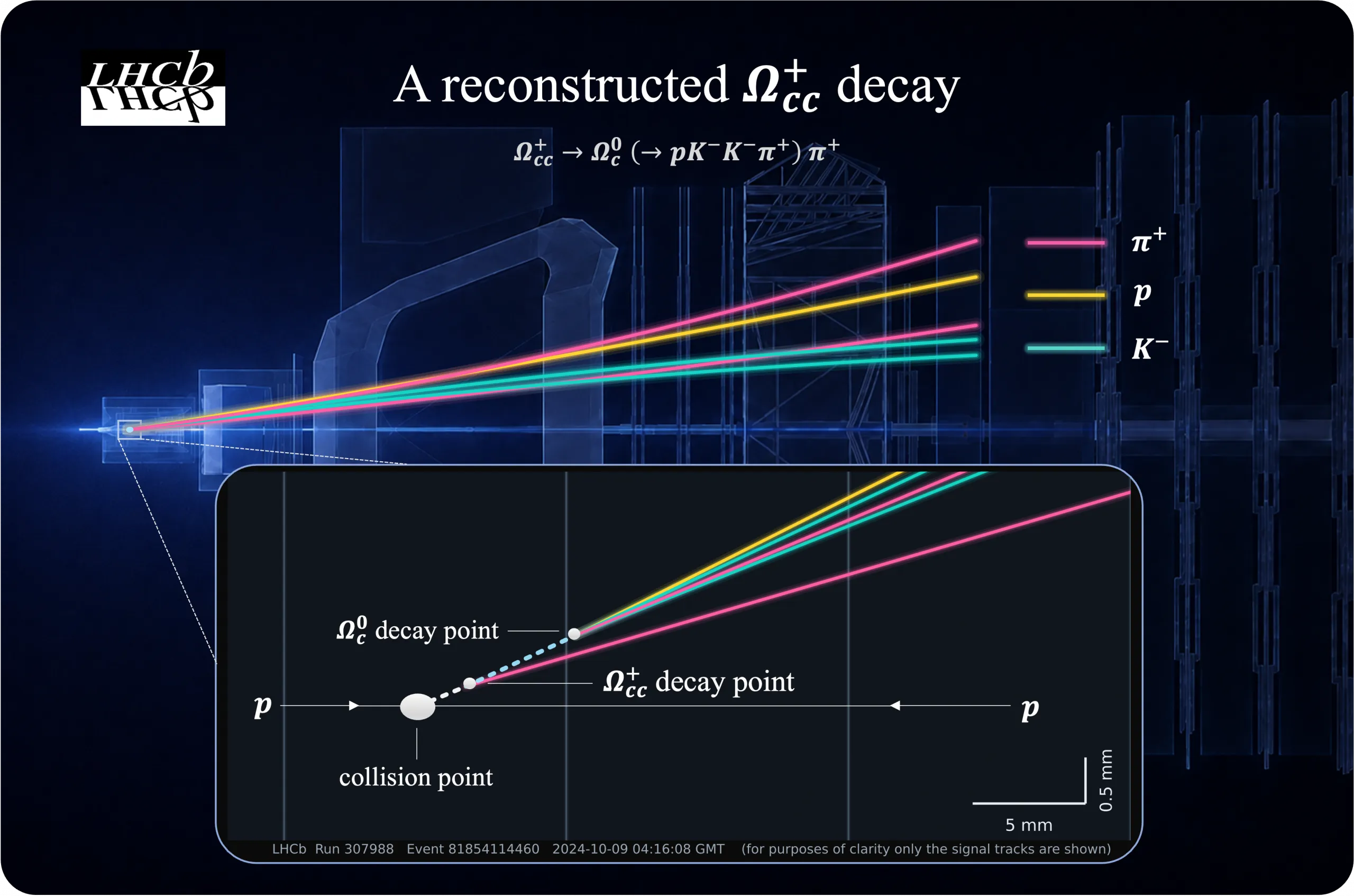
LHCb completes a long-awaited family of doubly charmed baryons
LHCb completes a long-awaited family of doubly charmed baryons More than sixty years ago, particle physics was facing a problem of abundance. New subatomic particles were appearing in experiments, but there was not yet a clear organising principle to explain their relationships. In the early 1960s, Murray Gell-Mann and Yuval Ne’eman independently proposed the “Eightfold
-
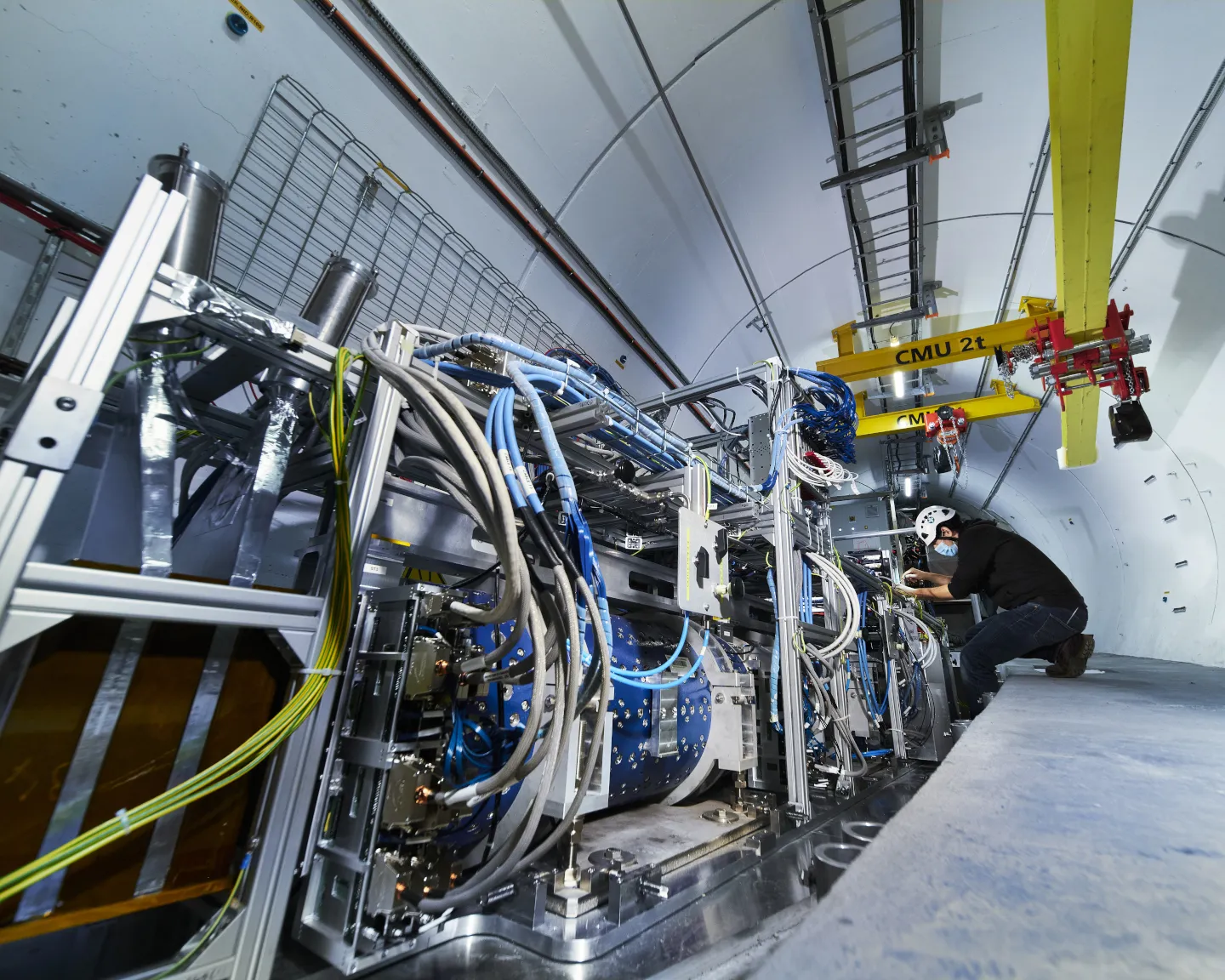
FASER opens new windows on dark sectors and TeV neutrino physics
FASER opens new windows on dark sectors and TeV neutrino physics The FASER experiment has presented a series of new results that highlight the growing breadth of its physics programme at the LHC. These include a search for dark photons with the main FASER detector, a first search for neutrino-induced charm production with FASERν, and
-
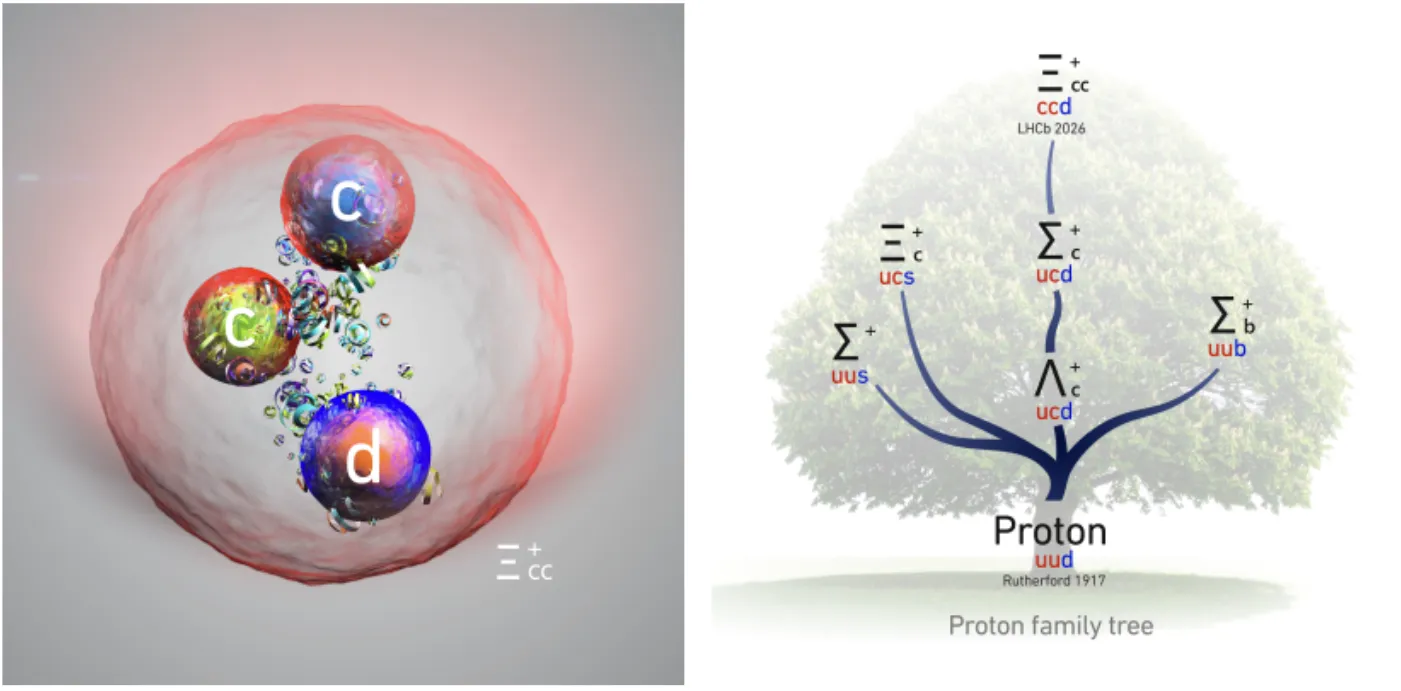
Doubly charmed baryon doublet completed with upgraded LHCb
Doubly charmed baryon doublet completed with upgraded LHCb The image on the left presents an artist’s impression of this exotic particle, while the diagram on the right shows a kind of “family tree” of the proton, illustrating how heavier relatives emerge when its quarks are replaced by strange (s), charm (c), or bottom (b) quarks.
-

ATLAS scales up AI for jet physics and reveals flavour-tagging scaling laws
ATLAS scales up AI for jet physics and reveals flavour-tagging scaling laws High Energy Physics (HEP) and Machine Learning (ML/AI) are uniquely aligned: The data recorded by particle physics experiments are so rich, heterogeneous and complicated that scientists crucially depend on advanced pattern recognition in order to extract physics results. It’s for this reason that
-

A word from the EP Department Head – Spring 2026
A word from the EP Department Head – Spring 2026 Dear Colleagues, It is my pleasure to share the first 2026 edition of the EP newsletter with you, in my new role as EP Department Head. CERN’s new management took office in January, with a revised structure of Sectors and Departments. In EP, we reorganised
-

A word from the EP Department Head – Spring 2026
A word from the EP Department Head – Spring 2026 Dear Colleagues, It is my pleasure to share the first 2026 edition of the EP newsletter with you, in my new role as EP Department Head. CERN’s new management took office in January, with a revised structure of Sectors and Departments. In EP, we reorganised