
Tag: News from the experiments
-
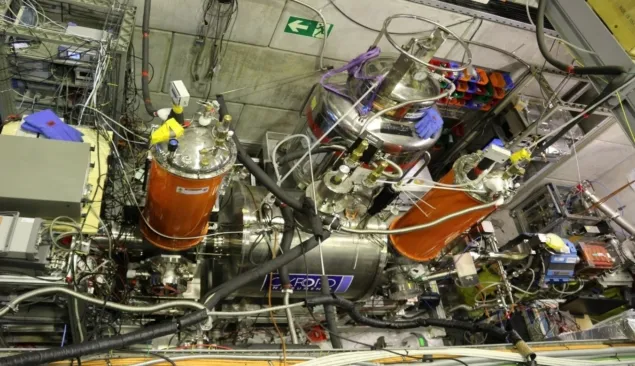
BASE develops a new technique to detect ultralight dark matter.
BASE develops a new technique to detect ultralight dark matter. In a recent work published in Physical Review Letters [1], the Baryon Antibaryon Symmetry Experiment (BASE) at CERN has placed new limits on a possible coupling between photons and hypothetical axionlike dark matter particles with masses between 2.7906-2.7914 neV. We evaluated the signals from our
-

Latest Results from the AMS on the International Space Station
Latest Results from the AMS on the International Space Station The Alpha Magnetic Spectrometer, AMS, is a particle physics detector operating on the International Space Station (Figure 1) since May 2011 with the aim to address long-standing open questions in fundamental physics, such as the matter-antimatter asymmetry, the nature of dark matter, the existence of
-
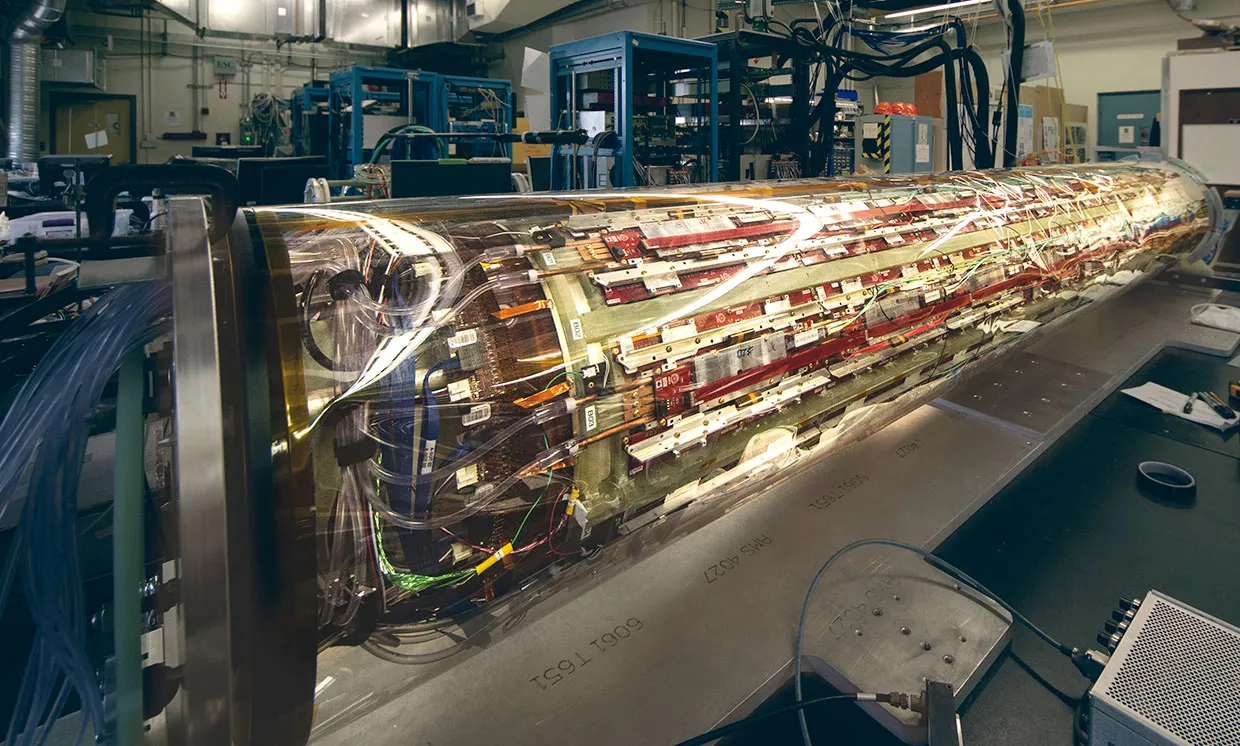
Do opposites attract? ALPHA-g prepares to explore antimatter gravity
Do opposites attract? ALPHA-g prepares to explore antimatter gravity Stuff falls down. This is the universal experience we all have with the gravitational interaction of matter on Earth. Yet one may still wonder if this holds true in the case of the most elusive stuff you can imagine dropping: antimatter. Might it be the case
-
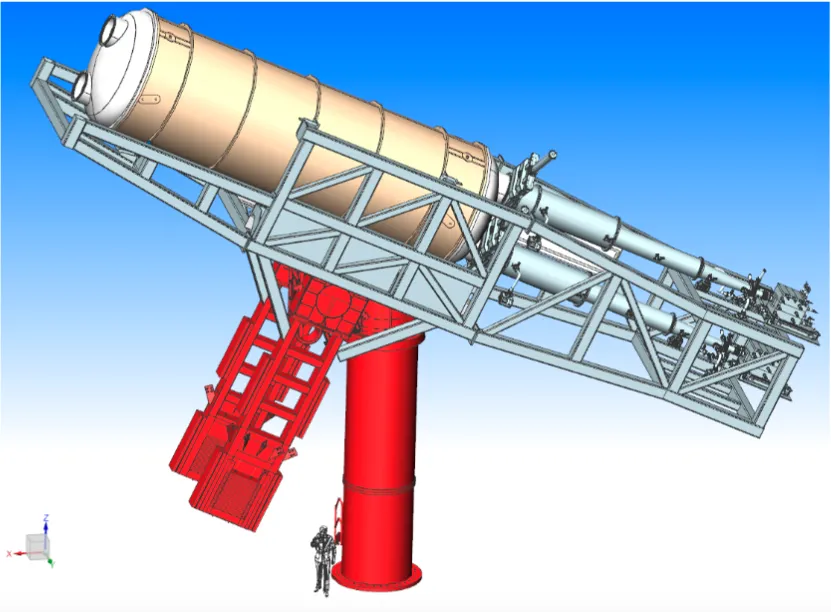
BabyIAXO submits for publication its Conceptual Design Report
BabyIAXO submits for publication its Conceptual Design Report The International Axion Observatory (IAXO) will search for axions or axion-like particles emitted by the Sun with unprecedented sensitivity. Axions are hypothetical particles that appear in extensions of the Standard Model that include the Peccei-Quinn mechanism [1–4], proposed to solve the “strong-CP problem”, or why the strong
-
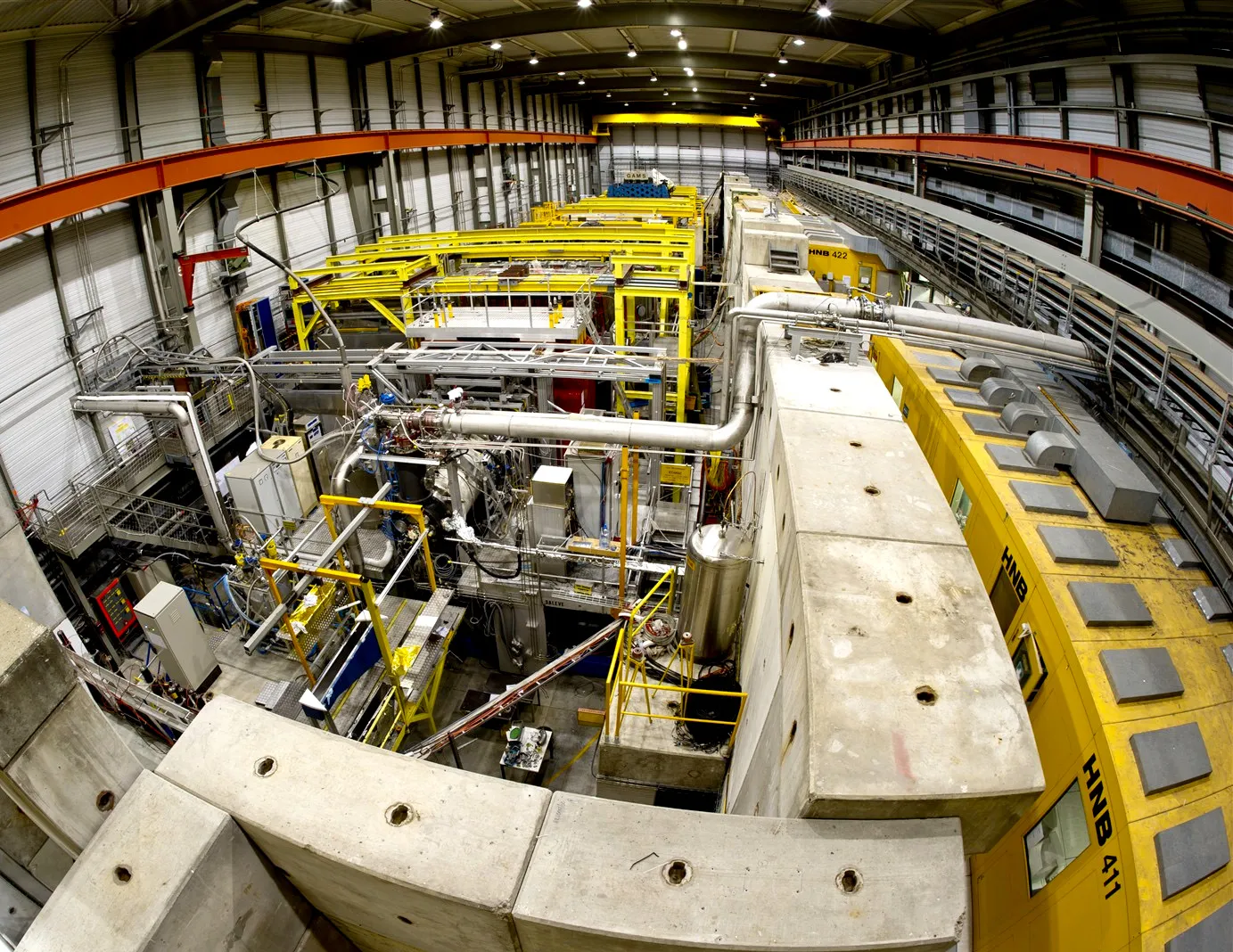
From COMPASS to AMBER: exploring fundamental properties of hadrons
From COMPASS to AMBER: exploring fundamental properties of hadrons The quest to fully understand the internal structure of hadrons, in particular the dynamics as well as the spatial and momentum distributions of their constituents – the partons -, inspired a large community of theoreticians and experimentalists to commit to the continuous development of the underlying
-
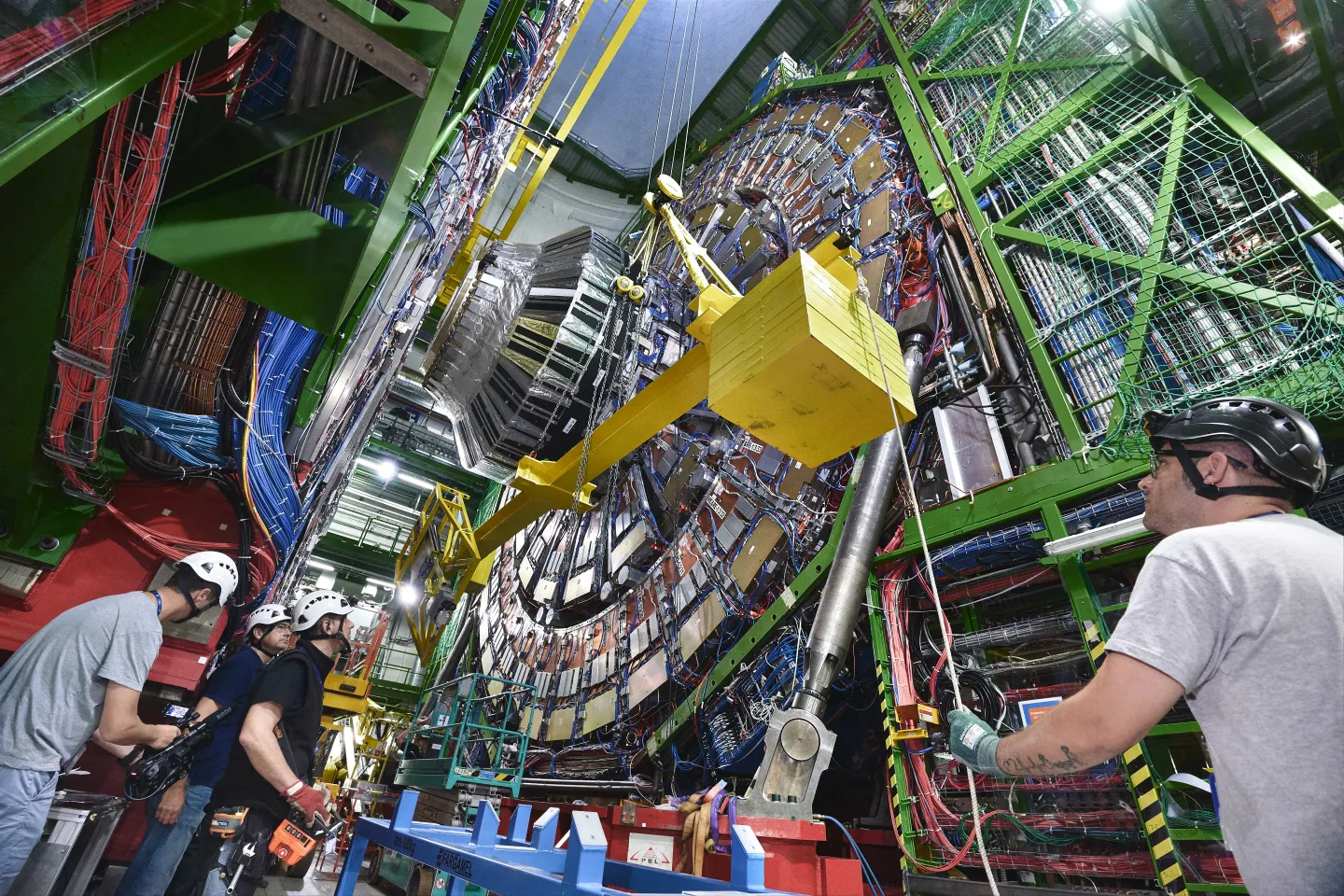
CMS GEMs are changing gear
CMS GEMs are changing gear It can be called the achievement of the year for the CMS Muon GEM group, culminating on a decade-long effort and development of knowhow. The Gas Electron Multiplier (GEM) is a Micro Pattern Gaseous Detector (MPGD) widely used in particle physics. They have been introduced into CMS by the author
-
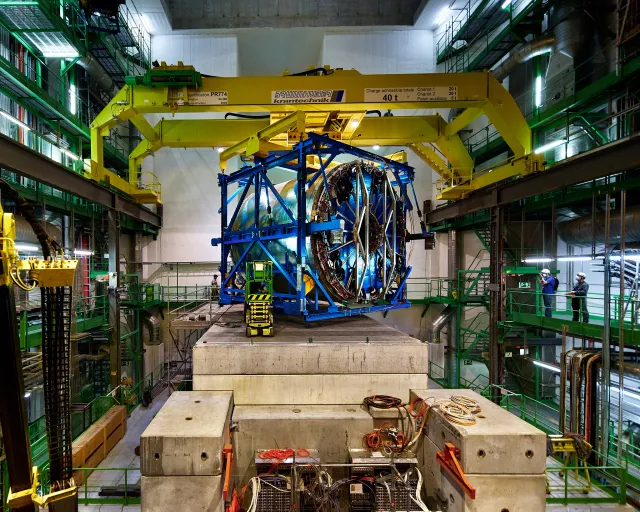
The upgraded ALICE TPC
The upgraded ALICE TPC The ALICE time projection chamber (TPC) is a big, gas-filled cylinder (with a hole in the centre to accommodate the silicon tracker), where the charge produced by ionising radiation is projected onto detectors arranged in the two endplates. Therefore, it is a true 3-dimensional tracking device which also, by recording many
-
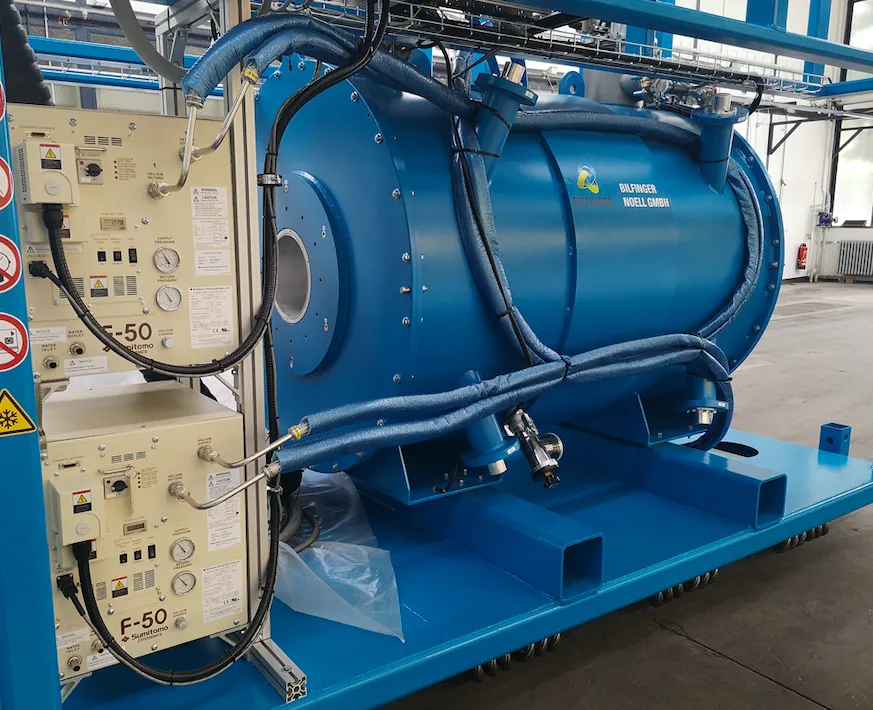
PUMA: antiprotons to probe the surface of radioactive nuclei
PUMA: antiprotons to probe the surface of radioactive nuclei Antiprotons as a probe to study short-lived isotopes remain unexploited despite past pioneering works with stable nuclei. In particular, low-energy antiprotons offer a unique prospect in terms of sensitivity to the neutron and proton densities at the annihilation site, i.e. in the tail of the nuclear
-
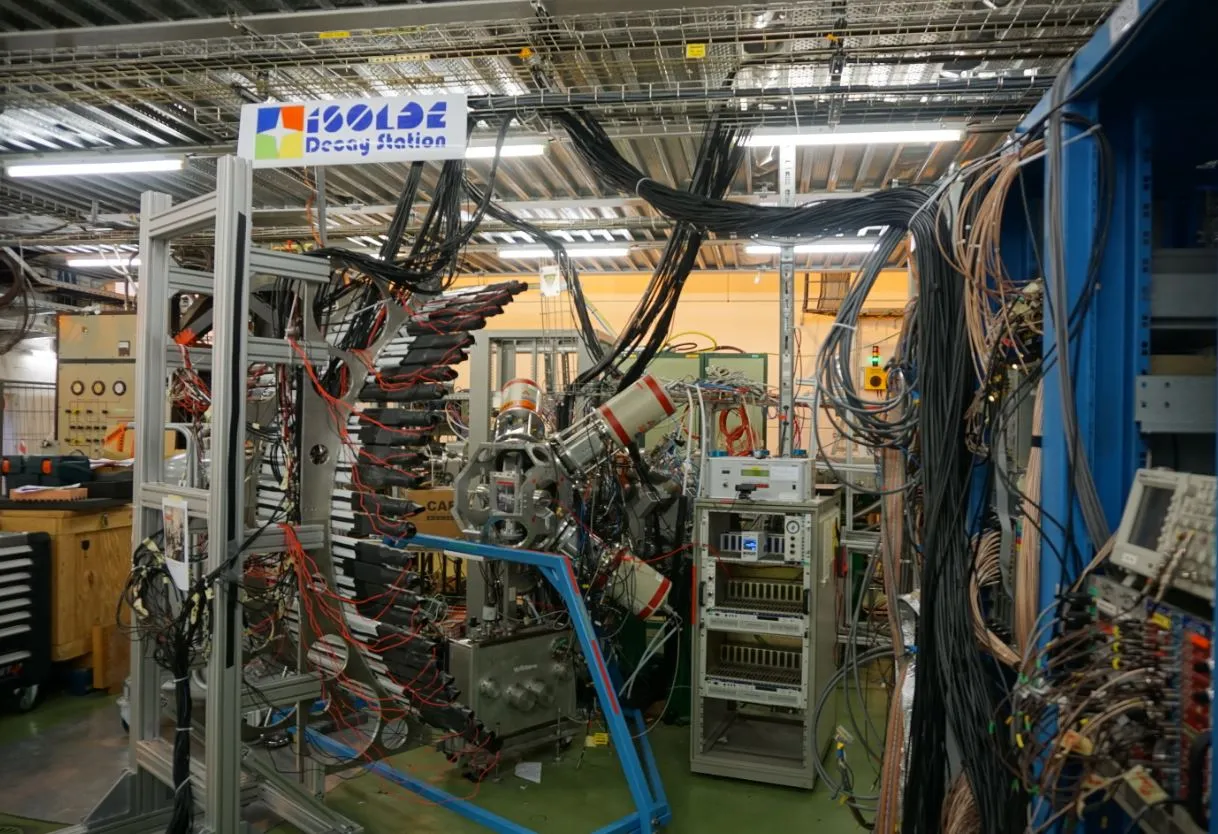
Secrets of beta decay unraveled at ISOLDE
Secrets of beta decay unraveled at ISOLDE Ernest Rutherford, in 1899, separated radioactive emissions into two types: alpha and beta. Becquerel, in 1900, measured the mass-to-charge ratio of beta particles and identified them as electrons. The theory of β decay was developed by Fermi in 1934. However, even now predicting the half-life of beta decaying
-
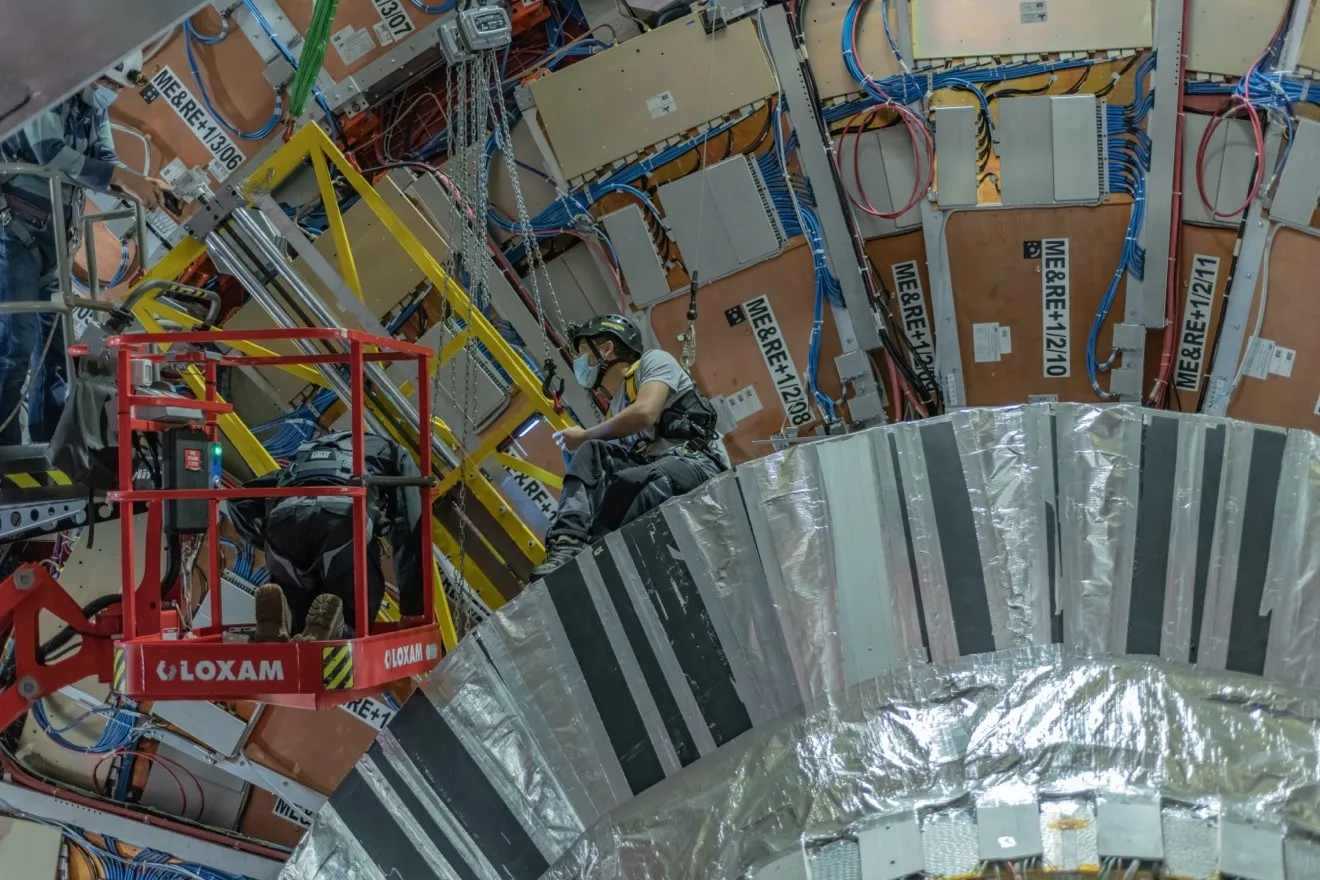
CMS restarts and continues working under Covid-19 conditions
CMS restarts and continues working under Covid-19 conditions One of the major objectives of CMS for LS2 is an early phase-2 electronics upgrade of the Cathode Strip Chambers (CSC), located on all three endcap disks, and the installation of one layer of triple Gas Electron Multiplier Chambers (GEM) on the first endcap disk. This work