
Tag: Open Science
-
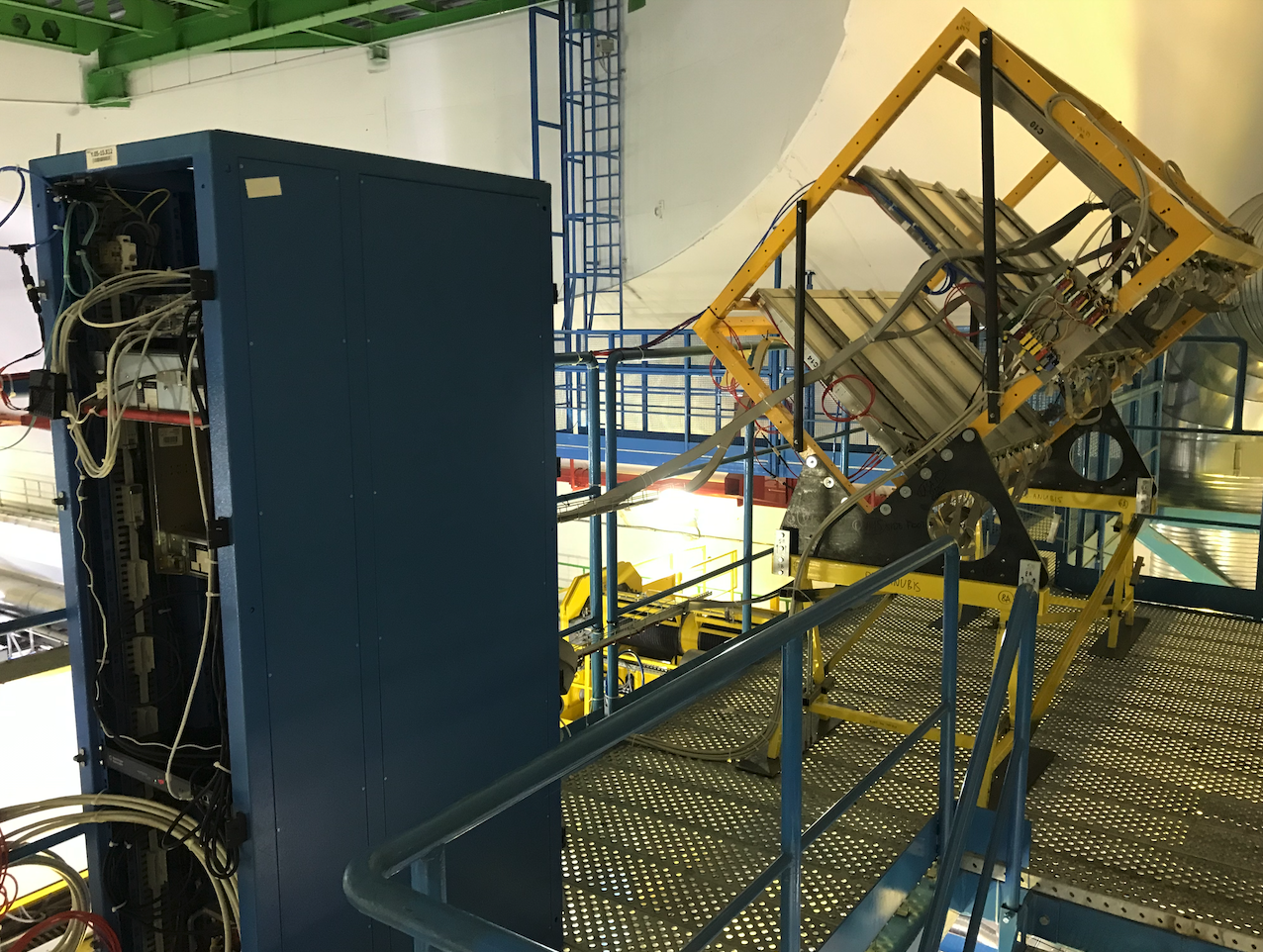
ANUBIS: from prototype to Letter of Intent
The proANUBIS demonstrator has completed data taking in the ATLAS cavern, showing that its detector technology delivers the efficiency and timing precision required to search for long-lived particles. These results strengthen the case for the full ANUBIS experiment, which would extend ATLAS’s reach into a largely unexplored region of new physics.
-
Rucio crosses the exabyte horizon
Rucio crosses the exabyte horizon When we last wrote in these pages about Rucio, ATLAS had just passed the half-exabyte mark and the community counted around thirty organisations. Six years on, a threshold that was then a distant projection has been crossed: both ATLAS and CMS, the two largest LHC experiments, now each manage more
-
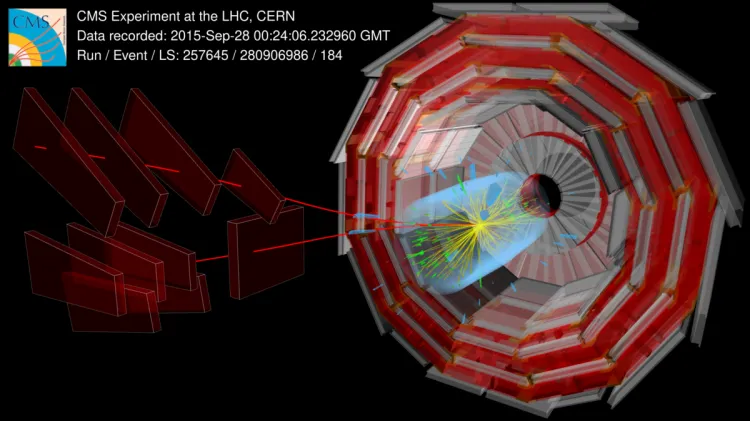
CMS Releases Extensive 13 TeV Collision Data for Open Science
CMS Releases Extensive 13 TeV Collision Data for Open Science The CMS experiment at CERN recently announced the release of 13 TeV proton-proton collision data from 2016. Over 70 TB of collision data and 830 TB of corresponding simulations are now available through the CERN Open Data Portal, marking a significant milestone in open science.
-
CERN’s new open data policy supports open science
CERN's new open data policy supports open science The four main LHC collaborations (ALICE, ATLAS, CMS and LHCb) have unanimously endorsed a new open data policy for scientific experiments at the Large Hadron Collider (LHC), which was presented to the CERN Council today. The policy commits to publicly releasing so-called level 3 scientific data, the
-
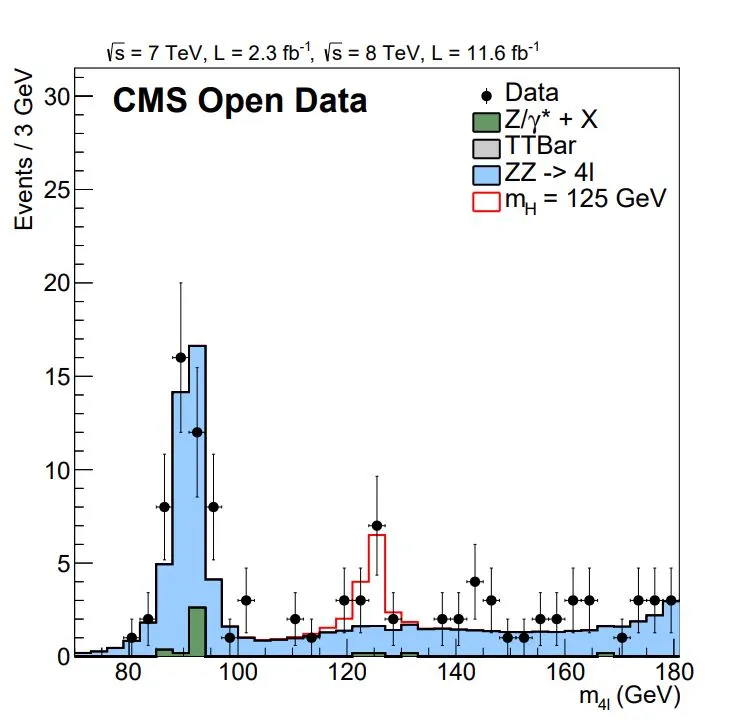
Re-discovering the Higgs boson in the Cloud
Re-discovering the Higgs boson in the Cloud It’s hard to believe that it has already been more than seven years since the discovery of the Higgs boson. Since then, numerous papers have been published by the ATLAS and CMS collaborations measuring the long-awaited particle’s properties in detail. Have you ever wondered whether one could repeat