
Tag: Standard Model
-
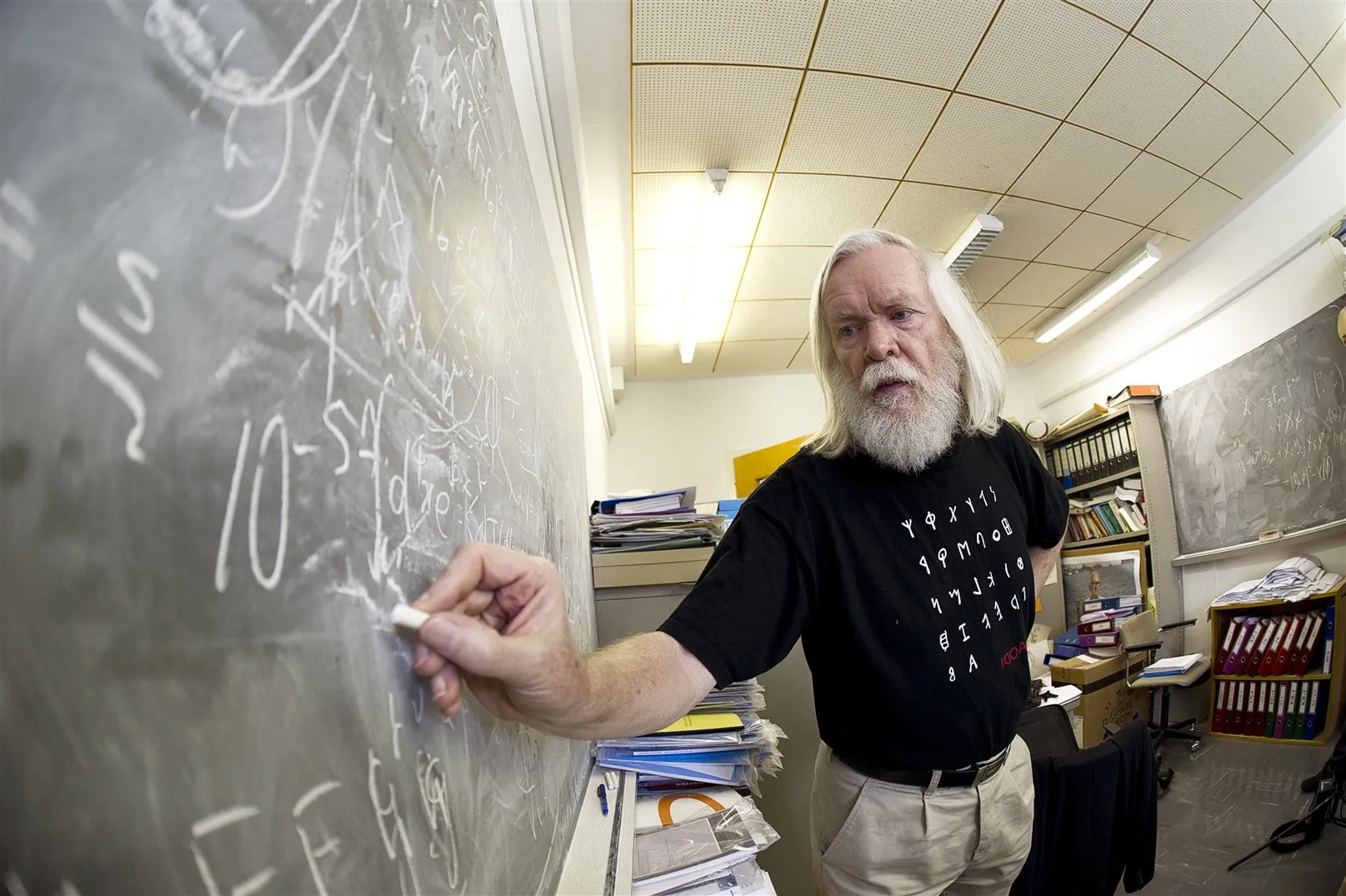
In discussion with John Ellis: The Higgs, Patience and Perseverance in Science
In discussion with John Ellis: The Higgs, Patience and Perseverance in Science by Panos Charitos For John Ellis, the history of the Higgs boson is not a neat, short story that begins with a theory paper and ends with a discovery announcement. It is a long intellectual adventure, beginning in superconductivity, moving through the construction
-
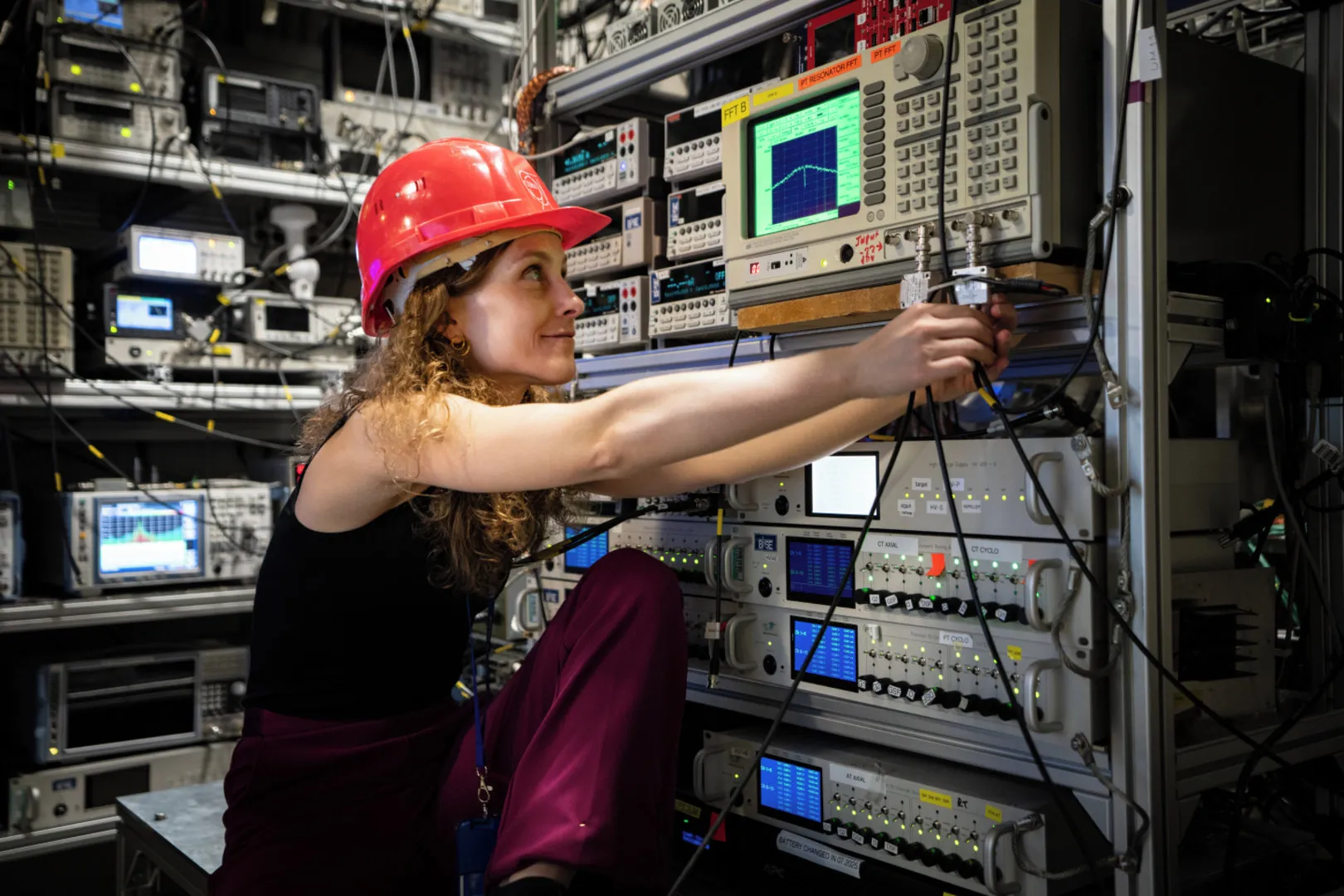
BASE experiment scientist recognised with UPAP Early Career Scientist for coherent antiproton spin spectroscopy
BASE experiment scientist recognised with UPAP Early Career Scientist for coherent antiproton spin spectroscopy Dr Barbara Maria Latacz, CERN scientist and lead author of the BASE study, works on the trap electronics used to control single antiprotons for high-precision antimatter measurements. Barbara Latacz, CERN research scientist and technical coordinator of the BASE experiment, has received
-
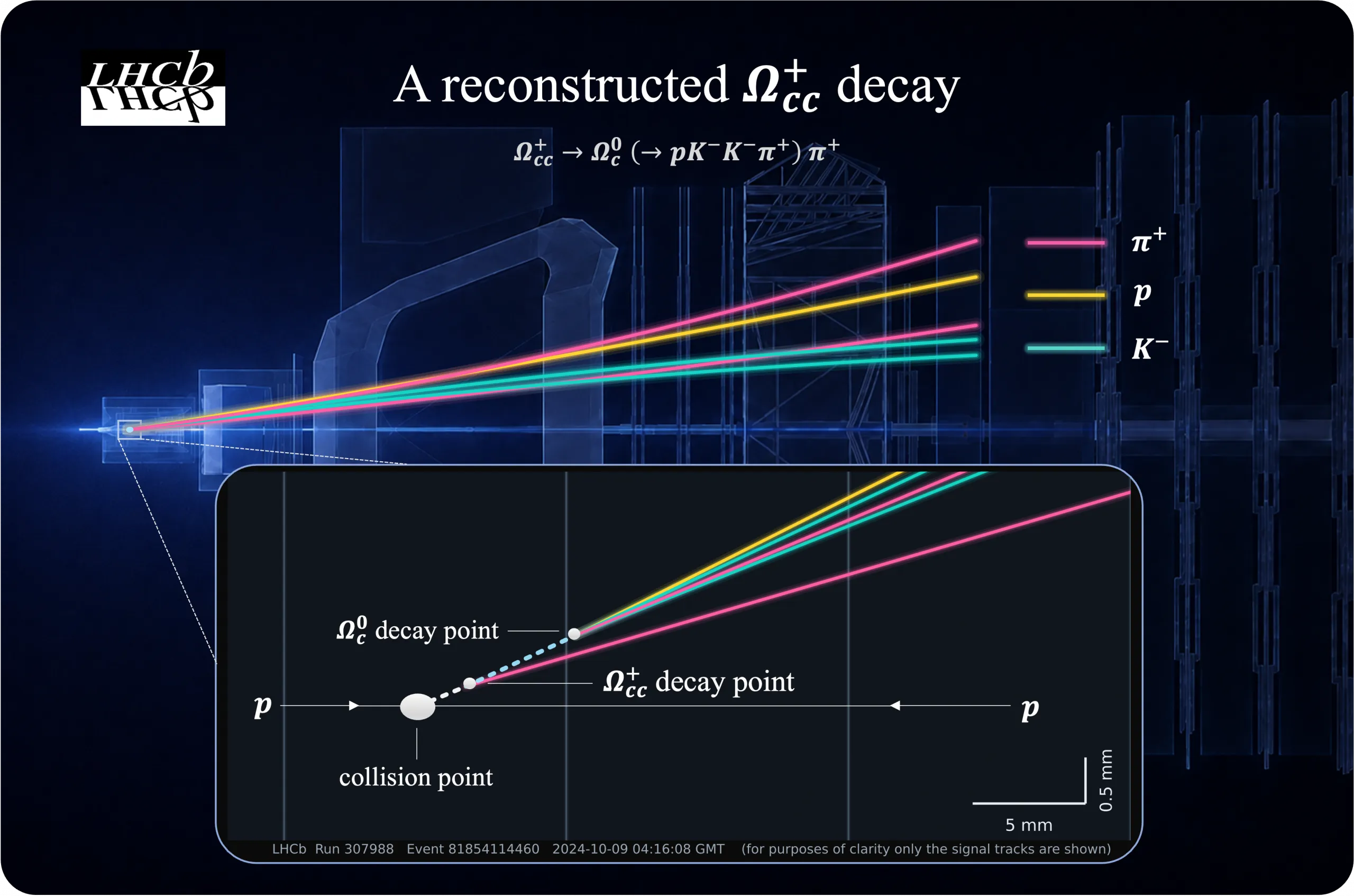
LHCb completes a long-awaited family of doubly charmed baryons
LHCb completes a long-awaited family of doubly charmed baryons More than sixty years ago, particle physics was facing a problem of abundance. New subatomic particles were appearing in experiments, but there was not yet a clear organising principle to explain their relationships. In the early 1960s, Murray Gell-Mann and Yuval Ne’eman independently proposed the “Eightfold
-
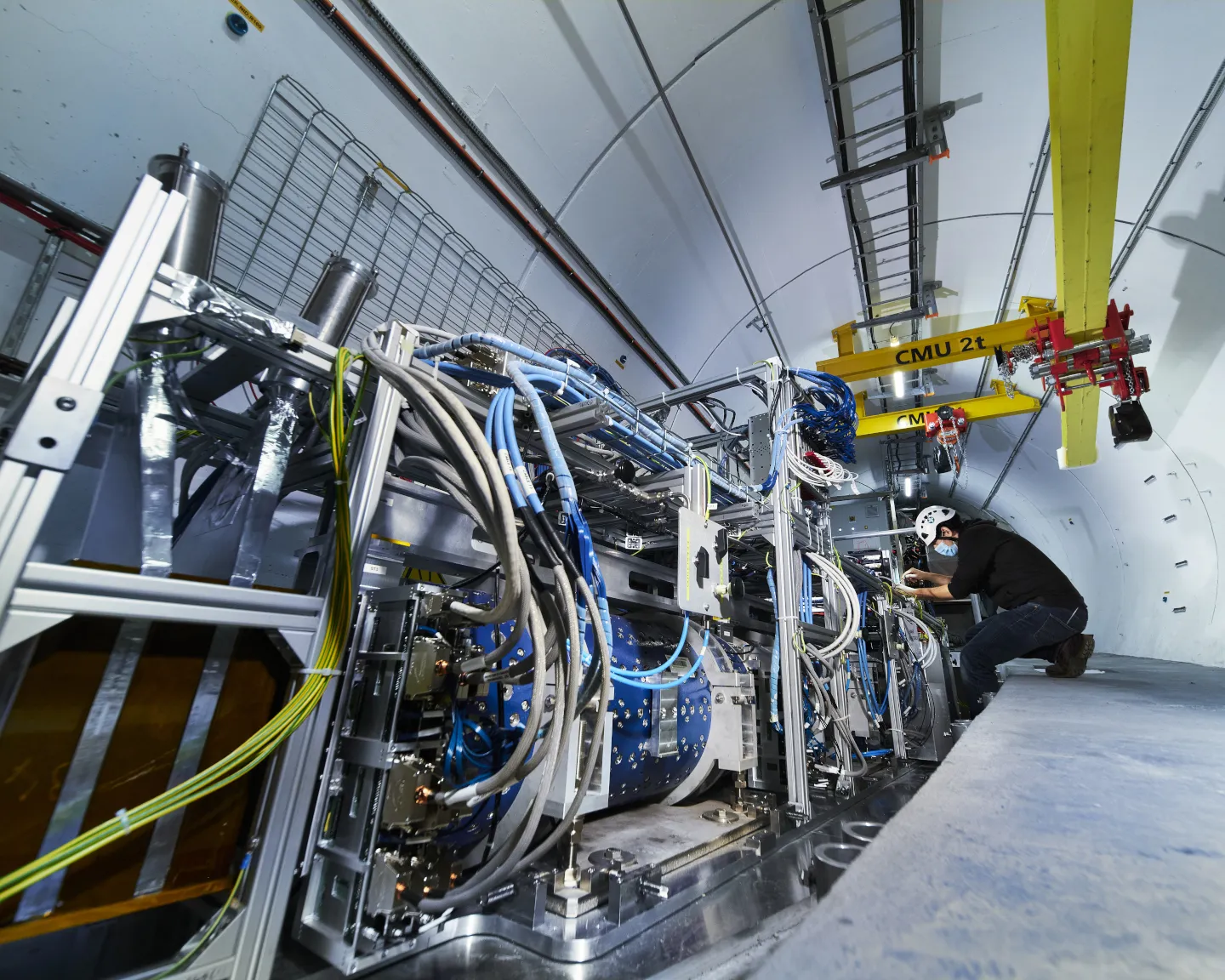
FASER opens new windows on dark sectors and TeV neutrino physics
FASER opens new windows on dark sectors and TeV neutrino physics The FASER experiment has presented a series of new results that highlight the growing breadth of its physics programme at the LHC. These include a search for dark photons with the main FASER detector, a first search for neutrino-induced charm production with FASERν, and
-
New Staff Members and Fellows
New Staff Members and Fellows Maximilian Babeluk Hi, I’m Max. I recently joined the ALICE ITS3 team, where I work on sensor testing, functional verification, and in the future also chip design – particularly on MOSAIX. My main activities include testing and yield assessment across multiple integration levels (wafer probing to system tests), including data
-
From top quarks to Higgs bosons: LHCb’s expanding jet programme
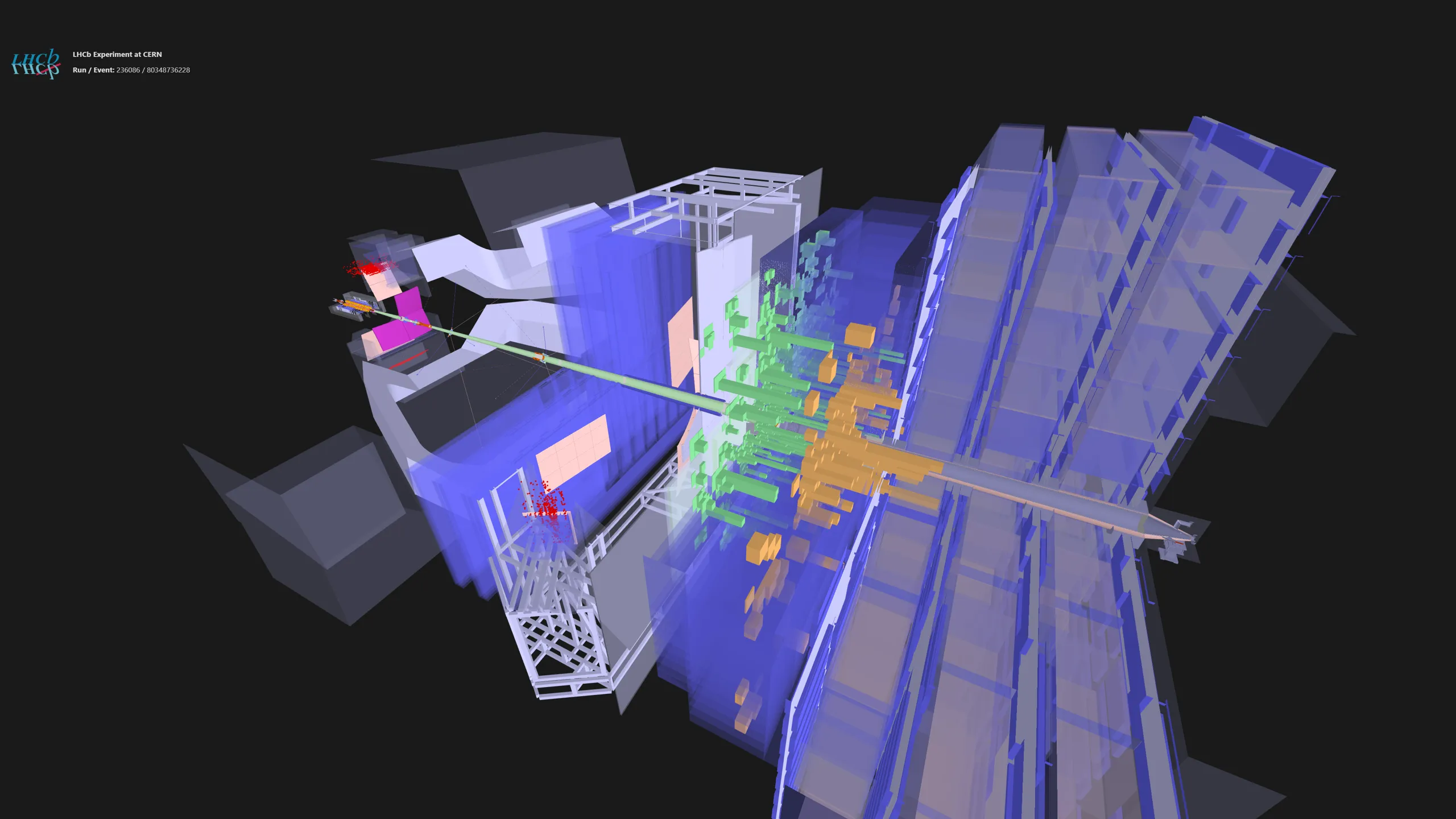
From top quarks to Higgs bosons: LHCb’s expanding jet programme Over the past decade, LHCb has steadily evolved from a detector primarily associated with heavy-flavour physics into a broader forward spectrometer able to address an increasingly diverse set of questions in Standard Model and beyond-the-Standard-Model physics. Two recent papers illustrate that evolution particularly well. One
-
LHCb in the hunt of tetraquarks
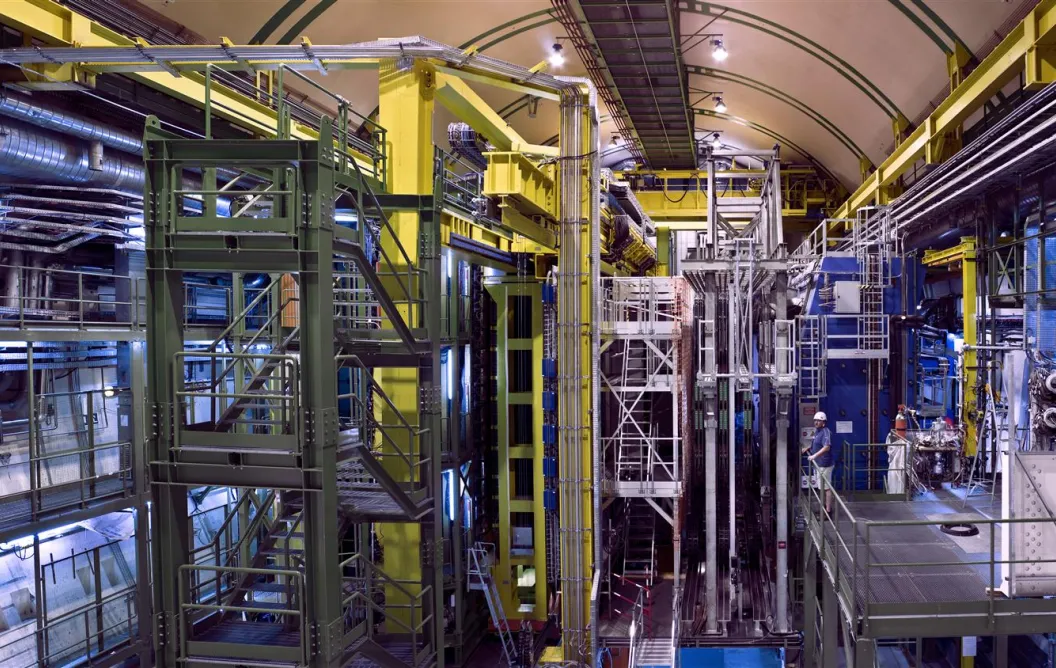
LHCb in the hunt of tetraquarks In 2003, the Belle collaboration reported the observation of an unexpected new particle, showing up in the mass spectrum of J/ψ π π candidated. Its mass was somewhat close to the value expected for the yet unobserved χc1(2P) charmonium, but its width was extremely narrow and completely dominated by
-
CERN experiments find first evidence for rare Higgs boson decay
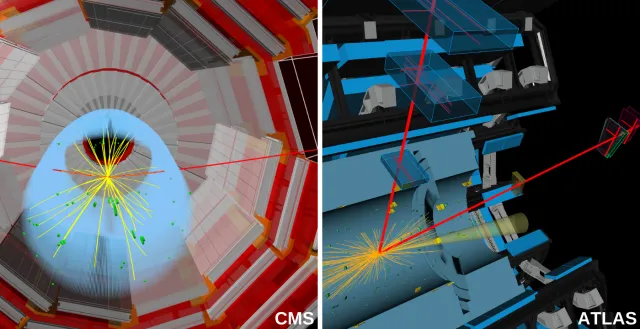
CERN experiments find first evidence for rare Higgs boson decay The strength of the interaction between the Higgs field and a particle determines the mass it obtains from the Higgs and it is a mystery why the interaction strength is different for different particles. This puzzle is exacerbated as the leptons, quarks and neutrinos appear
-
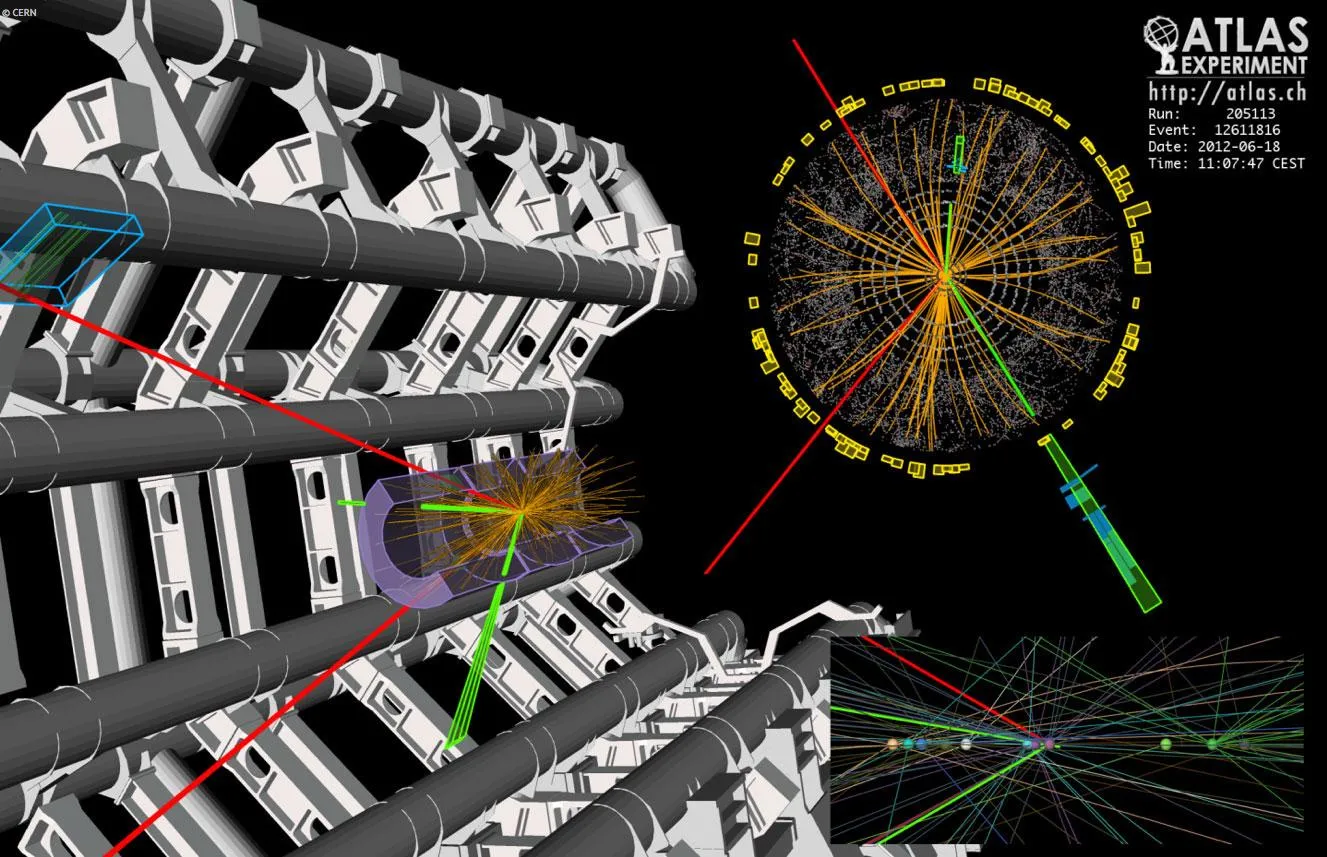
ATLAS presents a strategy for a general search of new physics
ATLAS presents a strategy for a general search of new physics One of the main goals of the Large Hadron Collider is to look for signals beyond the Standard Model (the other major goal has already been fulfilled with the discovery of the Higgs boson). To this day scientists are still lacking clues. Could it