
ANUBIS: From prototype to Letter of Intent
by Oleg Brandt (University of Cambridge, UK), Cayetano Fernandez Ruiz (University of Cambridge, UK), and Michael Revering (University of Cambridge, UK) for the ANUBIS Collaboration
The arrival of a god is traditionally announced by a prophet. ANUBIS sent a prototype. With proANUBIS data taking in the ATLAS cavern now concluded and its first performance results public, the ANUBIS collaboration achieved a crucial milestone: an in-situ demonstration, with beam, that the technology proposed for a ceiling-mounted long-lived particle detector does what is asked of it.
The incompleteness of the Standard Model is not in dispute; the absence of experimental evidence for new particles at colliders is. One explanation is that whatever we are looking for is too rare to have shown up yet — a problem the HL-LHC will attack with luminosity. Another is that it is too heavy, which is an argument for the FCC-hh or another higher-energy machine. The third possibility is more awkward: the particles may be produced in abundance but live too long to decay inside the existing detectors. A neutral particle that travels tens of metres before decaying leaves no visible signal in a detector designed for prompt physics, and no approved project is equipped to catch such particles produced at the electroweak scale and above.
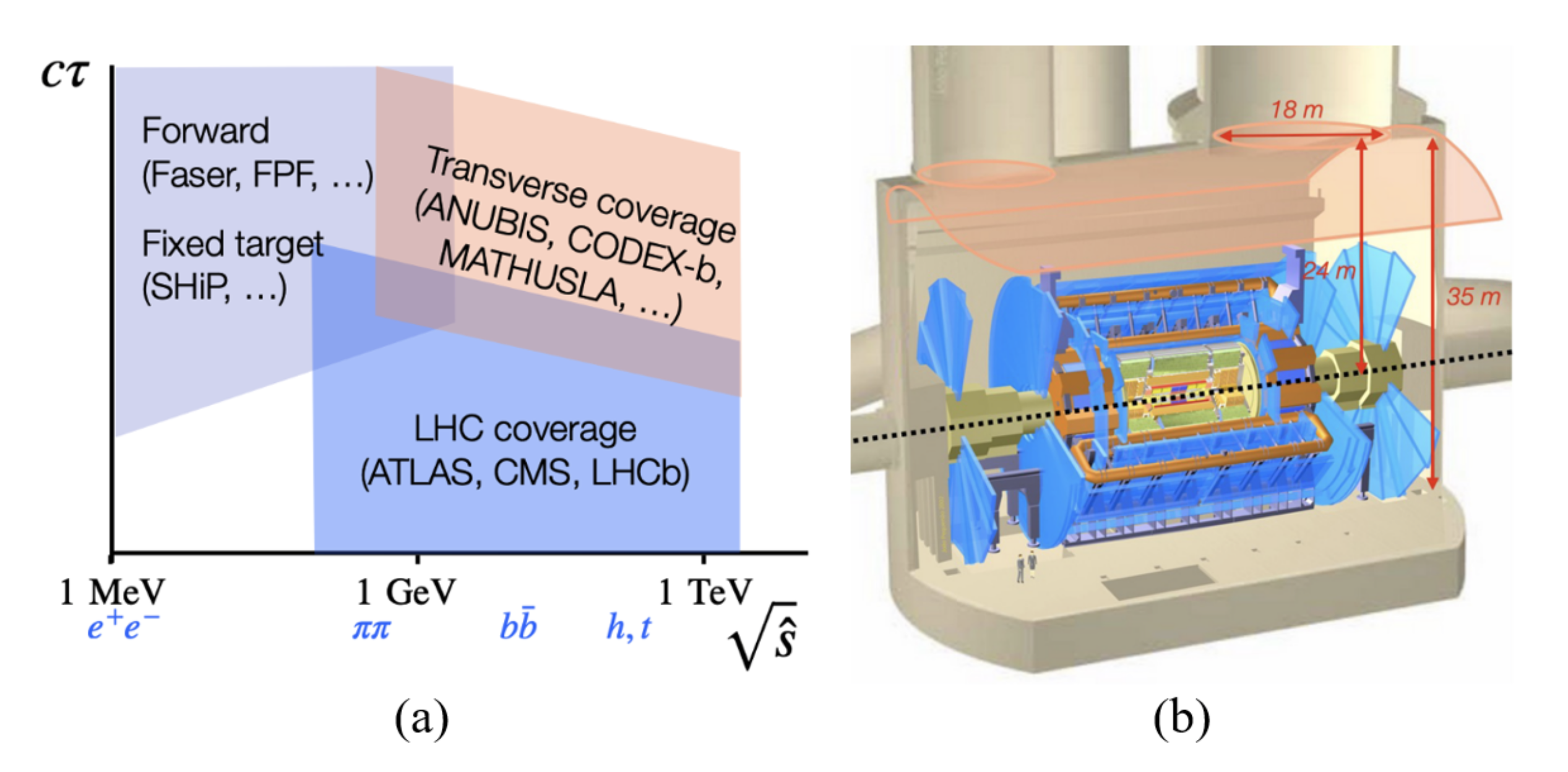
Several dedicated experiments have been proposed at the LHC to search for such long-lived particles (LLP). These can be grouped into two complementary categories: forward experiments that can probe LLPs produced at energy scales up to a few GeV, and transverse experiments capable of probing LLP production at the electroweak scale and above (Fig 1a). Among the transverse experiments, the ANUBIS detector concept foresees instrumenting the cavern ceiling with Resistive Plate Chambers (RPCs), radially extending ATLAS’s effective decay volume by more than 20 m (Fig 1b). The relationship with ATLAS would be symbiotic rather than parasitic: ANUBIS can use ATLAS information to identify and reject backgrounds and probe for LLP models, while ATLAS could use ANUBIS as an additional triggering, tracking, and timing layer. A fuller description of the detector concept [1] was featured in an earlier EP Newsletter article [2].
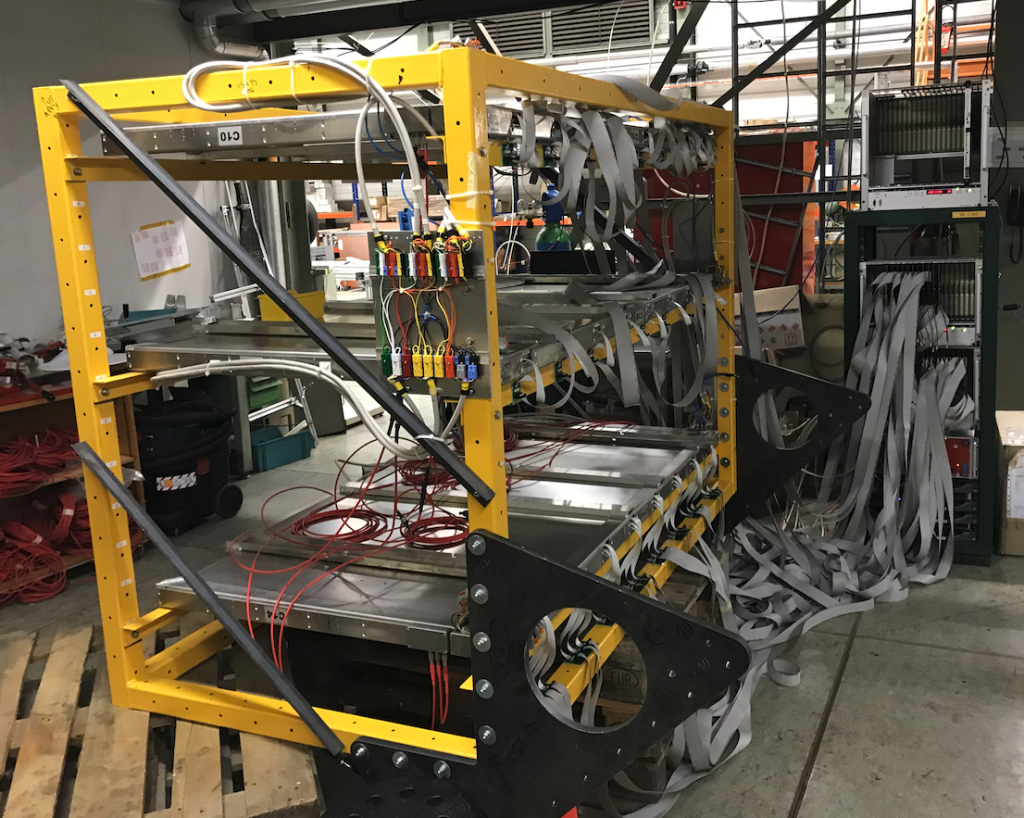
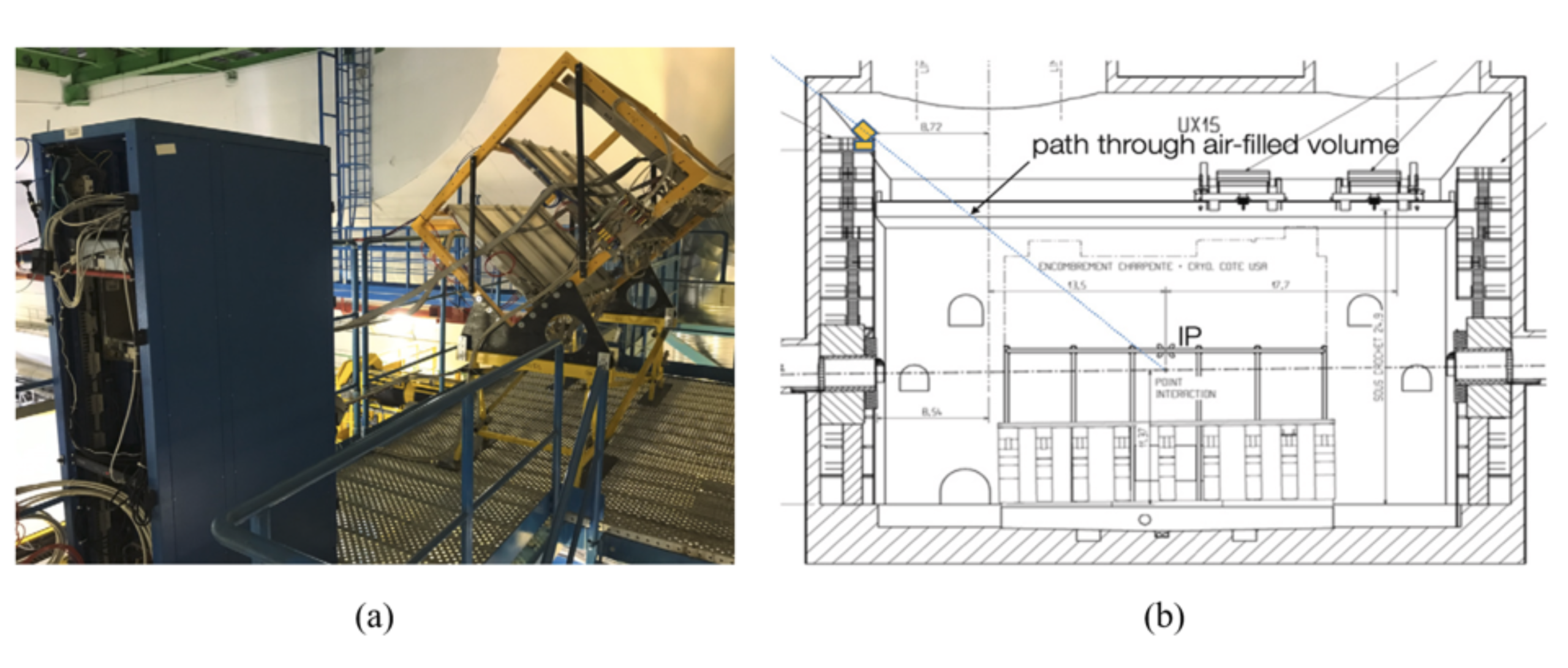
The proANUBIS demonstrator (Fig 2a) was constructed [3], installed and commissioned [4] in the ATLAS cavern in 2024, both as a single example of the unit modules that would make up the full experiment and as a way of measuring the cavern backgrounds directly. It comprises six RPCs arranged in three layers, in a triplet–singlet–doublet arrangement. Each chamber is read out by strips in two orthogonal directions, φ and η. These register the position and time at which a charged particle crosses them and feed that signal into a data acquisition system composed of a dedicated hardware trigger and time-to-digital converters synchronised with the LHC clock.
The prototype was positioned on the top floor of the scaffolding beside ATLAS, pointing at the interaction point — as close to the proposed ANUBIS position as one can get without being in the ceiling (Fig 2b).
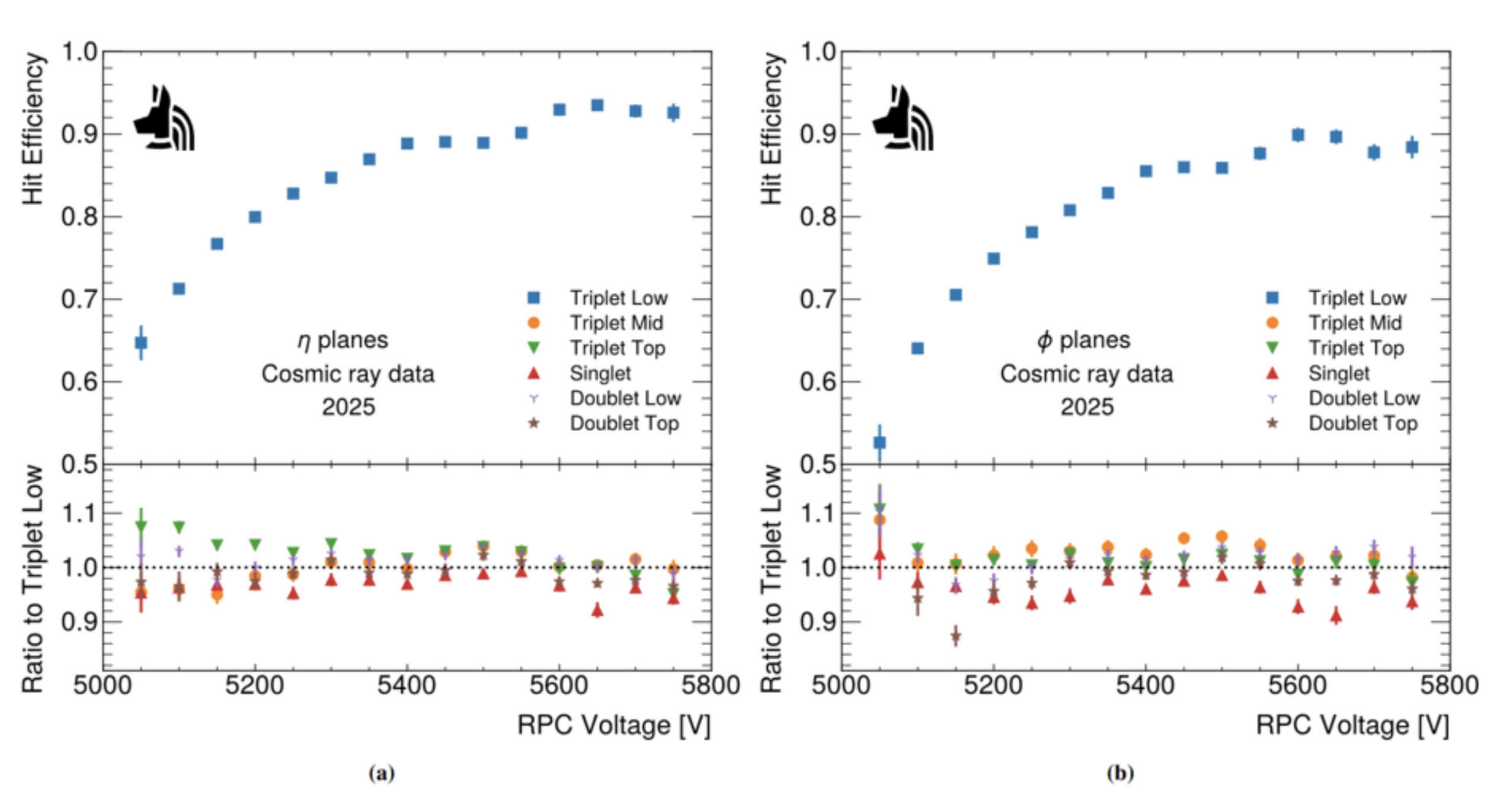
Data taking with proANUBIS concluded in late 2025 with 177 fb⁻¹ recorded. The first public results, a calibration and performance paper [5], show that proANUBIS reaches the precision required for ANUBIS physics analyses. Individual RPC efficiencies exceed 85% (Fig 3), which for the three-chamber modules planned for ANUBIS translates to better than 99% per module. The measured time resolution is approximately 350 ps, and further studies indicate that 280 ps is within reach with additional calibration. The results were shared with the community at the LLP 2026 workshop in Cambridge, covered in another article [6] of this EP Newsletter, where the timing result is prominently featured.
.
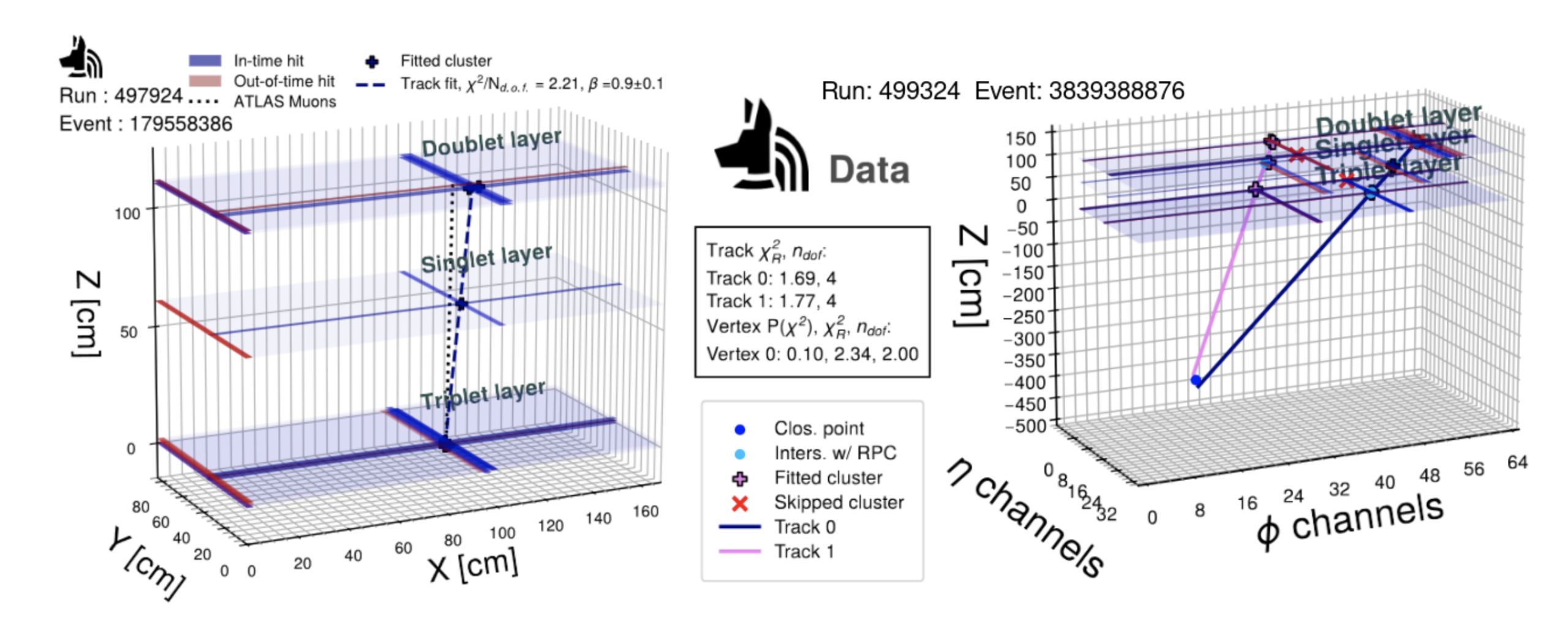
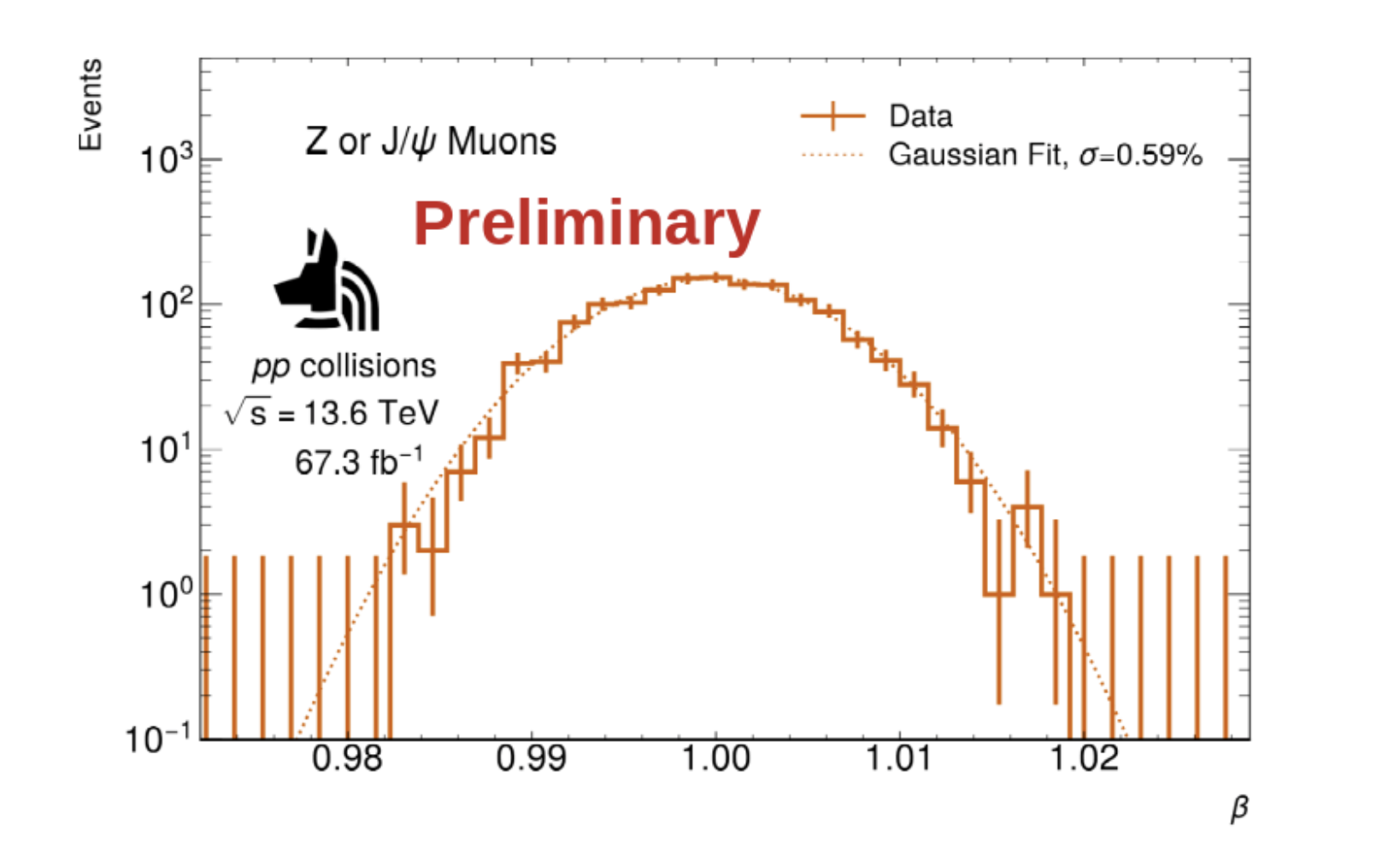
A second set of proANUBIS results will be released shortly. It combines proANUBIS data with ATLAS data to show the symbiotic potential of the two experiments. This is made possible by an ATLAS Open Data release created for this purpose [7]. Notably, proANUBIS events have been successfully synchronised with ATLAS events. This allows for combining ATLAS muons and hadrons with tracks registered by proANUBIS. Their correlation is/can be studied in several ways, such as calculating the distance between the projected ATLAS muon track and the proANUBIS muon track (Fig 4a), reconstructing vertices of several tracks (Fig 4b), or precisely measuring the velocity of muons using information from both detectors (Fig 5).
In parallel, the Collaboration has been refining its sensitivity projections for the full ANUBIS experiment, starting from the quantity everything else depends on: the background. The dominant contribution comes from energetic SM LLPs – KL and neutrons – interacting hadronically with air molecules in the ANUBIS decay volume to produce displaced vertices. The background is determined through a data-driven projection — the observed rate of displaced vertices in the ATLAS muon spectrometer is extrapolated to ANUBIS, accounting for the relative size of the two detectors, the difference in material composition, luminosity, and possible differences in vertex reconstruction efficiency [8]. This yields a deliberately conservative estimate of at most 182 ± 12 background events over the full HL-LHC dataset.
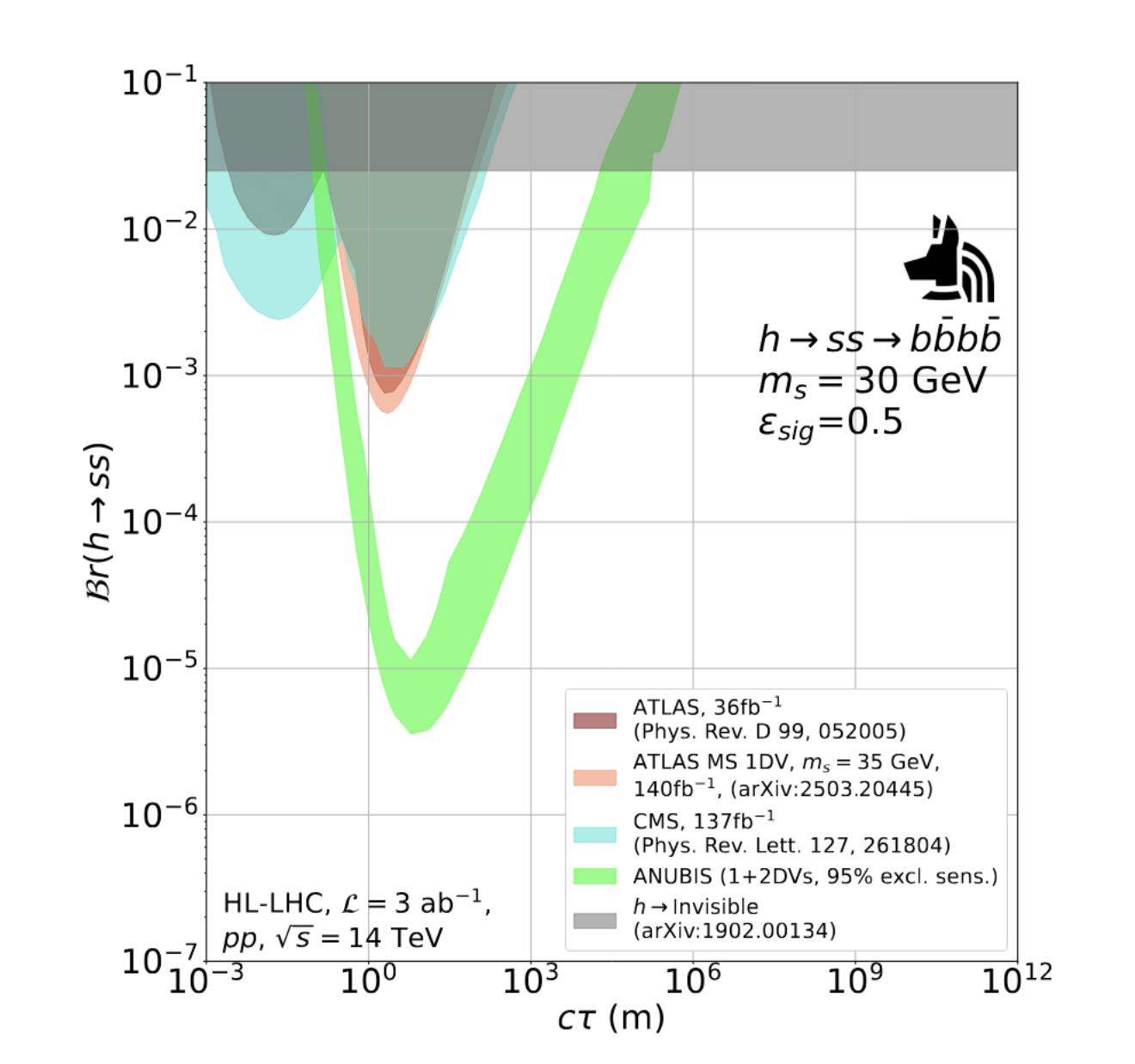
With this background prediction, sensitivities have been computed for the benchmark models defined by the Physics Beyond Colliders (PBC) working group, allowing direct comparison with other proposed experiments and existing limits. The landmark ANUBIS result is for Benchmark Case 5 (BC5), in which neutral LLPs are pair-produced via the 125 GeV Higgs boson [8]. Given how conservative the background estimate is, the projection is shown as a band spanning the full-background and background-free limits, providing unique sensitivity beyond existing and approved detectors (Fig 6).
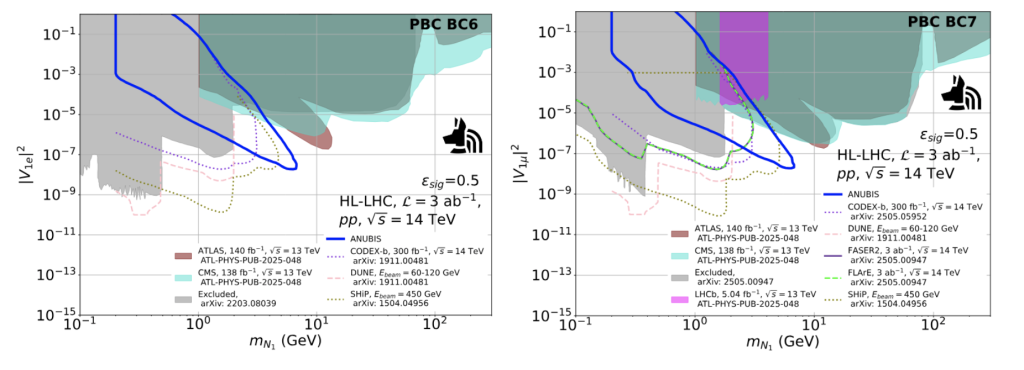
A second projection covers heavy neutral leptons (HNL) in the minimal Majorana model (PBC BC6–BC7) [9]. The production modes ANUBIS is sensitive to are principally Drell-Yan and Wγ fusion. HNLs produced in association with mesons are largely lost to the isolation requirement imposed to suppress background from SM LLPs in punch-through jets; this production mode should be recoverable in detailed studies beyond the selections driven by the data-driven estimate. Its large active volume and proximity to the interaction point put ANUBIS in a good position to probe the high-mass, small-coupling corner, complementing experiments that reach lower masses or larger couplings (Fig 7). Projections for axion-like particles (ALP) are also underway, where ALPs are produced alongside a prompt lepton visible in ATLAS offering a handle for both triggering and further background reduction. The modular simulation framework SET-ANUBIS used to derive the aforementioned results was recently made public and documented in a paper [10], inviting new collaboration on sensitivity analysis of ANUBIS.
The ANUBIS Collaboration is currently preparing its Letter of Intent, to be completed ahead of the Physics Beyond Colliders Roadmap Workshop on 2-4 December [11]. Interested institutes are warmly invited to join the Letter of Intent (for more information, please reach out to anubis-mgt@cern.ch), provided their involvement would not conflict with existing commitments to the Phase-2 ATLAS detector upgrade programme.
References
[1] M. Bauer, O. Brandt, L. Lee, and C. Ohm, Proposal to search for long-lived neutral particles in CERN service shafts, accepted by APS Open Science Gold, 1909.13022 (2026).
[2] EP Newsletter article: ANUBIS: a guide into the dark sector.
[3] G. Aielli, O. Brandt, J. Burr, O. Kortner, H. Kroha, C. Lester, L. Pizzimento, L. Pontecorvo, M. Revering, T. P. Satterthwaite, A. Shah, D. Soyk, P. Swallow (for the ANUBIS collaboration), Construction of proANUBIS: A proof-of-concept detector for the ANUBIS experiment, Nucl. Instrum. Meth. A. 1091 (2026) 171687,2512.13926 (2025).
[4] G. Aielli, O. Brandt, P. Collins, L. Dartmoor Corpe, J. Dej, O. Kortner, H. Kroha, C. Lester, L. Pizzimento, L. Pontecorvo, M. Revering, A. Shah, D. Soyk, P. Swallow, Y. Wan (for the ANUBIS Collaboration), Commissioning of proANUBIS: A proof-of-concept detector for the ANUBIS experiment, Nucl. Instrum. Meth. A. 1089 (2026) 171501,2512.18414 (2025).
[5] G. Aielli, O. Brandt, J. Burling, P. Collins, J. Dej, C. Fernandez Ruiz, C. Lester, K. Liu, L. Pizzimento, L. Pontecorvo, T. Reymermier, M. Revering, A. Shah, T. Spencer, P. Swallow (for the ANUBIS collaboration), Calibration and Performance of proANUBIS: A proof-of-concept detector for the ANUBIS experiment, accepted by Nucl. Instrum. Meth. A, 2606.26856 (2026).
[6] Designing for the unusual: LLP2026 and the lifetime frontier, https://ep-news.web.cern.ch/designing-for-the-unusual-llp2026-and-the-lifetime-frontier/
[7] ATLAS Collaboration, ATLAS proANUBIS calibration data set, https://opendata.cern.ch/record/atlas-93943 (2026).
[8] T. Adolphus et al (for the ANUBIS Collaboration), The ANUBIS detector and its sensitivity to neutral long-lived particles (PBC BC5 scenario), accepted by Phys. Rev. D 2510.26932 (2025).
[9] M. Bauer, R. Bentham, S. N. Erner, A. Mullin, D. Peng, T. Reymermier, P. N. Swallow (for the ANUBIS Collaboration), Projected sensitivity of the ANUBIS detector to heavy neutral leptons, 2606.26862 (PBC BC6 & BC7 scenarios), accepted by Eur. Phys. J C (2026).
[10] S. N. Erner, A. Mullin, T. Reymermier, P. N. Swallow, O. Brandt (for the ANUBIS Collaboration), SET-ANUBIS: a modular pipeline for ANUBIS long-lived particle sensitivity studies, 2607.26112, subm. to Comp. Phys. Comm. (2026).
[11] 2026 Physics Beyond Colliders and Non-Collider Physics Roadmap Workshop, 2-4 December 2026, https://indico.cern.ch/event/1687237/.