
Category: Newsletter
-
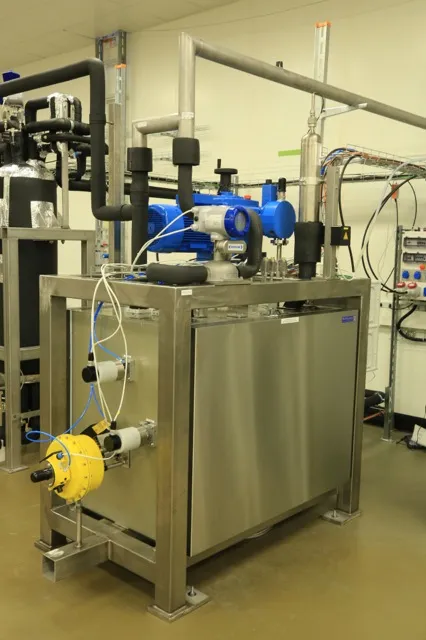
The CMS PIX Phase I upgrade CO2 cooling: a full scale prototype ready for tests
The CMS PIX Phase I upgrade CO2 cooling: a full scale prototype ready for tests Low temperature cooling systems using evaporative Carbon Dioxide (CO2) have been used for particle detectors since 2000 by the Silicon Tracker of the AMS02 experiment at the ISS (International Space Station) and for the VELO vertex detector of the LHCb
-
TOTEM: Moving Forward Through Consolidation and Upgrade
TOTEM: Moving Forward Through Consolidation and Upgrade Building on the rich experience gathered during its very successful pre-LS1 operation that has already produced 9 publications (with more being in preparation), TOTEM profits from the two-year-long LHC break to start strengthening its very-forward Roman Pot (RP) detector system, creating a leading-proton spectrometer with unprecedented performance and
-
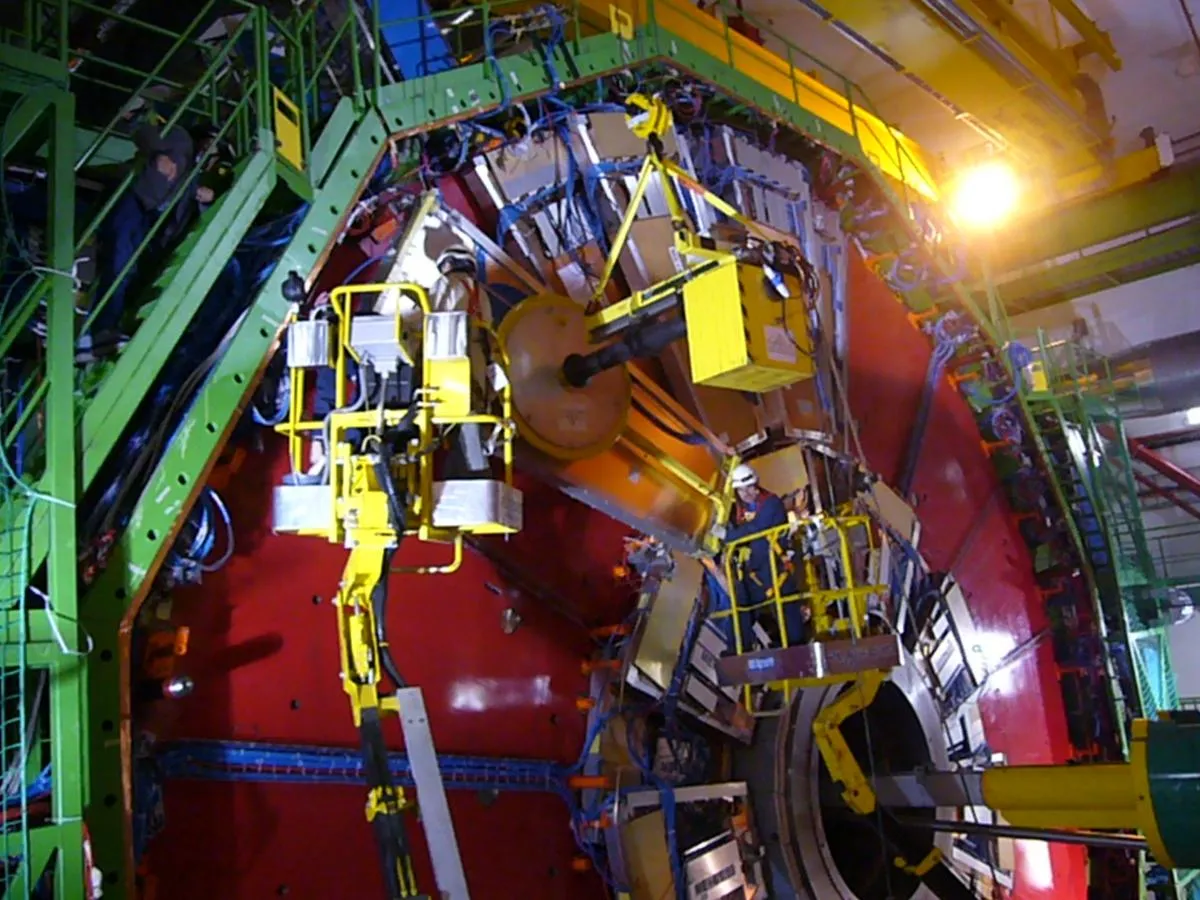
CMS – Highlights and Perspectives from UXC55
CMS – Highlights and Perspectives from UXC55 A very busy year of shutdown activities comes to an end, bringing us to the half-way-point of LS1. The most visible change of CMS is an additional fourth shielding disk on the +z end (pointing towards the Jura) of the detector, which is currently parked at the head
-
LS1: A special opportunity for LHCb
LS1: A special opportunity for LHCb An unforgettable first act is drawing to an end for LHCb: incredibly productive data taking during LHC run 1, followed by a long shutdown (LS1), packed full with many tasks and at the same time ever increasing activity on the upgrade of the experiment… LHCb operated with great success
-
Interview with George Zweig
Interview with George Zweig “Art is not merely an imitation of nature. Art is about creation. Art is creating the world. For the Arts, Nature is a nebula and the true challenge is to create its stars.” G.Seferis, 1926 Earlier this autumn, George Zweig, father of Aces, visited CERN to give a Colloquium titled “Concrete
-
Interview with Philippe Bloch
Interview with Philippe Bloch Philippe Bloch has stepped aside after five years as Head of the PH Department in order to return to CMS and continue his research work. He achieved to combine successfully fundamental research work with an administrative position. In this interview, we discuss his first steps in particle physics, when forty years
-
CAST opens a new window into dark energy and dark matter after 11 years of operation and continuous renewal.
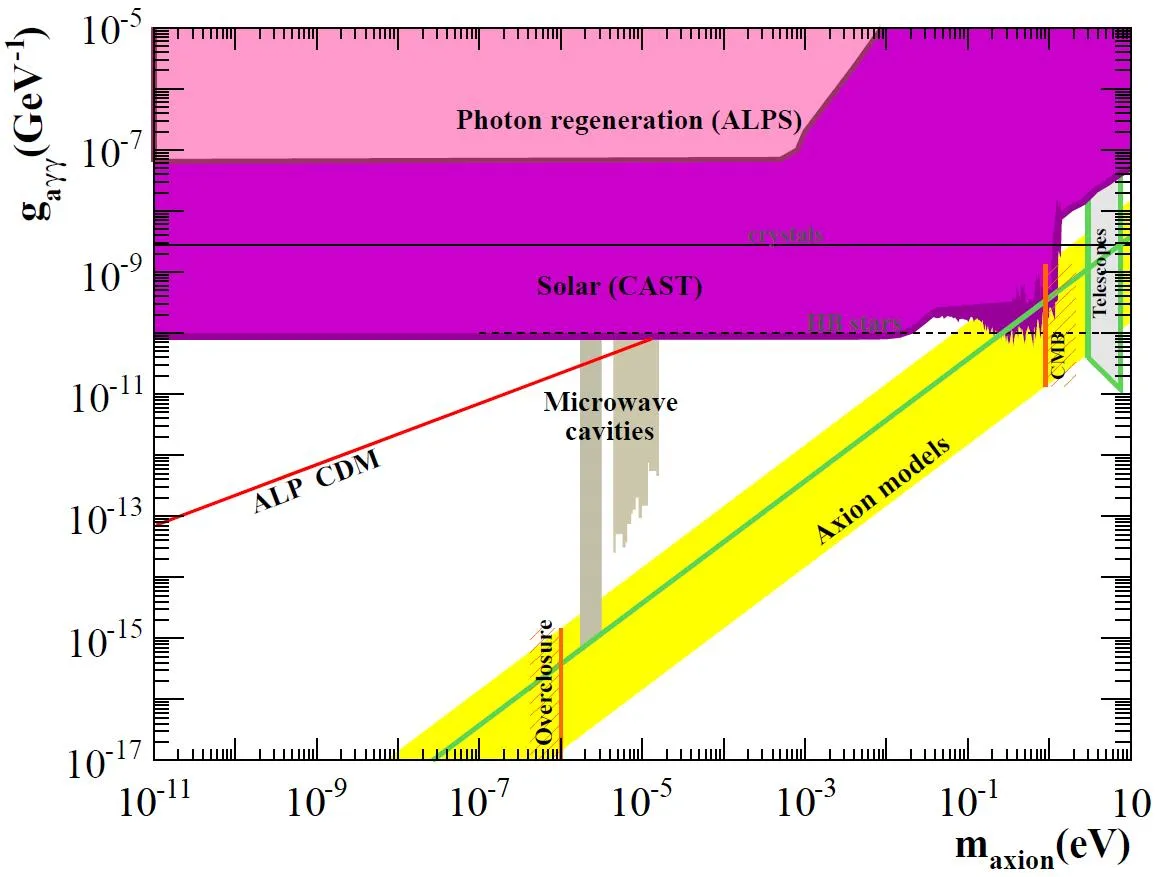
CAST opens a new window into dark energy and dark matter after 11 years of operation and continuous renewal. The Cern Axion Solar Telescope (CAST) is the only astroparticle physics experiment at CERN. It is taking data for the last 11 years searching for solar axions or other similar exotica from the dark sector, that
-
ISOLDE PhD student wins 2013 IOP Nuclear Physics Group Early Career award
ISOLDE PhD student wins 2013 IOP Nuclear Physics Group Early Career award Kara Marie Lynch has received the 2013 Institute of Physics-Nuclear Physics Group’s Early Career Prize, which is awarded to young scientists with less than five years of research. Candidates are nominated by their supervisor or another academic with whom they have closely worked
-
Towards radiation tolerant silicon sensors – News from RD50
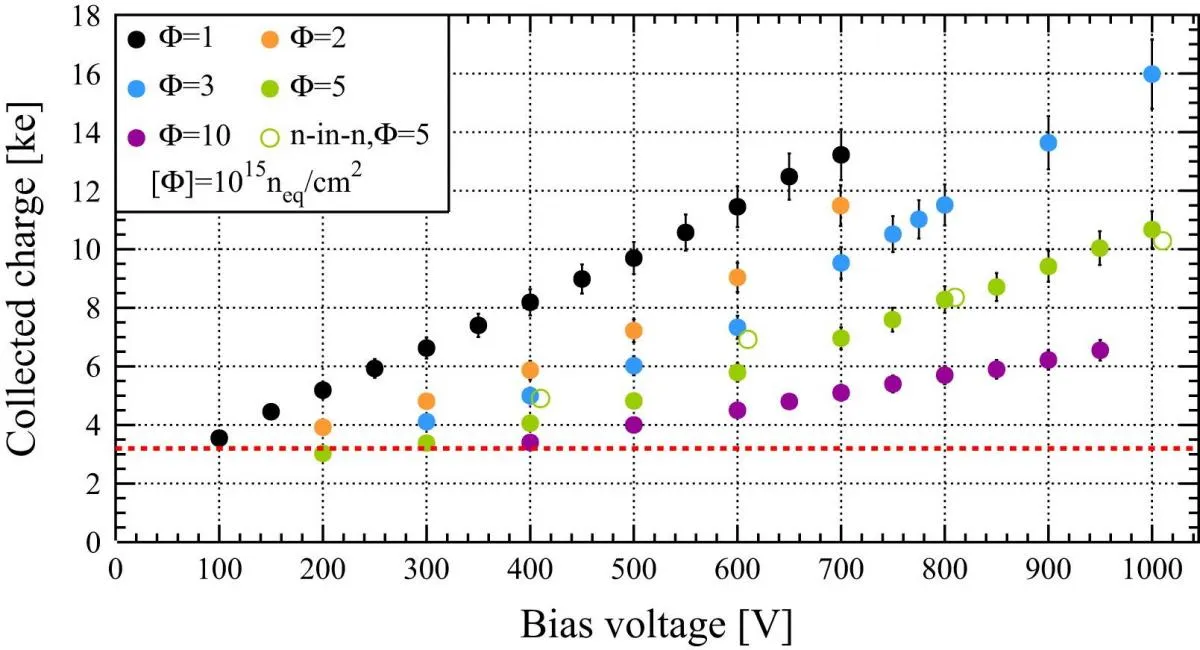
Towards radiation tolerant silicon sensors – News from RD50 The RD50 collaboration “Radiation hard semiconductor devices for high luminosity colliders” is working on the development of radiation tolerant silicon sensors for the detectors of the HL-LHC (High Luminosity-LHC) experiments. An introduction to the RD50 collaboration which comprises 49 institutes with 270 members and its wide
-
MoEDAL – the LHC’s Magnificent 7th Experiment
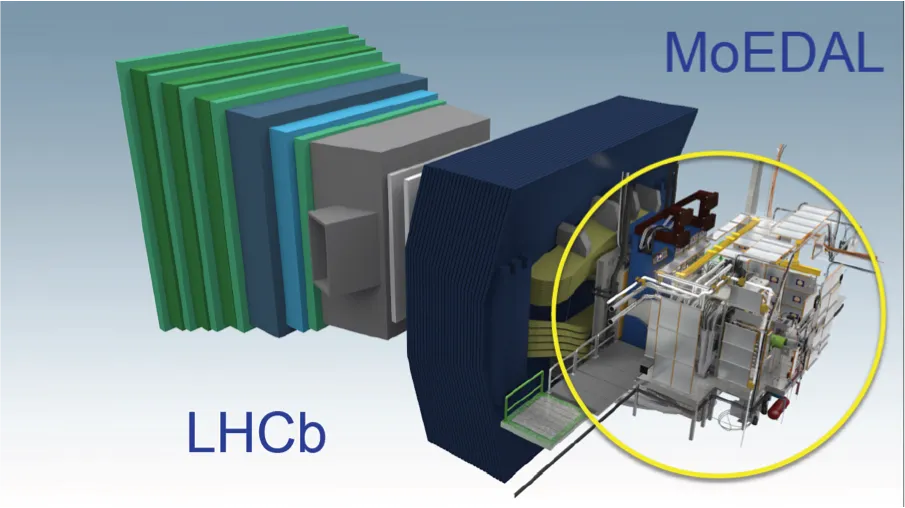
MoEDAL – the LHC’s Magnificent 7th Experiment MoEDAL, the 7th and newest experiment is dedicated to the detection of the highly ionizing particle avatars of new physics such as the magnetic monopole and massive stable or metastable charged particles. Such particles originate from a number of beyond the Standard Model scenarios that, for example, incorporate: