
Category: Newsletter
-
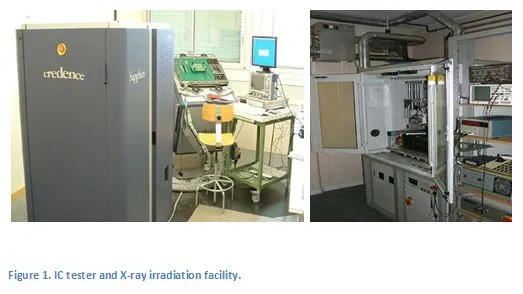
The PH electronics support group
The PH electronics support group The PH-ESE group (Electronics Systems for Experiments) was established in 2007 from the merging of 5 separate PH electronics groups. The group consisting of ~50 staff members supports all CERN experiments with electronics R&D, services and the commissioning and running of their large complex electronics systems. The merging of the
-
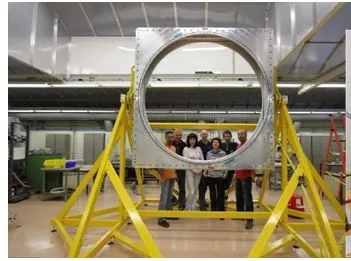
NA62 – Searching for the Very Rare
NA62 – Searching for the Very Rare Work is progressing swiftly on the construction of the new NA62 detectors. The experiment aims to collect new data, with a partial setup, already in 2012. NA62 is an experiment devoted to the study of rare kaon decays. It addresses in particular the very rare decay of a
-
LHC upgrades: the landscape becomes clearer
LHC upgrades: the landscape becomes clearer Many of you have contacted me recently concerning the LHC detector upgrades, with some questions about the planning of future work. It is true that the one year stop after the LHC incident in September 2008, the need of a further shutdown to consolidate the interconnecting splices between magnets
-
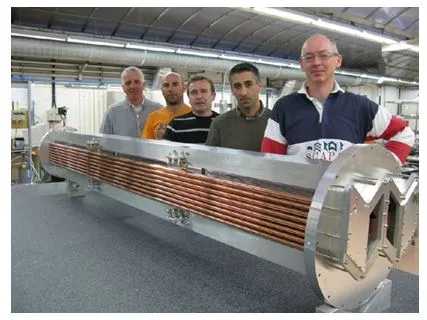
The PH Detector Technology (PH DT) group
The PH Detector Technology (PH DT) group PH‐DT is one of the three technical support groups in the physics department. Our main mandate is to develop, construct, operate and maintain detectors components for physics experiments at CERN. Our competencies span over a very wide spectrum from classical mechanics and composite materials over thin films and
-
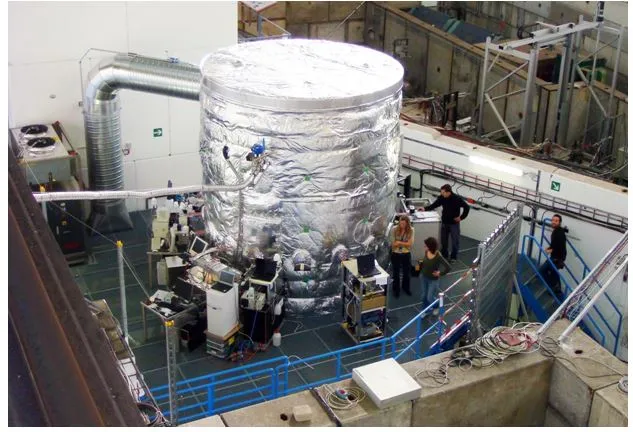
CLOUD
CLOUD A new experiment, known as CLOUD1, began operation at the CERN PS in November 2009 [CERN Bulletin (2009)]. The CLOUD collaboration comprises 17 institutes from Europe, Russia and the United States, and brings together a diverse interdisciplinary team of atmospheric physicists and chemists, and space, cosmic ray and particle physicists [CLOUD Collaboration]. Over the