
Category: Newsletter
-
Editorial – August 2013
Editorial – August 2013 The Summer Student program is well known and is a great success thanks to the dedication of CERN staff and of the numerous teachers from our community who contribute to an excellent series of lectures. What is probably less well known is that, following the strong involvement of pioneers such as
-
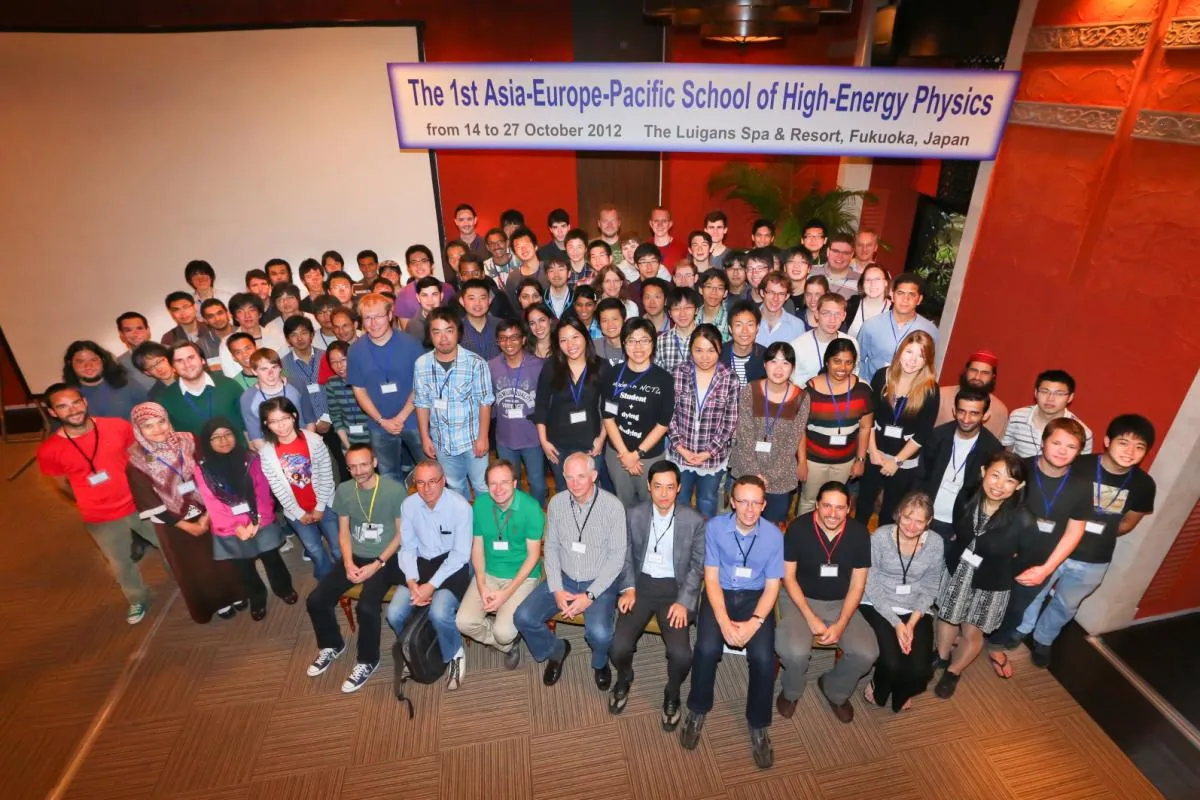
CERN Schools of High-Energy Physics
CERN Schools of High-Energy Physics Each year CERN organizes Schools that give junior researchers the chance to learn about recent developments in High-Energy Physics (HEP). Two Schools are organised by CERN every year: namely the annual European School and another School that is organized alternately in Latin-American countries (in odd-numbered years) or in the Asia–Pacific
-
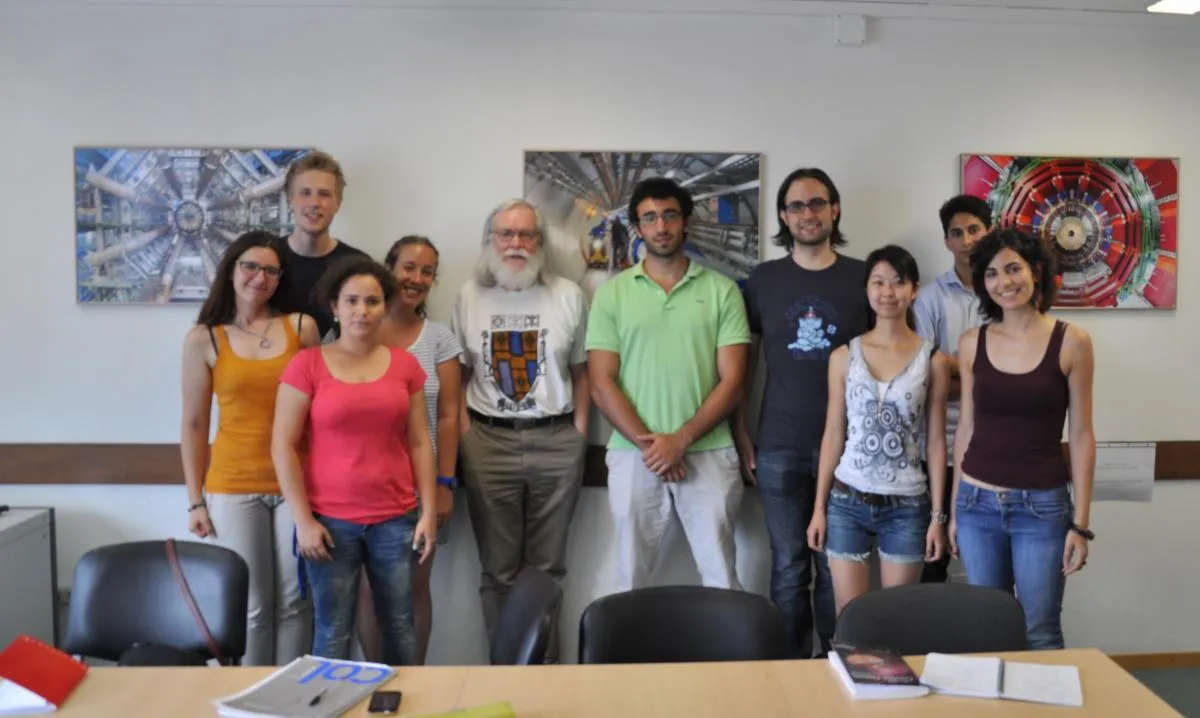
Interview with John Ellis
Interview with John Ellis Summer students met and discussed with John Ellis about his early career in physics, his current research interests and his views on the relation between philosophy and science… When did you decide that you would become a theoretical physicist? When I was a child, my mother often used to take my
-
CERN Open Days are fast approaching
CERN Open Days are fast approaching CERN OpenDays 2013 will be taking place in one month’s time. During Saturday 28 and Sunday 29 September 100 000 visitors are expected in the world’s biggest laboratory. The organizers have prepared a rich programme that aims to entertain and educate the visitors. It includes visits to the laboratories,
-
Antimatter Event with Rolf Landua: Everything you wanted to ask.
Antimatter Event with Rolf Landua: Everything you wanted to ask. Shortly after Dirac’s prediction, the first antiparticle was discovered in 1932. Since then, antimatter has been largely studied and produced in many experiments in order to help unrevealing the mysteries of the Universe. Antimatter has also reached the general public through science fiction, especially through
-
CERN continuous support to EPLANET
CERN continuous support to EPLANET As the recipient of a large fraction of the Latin American grants (79%), CERN provides resources to administer and manage the project. Administrative personnel from the various experiments and activities involved in the 8 work packages help the grantees to find their way at CERN. This includes their reception, their
-
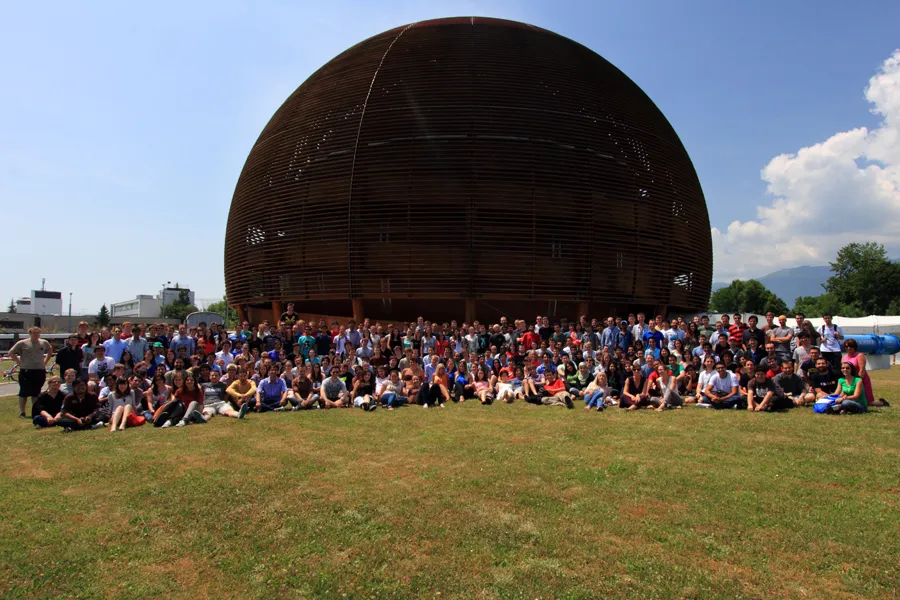
The Non-Member States (NMS) Summer Students Programme: CERN opens to the world’s young
The Non-Member States (NMS) Summer Students Programme: CERN opens to the world's young The NMS Summer Student Programme gives an alternative summer option to undergraduate students of physics, engineering, computing and mathematics, who are nationals of Non Member States of CERN. The Programme offers a first-class education course that consists of interesting lectures, discussion sessions,
-
EPLANET: The European Particle physics Latin America NETwork
EPLANET: The European Particle physics Latin America NETwork Communication Collaboration Education These concepts are fundamental to the advance of science. Science thrives when scientists collaboratively conduct and publish research, when they are able to communicate easily, when the young generations have unrestricted access to university education. The EPLANET Programme advocates the above mindset. The Programme
-
EPLANET – Meet some of the participants
EPLANET – Meet some of the participants We met five Latin-American physicists during their recent stay to CERN and asked them to share their experiences from the EPLANET programme and their future plans… “Following our participation on the HELEN program program we decided to participate following the initiative of Luciano Maiani. We thought this program
-
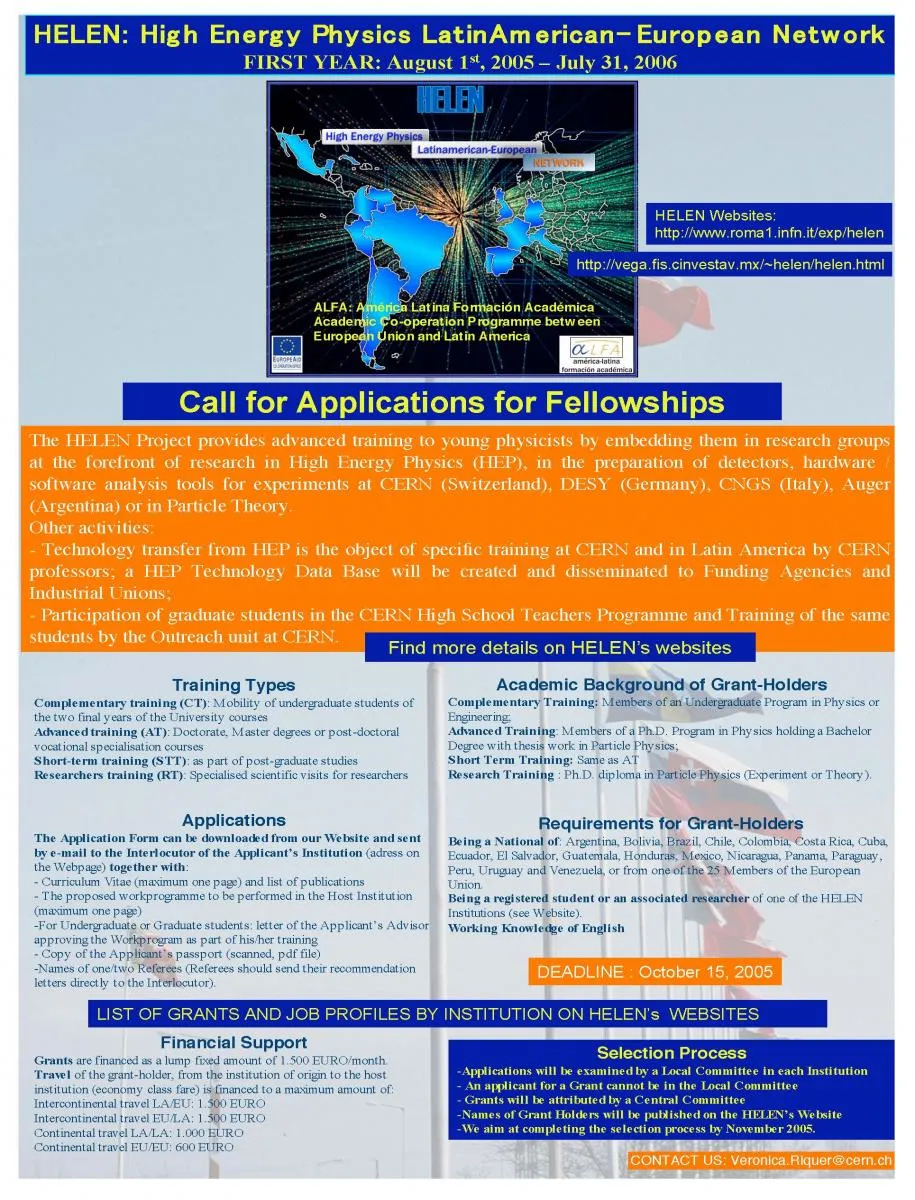
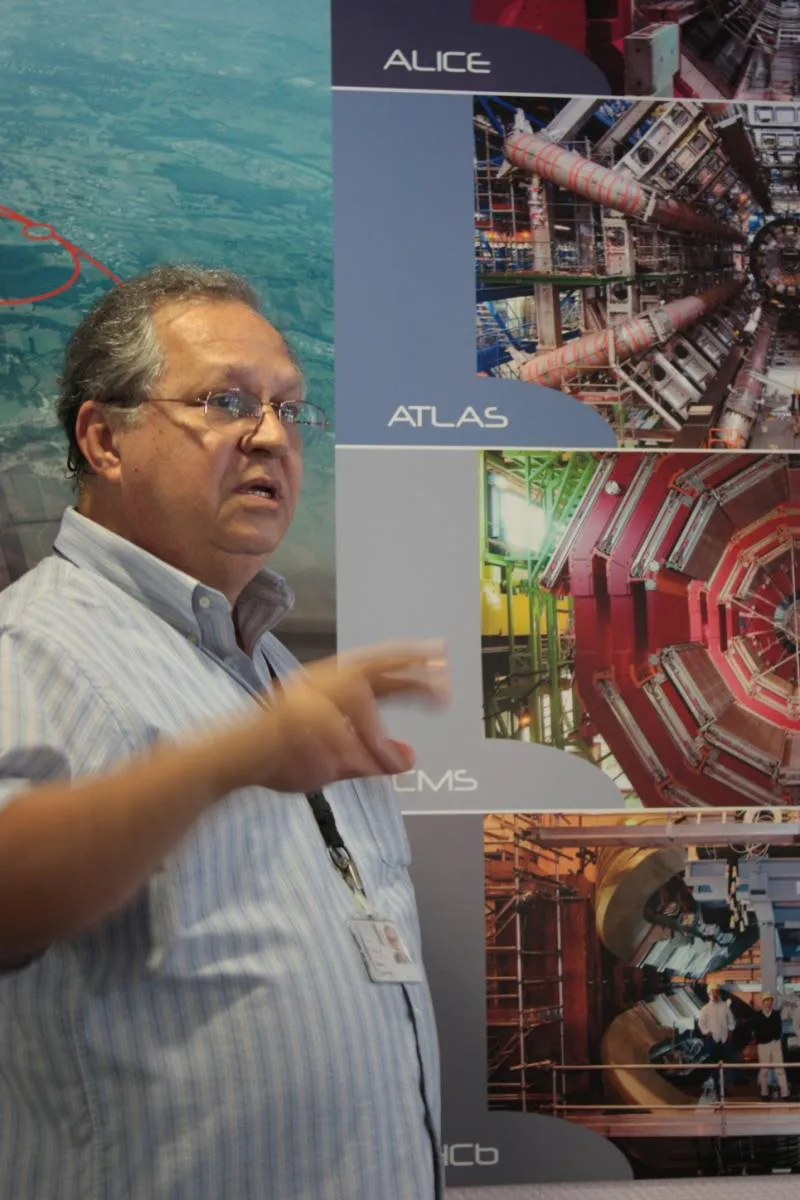
Interview with Luciano Maiani and Veronica Riquer
Interview with Luciano Maiani and Veronica Riquer How did you become involved with the EPLANET project? L.M. When I was Director General I happened to discuss the future of Latin America with Juan Antonio Rubio. He convinced me that Latin America had endless possibilities for development, especially in the field of particle physics. In addition,