
Category: Newsletter
-
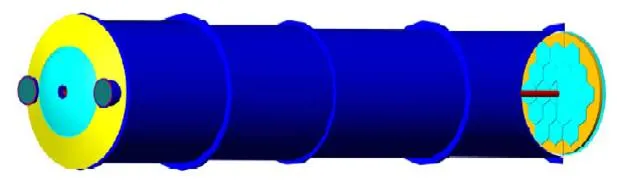
The RICH detector of the NA62 experiment
The RICH detector of the NA62 experiment The NA62 experiment is focused on precision tests of the Standard Model by studies of rare decays of charged kaons since only for few kaon decays there is a precise theoretical prediction. One of these exceptions is the very rare decay K+→π+ν ν, which has a branching ratio
-
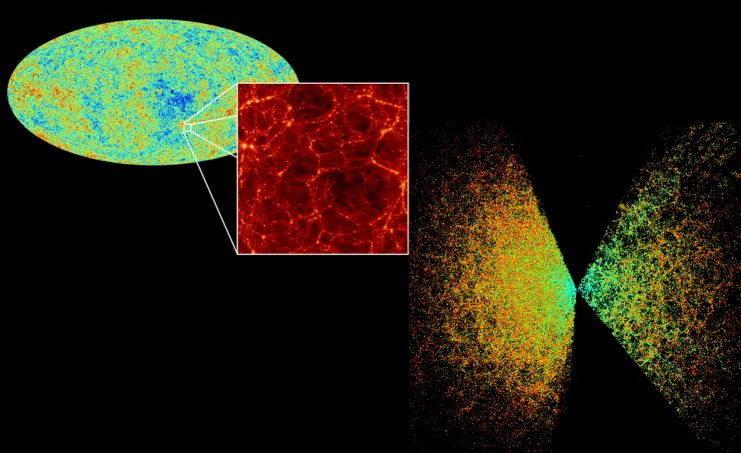
Neutrino properties from cosmology
Neutrino properties from cosmology Cosmology has entered the precision era: we now have a standard model for cosmology where the content, history and evolution of the Universe are described by few parameters. These parameters are constrained by observations at the percent level or better. As for particle physics and the search for beyond the standard
-
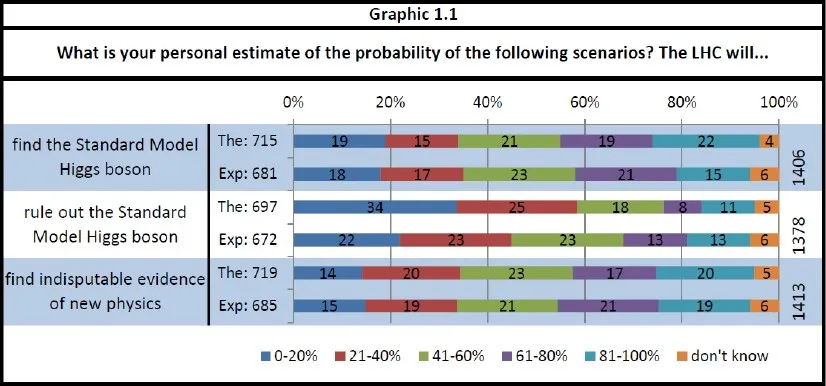
A philosophical experiment
A philosophical experiment In 2008 a group of high-energy physicists, philosophers and historians of science decided to join forces to take a closer and critical look at the knowledge production which would accompany the first phase of operation of the LHC. In 2010, thanks to the support of the German Research foundation (DFG), the interdisciplinary
-

Google Summer of Code
Google Summer of Code In 2013, CERN PH/SFT will apply to participate for a third year in Google Summer of Code, a global program that offers student developers stipends to write code for open source projects. The program was launched in 2005 and since then it has brought together over 6000 students with over 3000
-
The Concurrency Forum at CERN
The Concurrency Forum at CERN The successful processing of more than 15PB of data recorded by the LHC experiments in 2012 led to extraordinary discoveries in the field of HEP. The CPU hardware that will be at our disposal to treat the total projected data volume after the Lond Shutdown 1 will not feature higher
-
ISOLTRAP’s MR-ToF mass separator to plumb a neutron star
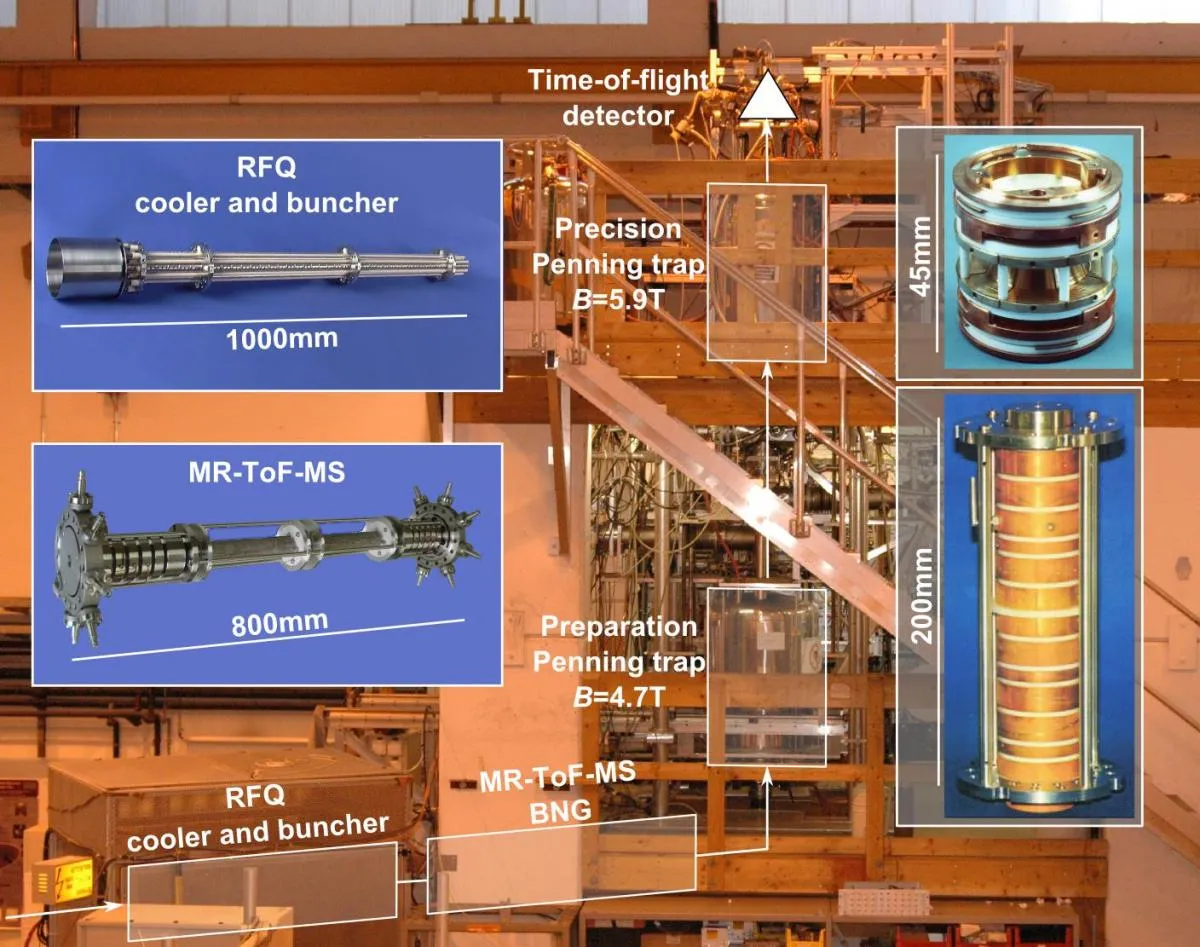
ISOLTRAP’s MR-ToF mass separator to plumb a neutron star The mass of an atomic nucleus is one of its most fundamental properties.Via the binding energy, i.e., the difference in mass between its constituents (protons and neutrons) and the entire nucleus, it reflects the sum of all interactions present. Precision mass measurements of short-lived isotopes provide
-
GBAR – Gravitational Behavior of Antimatter at Rest
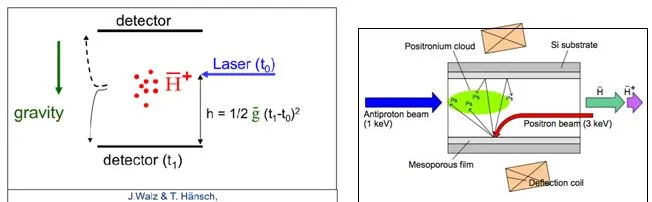
GBAR – Gravitational Behavior of Antimatter at Rest The GBAR experiment, proposing a gravity measurement of antihydrogen at the planned ELENA facility, was approved by the Research Board in May 2012. The collaboration is formed of 14 laboratories and about 40 researchers at present1. The goal of GBAR is to test the Einstein Weak Equivalence
-
The Open Symposium on European Strategy for Particle Physics
The Open Symposium on European Strategy for Particle Physics From 10th to 12th September a very interesting symposium took place in Krakow, to gather input from the community for the Update of the European Strategy for Particle Physics. The symposium was very well attended, with close to 500 participants and was an opportunity for an
-
PRESENT STATUS AND FUTURE PROGRAMS OF THE n_TOF EXPERIMENT
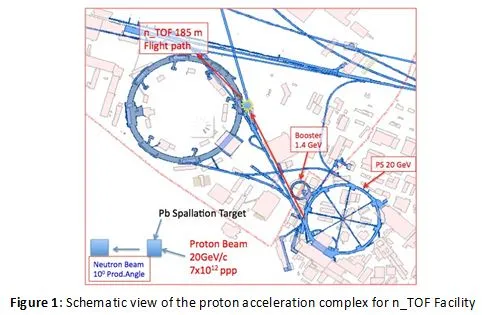
PRESENT STATUS AND FUTURE PROGRAMS OF THE n_TOF EXPERIMENT High precision neutron cross-‐section data are of major importance for a wide variety of research fields in basic and applied nuclear physics [1]. In particular, neutron data on neutron-‐nucleus reactions are essential in Nuclear Astrophysics for understanding the production rate of heavy elements in the Universe,
-
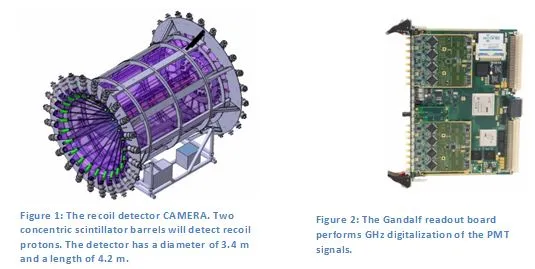
COMPASS-‐II: Preparing for the next step
COMPASS-‐II: Preparing for the next step COMPASS (NA58) is preparing for the next step in its programme studying nucleon structure and hadron spectroscopy. From 2014 onward the focus will be on transverse momentum dependent (TMD) parton distribution functions (PDF) and on generalised parton distributions (GPD). Both are related to the intrinsic transverse structure of the