
Category: Newsletter
-
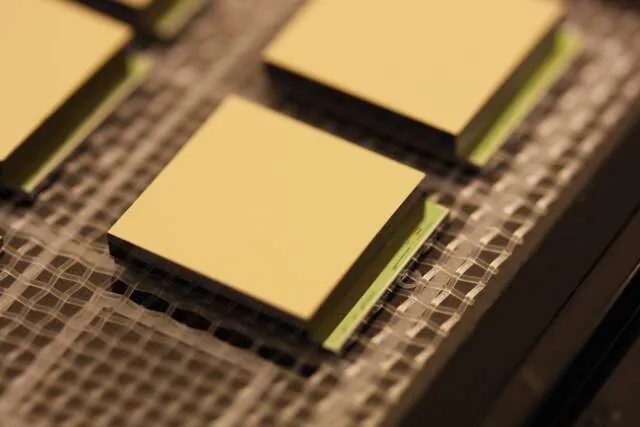
Enhancing sensitivity of spectroscopic X-ray imaging
Enhancing sensitivity of spectroscopic X-ray imaging A dedicated workshop on Medical Applications of Spectroscopic X-ray Detectors took place at CERN from 29th August – 1st September. It brought together more than 100 participants from a variety on institutions including prestigious medical schools, major medical equipment suppliers, small and medium sized enterprises as well as universities
-
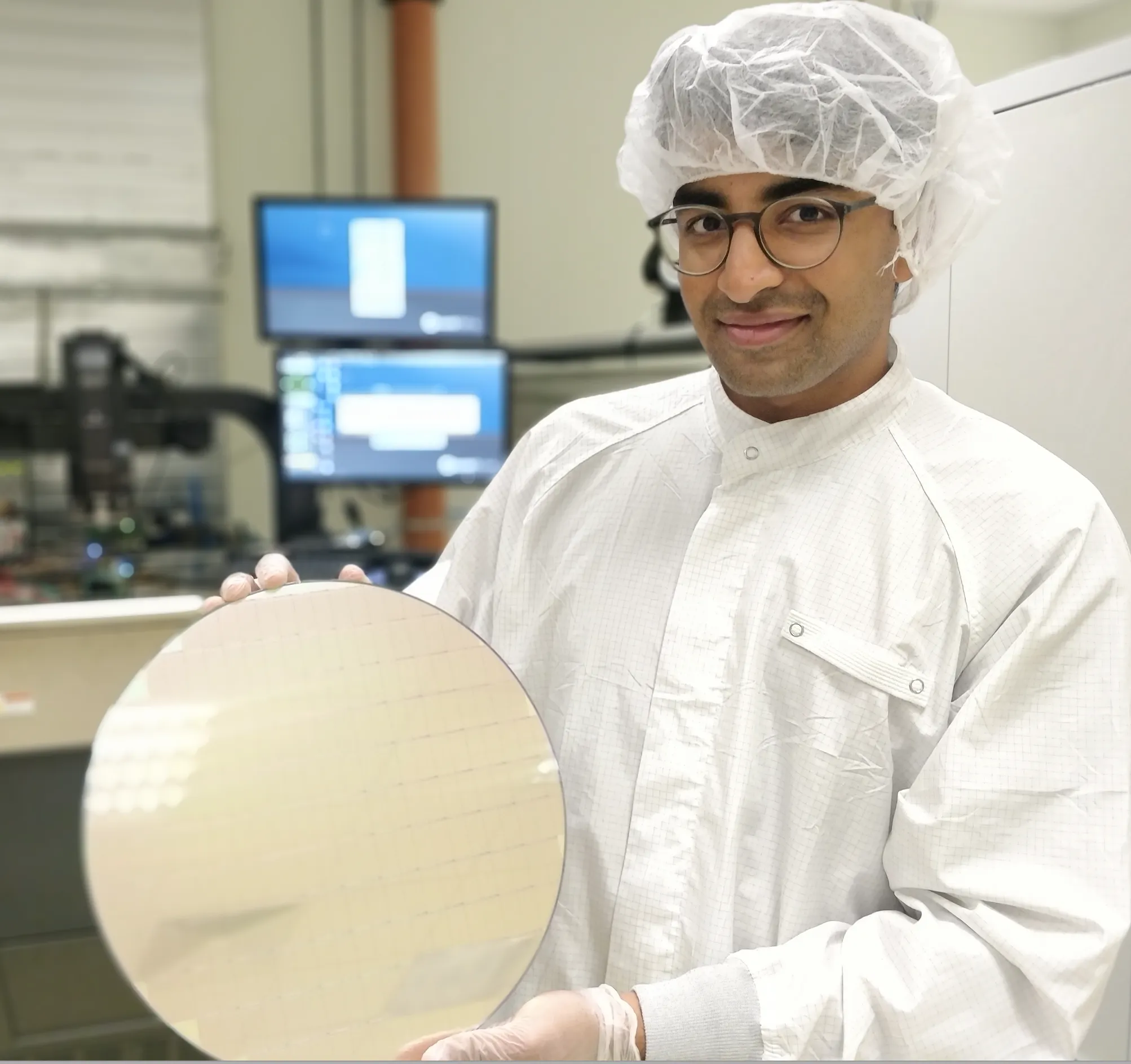
Wafer-level testing of CMS Outer Tracker ASICs
Wafer-level testing of CMS Outer Tracker ASICs The Macro-Pixel ASIC (MPA) and Short-Strip ASIC (SSA) are the new read-out chips used to process particle hit signals of pixel and strip sensors in the upcoming CMS Outer Tracker of the High-Luminosity LHC Upgrade (HL-LHC). The two chips are produced by TSMCs 65nm fabrication process and were
-
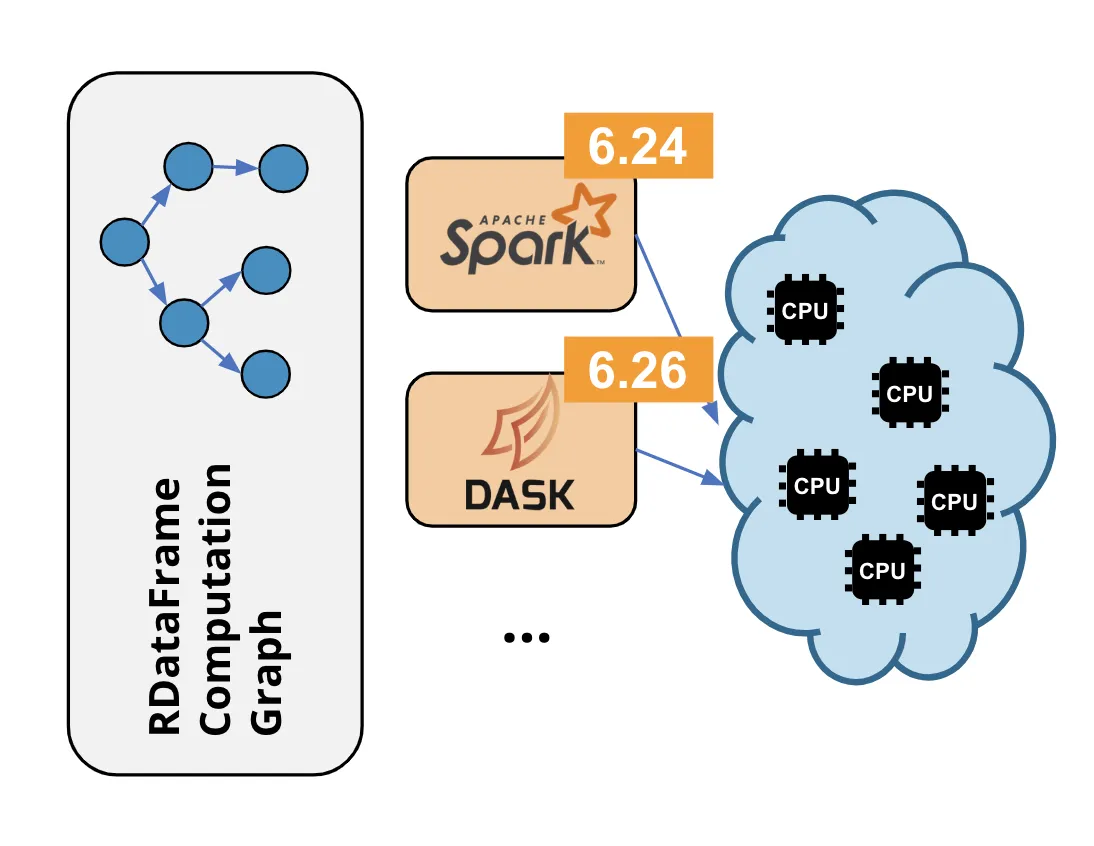
Distributed Analysis with ROOT RDataFrame
Distributed Analysis with ROOT RDataFrame The HL-LHC is foreseen to generate roughly thirty times more data than the LHC has produced so far. Given the available future budget estimations and expected technological evolution [1], software will play a crucial role to cover the performance gap and be able to process the foreseen data volumes. In
-

10 Years of operating the Alpha Magnetic Spectrometer on the International Space Station
10 Years of operating the Alpha Magnetic Spectrometer on the International Space Station AMS, passed the milestone of its first 10 years of continuous operation on the International Space Station. AMS is a particle physics detector designed to measure antiparticles, particles, and nuclei of rigidity (momentum/charge) ranging from the GV to few TV (Figure 1).
-

A timeline of the Higgs boson discovery
A timeline of the Higgs boson discovery The Higgs boson is the final piece of the standard model of particle physics to be observed, following decades of research. In June 2012, the ATLAS and CMS collaborations at CERN announced, that they had discovered a particle with the right properties to be the Higgs boson, which
-

A word from the Deputy Head of the EP department – June 2022
A word from the Deputy Head of the EP department – June 2022 Dear Colleagues, dear Members of the EP Department and CERN Users, It is a pleasure to introduce the summer issue of the EP newsletter. Ten years after the Higgs discovery in July 2012, CERN is preparing to enter full physics mode! As
-
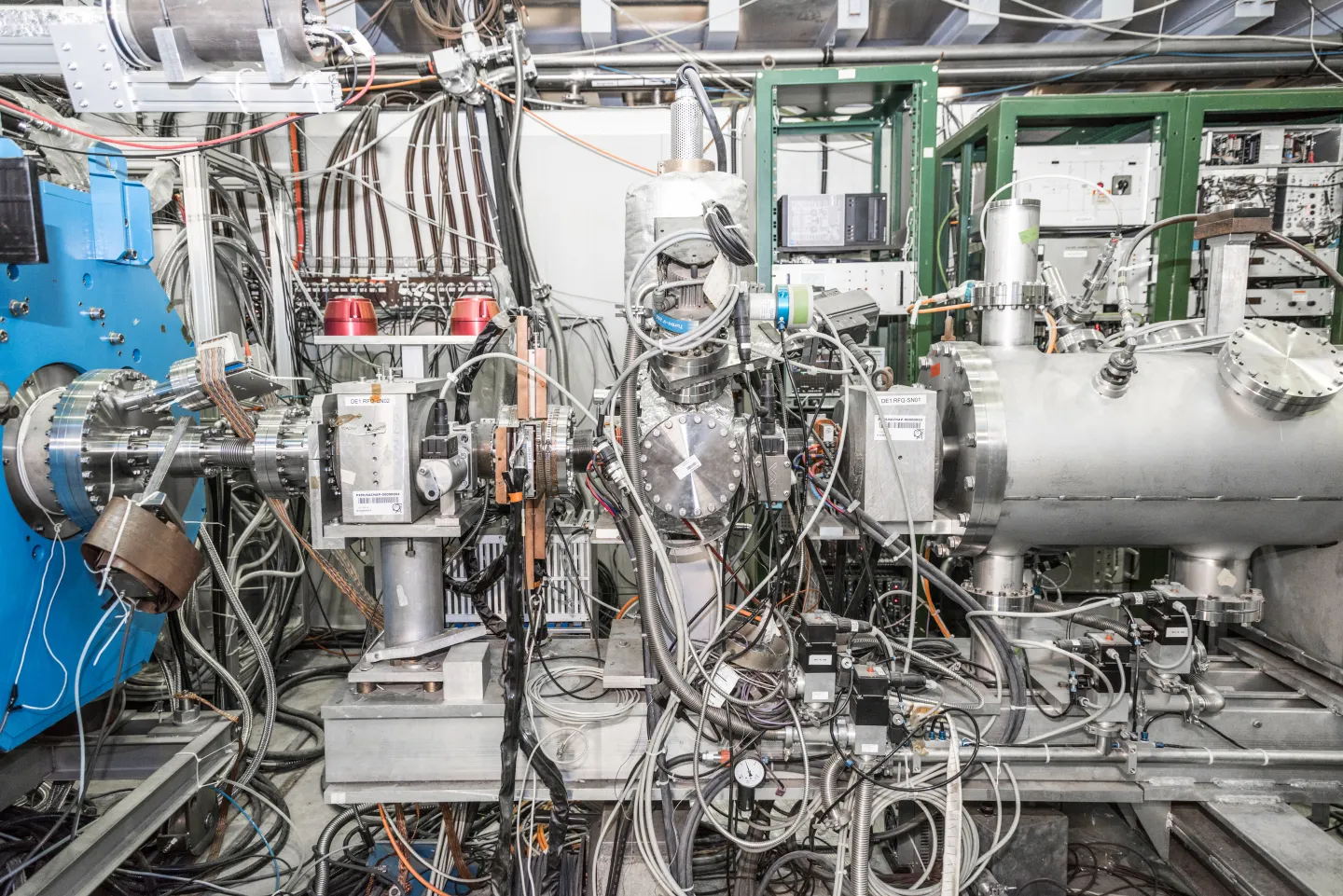
ASACUSA excites antimatter hybrid atoms immersed in superfluid helium
ASACUSA excites antimatter hybrid atoms immersed in superfluid helium When atoms are immersed into liquids, their atomic spectral lines at visible wavelengths become greatly broadened compared to those of single, isolated atoms. A million-fold increase in the linewidth is often observed, which obscures spectroscopic structures and prevents high-resolution optical spectroscopy. In fact, the distortions are
-
ALICE Inner Tracking System is ready for data taking
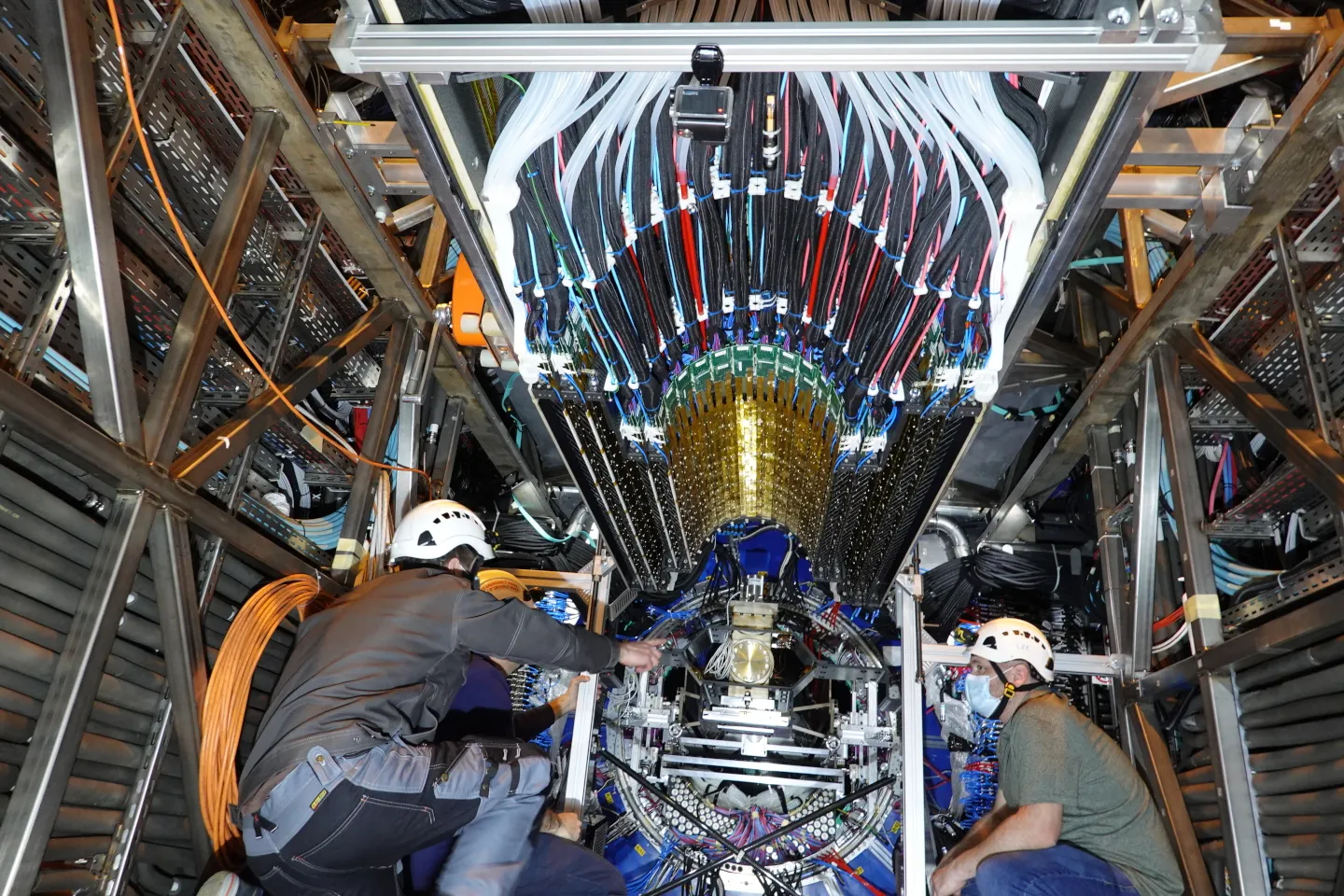
ALICE Inner Tracking System is ready for data taking The new Inner Tracking System (ITS) of the ALICE detector was installed inside the Time Projection Chamber (TPC) in spring 2021. The new ITS consists of 7 layers of monolithic pixel sensors, named ALPIDE, tiled up on linear staves of different lengths as described in (ref
-

Deciphering the Electro-Weak Phase Transition at Current and Future Colliders
Deciphering the Electro-Weak Phase Transition at Current and Future Colliders Over the past century, a whole zoo of particles has been discovered and their interactions have been investigated. This led to a puzzling mystery; on the one hand we discovered a property of Nature, known as electro-weak symmetry, which gave a unified explanation of radioactive
-

Intelligent Design for Particle Detectors
Intelligent Design for Particle Detectors Particle detectors are becoming ubiquitous: originally designed as tools for fundamental physics (collider physics experiments, neutrino observatories, etc.), they are also increasingly used in medical and industrial applications. For all use cases, the main challenge in the design of a detector can always be described by the same terms: achieving