
Category: Newsletter
-
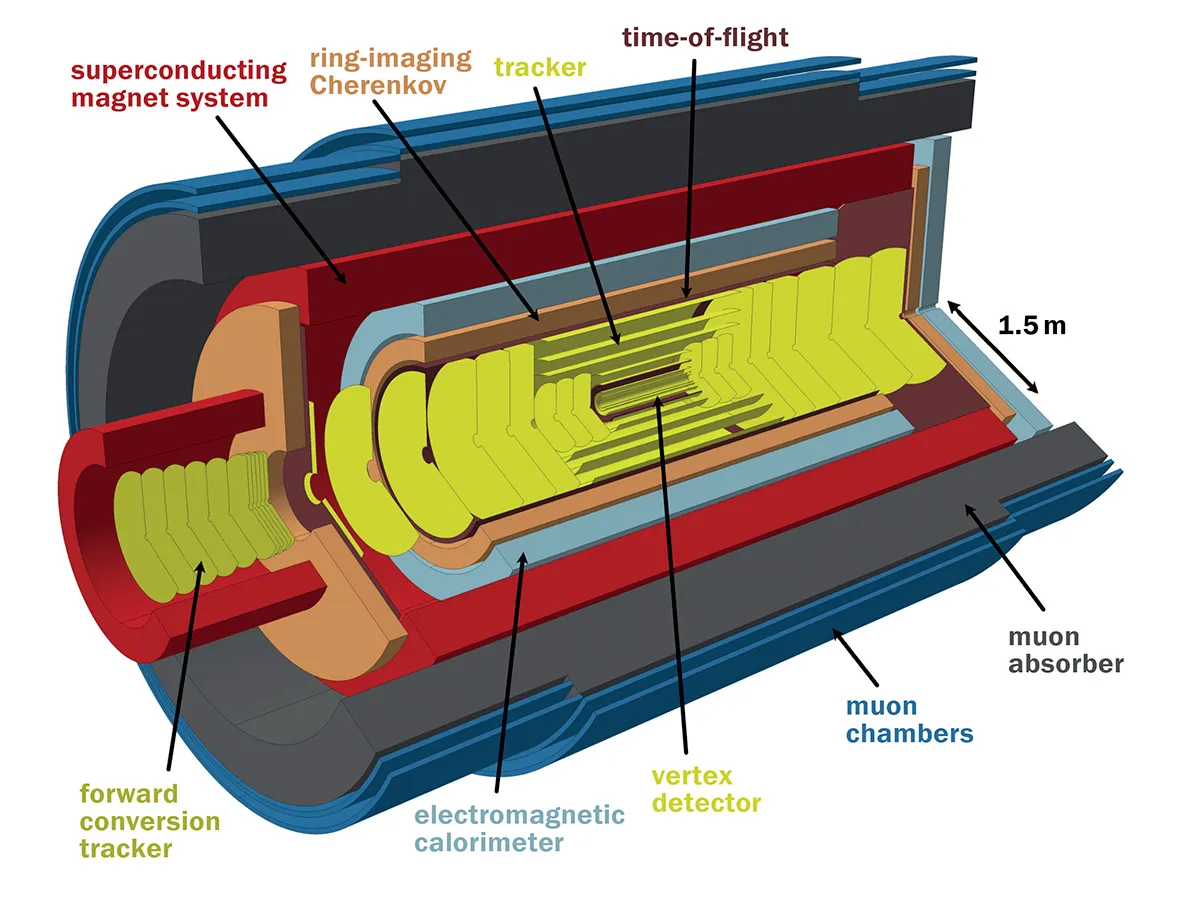
Aerogel RICH detector for the future ALICE 3 PID system at LHC
Aerogel RICH detector for the future ALICE 3 PID system at LHC For the LHC Runs 5, starting in 2036, the ALICE collaboration is proposing a new apparatus, ALICE 3 (CDS record), to further investigate the properties of Quark–Gluon Plasma (QGP) following the physics measurement campaign of LHC Runs 3 and 4. Despite significant progress,
-

G4HepEm: accelerated electromagnetic shower simulation for the HL–LHC
G4HepEm: accelerated electromagnetic shower simulation for the HL–LHC When the High–Luminosity LHC (HL–LHC) starts delivering data, the volume of simulated events required to control systematic uncertainties will rise sharply. In ATLAS, detailed detector simulation already consumes a large fraction of the computing budget; in CMS, it is expected to grow substantially with the Phase-2 upgrade,
-
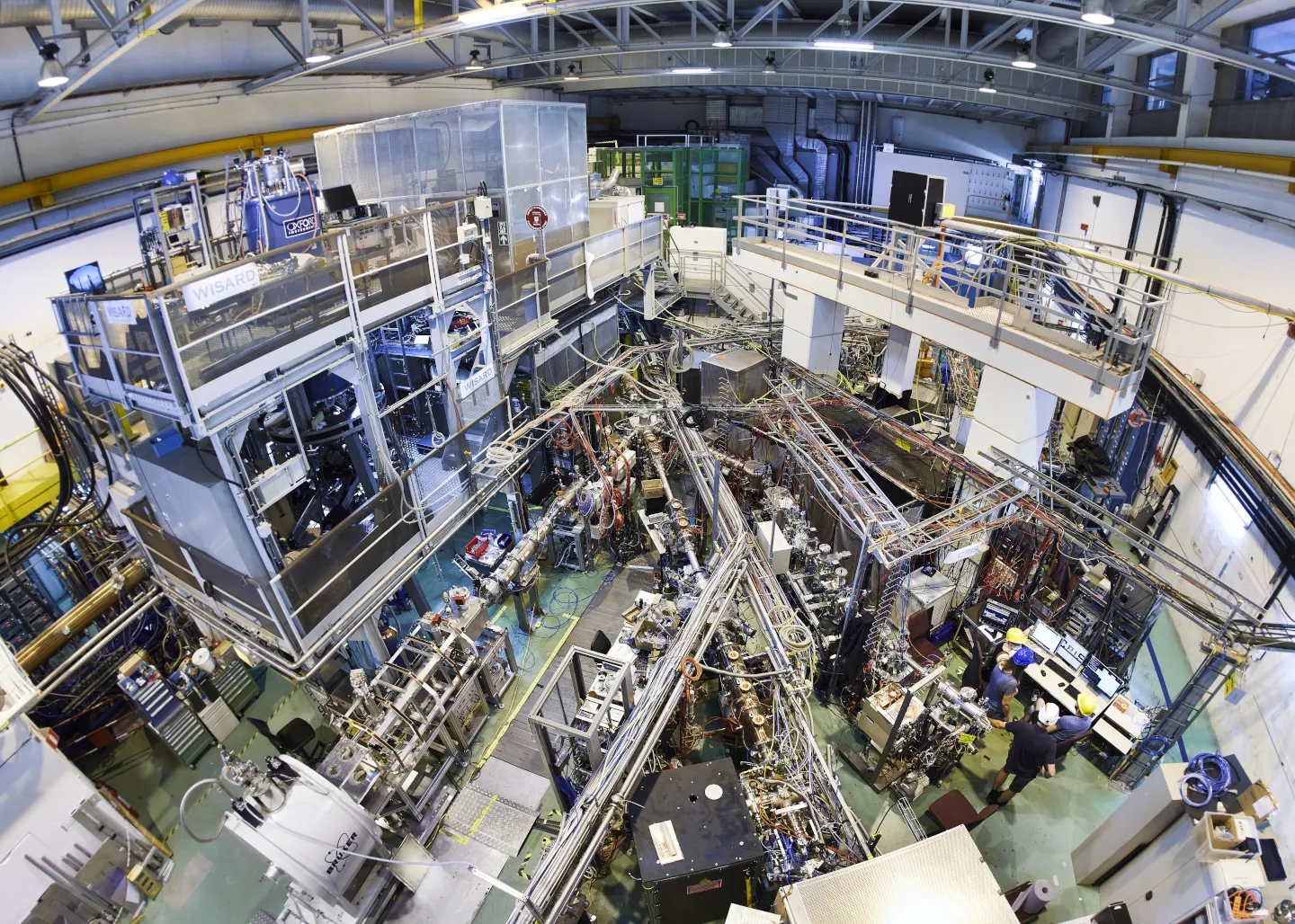
ISOLDE charts the shores of the islands of inversion
ISOLDE charts the shores of the islands of inversion For decades, CERN’s ISOLDE (Isotope Separator On-Line Device) facility has been a global leader in exploring the behaviour of exotic nuclei far from stability. By delivering beams of short-lived isotopes and enabling their study with advanced spectroscopic techniques, ISOLDE has expanded our view on nuclear structure
-
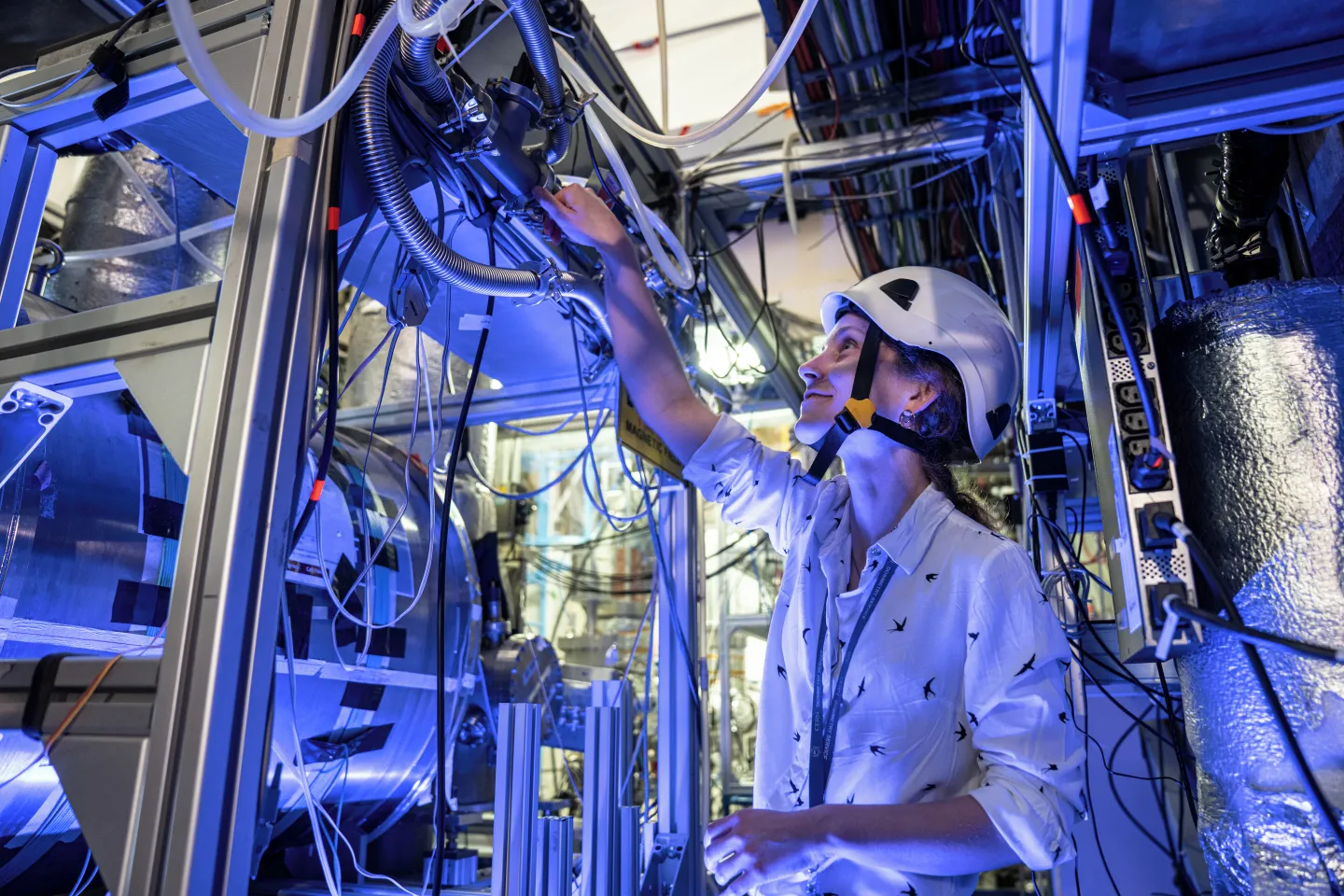
Breakthrough: Coherent Spectroscopy with a Single Antiproton Spin
Breakthrough: Coherent Spectroscopy with a Single Antiproton Spin BASE physicist Barbara Latacz in front of the experiment’s cryostat. This cylinder, which is kept at 4 kelvins (-269°C), houses the system of traps that cool and measure the antiprotons and a very strong magnet. (Image: CERN) In a significant breakthrough for precision physics and antimatter research,
-
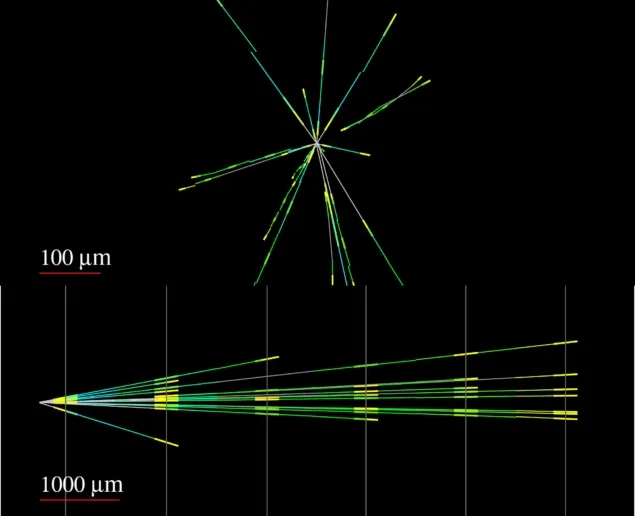
Welcome to the Collider Neutrino Era!
Welcome to the Collider Neutrino Era! Searches for new fundamental particles and interactions at hadron collider experiments such as the SPS, the TeVatron, and the LHC have traditionally focused on heavy and relatively strongly interacting states. The two general-purpose experiments of the LHC, ATLAS and CMS, were for this reason designed to cover the central
-
OLC-R / OLC-1 refurbishment in a Nutshell
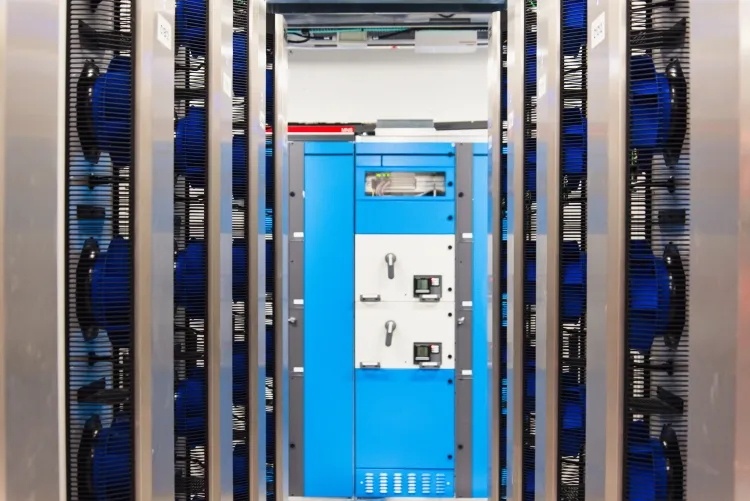
OLC-R / OLC-1 refurbishment in a Nutshell For Phase-2, CMS DAQ will undergo a major increase of its capacities to match HL-LHC performance and the related CMS physics program. Compared to the present situation (Run3), the post-trigger data throughput will increase from 2 Tb/s today to 50 Tb/s for Run4 and the processing power needed
-
The ATLAS High Granularity Timing Detector
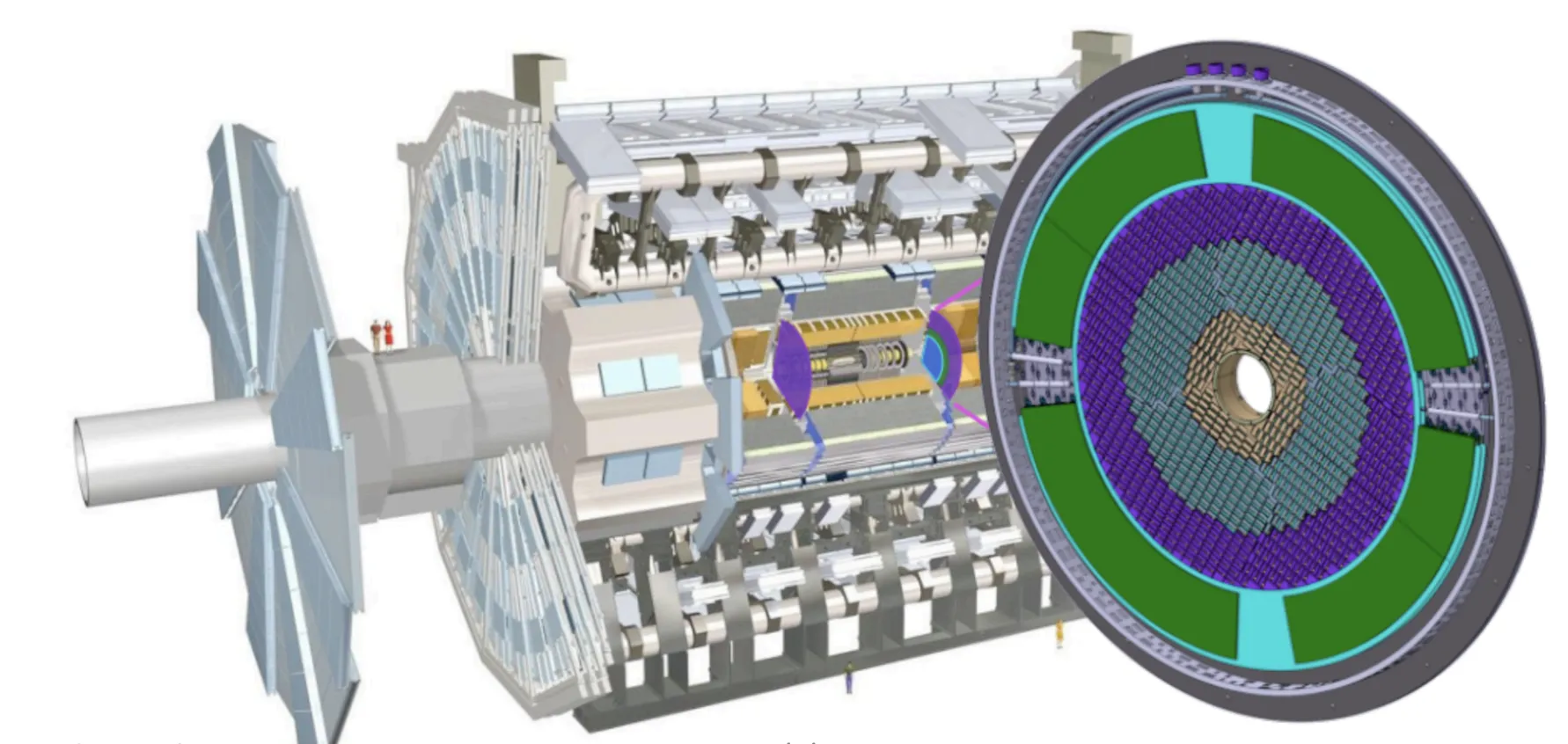
The ATLAS High Granularity Timing Detector Introduction Given the challenging conditions posed by the HL-LHC, ATLAS is currently in the process of constructing a novel precision-timing silicon detector, the High-Granularity Timing Detector (HGTD), which provides a time resolution of 30 to 50 ps for charged particles [ATLAS-TDR-31]. The detector covers a pseudorapidity range of 2.4
-
SMOG(2) at LHCb: a space experiment and a bowling alley
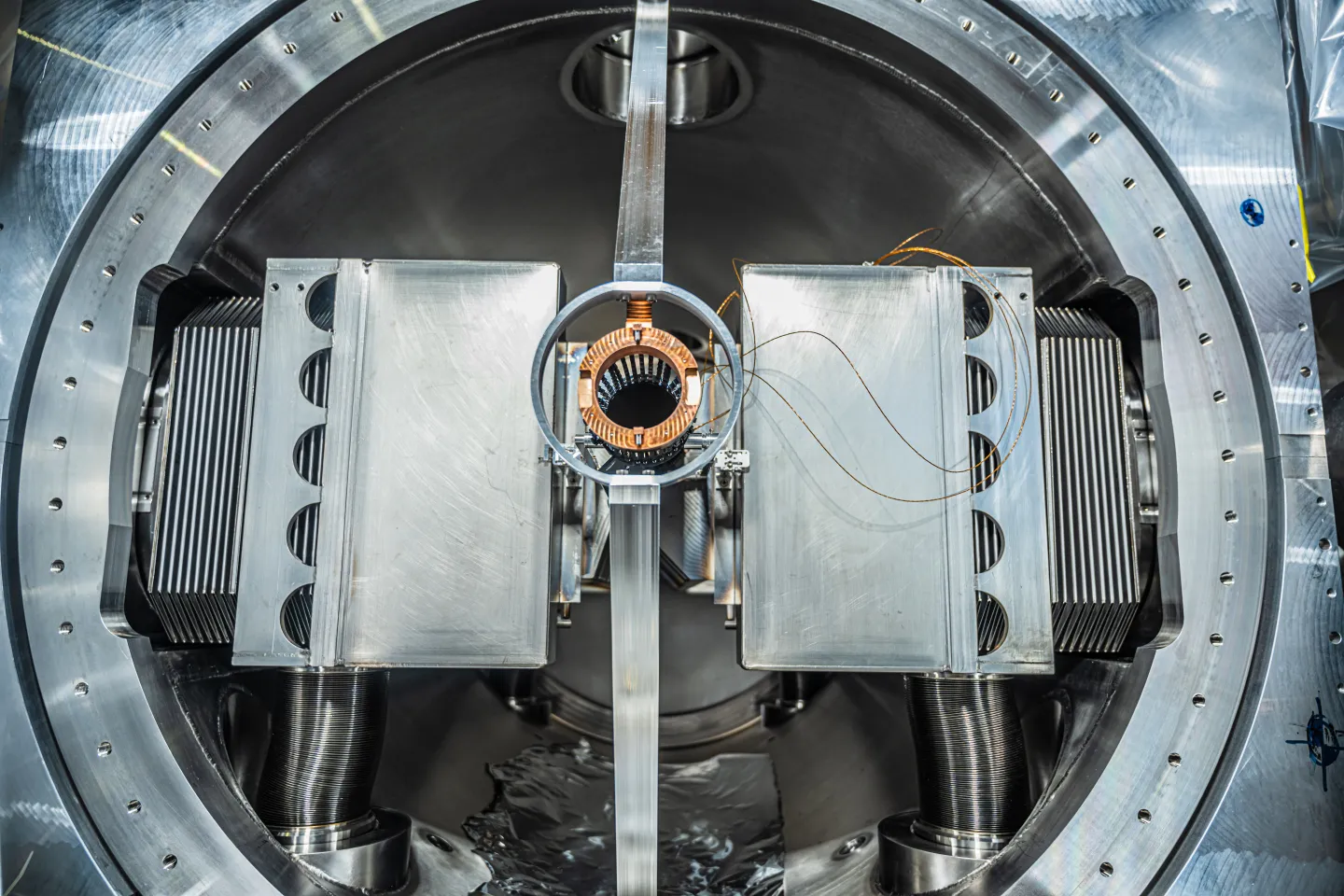
SMOG(2) at LHCb: a space experiment and a bowling alley A famous aphorism, sometimes attributed to Max Planck, goes “When you change the way you look at things, the things you look at change”. Since 2011, the LHCb experiment at the LHC has employed a System for Measuring Overlap with Gas (SMOG) to inject gas
-
An all-round boosted chase for supersymmetry
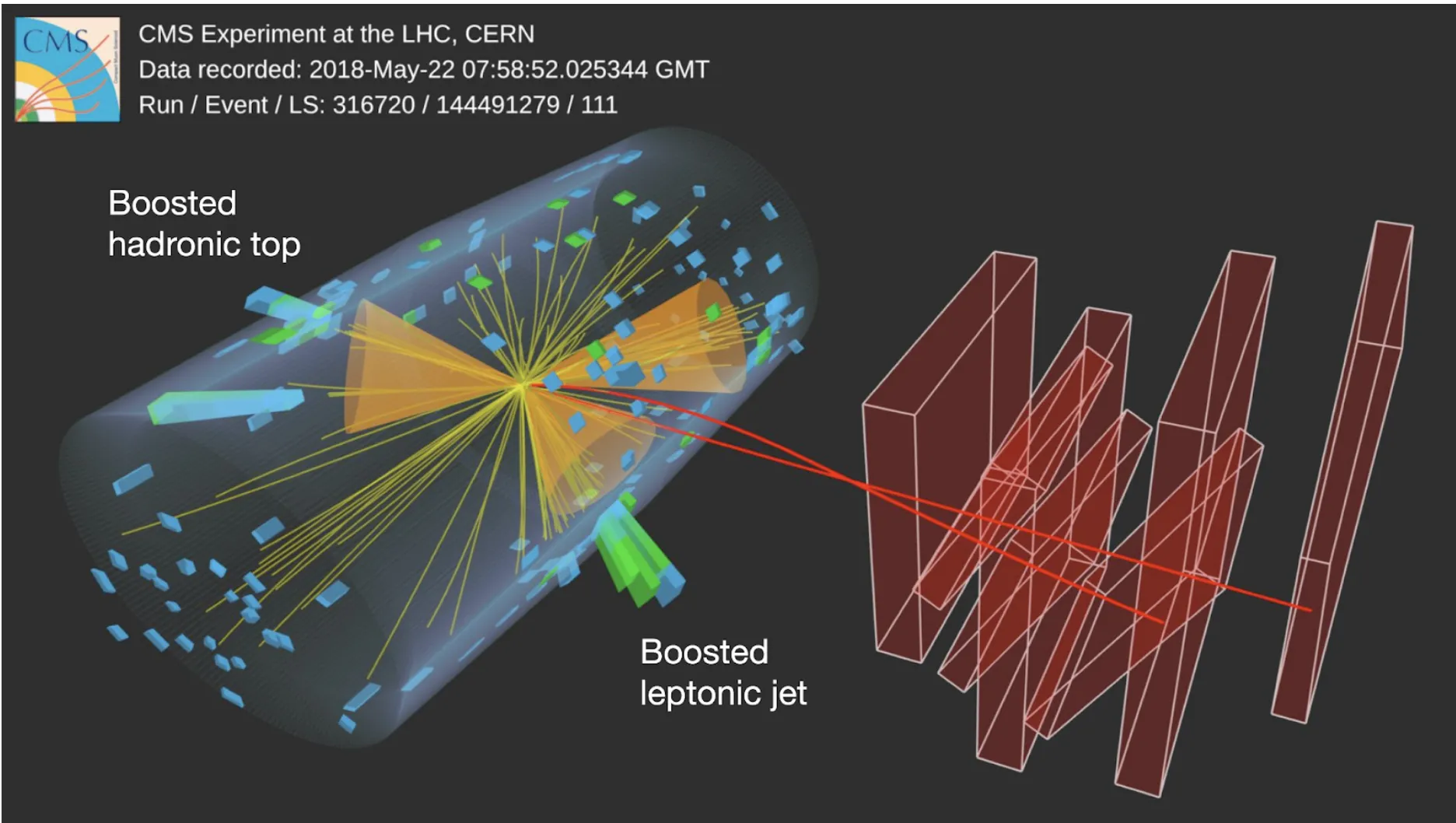
An all-round boosted chase for supersymmetry It is rare for a theory to inspire as much experimental attention as supersymmetry has. CMS completed more than 40 SUSY searches in Run 2 alone, reflecting how compelling this framework remains in the quest for new physics. SUSY proposes that every known particle has a heavier partner, a
-
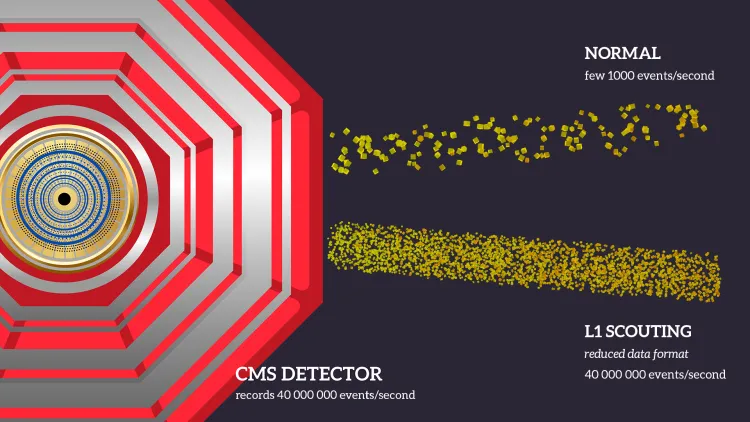
How CMS records all 40 million events per second
How CMS records all 40 million events per second Traditional data taking workflows at the LHC experiments rely on a filtering step – called Level-1 trigger – that reduces the amount of data to a manageable level. The Level-1 trigger is implemented in hardware, takes only a few microseconds, and gets rid of more than