
Tag: ATLAS
-
Heavy-ion collisions at Quark Matter 2018
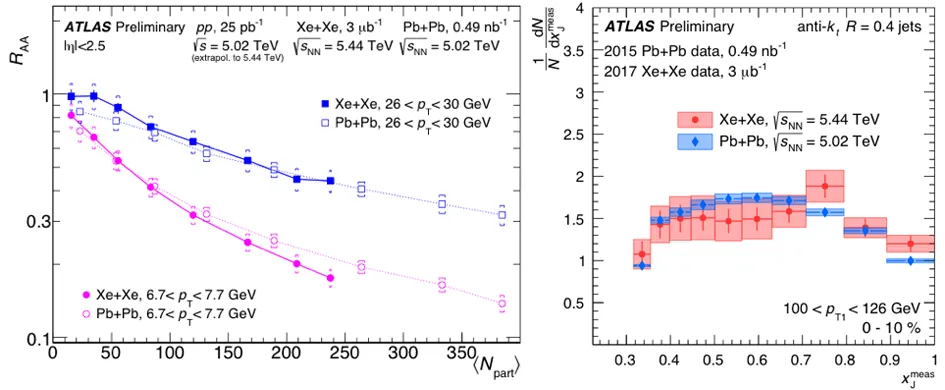
Heavy-ion collisions at Quark Matter 2018 BROKEN IMAGE NOT MOVED (drupal url : https://ep-news.web.cern.ch//content/heavy-ion-collisions-quark-matter-2018) CERN experiments presented their latest results from the study of lead-ion collisions at the annual Quark Matter conference, that was held this year in Venice, Italy. The programme includes a plethora of presentations on a variety of topics, spanning QCD at
-
New season starts for the LHC experiments
New season starts for the LHC experiments The last 2017 proton-proton collisions took place on 28 November and the LHC machine was shut down during the winter period to allow for planned technical interventions while the LHC experiments profit from this period to perform maintenance work on many sub-detectors. Four months later proton beams were
-
Connecting the dots: applying deep learning techniques in HEP
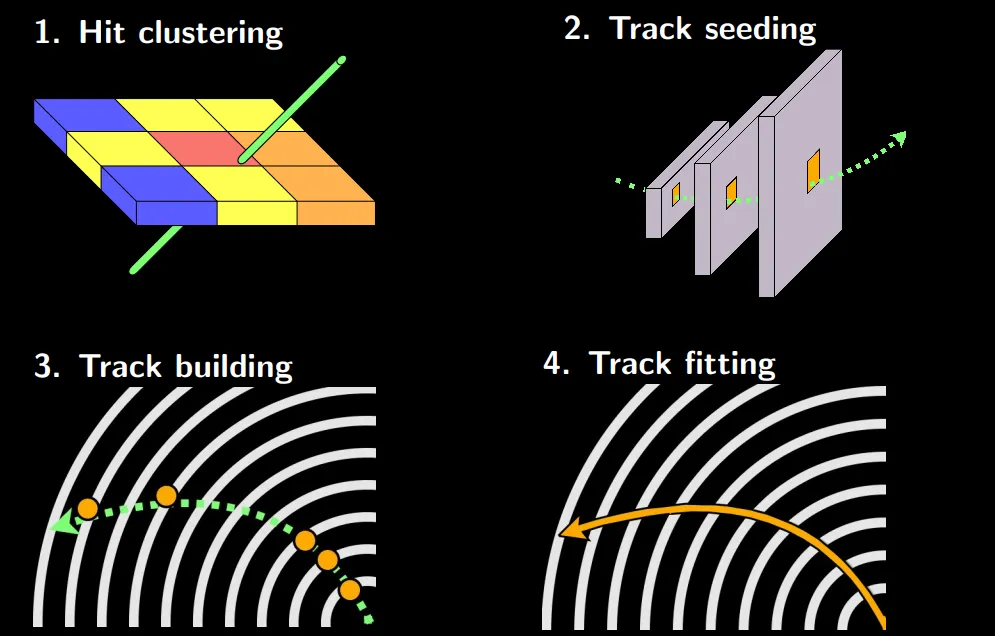
Connecting the dots: applying deep learning techniques in HEP With massive amounts of computational power, machines can now recognize objects and translate speech in real time. Deep-learning software attempts to mimic the activity in layers of neurons in the neocortex, the wrinkly 80 percent of the brain where thinking occurs. The software learns, to recognize
-
LHC experiments present results in Moriond Conference
LHC experiments present results in Moriond Conference This year saw the 53rd meeting in the series “Les Rencontres de Moriond”. ATLAS and CMS presented impressive results (see pictures) of searches for new phenomena, setting boundaries to where the new physics can still exist. These limits severely constrain models for physics beyond the Standard Model including
-
ATLAS further investigates the width of top quark
ATLAS further investigates the width of top quark The top quark is the heaviest known elementary particle and completes the quark sector of the standard model (SM). Like other fermions in the standard model (SM), it decays through the electroweak interaction. But unlike b and c quarks, which form long-lived hadrons, the top quark has
-
Searching for leptoquarks at the LHC
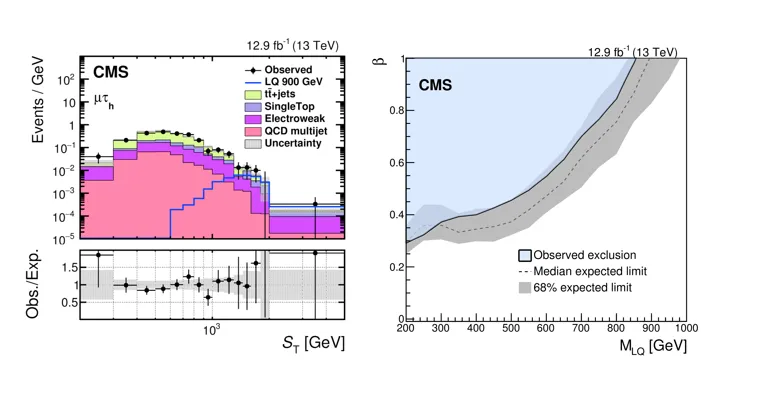
Searching for leptoquarks at the LHC Last month, Admir Greljo (University of Mainz) and Abdollah Mohammad (Kansas State University, US) during the Collider Cross Talk, gave a comprehensive overview of the theoretical and experimental aspects in leptoquarks searches. Leptoquarks are hypothetical particles that can turn quarks into leptons and vice versa and they can be
-
ATLAS observes Higgs boson produced in association with top quarks
ATLAS observes Higgs boson produced in association with top quarks The ATLAS collaboration presented the first evidence of “ttH production”, a rare process where a pair of top quarks emits a Higgs boson. Observing this process would provide new insight into the Higgs mechanism and allow for new studies of how unknown physics might (or
-
Electroweak boson pairs offer new approach to searches for New Physics
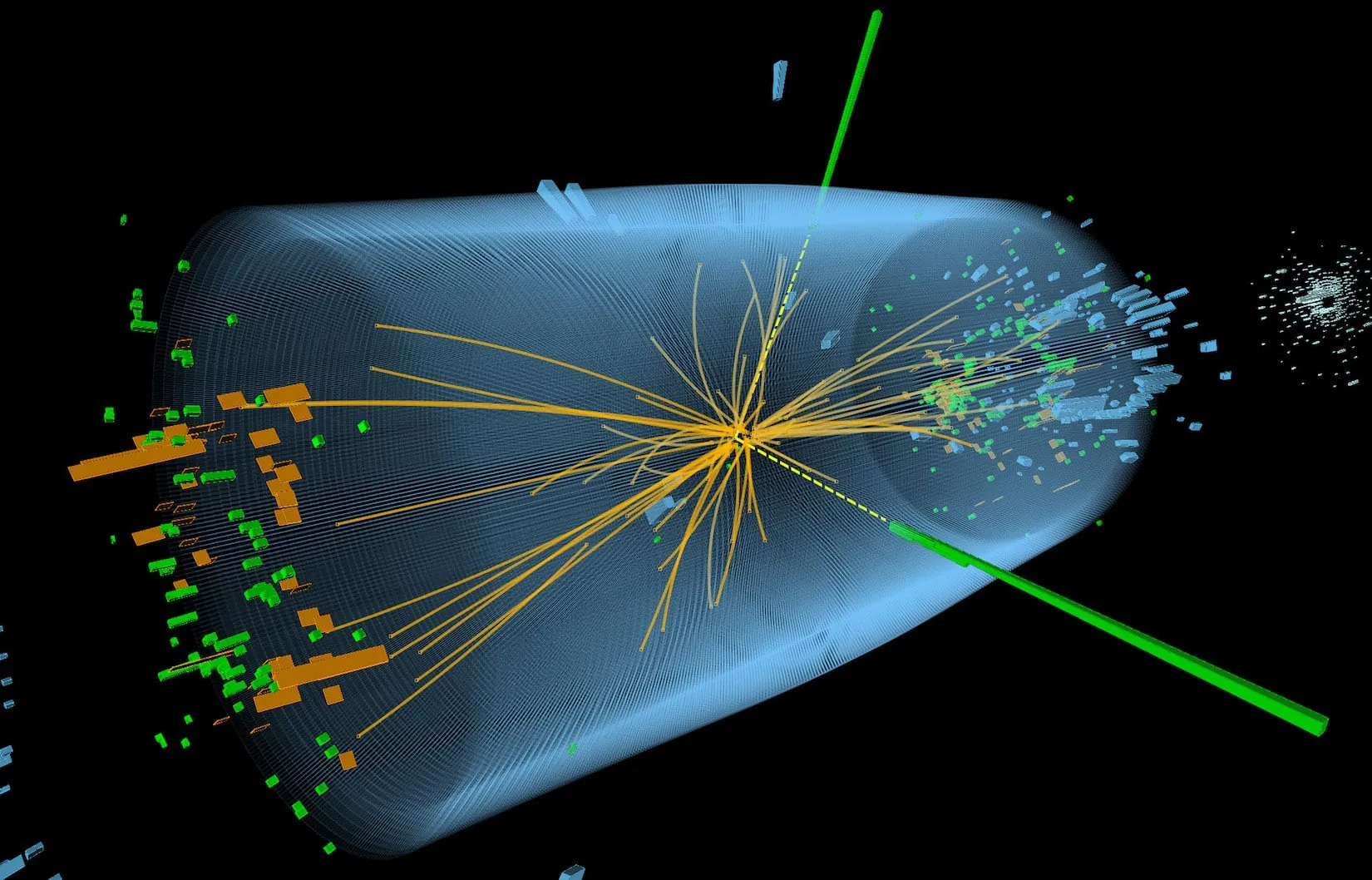
Electroweak boson pairs offer new approach to searches for New Physics During the past decades, the Standard Model (SM) of particle physics that explains how the basic building blocks of matter interact is scrutinised by high energy physics experiments. Along with the remarkable success of the SM, there are compelling reasons to consider that at
-
Colliding photons at the LHC!
Colliding photons at the LHC! The interaction of photons with matter such as Compton and Thompson scattering are well-known at higher photon energies. What about the scattering events between photons? In classical Maxwell theory photons do not interact. In contrast, in quantum theory they can interact via quantal fluctuations. During the early years of quantum
-
New LHC results presented at EPS-HEP 2017
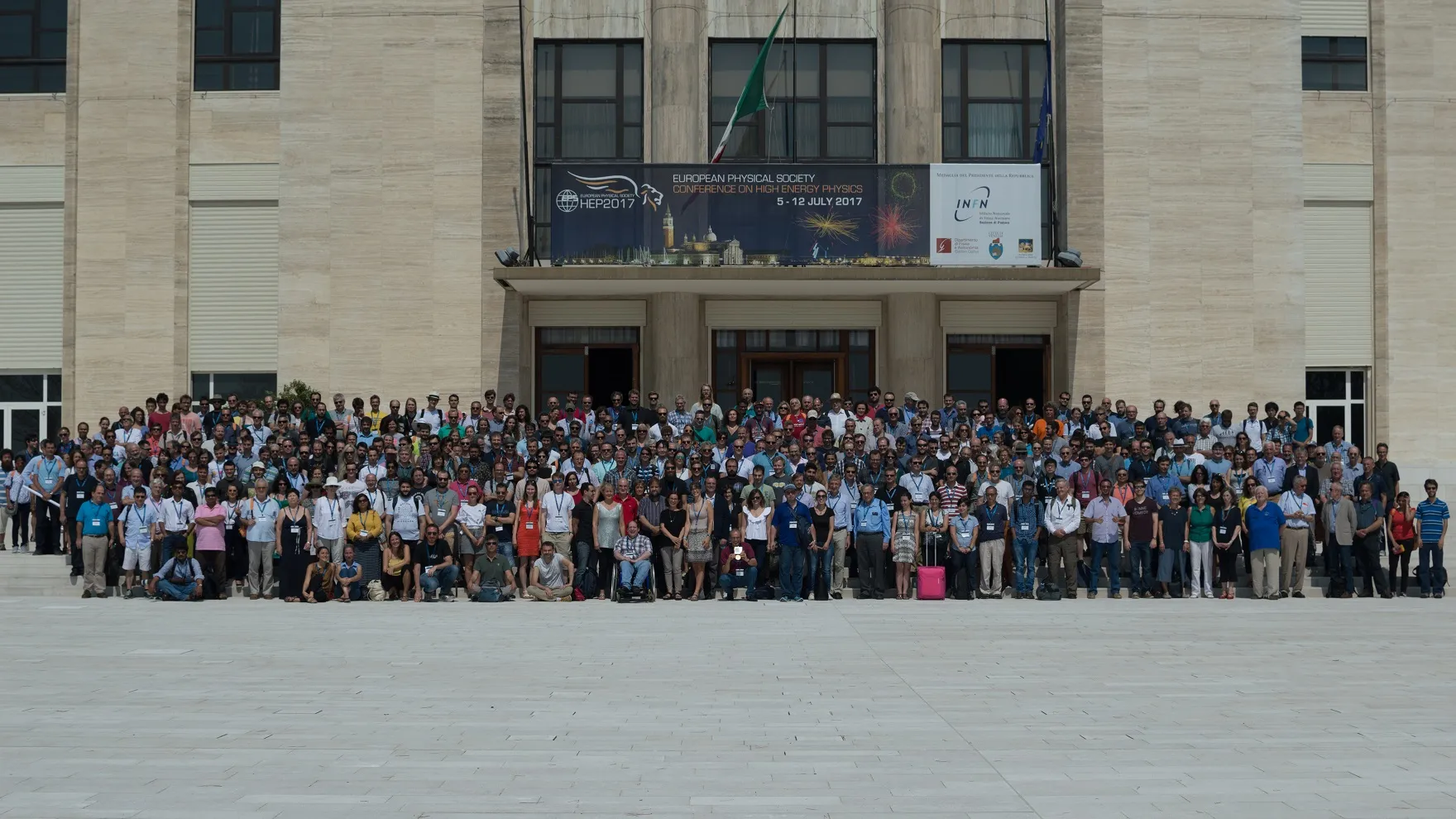
New LHC results presented at EPS-HEP 2017 Over 700 physicists coming from 50 countries met in Venice to discuss the newest results in their field at EPS 2017, one of the world’s most important conferences on particle physics. The conference was co-organized by the European Physical Society, the Istituto Nazionale di Fisica Nucleare (INFN) and
