
Tag: CMS
-
Latest results from the Higgs boson couplings to second-generation fermions
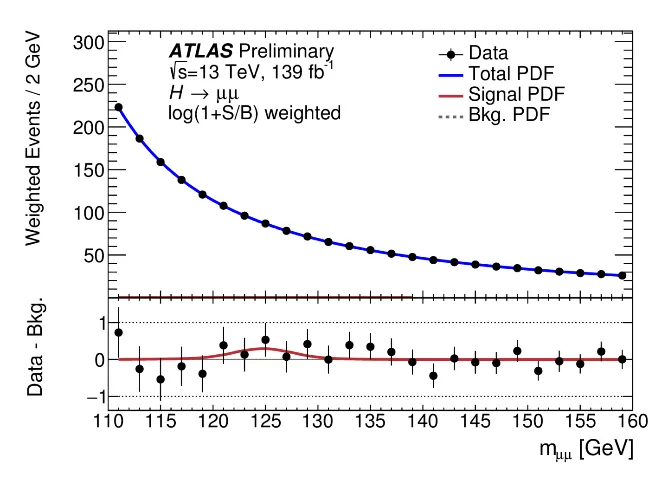
Latest results from the Higgs boson couplings to second-generation fermions The discovery of the Higgs boson completes the Standard Model, a very successful theory describing particles of visible matter and their interactions. However, there are still big missing pieces in our fundamental understanding of matter, while certain experimental phenomena point to the existence of new
-
A new home for GEM detectors at CERN
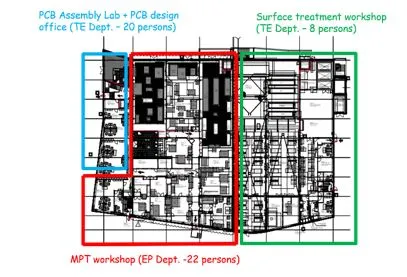
A new home for GEM detectors at CERN Since the beginning of 2019, a new building at CERN is ready to house ongoing R&D activities that will push the performance of detectors to cope with the high performance of the LHC. Building No.107 (replacing the building 102) offers a brand new laboratory with sophisticated equipment,
-
The GEMs of CMS
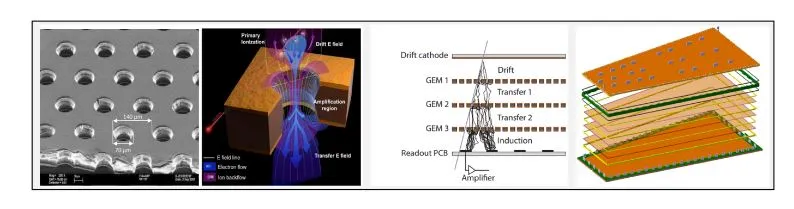
The GEMs of CMS To prepare for the higher collision energy and luminosity of the subsequent running period of the LHC significant improvements are ongoing in the CMS detector. One of the planned upgrades is the installation of large-area GEM detectors in the forward muon region. Following an extensive R&D program since 2009, Triple GEM
-
The Higgs boson as a probe for new physics
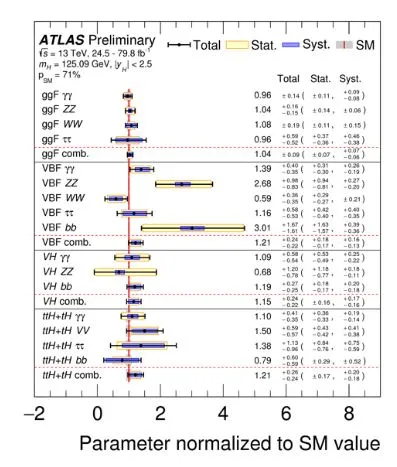
The Higgs boson as a probe for new physics The discovery of the Higgs boson has ushered in a new era of exploration at the Large Hadron Collider (LHC). Persistent tensions in the Standard Model (SM) of particle physics compel us to seek out physics beyond the SM (BSM) at the TeV scale, and the
-
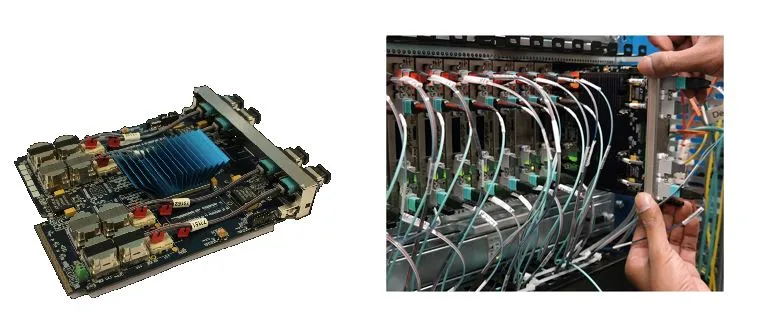
CMS Trigger: Lessons from LHC Run 2
CMS Trigger: Lessons from LHC Run 2 The CMS experiment has a two-level trigger system [1], to reduce the number of events stored from the LHC bunch crossing rate of 40 MHz to around 1 kHz. The first level (the Level-1) uses custom electronics to reduce the rate of events to 100 kHz, and the
-
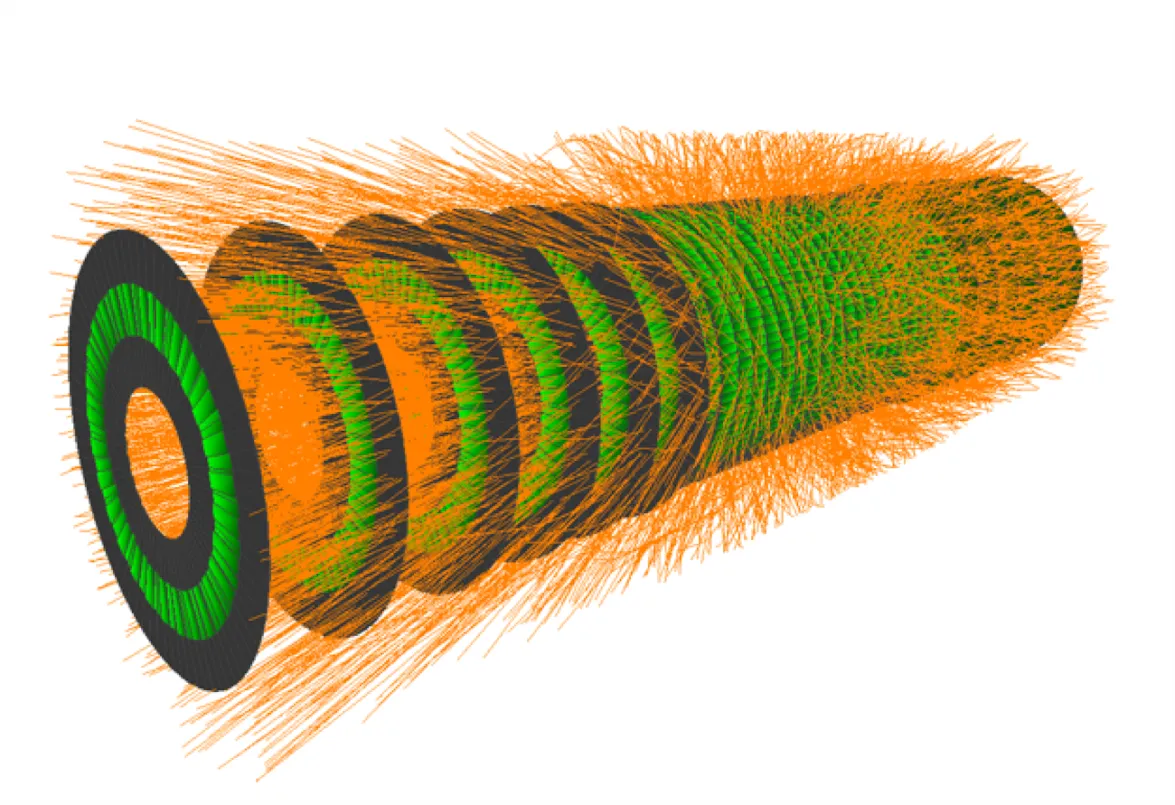
Can AI help us to find tracks?
Can AI help us to find tracks? Data science (DS) and machine learning (ML) are amongst the fastest growing sectors in science and technology, not at least due to their strong rooting in industrial and commercial applications. Global players such as Google, Facebook and Amazon have surpassed HEP in both, computing complexity and data volume.
-

Removal of the CMS beam pipe during Long Shutdown 2
Removal of the CMS beam pipe during Long Shutdown 2 The CMS detector is built from several different layers, surrounding the beam pipe in which the LHC beams collide. The subdetector that is closest to the collisions is the pixel detector. It has a functionality similar to a digital camera taking 40 million snapshots of
-

INSIGHTS: A new network of statistics for HEP and beyond
INSIGHTS: A new network of statistics for HEP and beyond Following the success of the AMVA4NewPhysics network, a new 4-year Innovative Training Network funded by the Horizon 2020 program of the European Commission will develop new statistical methods and boost the use of machine learning (ML) to solve some of the most challenging problems in
-
CMS upgrade plans for LS2
CMS upgrade plans for LS2 To achieve the full benefit of the HL-LHC, CMS must continue to be able to reconstruct at the much higher luminosity all the standard physics analysis objects with high efficiency, low fake rate, and high resolution. Excellent electron, photon, and muon reconstruction is needed for Higgs decays to γγ, ZZ*
-
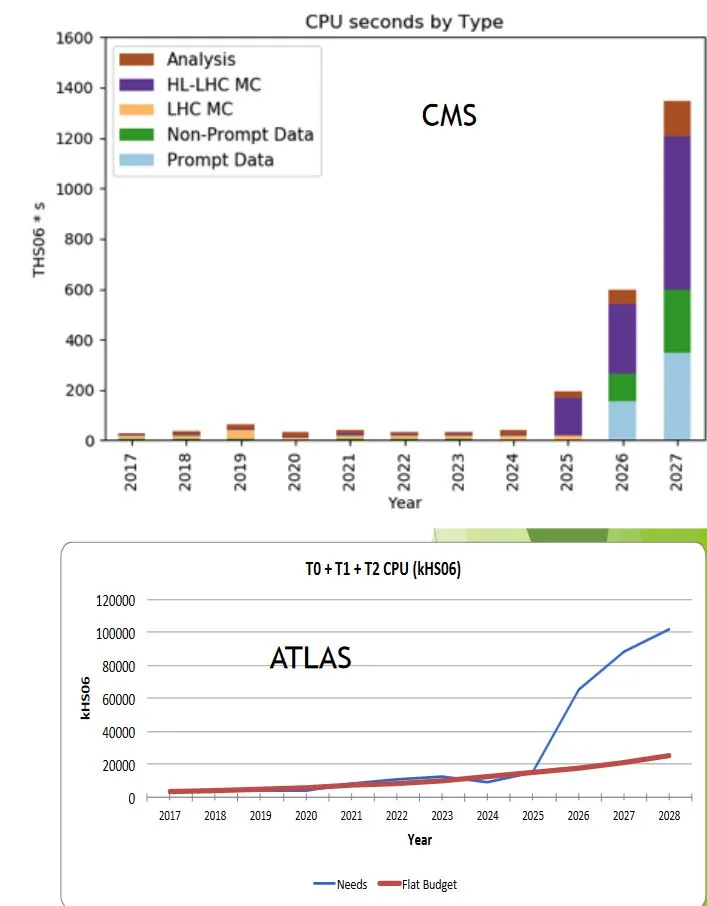
HL-LHC computational challenge for ATLAS and CMS experiments
HL-LHC computational challenge for ATLAS and CMS experiments The two general purpose LHC Experiments, ATLAS [1] and CMS [2], are going to be confronted with challenging experimental conditions at the High Luminosity LHC Run (HL-LHC), starting in 2026. In particular, computing systems will have to cope with greatly increased data samples and data acquisition and