
Tag: AMS
-

A word from the EP Department Head – Autumn 2026
Dear Colleagues, Autumn is transforming nature by giving it new colours, shortening daylight and changing the temperature. Similarly, the start of Long Shutdown 3 has transformed our experimental facilities into busy construction sites. The excitement of data taking has given way to eager teams of technicians, engineers and scientists dismantling, cleaning and refurbishing the areas…
-
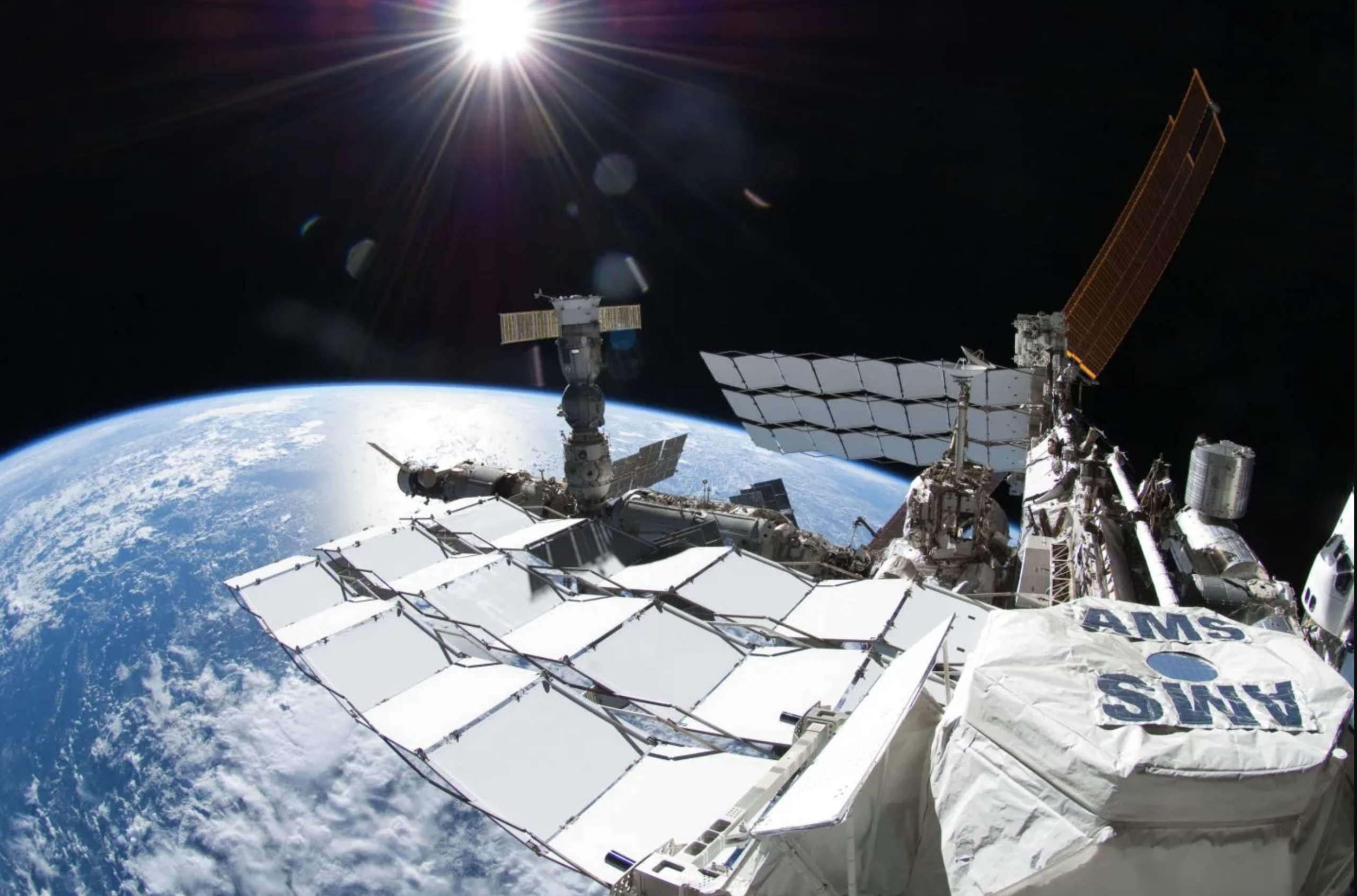
Investigating the origin of elements with the AMS on the International Space Station
Drawing on 15 years of observations and more than 260 billion cosmic-ray events, the Alpha Magnetic Spectrometer is helping scientists investigate how elements are produced and propagate through our Galaxy. Its latest measurements of phosphorus, chlorine, argon, potassium and calcium reveal distinct patterns among primary and secondary cosmic-ray nuclei, contributing to a more comprehensive model…
-

Rucio crosses the exabyte horizon
Rucio crosses the exabyte horizon When we last wrote in these pages about Rucio, ATLAS had just passed the half-exabyte mark and the community counted around thirty organisations. Six years on, a threshold that was then a distant projection has been crossed: both ATLAS and CMS, the two largest LHC experiments, now each manage more
-
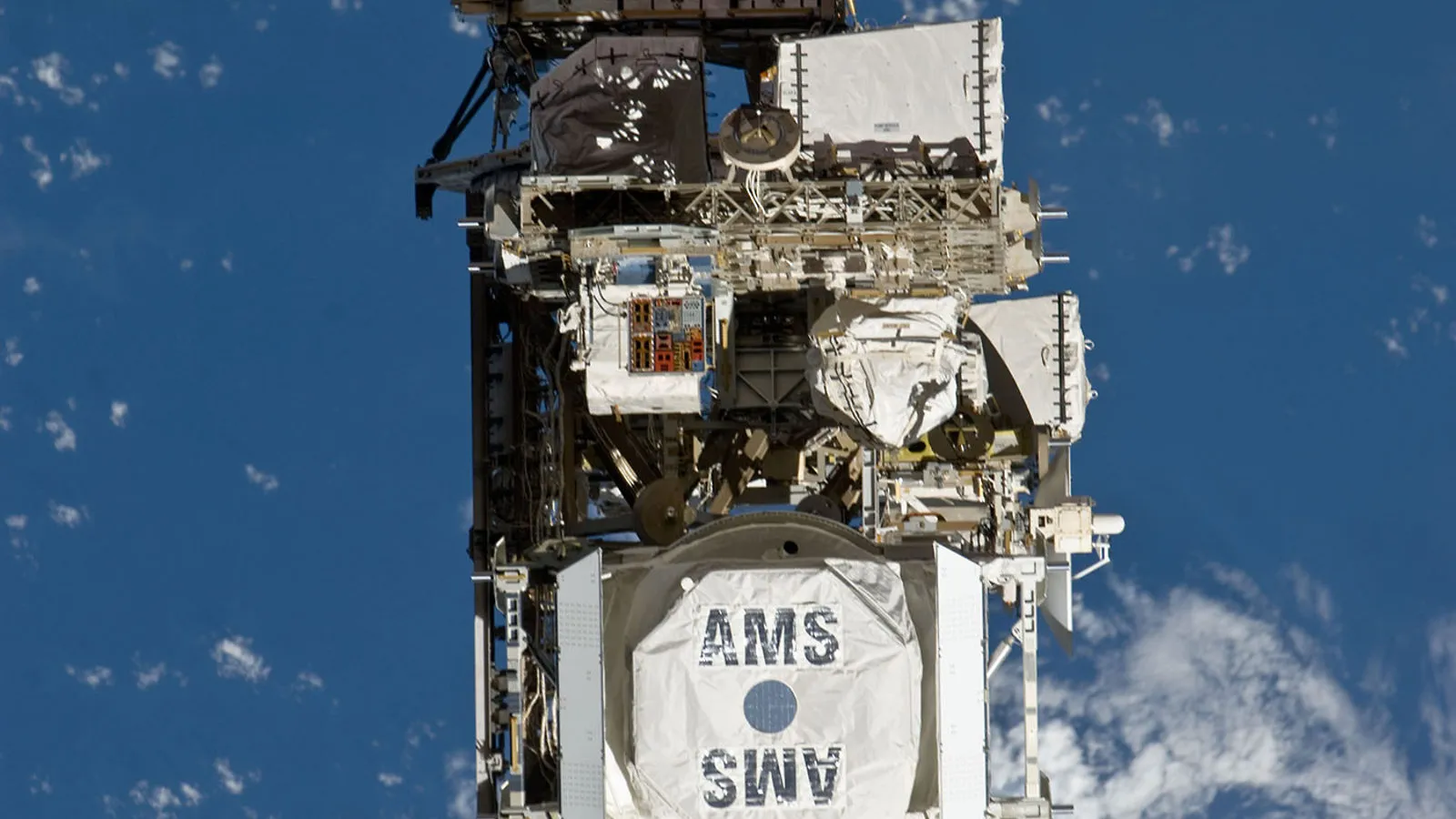
Highlights from the Alpha Magnetic Spectrometer on the International Space Station
Highlights from the Alpha Magnetic Spectrometer on the International Space Station The Alpha Magnetic Spectrometer, AMS, is a high-energy particle detector performing unprecedented-precision measurements of cosmic rays of rigidity (momentum/charge) ranging from GV to 3 TV on the International Space Station (ISS). AMS has now reached 13 years of continuous operation, and it has collected
-
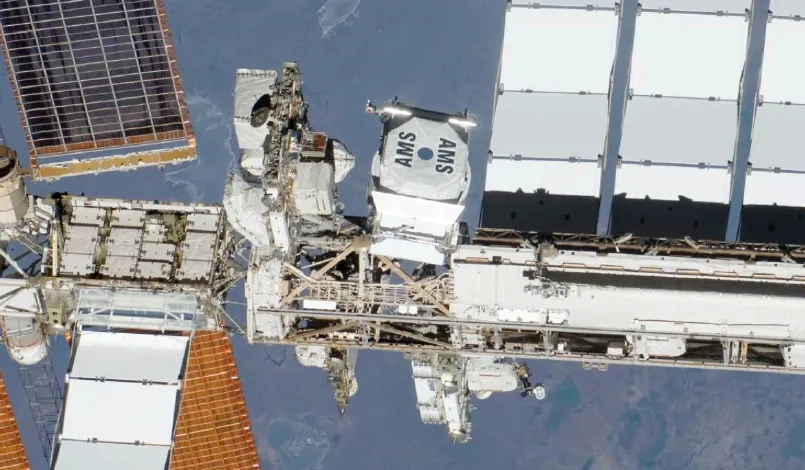
10 Years of operating the Alpha Magnetic Spectrometer on the International Space Station
10 Years of operating the Alpha Magnetic Spectrometer on the International Space Station AMS, passed the milestone of its first 10 years of continuous operation on the International Space Station. AMS is a particle physics detector designed to measure antiparticles, particles, and nuclei of rigidity (momentum/charge) ranging from the GV to few TV (Figure 1).
-
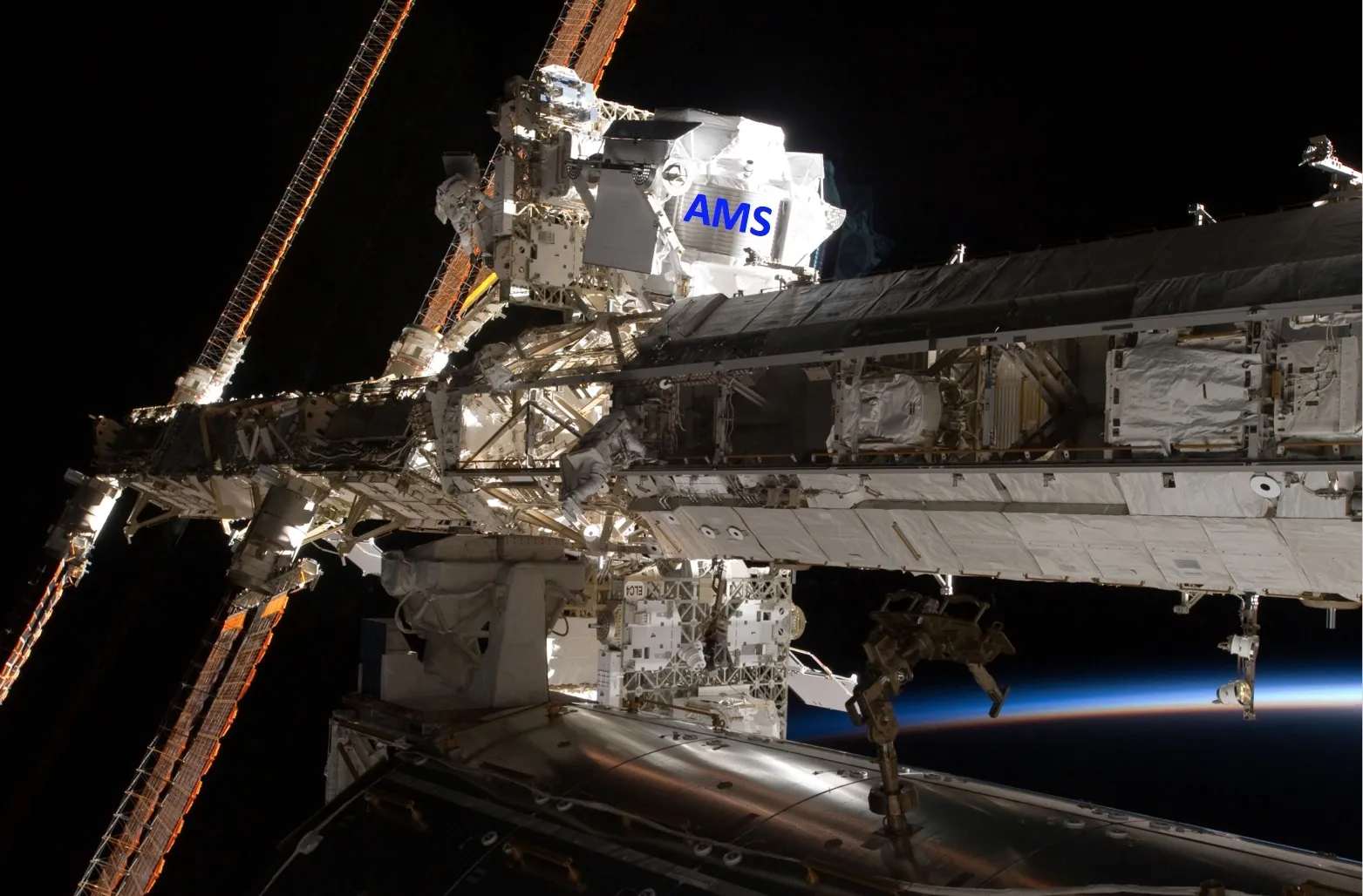
Latest Results from the AMS on the International Space Station
Latest Results from the AMS on the International Space Station The Alpha Magnetic Spectrometer, AMS, is a particle physics detector operating on the International Space Station (Figure 1) since May 2011 with the aim to address long-standing open questions in fundamental physics, such as the matter-antimatter asymmetry, the nature of dark matter, the existence of
-
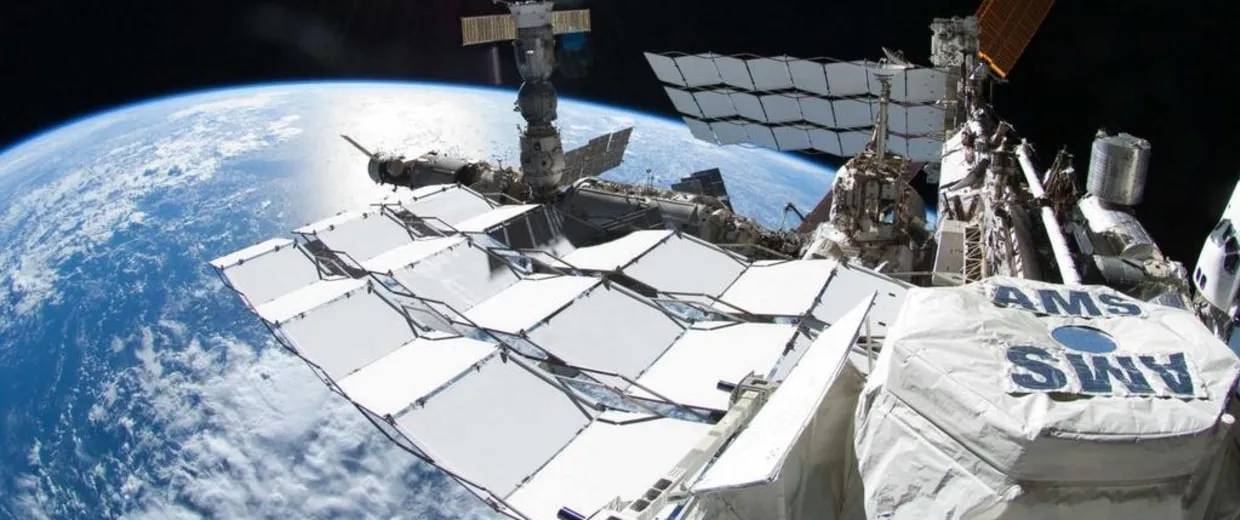
AMS looks at Cosmic Galactic Rays
AMS looks at Cosmic Galactic Rays The Alpha Magnetic Spectrometer (AMS) is a state-of-the-art particle physics experiment operating on the International Space Station (ISS) since May 2011. In the first 6 years of missions, AMS has detected over 100 billion cosmic ray (CR) particles. Recently, it has released new results on proton, antiproton, lepton, and