
Tag: CMS
-
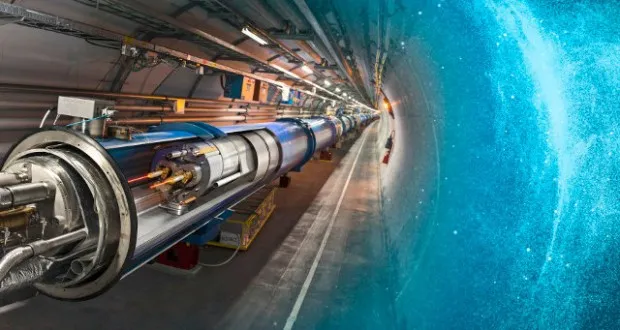
Searching for dark energy with particle colliders
Searching for dark energy with particle colliders 2 GeV. For one type of coupling this is eleven orders of magnitude more stringent than constraints obtained from cosmological and solar system tests, and excludes previously popular models that require the coupling scale to lie close to the dark energy scale, Λ ~ 10 -3 eV. These
-
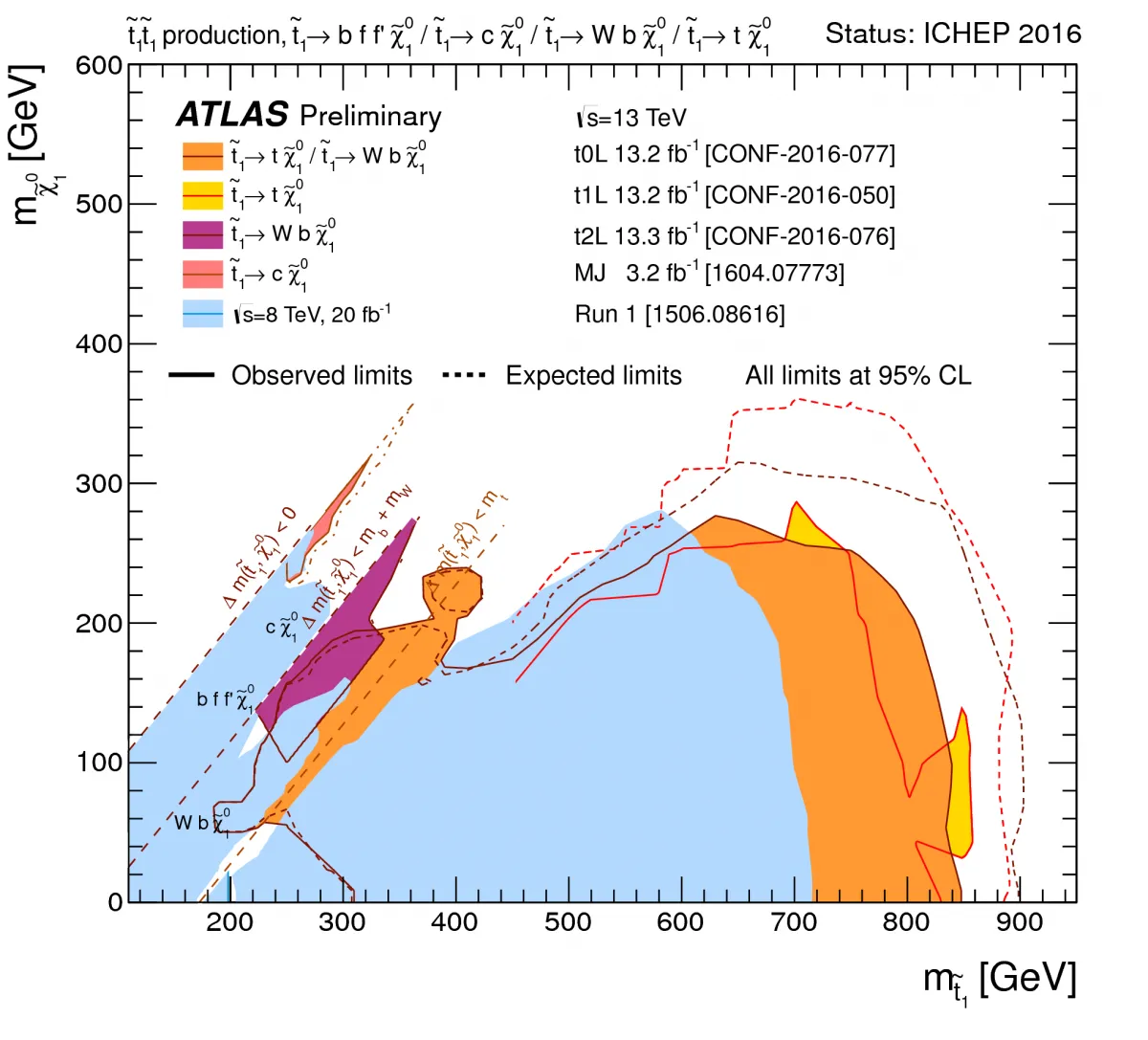
Where is Supersymmetry?
Where is Supersymmetry? The original ideas The original ideas for introducing supersymmetry dates back in the 1960s when, in the context of hadron physics that was found to be approximately spin-flavour independent, a symmetry between mesons and baryons was proposed. These ideas, largely ignored at the time, found their way through mathematical investigations related to
-
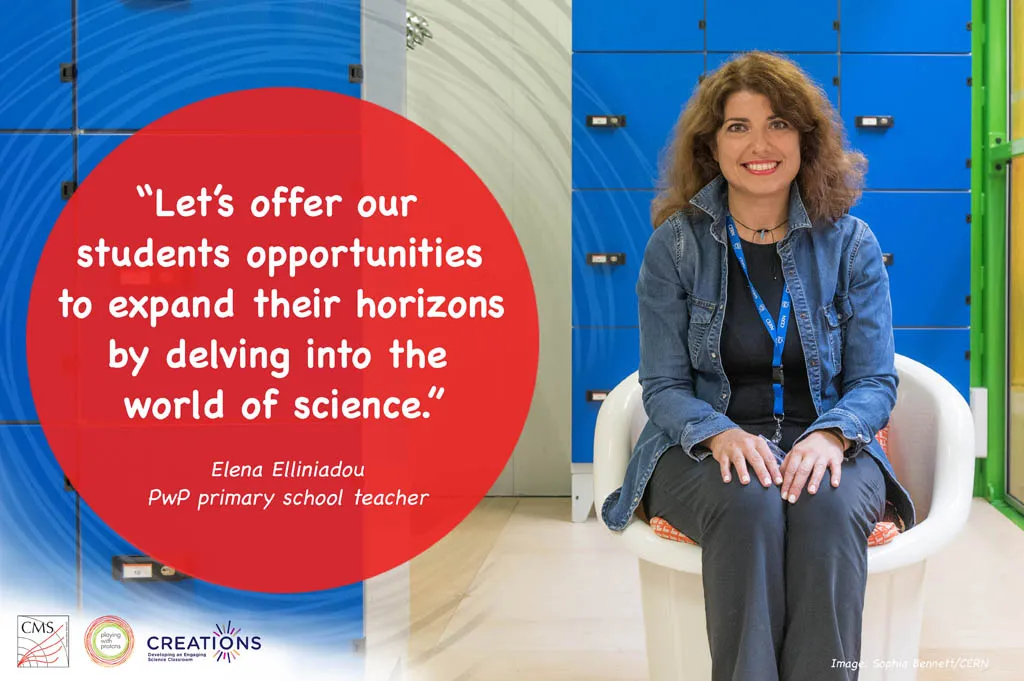
Playing with Protons: Engaging Teachers to Engage K-6 Students with Science, Technology and Innovation
Playing with Protons: Engaging Teachers to Engage K-6 Students with Science, Technology and Innovation BROKEN IMAGE NOT MOVED (drupal url : https://ep-news.web.cern.ch//content/playing-protons-engaging-teachers-engage-k-6-students-science-technology-and-innovation) There is widespread consensus among science education researchers that learning science should begin early in every child’s schooling. Among many good reasons, one stands out clearly: “Children naturally enjoy observing and thinking about
-
LHC experiments present latest results in ICHEP16
LHC experiments present latest results in ICHEP16 BROKEN IMAGE NOT MOVED (drupal url : https://ep-news.web.cern.ch//content/lhc-experiments-present-latest-results-ichep16) New results from the LHC experiments were presented during the 38th International Conference on High Energy Physics (ICHEP 2016) that took place in Chicago, USA. The collaborations of the LHC experiments can now dive in and explore at the new
-
Interview with Guido Tonelli
Interview with Guido Tonelli Guido Tonelli, former spokesperson of the CMS experiment and one of the protagonists of the Higgs boson discovery, discusses the meaning of one of the major breakthroughs of the century, as well as the importance of pushing beyond the current limits of knowledge. He reflects on the present situation in particle
-
Charting the Unknown: interpreting LHC data from the energy frontier
Charting the Unknown: interpreting LHC data from the energy frontier The LHC has started its Run2, exploring for the first time the high-energy frontier at 13 TeV. Collected data will give decisive information on the dynamics behind electroweak symmetry breaking and allow testing the weak-scale naturalness. A TH Institute “Charting the Unknown: Interpreting LHC data
-
LHC Restart 2016
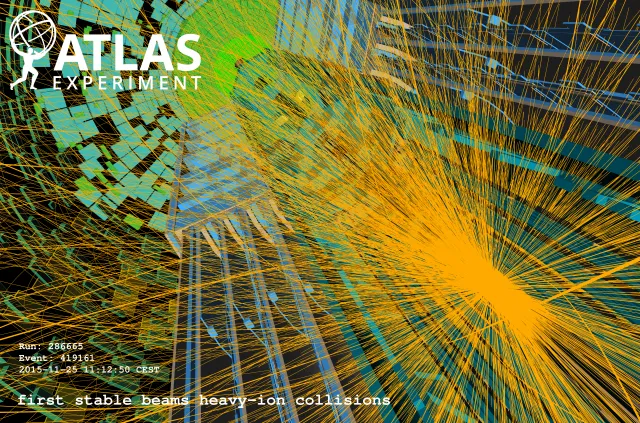
LHC Restart 2016 The Large Hadron Collider (LHC) and its experiments are back in action, now taking physics data at 13TeV. The goal is to improve our understanding of fundamental physics which ulitmately in decades to come can drive innovation and inventions by researchers in other fields. The Higgs was the last piece of the
-
CMS releases new data
CMS releases new data Rediscover the Standard Model of particle physics and much more with open data from the Large Hadron Collider Today, the CMS Collaboration at CERN has released more than 300 terabytes (TB) of high-quality open data. These include over 100 TB, or 2.5 inverse femtobarns (fb−1), of data from proton collisions at
-
CMS 2015 – taking data under difficult conditions
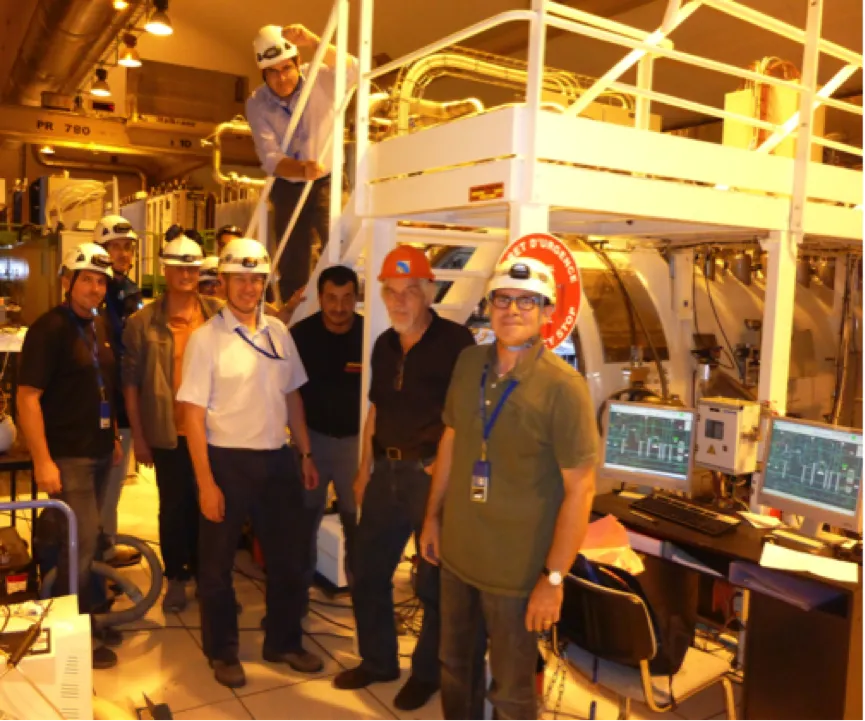
CMS 2015 – taking data under difficult conditions The last edition of this letter ended with the optimistic remark that CMS after the end of LS1 would be perfectly prepared for the exciting times ahead of us. And indeed the final steps of LS1 went smoothly with CMS ready for the first beams. In April
-
Results from ATLAS & CMS shed light on Higgs properties
Results from ATLAS & CMS shed light on Higgs properties Three years after the announcement of the discovery of a new particle, the Higgs boson, the ATLAS and CMS Collaborations have recently presented for the first time combined measurements of many of its properties, at the third annual Large Hadron Collider Physics Conference (LHCP 2015).