
Tag: CMS
-
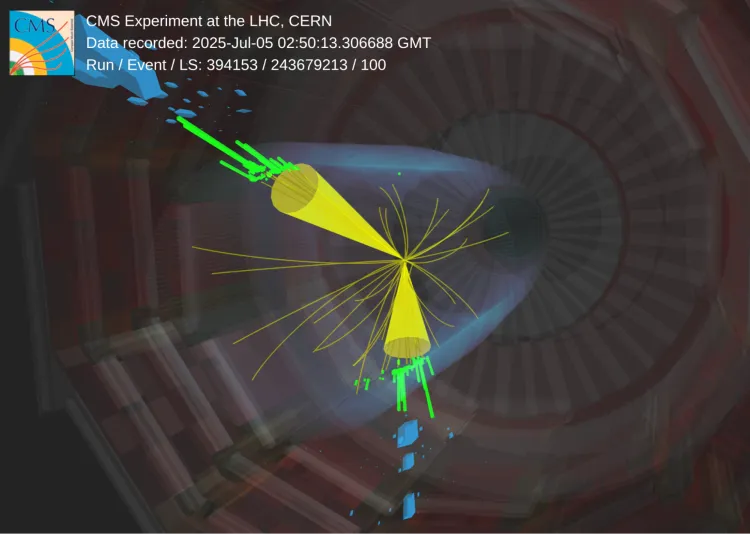
CMS explores light-ion collisions: suppression, scaling, and collectivity
CMS explores light-ion collisions: suppression, scaling, and collectivity The CMS experiment has reported first results from the LHC’s dedicated oxygen–oxygen (O–O) and neon–neon (Ne–Ne) collision run, offering an unprecedented look at quark–gluon plasma (QGP) formation in light-ion systems. These studies address long-standing questions about the minimal conditions required for QGP droplets to form and how
-
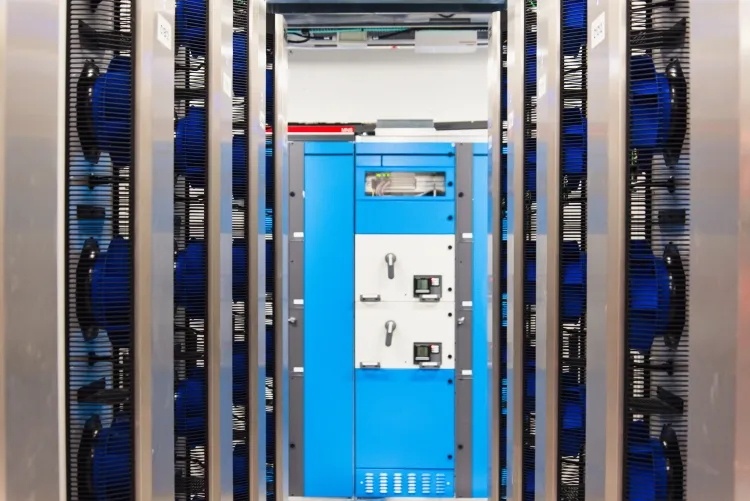
OLC-R / OLC-1 refurbishment in a Nutshell
OLC-R / OLC-1 refurbishment in a Nutshell For Phase-2, CMS DAQ will undergo a major increase of its capacities to match HL-LHC performance and the related CMS physics program. Compared to the present situation (Run3), the post-trigger data throughput will increase from 2 Tb/s today to 50 Tb/s for Run4 and the processing power needed
-
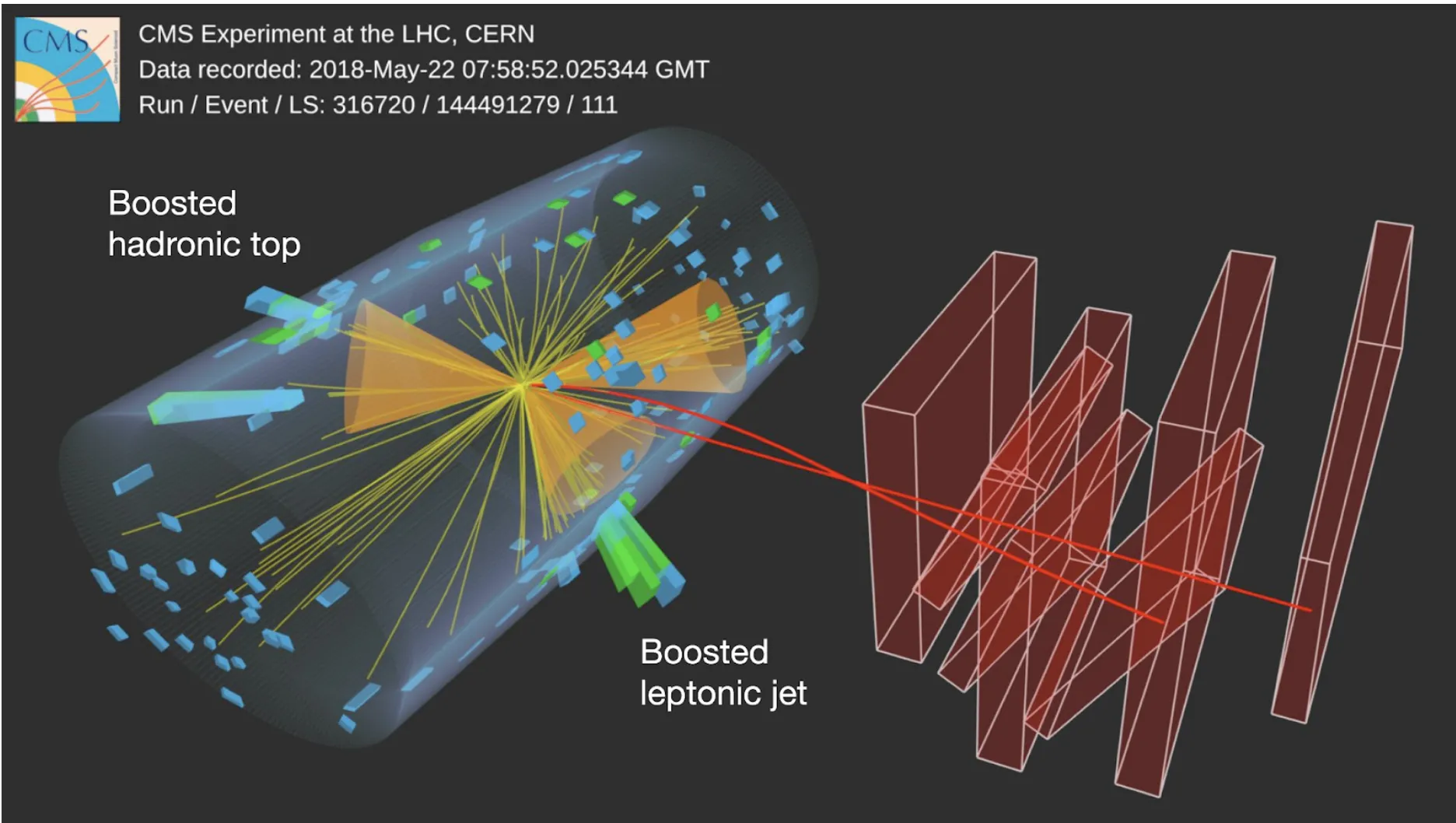
An all-round boosted chase for supersymmetry
An all-round boosted chase for supersymmetry It is rare for a theory to inspire as much experimental attention as supersymmetry has. CMS completed more than 40 SUSY searches in Run 2 alone, reflecting how compelling this framework remains in the quest for new physics. SUSY proposes that every known particle has a heavier partner, a
-
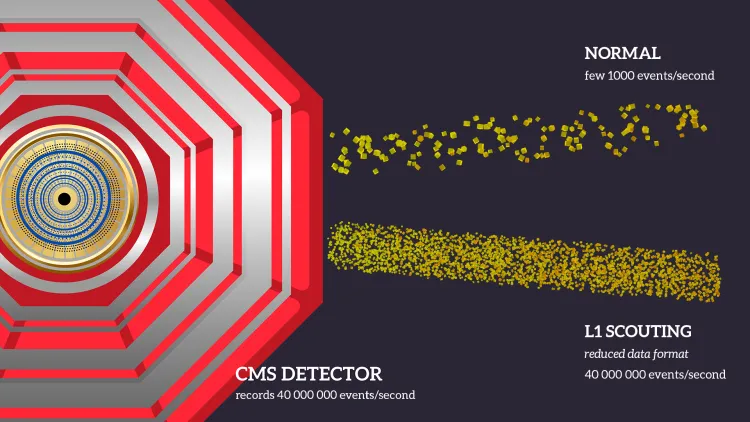
How CMS records all 40 million events per second
How CMS records all 40 million events per second Traditional data taking workflows at the LHC experiments rely on a filtering step – called Level-1 trigger – that reduces the amount of data to a manageable level. The Level-1 trigger is implemented in hardware, takes only a few microseconds, and gets rid of more than
-
Next-Generation CO₂ Cooling Systems Powering the Future of ATLAS and CMS
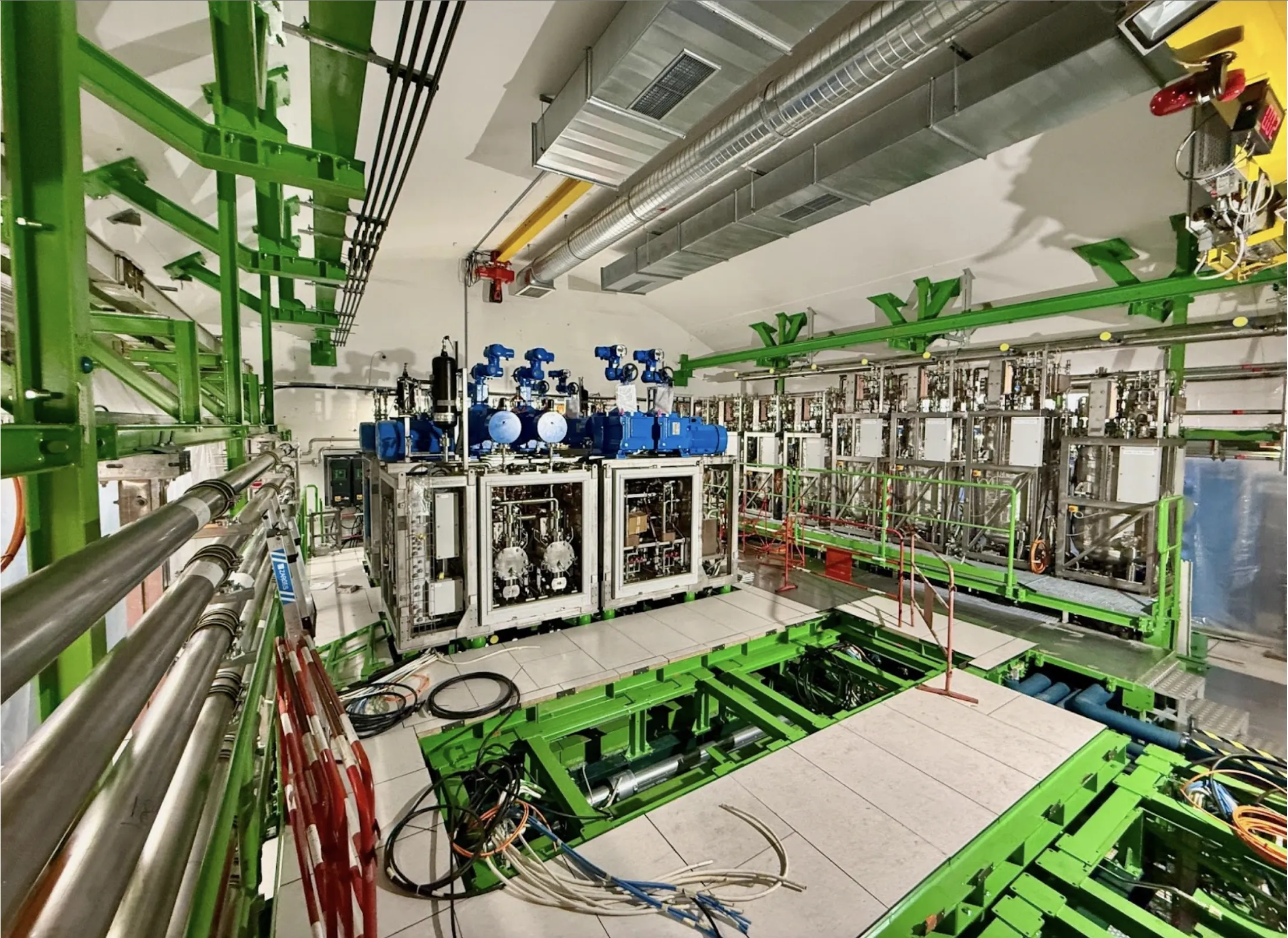
Next-Generation CO₂ Cooling Systems Powering the Future of ATLAS and CMS Four CO2 cooling plants and accumulators in the service cavern of CMS in May 2025. (Photo by Jérôme Daguin) During recent shutdown periods, CERN engineers and technicians — in collaboration with the ATLAS and CMS teams — began installing the first units of next-generation
-
CMS Inaugurates Its New Control Room
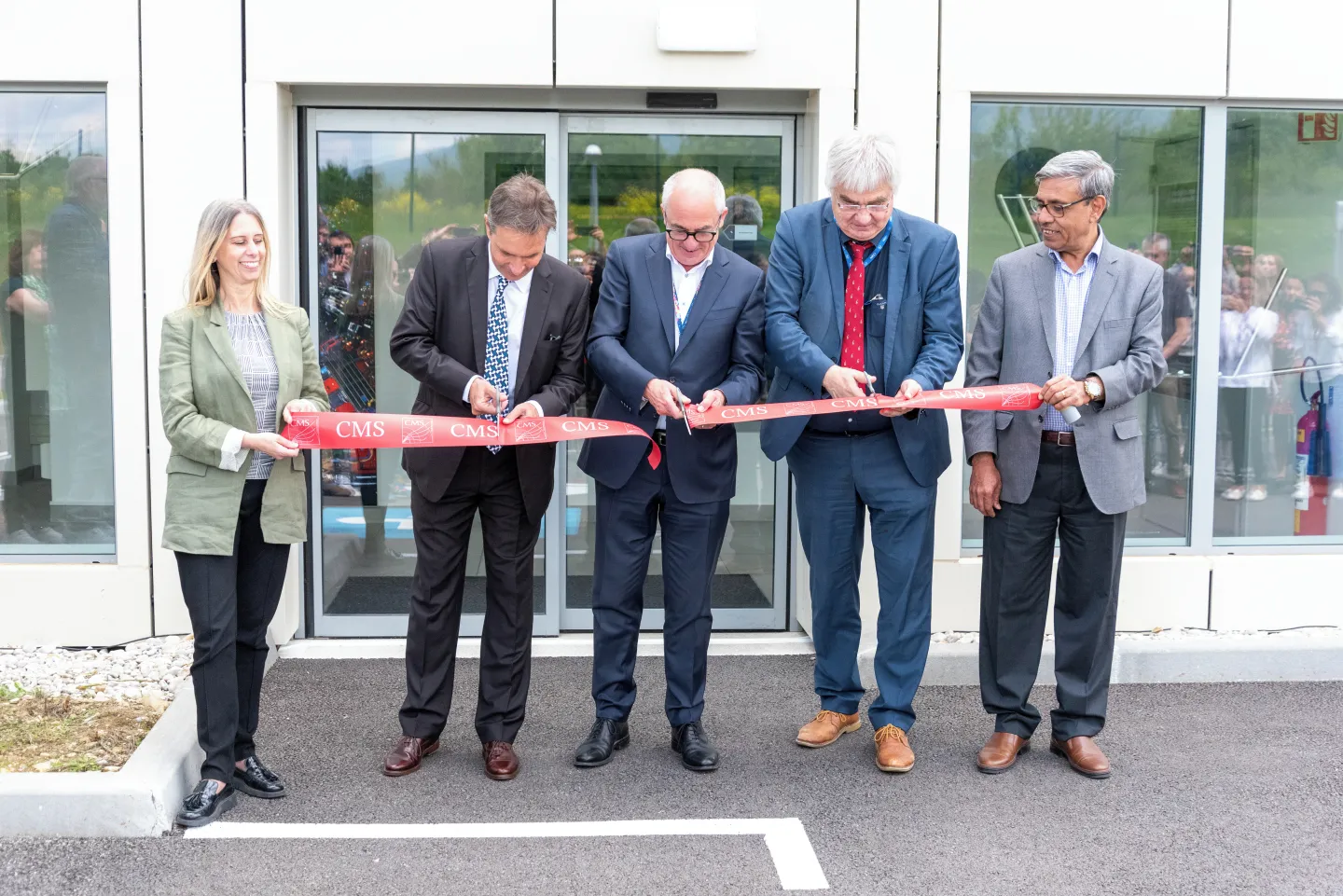
CMS Inaugurates Its New Control Room On 15 May 2025, CMS officially inaugurated its new control room at Point 5 in Cessy, France. The celebration brought together guests from CERN management and representatives of all LHC experiments to mark this significant upgrade to CMS’s operational infrastructure. If CMS were a human body, the control room
-
CLUE: A Scalable Clustering Algorithm for the Data Challenges of Tomorrow
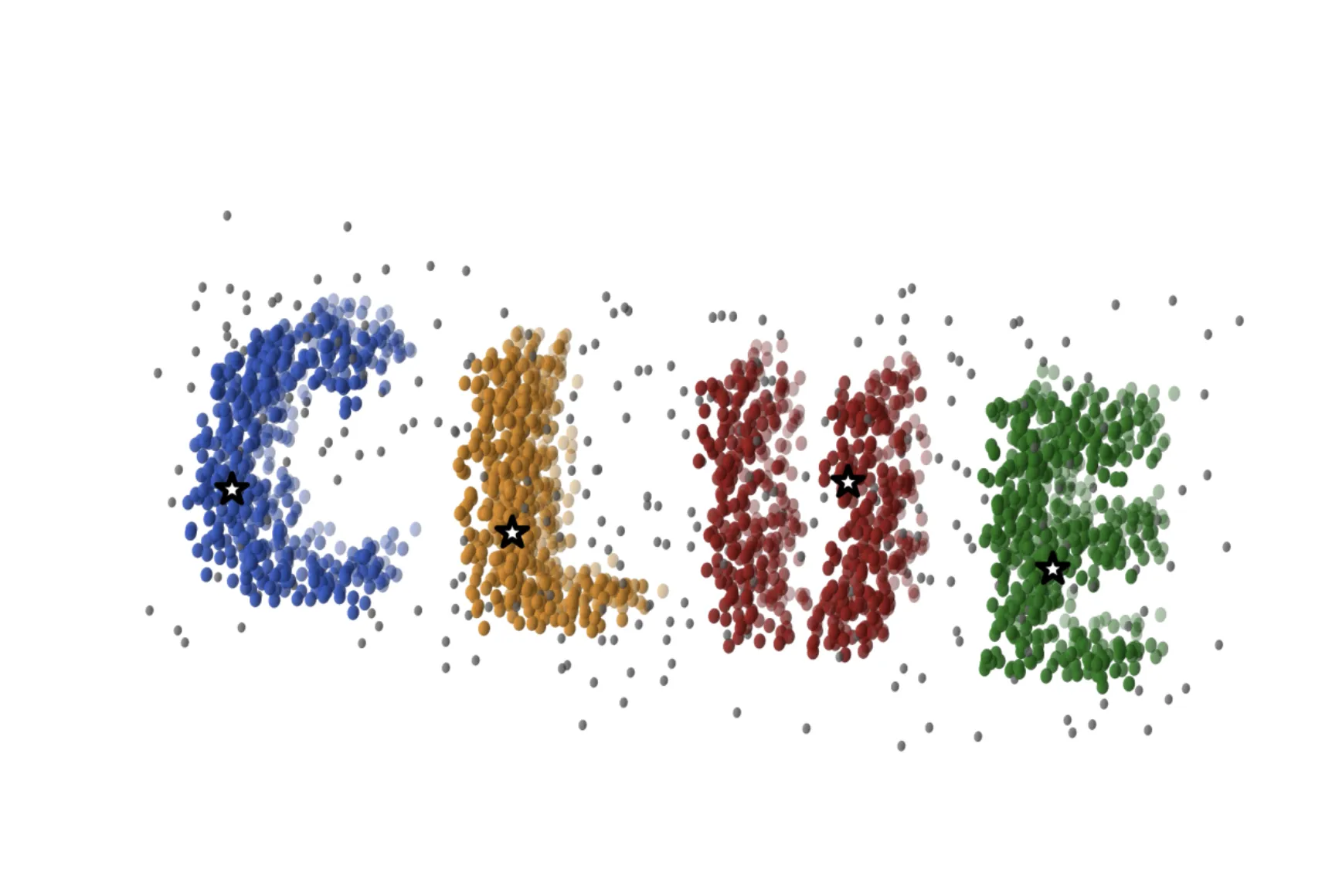
CLUE: A Scalable Clustering Algorithm for the Data Challenges of Tomorrow The foreseen increase in luminosity and pileup at the High-Luminosity Large Hadron Collider (HL-LHC) [1] will challenge both the detector hardware and the reconstruction software. With higher pile-up, calorimeter energy reconstruction depends even more on pattern-recognition algorithms. These algorithms have to cluster together deposits
-
Anomaly at the Threshold: A Closer Look at tt̄ Events in CMS
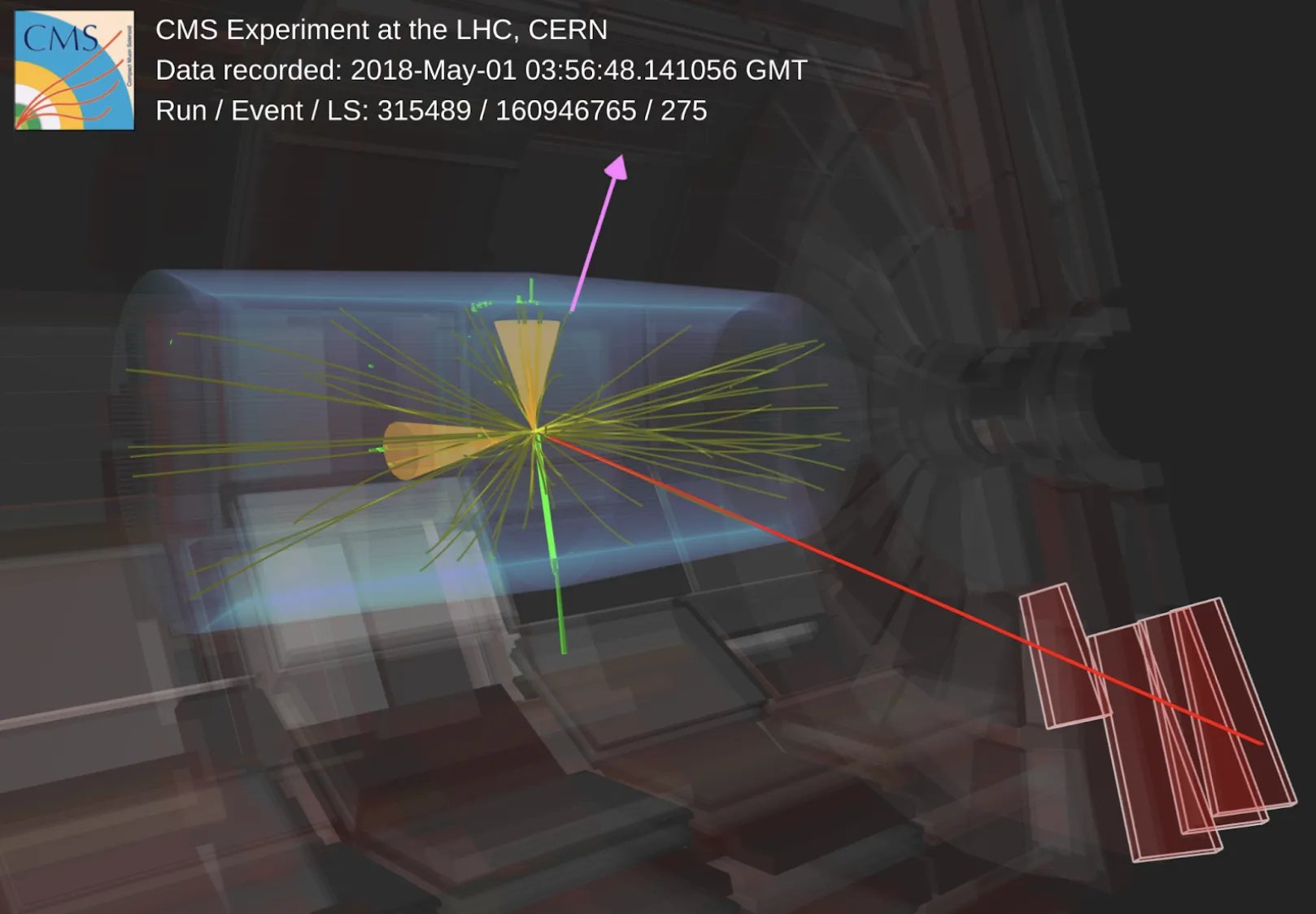
Anomaly at the Threshold: A Closer Look at tt̄ Events in CMS Some of the most intriguing developments in physics begin not with a discovery, but with an anomaly, subtle, persistent, and difficult to ignore. In 2019, CMS reported a mild excess of around three standard deviations in a search for heavy pseudoscalar (A) or
-

CMS Launches New Monthly Newsletter: Le Point Cinq
CMS Launches New Monthly Newsletter: Le Point Cinq The CMS collaboration is excited to announce the launch of its new monthly newsletter, "Le Point Cinq." This fresh communication channel will provide regular updates on CMS physics highlights, the progress of upgrade projects, and essential collaboration news. Following a successful internal trial over the past couple
-
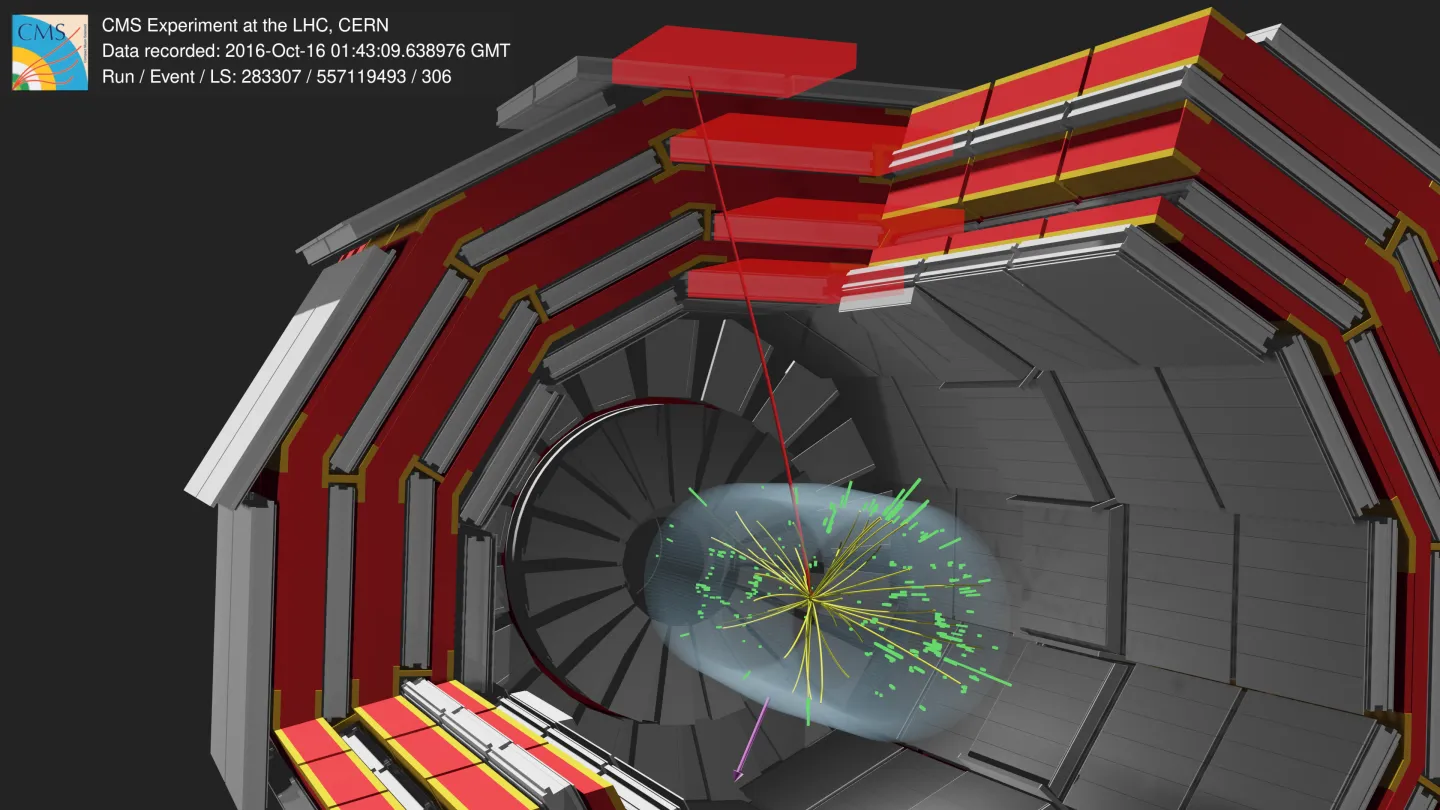
CMS Achieves LHC’s Most Precise W boson Mass Measurement Yet
CMS Achieves LHC's Most Precise W boson Mass Measurement Yet The first measurement of the W boson mass (mw) performed by the CMS Collaboration was announced in September 2024. This result has been long-awaited—the first LHC measurement of mW, by the ATLAS Collaboration, was shown nearly 7 years ago. In the meantime, the CDF Collaboration