
Tag: electronics
-
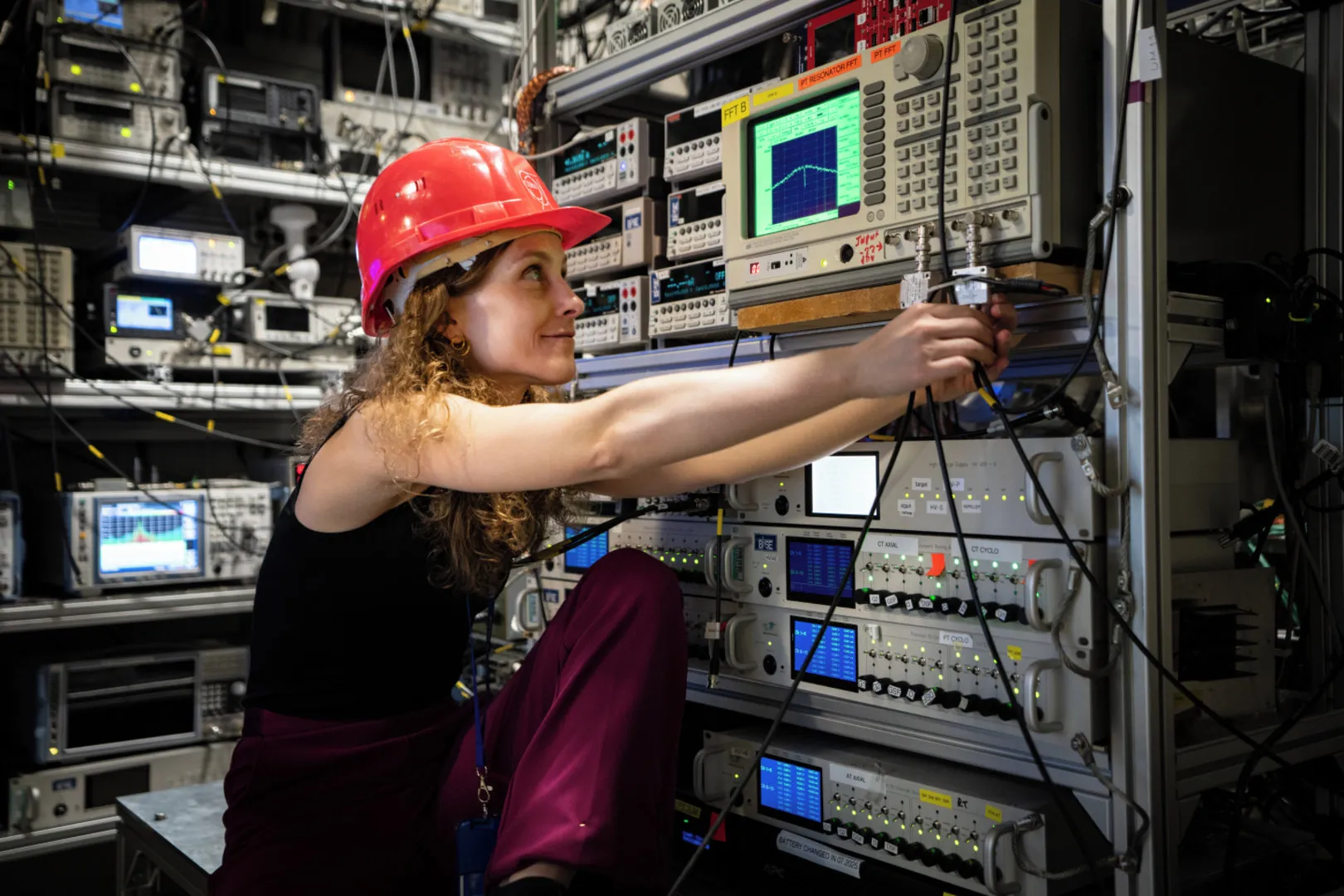
BASE experiment scientist recognised with UPAP Early Career Scientist for coherent antiproton spin spectroscopy
BASE experiment scientist recognised with UPAP Early Career Scientist for coherent antiproton spin spectroscopy Dr Barbara Maria Latacz, CERN scientist and lead author of the BASE study, works on the trap electronics used to control single antiprotons for high-precision antimatter measurements. Barbara Latacz, CERN research scientist and technical coordinator of the BASE experiment, has received
-
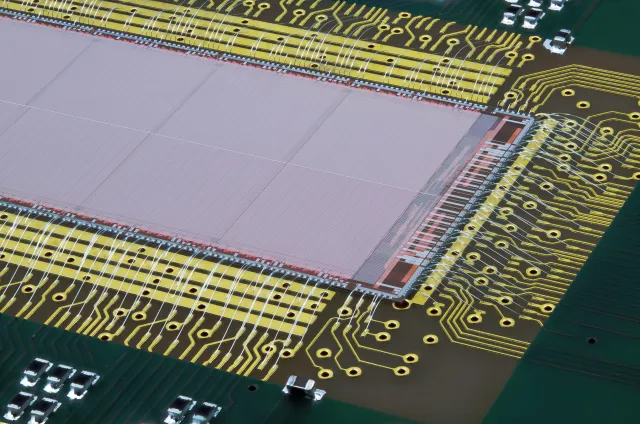
MOSAIX: Designing bent wafer-scale monolithic pixel sensors for the ALICE ITS3 upgrade
MOSAIX: Designing bent wafer-scale monolithic pixel sensors for the ALICE ITS3 upgrade The ALICE detector is preparing a major upgrade to its Inner Tracking System (ITS) during LHC long shutdown 3 (2026-2030). This upgrade, called ITS3, will replace the three innermost tracking layers with three layers of cylindrical, 50 µm thick, 27 cm long, silicon
-
Towards monitoring in Run 4 and beyond: LHC experiments exchange perspectives on data quality at the HL-LHC
Towards monitoring in Run 4 and beyond: LHC experiments exchange perspectives on data quality at the HL-LHC In March of 2026, experts from ALICE, ATLAS, CMS and LHCb gathered at CERN for a dedicated workshop on Data Quality Monitoring (DQM), bringing together developers, coordinators and detector specialists to discuss how the LHC experiments monitor the
-
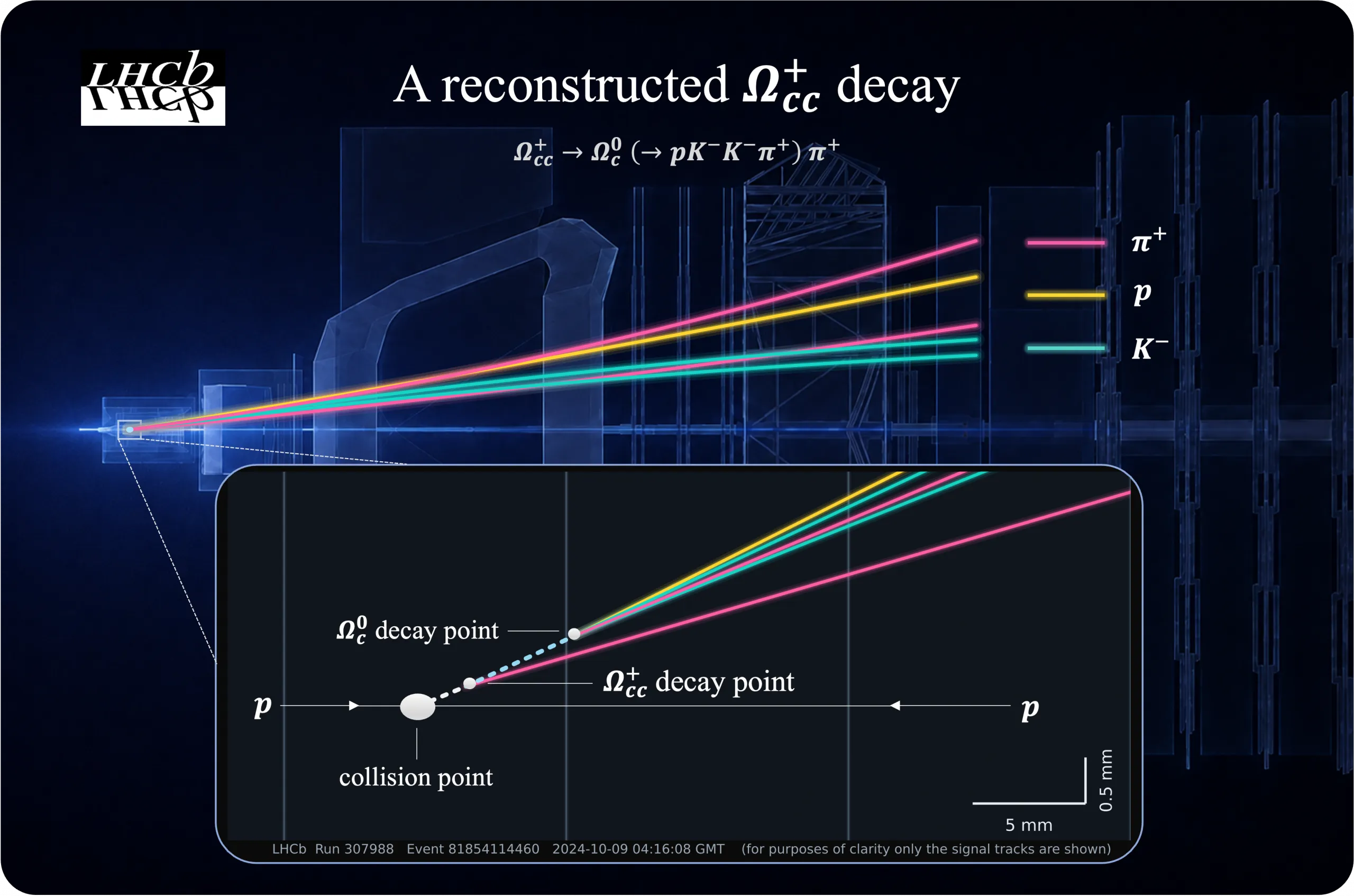
LHCb completes a long-awaited family of doubly charmed baryons
LHCb completes a long-awaited family of doubly charmed baryons More than sixty years ago, particle physics was facing a problem of abundance. New subatomic particles were appearing in experiments, but there was not yet a clear organising principle to explain their relationships. In the early 1960s, Murray Gell-Mann and Yuval Ne’eman independently proposed the “Eightfold
-
System-on-Chip in Particle Physics Experiments
System-on-Chip in Particle Physics Experiments Many experiments in particle physics use custom-built electronics boards in order to perform event triggering and data readout. For many years now, those electronics boards have been using Field-Programmable Gate Arrays (FPGAs) for processing data. An FPGA is a type of integrated circuit that is reconfigurable and that provides fast