
Tag: ESE
-
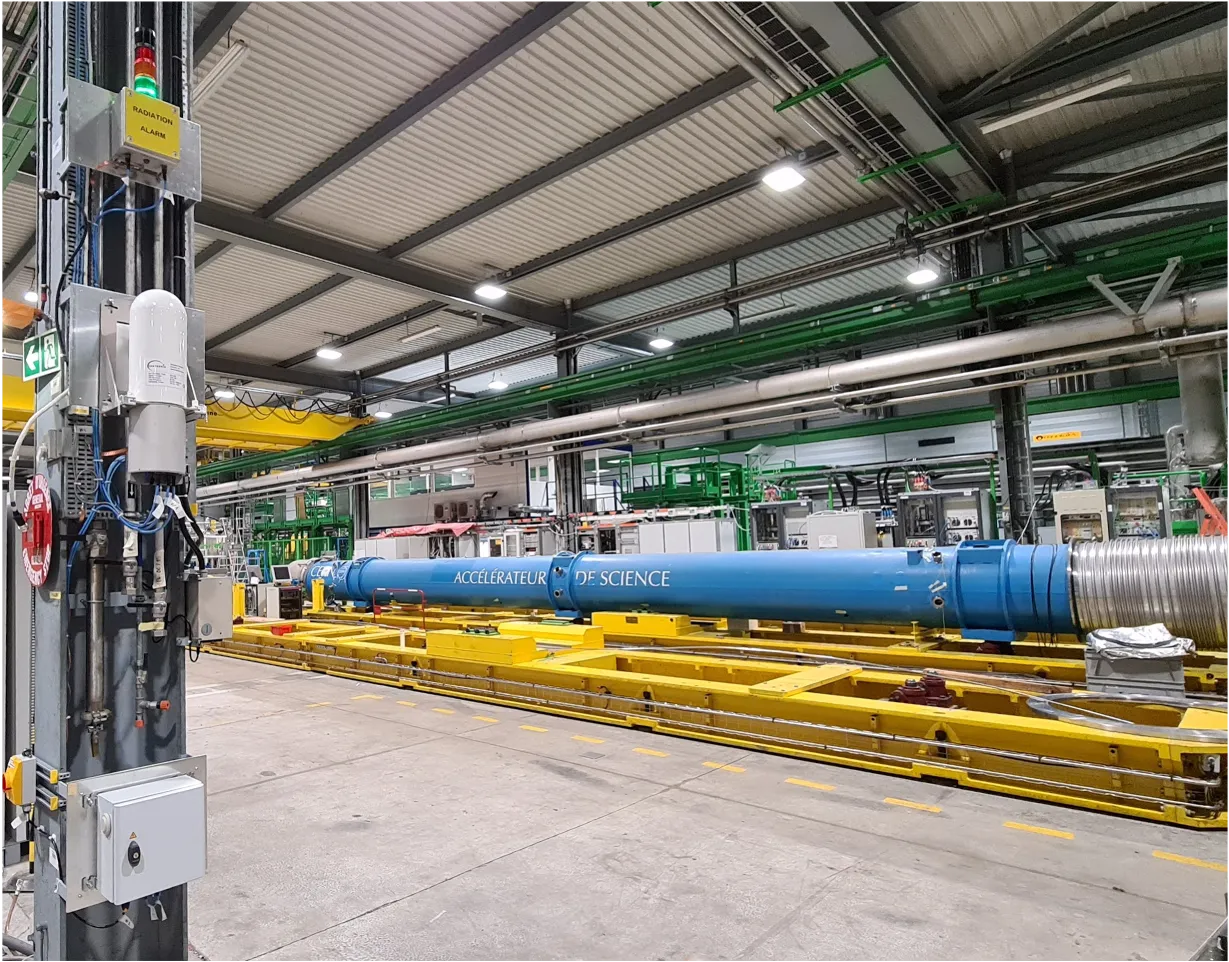
A safety and reliability perspective of the CERN RadiatiOn Monitoring Electronics (CROME).
A safety and reliability perspective of the CERN RadiatiOn Monitoring Electronics (CROME). CERN has the legal obligation to protect the public and the people working on its premises from any unjustified exposure to ionising radiation. In this context, radiation monitoring is one of the main tasks of the Radiation Protection Group. Currently, around 800 radiation
-
FastIC and FastICpix developments
FastIC and FastICpix developments Precise time tagging is a hot topic in High Energy Physics and in other fields. A number of detector technologies are available but there are few multi-channel front-end ASICs capable of providing time tagging in the region of 10ps. This article describes two developments that are going on within the microelectronics
-
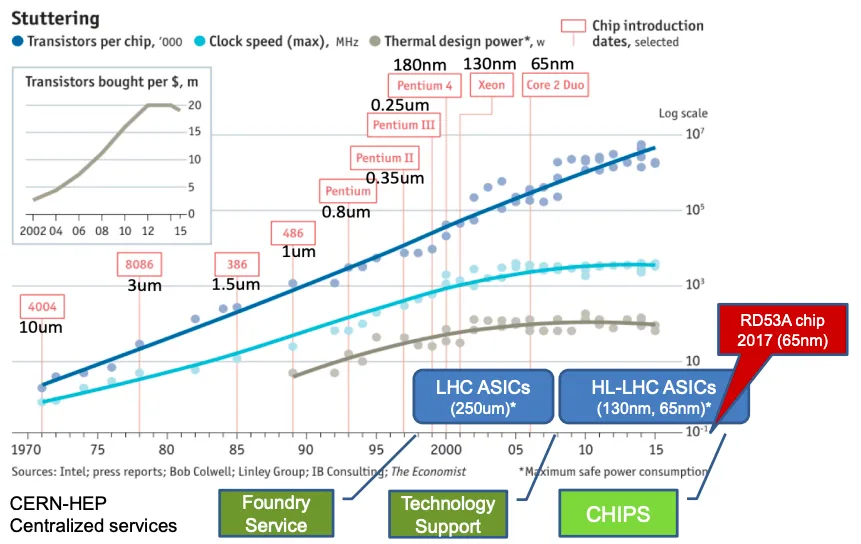
CHIPS: A new EP-ESE service for the HEP community
CHIPS: A new EP-ESE service for the HEP community ASIC technology and designs are becoming increasingly complex but bring potentially huge benefits to HEP experiments (see also previous EP article “A bright future for microelectronics“). Figure 1 summarises the evolution of CMOS technologies in the last decades, and their increasingly delayed adoption in HEP. Each
-
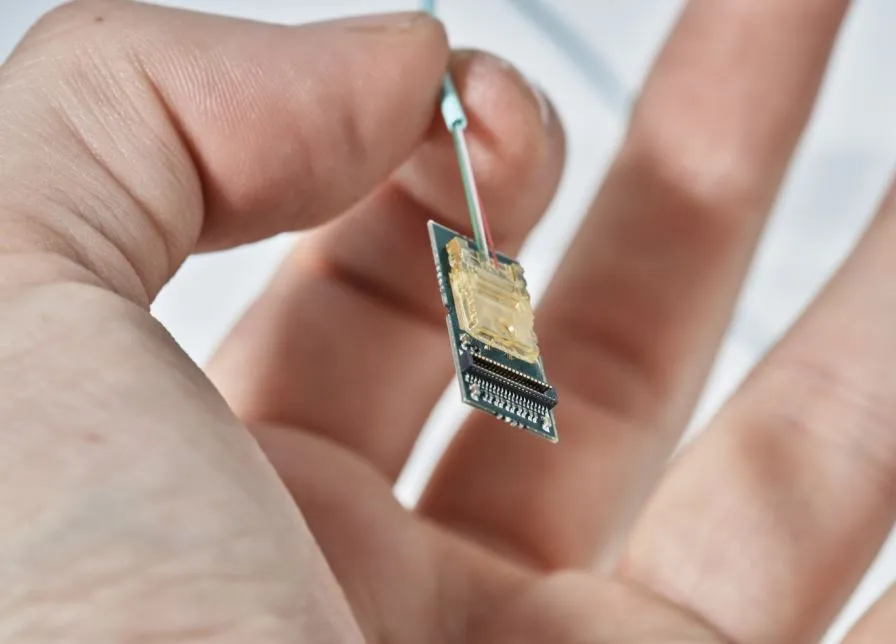
Optical Data Transmission for LHC Experiment Phase-2 Upgrades
Optical Data Transmission for LHC Experiment Phase-2 Upgrades Optical Readout and Control Systems have become ubiquitous with the LHC-era of Particle Physics Experiments, with each generation of detector upgrades bringing a need to transfer ever-greater amounts of data. Just like in our everyday lives where we now take for granted the ability to watch movies
-

Machine learning for new Detector Technologies
Machine learning for new Detector Technologies I have spent a considerable amount of my time as Master student in Physics in the late 70’s performing a fairly prosaic function that nevertheless required the presence of humans (physics professors, trained technicians and of course students): scanning thousands of BEBC pictures with (occasional) neutrino events, a task
-
Silicon photonics for high-energy physics experiments
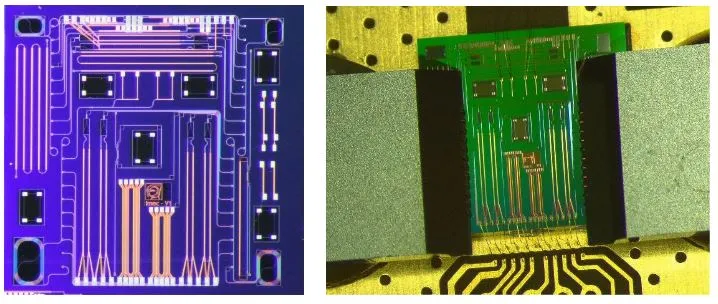
Silicon photonics for high-energy physics experiments Optical links have become ubiquitous in High Energy Physics (HEP) experiments to transport data generated from the particle detectors and other control points along the accelerator to the processing electronics. So far, links based on both single-mode Edge Emitting Lasers (EELs) [1] and multi-mode Vertical Cavity Surface Emitting Lasers
-

Colour X-rays for Medicine: The 2019 specXray workshop
Colour X-rays for Medicine: The 2019 specXray workshop The fifth workshop on Medical Applications of Spectroscopic X-ray Detectors (specXray) took place at CERN from 13 to 17th of May. Since its establishment in 2011, the workshop has brought together specialists from different but related fields focusing on how best to advance effort and understanding in
-
Electronics experts come together at Antwerp
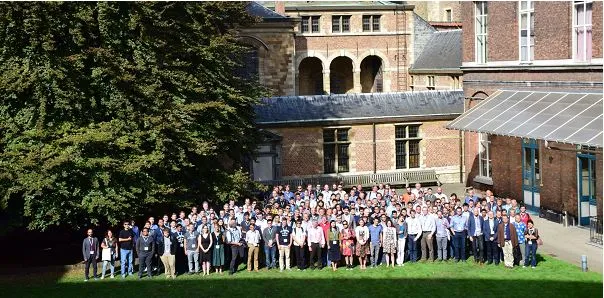
Electronics experts come together at Antwerp The “Topical Workshop on Electronics for Particle Physics” is the successor of the LEB and LECC Workshop series, which were initiated in 1994 by the LHC Electronics Board (LEB), an advisory board to the CERN LHC Experiments Committee. Since 2007, the workshop runs autonomously under the name “Topical Workshop
-
Developing new electronics for the CMS tracking system
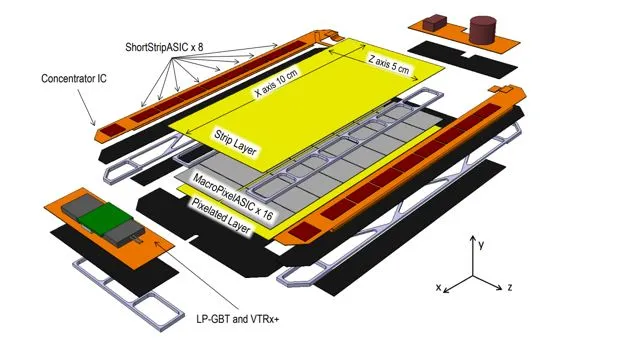
Developing new electronics for the CMS tracking system The High Luminosity Large Hadron Collider (HL-LHC) entails a substantial upgrade of the CMS tracking system, to cope with much more demanding requirements and to implement additional functionalities. One of the main challenges for the experiments is the increased number of pile up events which for an
-

VeloPix, a new hybrid pixel readout ASIC for the LHCb upgrade
VeloPix, a new hybrid pixel readout ASIC for the LHCb upgrade The LHCb-VELO group, which is composed of several institutes from the UK, Spain, Netherlands, Russia, Brazil and CERN are constructing an upgraded version of the VErtex LOcator (VELO) to be installed and commissioned during the long shutdown LS2 in 2019/2020. Unlike the currently operating