
Tag: ESE
-
A bright future for microelectronics at CERN
A bright future for microelectronics at CERN During the 2018 FCC week in Amsterdam, Michael Campbell (EP-ESE) gave a presentation on the “Present and future of microelectronics”. Following an informative review of ASICs used in the LHC run one systems, he tried to distinguish recent trends in ASIC design for HEP experiments and discussed possibly
-
Setting a roadmap for future experimental technologies
Setting a roadmap for future experimental technologies In elementary-particle physics as in most fields of science, advances in understanding are closely coupled to advances in technology. Machines of higher luminosity open opportunities for the observation of rare and unexpected processes while higher-energy accelerators are needed to cross thresholds for suspected new phenomena. Advances in accelerator
-
Designing Utopia – An Ultralow Picoammeter
Designing Utopia – An Ultralow Picoammeter There are various applications where the output of a sensor is a low current. In some cases like in ionizing radiation measurements, device characterization, leakage current measurements and biosensing instrumentation, the current that has to be measured can be as low as few femtoamperes. However, designing a measuring digitizer
-
RADECS 2017 meeting in Geneva
RADECS 2017 meeting in Geneva RADECS (RADiation Effects on Components and Systems) is the yearly European conference gathering world-class scientists in the field of radiation effects in electronics devices and systems. This year the conference has been organised by the partnership between CERN and CNES, the French Space Agency, and has taken place on October
-
RD53: a large scale demonstrator pixel chip for the phase 2 upgrades of ATLAS and CMS
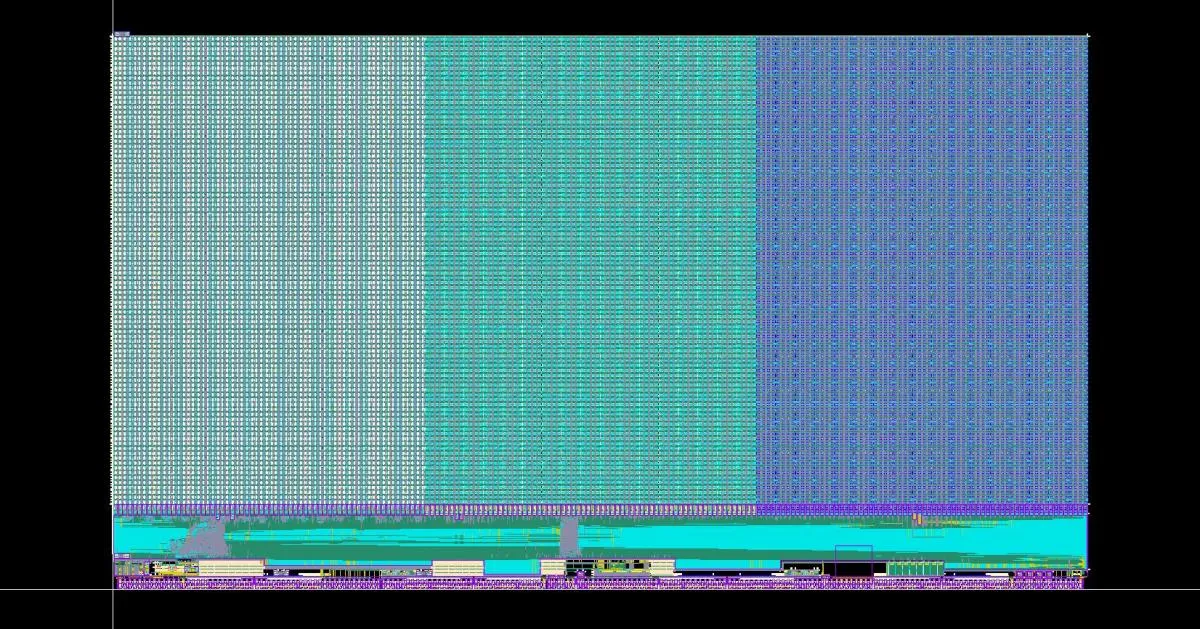
RD53: a large scale demonstrator pixel chip for the phase 2 upgrades of ATLAS and CMS The RD53 collaboration presented the RD53A large scale pixel chip demonstrator in 65nm CMOS technology as a vital milestone to make viable pixel detectors for the ATLAS and CMS phase 2 upgrades. The RD53 collaboration has during the last
-
Developing radiation hardness electronics for future detectors
Developing radiation hardness electronics for future detectors Particle colliders generate an extremely large amount of high-energy interactions in order to produce and detect very rare events that can be used to improve our understanding of the underlying physical laws. In doing so, a significant background is generated, which in turn degrades the performance of the
-
The Versatile Link Demonstrator Board (VLDB): an evaluation kit for the GBT ecosystem
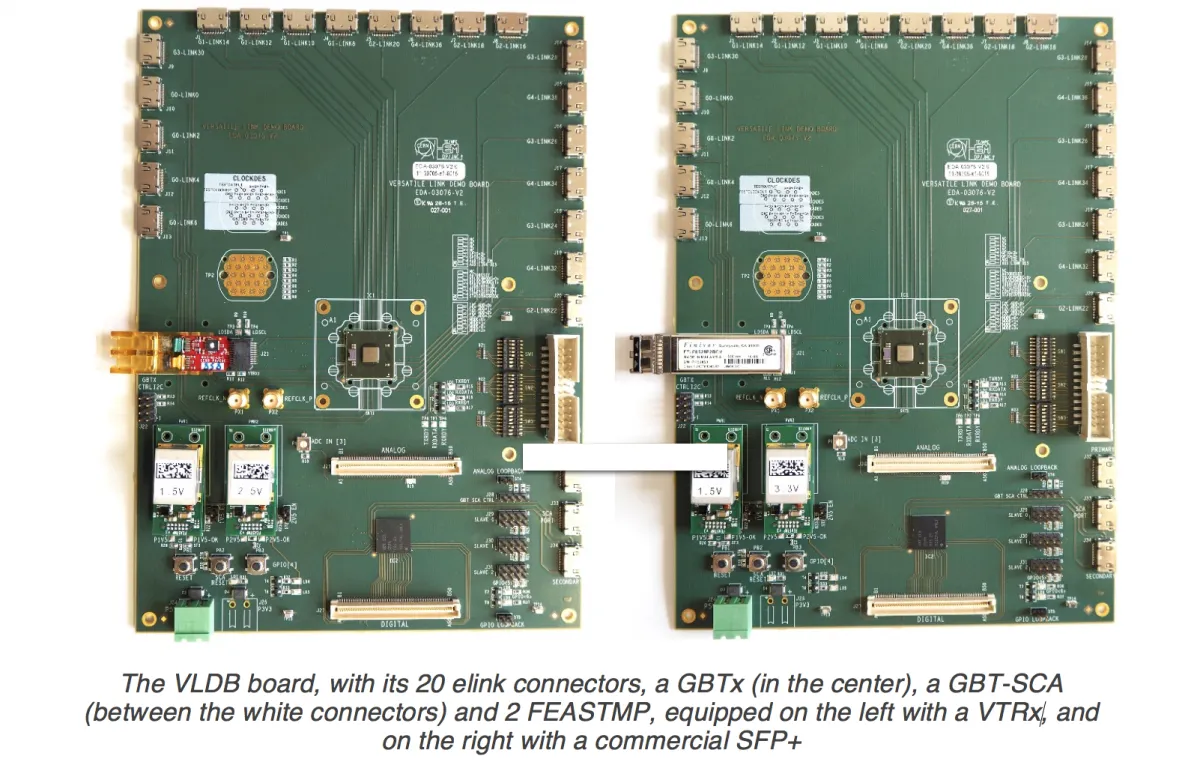
The Versatile Link Demonstrator Board (VLDB): an evaluation kit for the GBT ecosystem One of PH/ESE’s flagship projects is the Radiation Hard Optical Link project for LHC, a common development for all LHC experiments and other interested collaborations. The objective of the project is to supply experiments with a radiation hard, magnetic field tolerant 4.8
-
TDCpix: a high rate pixel detector ASIC with built-in ultra-precise stopwatches
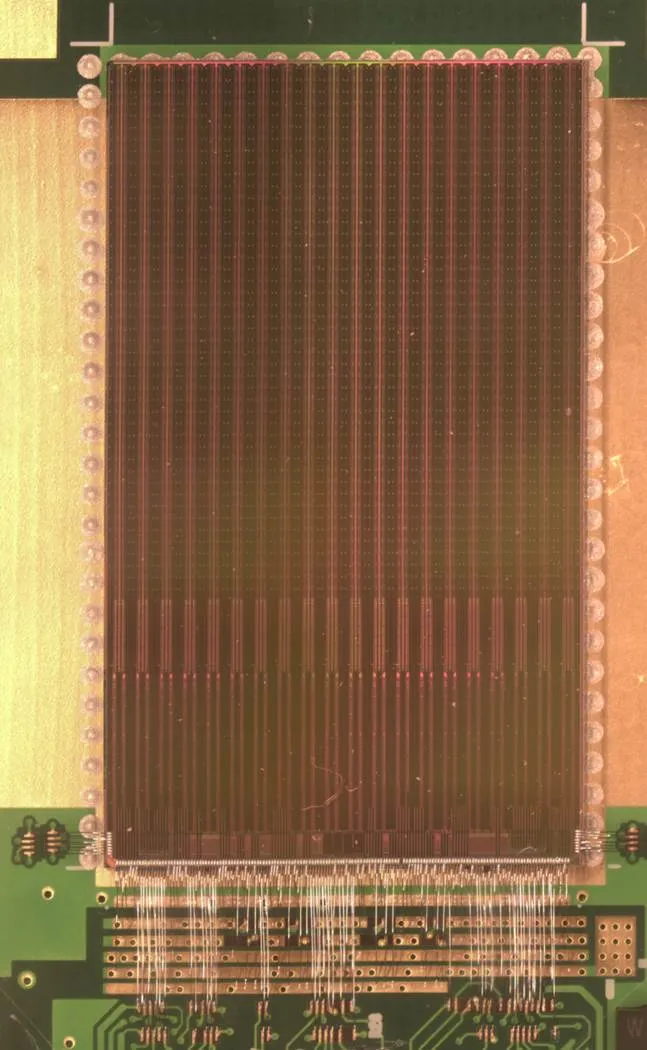
TDCpix: a high rate pixel detector ASIC with built-in ultra-precise stopwatches The TDCpix, which stands for Time-to-Digital Converter Pixel ASIC, measures the position and arrival time of incident beam particles in the Gigatracker detector of the NA62 experiment. Its design architecture stems from experience with silicon pixel detectors and time measuring devices gained during the
-
3rd workshop on medical applications of spectroscopic X-‐ray detectors.
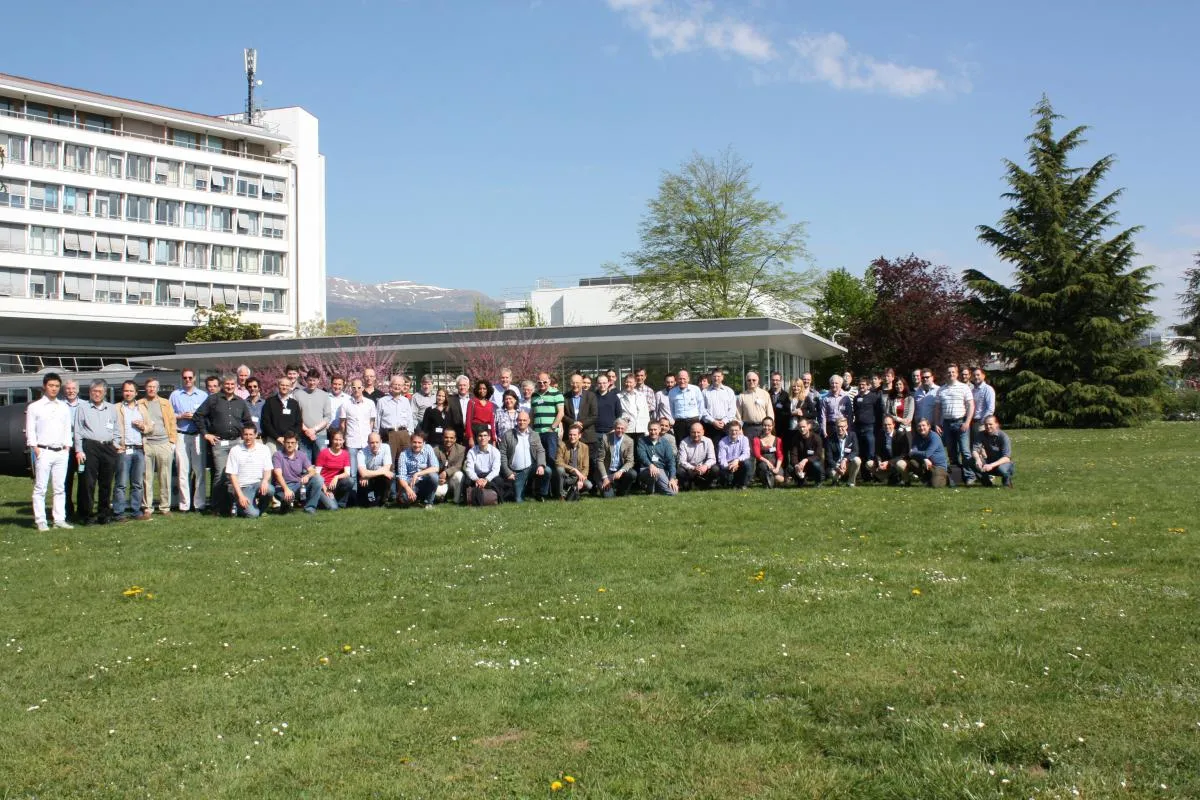
3rd workshop on medical applications of spectroscopic X-‐ray detectors. The 3rd workshop on medical applications of spectroscopic X-ray detectors took place at CERN from 20-23 April. There were 113 registered participants of which about 50 were from industry. All of the major medical equipment suppliers active in the spectroscopic Computer Tomography (CT) field (GE, Philips,
-
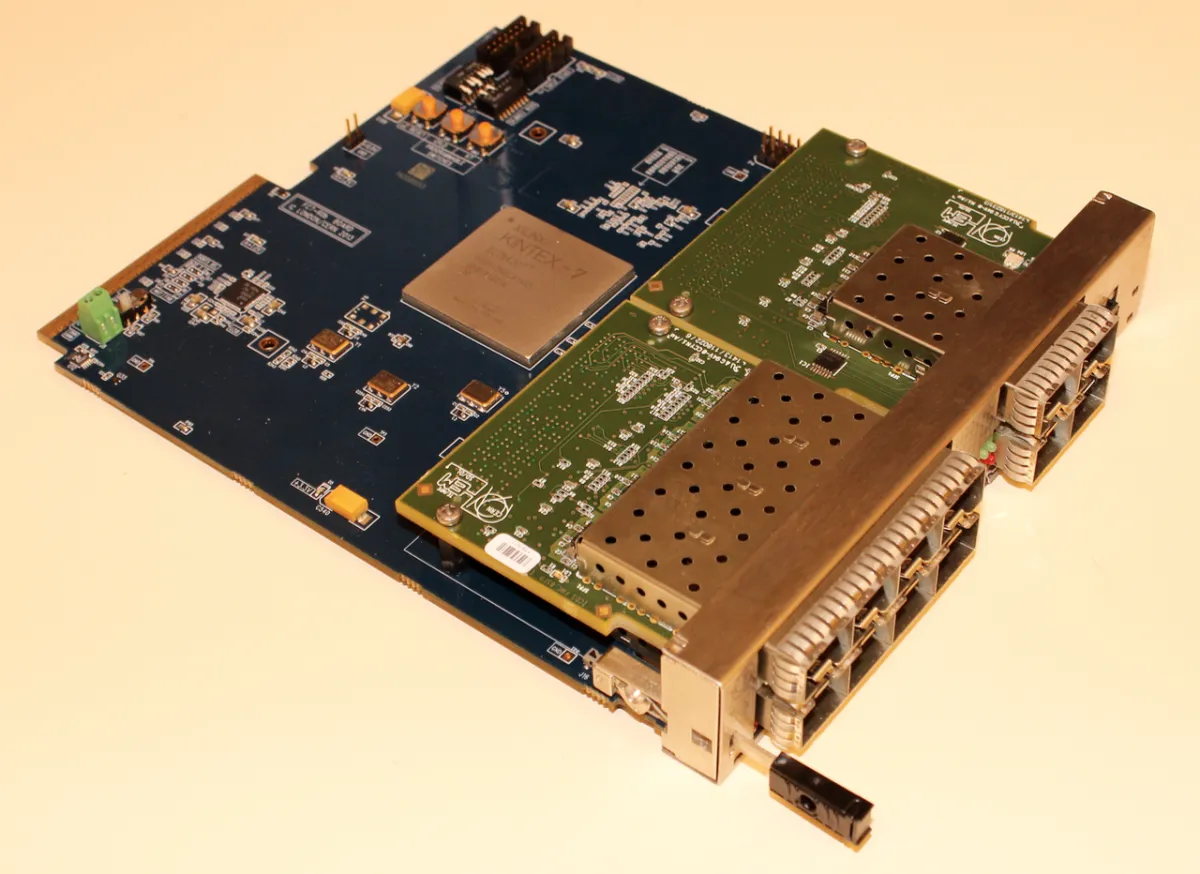
The new CMS Timing and Control Distribution System
The new CMS Timing and Control Distribution System It is of paramount importance that all parts of an LHC experiment are synchronized to each other and to the passage of particles in the centre of the experiment. The original CMS Timing, Trigger, and Control (TTC) system made this possible during the first period of data-taking