
Tag: VELO
-
New Staff Members and Fellows – Autumn 2026
New Staff Members and Fellows – Autumn 2026 Christian Appelt Hello, I’m Christian. I’ve joined EP-ATL-SO as a Research Fellow. I completed professional training as an electronics technician, worked in industry for 5 years, and studied electrical engineering (BEng) and physics (BSc, MSc, PhD). I’ve worked at several research institutes; in ATLAS, I’ve been involved in and am leading long-lived particle searches, the production
-
A Hundred Gigabits per Fibre: Silicon Photonics Links for the Detectors of Tomorrow
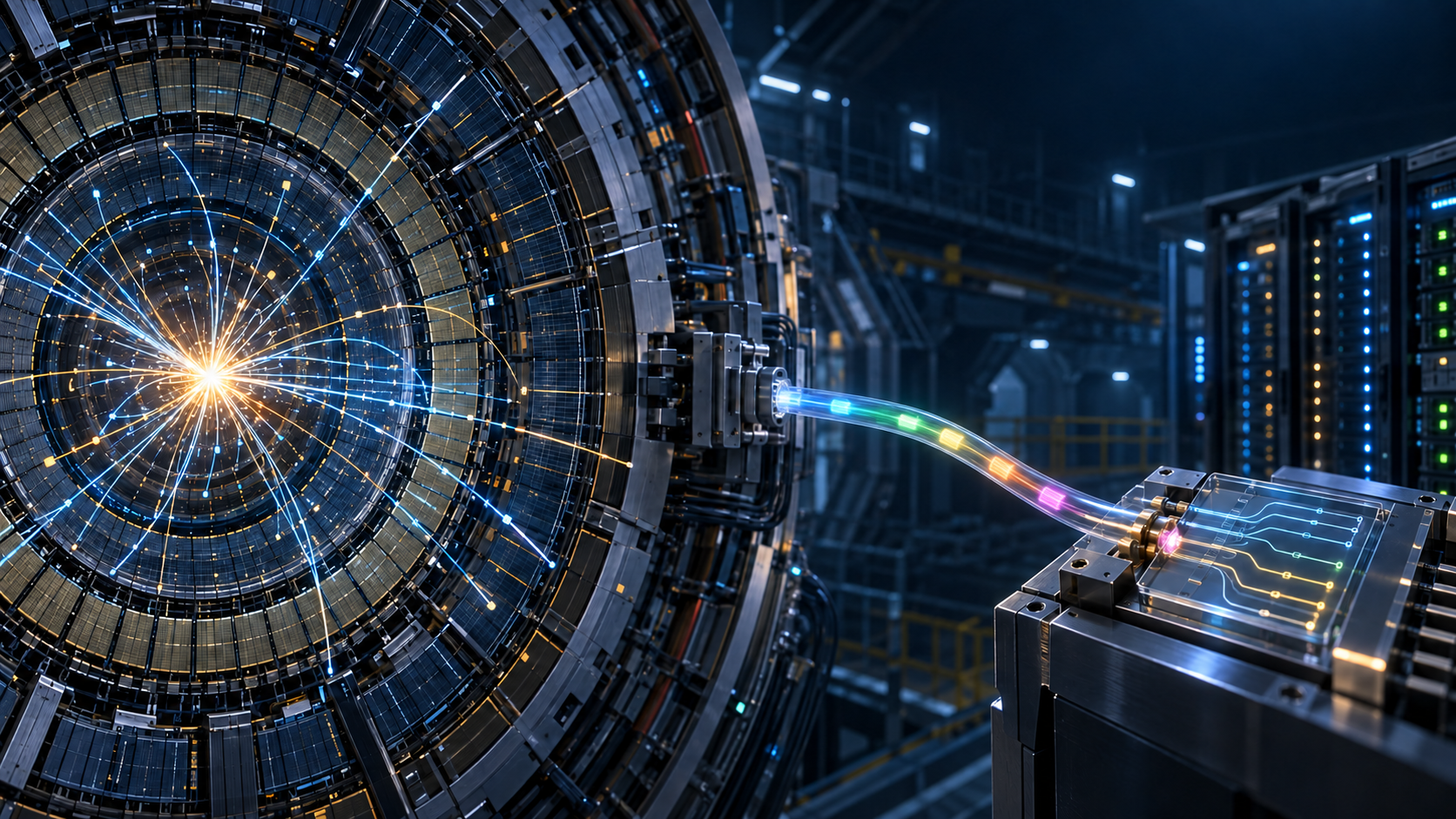
The High-Speed Links Work Package (WP6) of the EP R&D programme is developing the radiation-tolerant, high-bandwidth optical links needed for future particle detectors. Combining custom ASICs, Silicon Photonics and FPGA-based back-end systems, the team is now moving towards integrated demonstrations in an experimental context.
-
Building a Microelectronics Foundation for Tomorrow’s Detectors
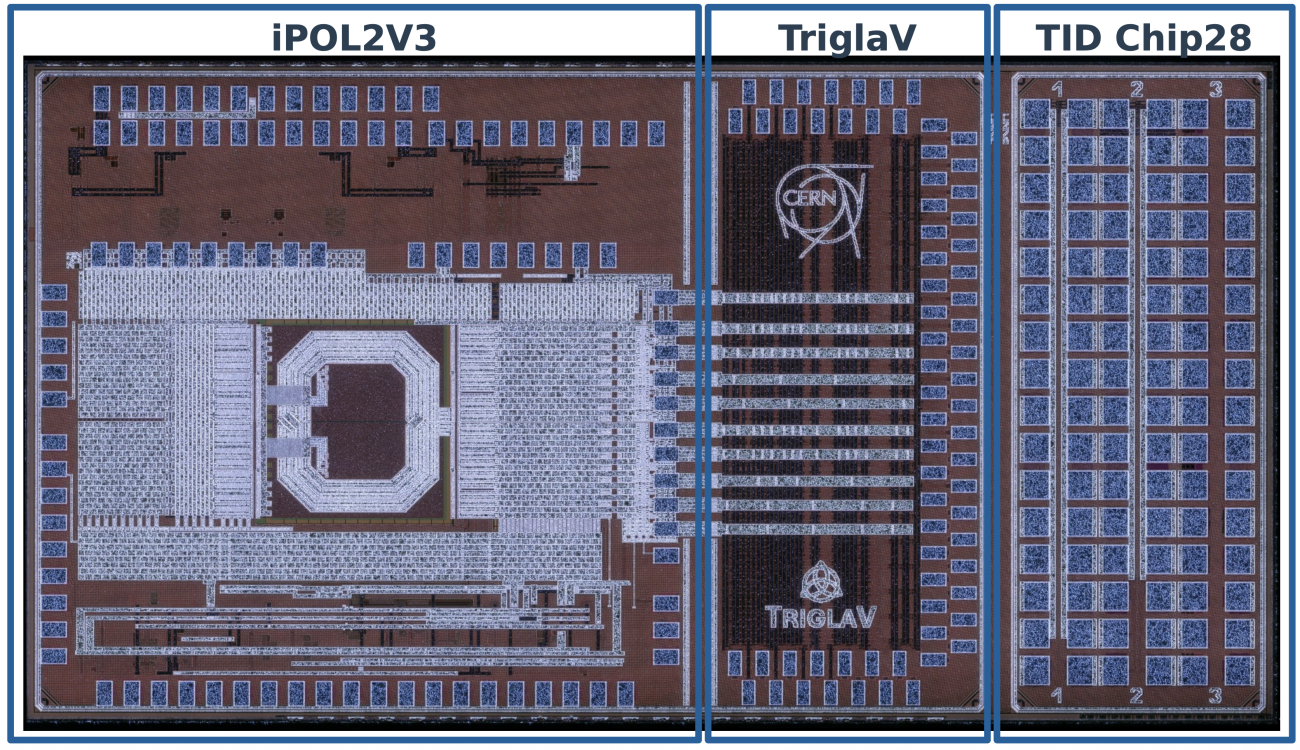
Building a Microelectronics Foundation for Tomorrow’s Detectors The challenge: smarter chips in harsher places Particle physics detectors have always pushed electronics to their limits. The next generation of tracking systems and calorimeters will depend critically on dense, intelligent, low power and radiation-hard microelectronics: front-end ASICs that can survive for decades in harsh environments, having their
-
Doubly charmed baryon doublet completed with upgraded LHCb
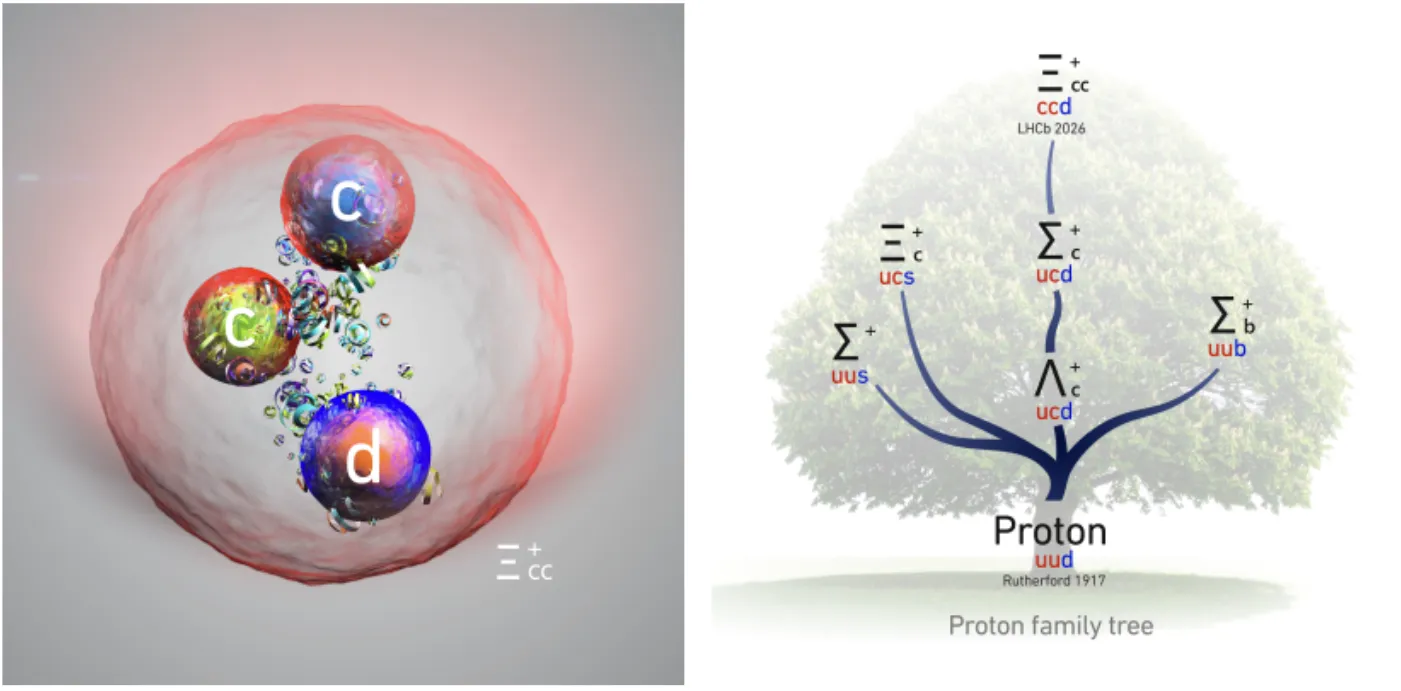
Doubly charmed baryon doublet completed with upgraded LHCb The image on the left presents an artist’s impression of this exotic particle, while the diagram on the right shows a kind of “family tree” of the proton, illustrating how heavier relatives emerge when its quarks are replaced by strange (s), charm (c), or bottom (b) quarks.
-
New Staff Members and Fellows
New Staff Members and Fellows Maximilian Babeluk Hi, I’m Max. I recently joined the ALICE ITS3 team, where I work on sensor testing, functional verification, and in the future also chip design – particularly on MOSAIX. My main activities include testing and yield assessment across multiple integration levels (wafer probing to system tests), including data
-
LHCb VELO closes fully for the first time
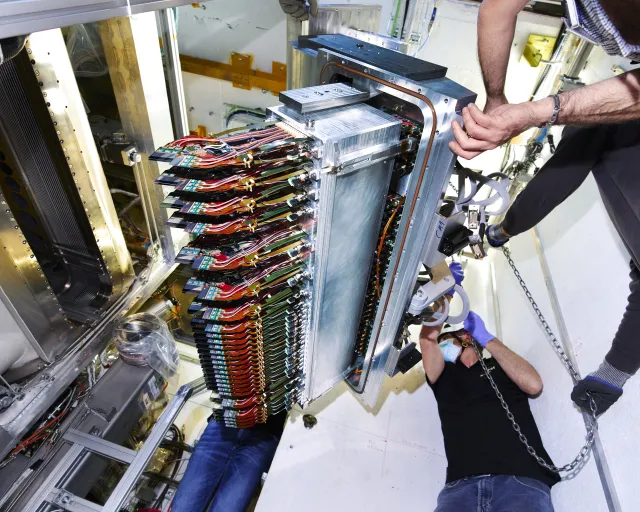
LHCb VELO closes fully for the first time At the end of October, the two halves of the new Vertex Locator (VELO) approached the LHC proton-proton collision point in a process referred to as VELO closing – following the installation of the upgraded detector. Replacing the previous VErtex LOcator (VELO) detector has been one of
-
LHCb VELO: “One down, one to go”
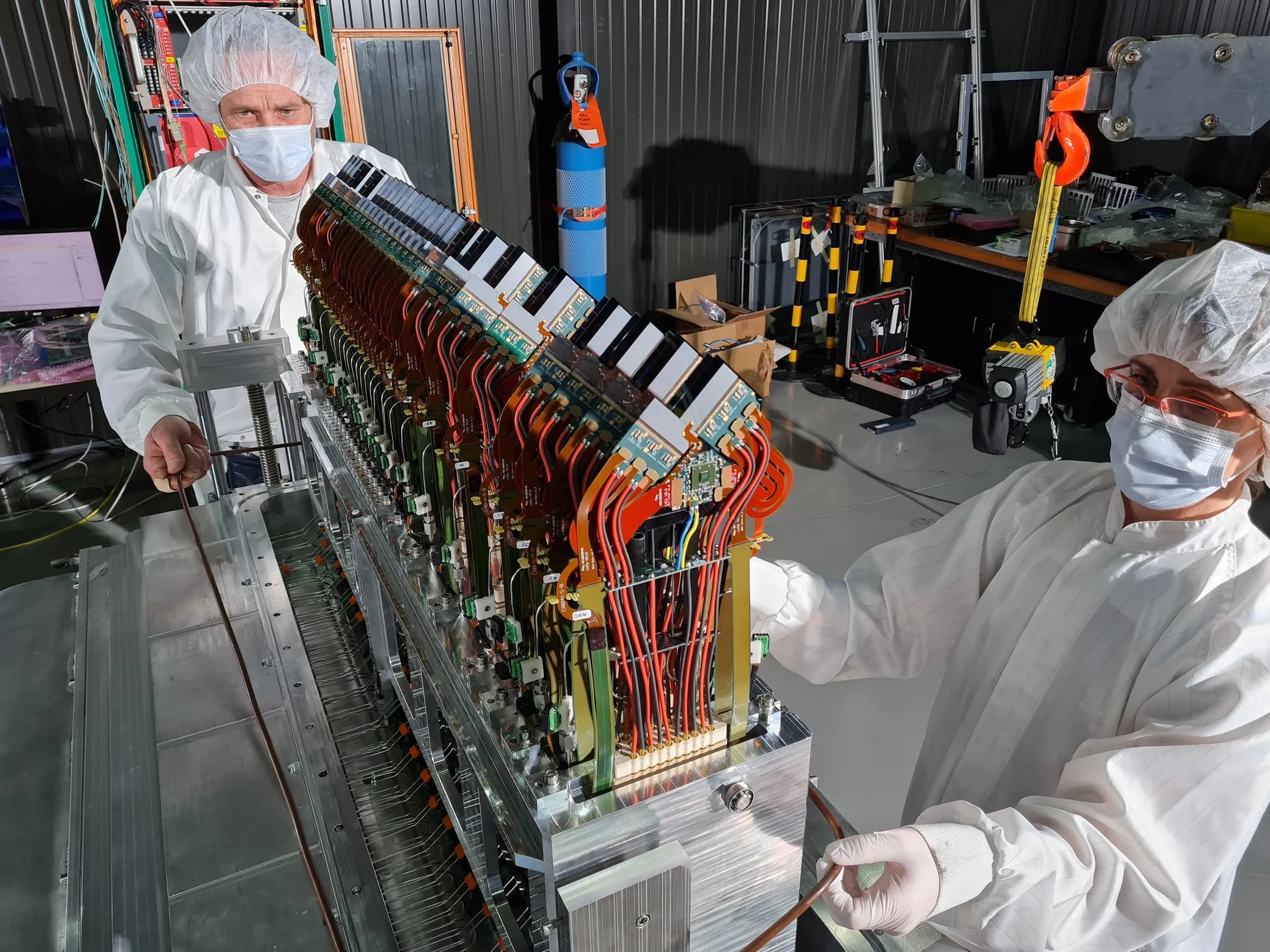
LHCb VELO: “One down, one to go” As the LHC marks the start of the final countdown to Run 3, the LHCb experiment is preparing to commission its new detector. The upgrade will allow the collaboration to pursue its physics programme into the High Luminosity era. LHCb aims to fully exploit a 5-fold increase of
-
A new VELO for the LHCb experiment
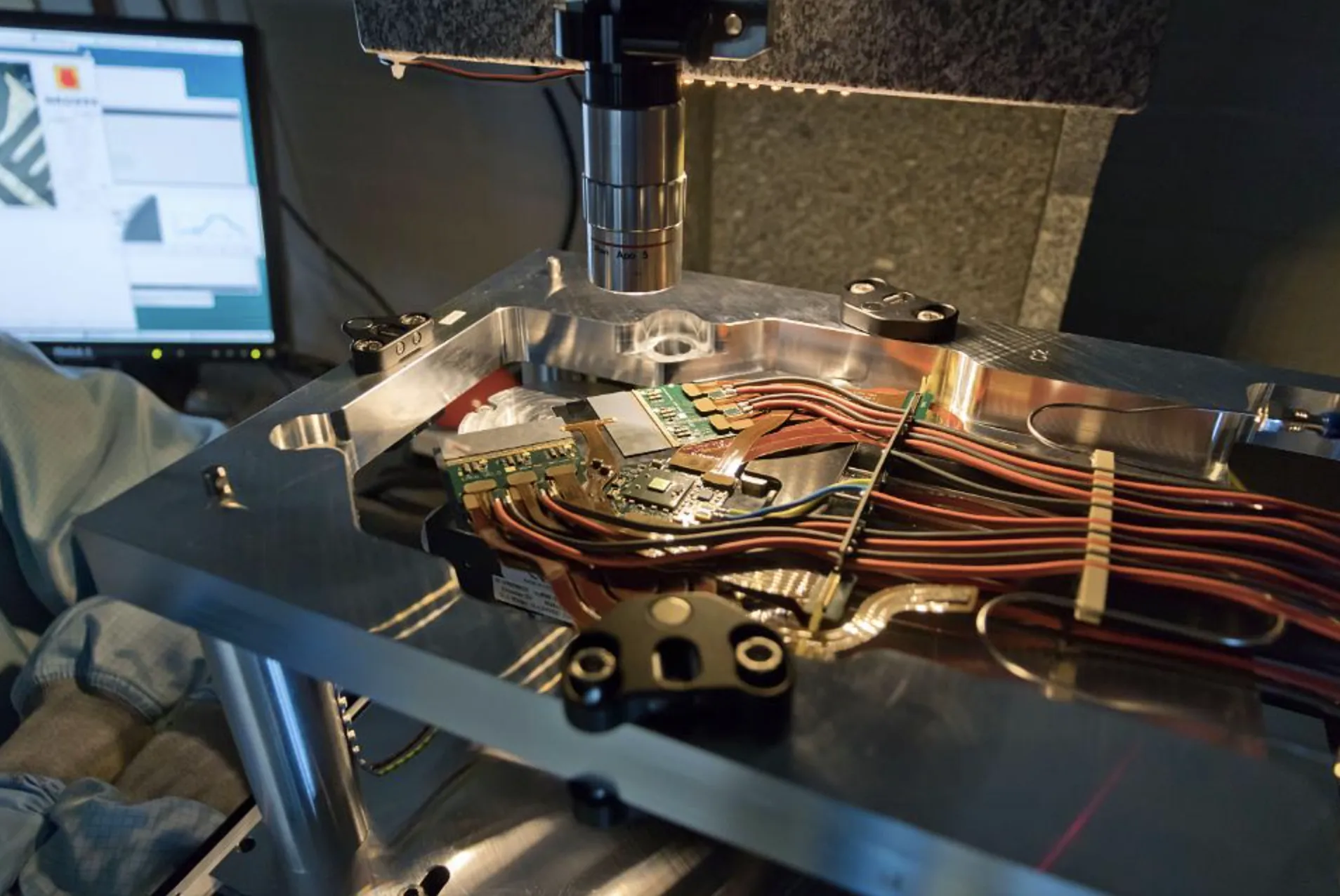
A new VELO for the LHCb experiment The VELO is stacking up milestones as it races to complete installation before the Run 3 startup. The previous VErtex LOcator (VELO) is being completely replaced during Long Shutdown 2 as part of a major upgrade programme to allow the experiment to operate at an instantaneous luminosity of