
The last beam tests before LS3 boost FCC-ee detector technologies
by Hector Garcia Morales (CERN, FCC-PED group)
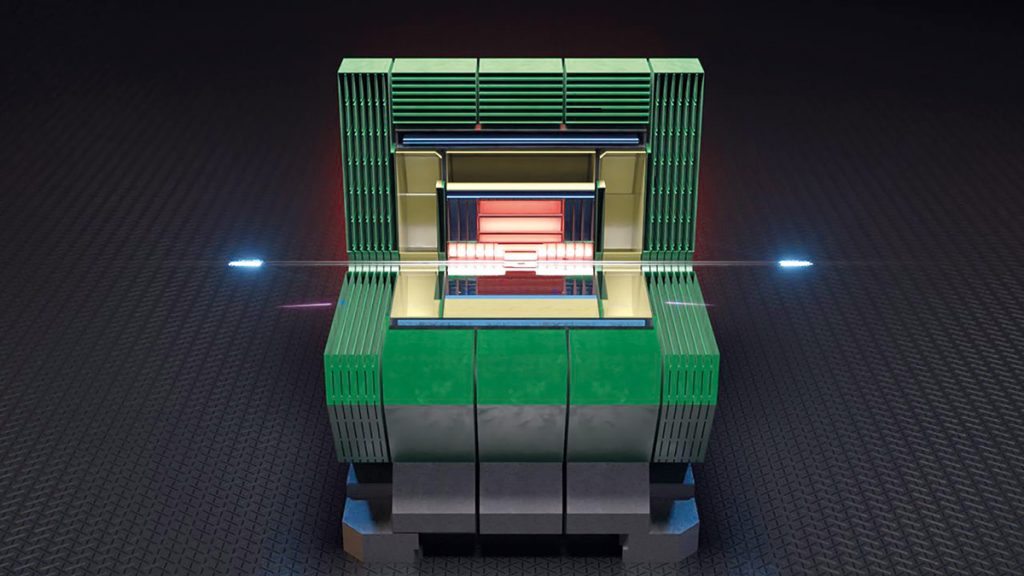
In one of the last opportunities to test detector prototypes before CERN’s accelerator complex enters Long Shutdown 3, a beam test campaign brought together different teams from across the world to test FCC-ee detector technologies.
To date, six different FCC-ee detector concepts are currently being explored: ILD, ALLEGRO, IDEA, CLD, ALFA, and AGORA. Although each of these concepts is currently in a different stage of development, there is steady progress in all of them, including an intense R&D program. Much like the first test beams of the LHC detectors date from 1993, sixteen years before they saw the first protons, the R&D of many of the FCC detectors started already years ago.
To develop new detector technologies, different teams of the IDEA detector concept have recently tested several prototypes of muon detection systems and calorimeters using secondary beams from the SPS and the PS. That was one of the last opportunities to perform beam tests before the CERN accelerator complex shut down for more than three years.
A high-resolution muon system
The first tests aimed to explore the potential of an innovative prototype of a muon detector featuring a two-dimensional strip readout. The muon technology tested recently, called micro-RWELL, belongs to a family of detectors known as micro-pattern gas detectors (MPGD). With a spatial resolution that can reach up to 50 microns, this muon technology provides a step forward in precision with respect to previous detectors such as the drift tubes installed in the CMS experiment.
A proton beam extracted from the SPS at 400 GeV hit several targets and produced secondary beams with high particle rates. Secondary pion and muon beams were directed towards the H8 beamline of the CERN North Area, where the micro-RWELL team installed two detector configurations.
In the first configuration, researchers tested a new type of electronics designed to cope with high particle rates. The second test evaluated the performance of different anode configurations that can help develop a two-dimensional readout system from a single detector. While the first detector samples tested are one-dimensional with 50-centimetre-long strips, the detectors planned for the FCC-ee muon system will have a two-dimensional readout, with two orthogonal layers of strips and several layers of pixels.
The tested prototype achieved efficiencies above 96% while maintaining spatial resolutions better than 100 microns in both transverse coordinates. “These results confirm the suitability of this technology for future detector developments,” says Marco Poli Lener, a researcher at INFN in Frascati, who led the beam tests. Over the next three years, the collaboration will refine and optimise the prototype in dedicated campaigns at the beam test facility in Frascati and at DESY.
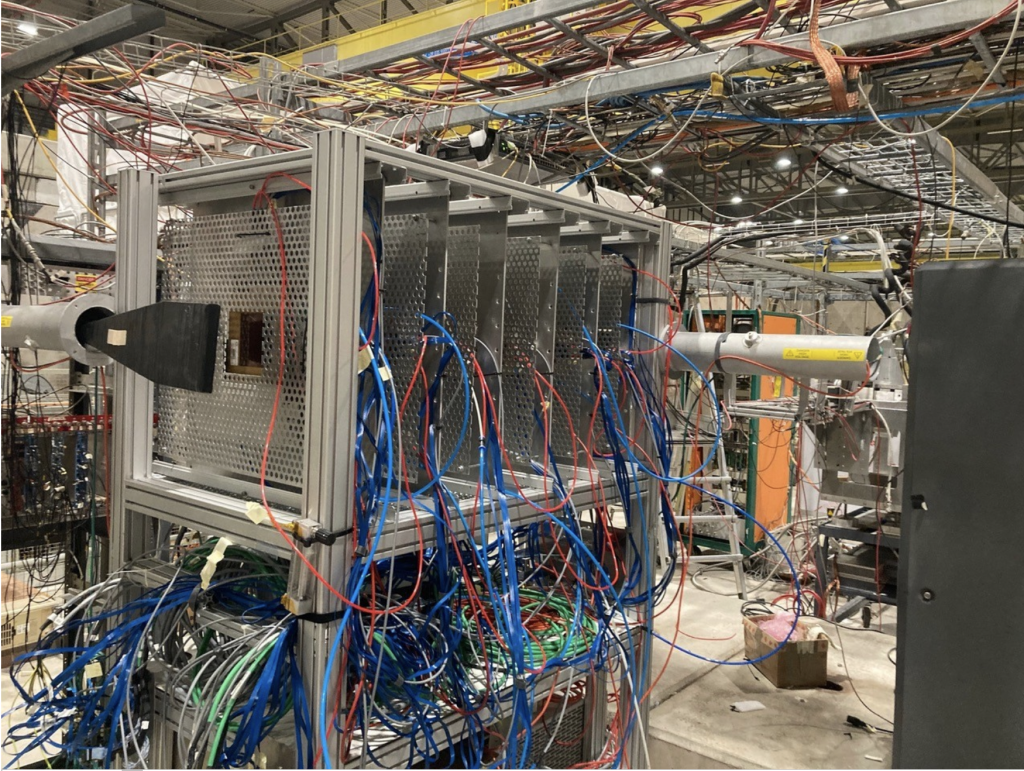
Figure 1: Micro-RWELL detector setup installed in one of the beamlines at the CERN North Area. (Credit: The IDEA study working group)
Particle discrimination in drift chambers
Between May and June 2026 in the CERN East Area, the IDEA Drift Chamber team carried out a dedicated beam test campaign to analyse the performance of the cluster counting (CC) technique1 for particle identification. “In the past we demonstrated that with this technique you can better discriminate pions from kaons,” explains Nicola De Filippis, researcher at INFN Bari and leader of the test campaign.
The experimental setup consisted of a module containing 20 drift cells, with a transverse square shape with sides of 1 and 1.5 cm, and equipped with a 20-micron-diameter gold-plated tungsten wire, filled with a 90%-10% He-Isobutane gas mixture. During the data acquisition period, De Filippis and his team collected data for muons between 2 and 12 GeV and for pions and kaons between 6 and 15 GeV.
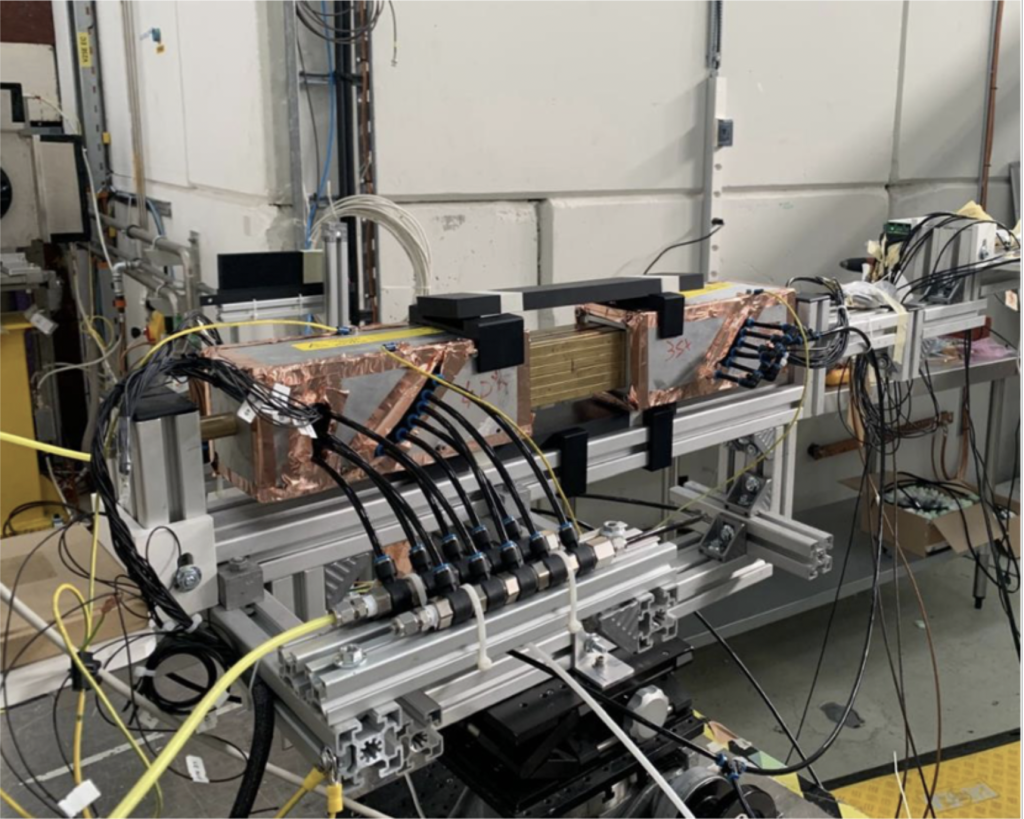
Figure 2: Drift chamber setup installed at the CERN East Area. (Credit: The IDEA study working group)
Researchers could collect a significant amount of data samples under different high-voltage and gas-gain conditions, as well as at different angles between the beam and the wires. Currently, the team is carrying out the analysis of the signal waveforms collected for various particles at different momenta in order to fully evaluate the CC potential for particle discrimination.
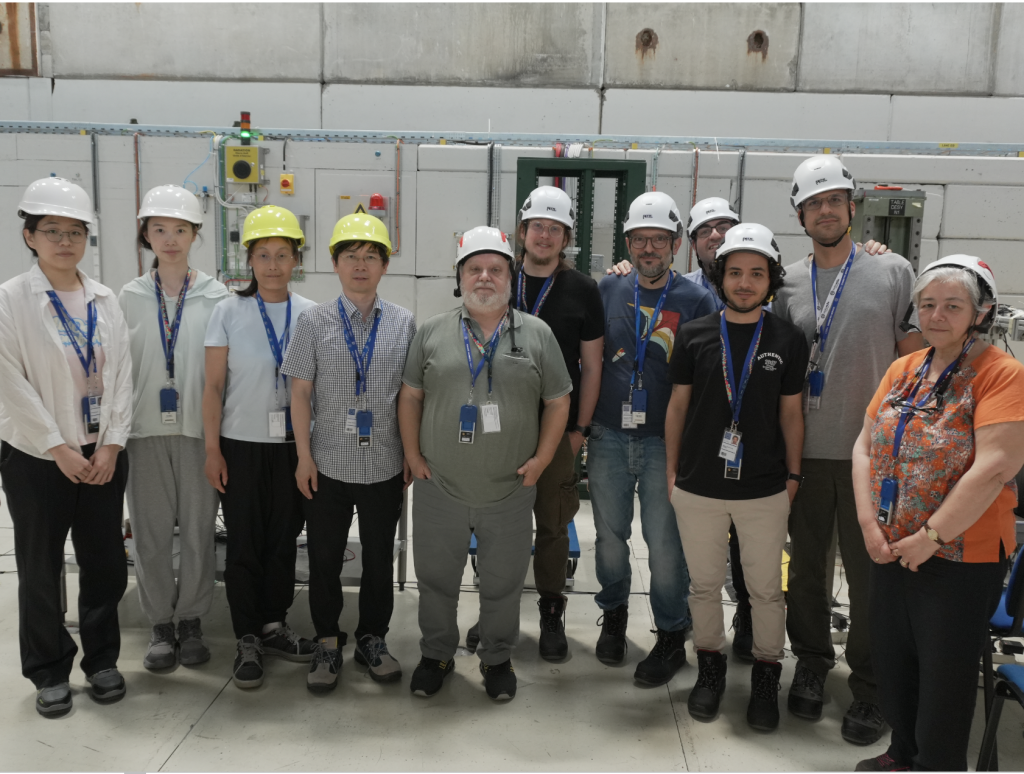
Figure 3: A team of researchers from the IHEP CEPC team joined the IDEA Drift Chamber group to test their small-scale drift chamber prototype, sharing the gas distribution and trigger systems. (Credit: Hector Garcia Morales | The IDEA study working group)
Over the next three years, the collaboration will continue to refine and optimise the CC technique, developing new algorithms and methods to count primary ionisation clusters in helium-based gas mixtures. The goal is to achieve optimal particle identification in the momentum range required by the FCC-ee design specifications.
Dual-readout calorimeters
The FCC-ee physics program requires unprecedented energy resolution, driving the development of new calorimeter technologies. Dual-readout calorimeters are designed to improve the precision of hadron energy measurements by recording two independent signals from particle showers. These detectors use two types of optical fibers: scintillating fibers, which respond to almost all charged particles, and undoped fibers, which are primarily sensitive to Cherenkov light produced by the fastest particles in the shower. By combining these two measurements, researchers can reconstruct particle energies with significantly greater accuracy than conventional hadronic calorimeters.
Dual-readout fiber calorimeter
The recent tests represented the first opportunity to evaluate the full calorimetric concept in a beam environment, combining a High-Resolution highly granular Dual-Readout calorimeter (HiDRa)2 for the hadronic section with an electromagnetic section based on crystals. “This represents an important milestone for the project, as it provides the first experimental data on the calorimetric concept proposed for the IDEA detector,” says Romualdo Santoro, a researcher at the University of Insubria, who led the team that performed the tests in the CERN North Area. The test-beam campaign was particularly challenging due to the unprecedented number of readout channels involved in the highly granular part of the demonstrator, with approximately 10,000 silicon photomultiplier channels.
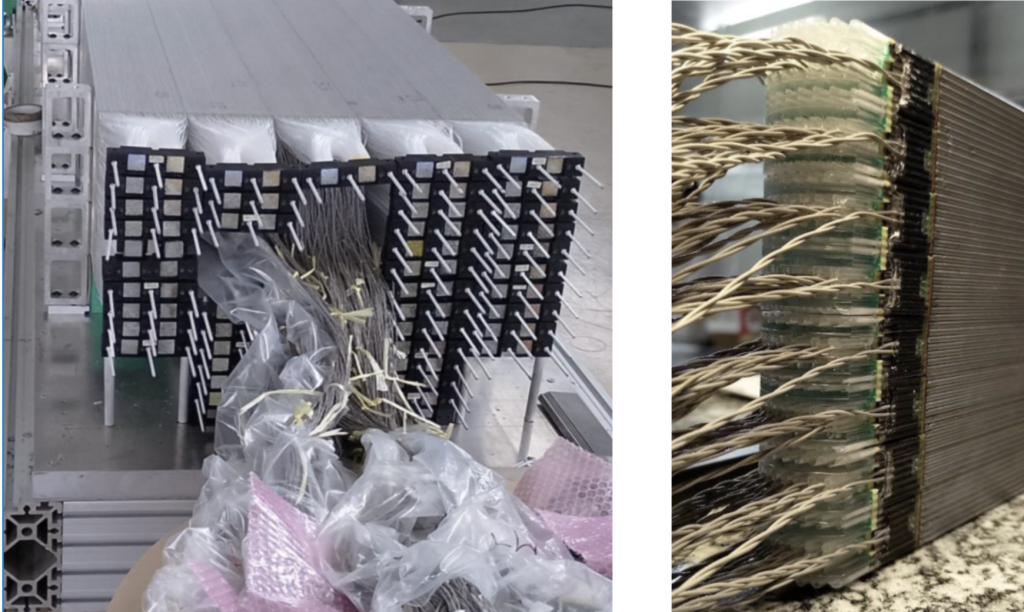
Figure 4: Dual-readout fiber calorimeter installed during the beam tests. (Credit: The IDEA study working group)
The collected data already provide valuable input for understanding the response and uniformity of the highly granular readout system. In the coming months, the team will focus on developing and validating reliable calibration procedures for the individual modules, with the ultimate goal of measuring the hadronic calorimetric performance of the demonstrator.
In the coming years, the efforts will focus on further consolidating the hardware and readout system. A particularly promising development for HiDRa is the investigation of digital silicon photomultipliers (dSiPMs), which could potentially provide performance comparable to conventional SiPMs while substantially simplifying the readout architecture and system integration. The implementation of a full-scale, highly granular calorimeter would require the deployment of approximately 50 million photosensors. Demonstrating that dSiPMs can provide the required performance could represent a major step towards making such a detector technologically viable.
Dual-readout crystal electromagnetic calorimeter
A second beam test on dual-readout electromagnetic calorimeters was also carried out at the CERN North Area in June 2026. This time, the experiments led by Marco Lucchini, Assistant Professor at Università degli Studi di Milano-Bicocca, tested a prototype of an electromagnetic homogeneous calorimeter made of highly segmented PWO crystals readout with 183 SiPMs, also referred to as MAXICC.
The MAXICC calorimeter simultaneously read out Cherenkov and scintillation signals, enabling a first assessment of the dual-readout method’s potential. These tests provided a calibration and performance evaluation of the prototype performance with muon, electron, and hadron beams. This was the first proof of principle for the novel hybrid dual-readout calorimeter concept proposed for the IDEA detector.
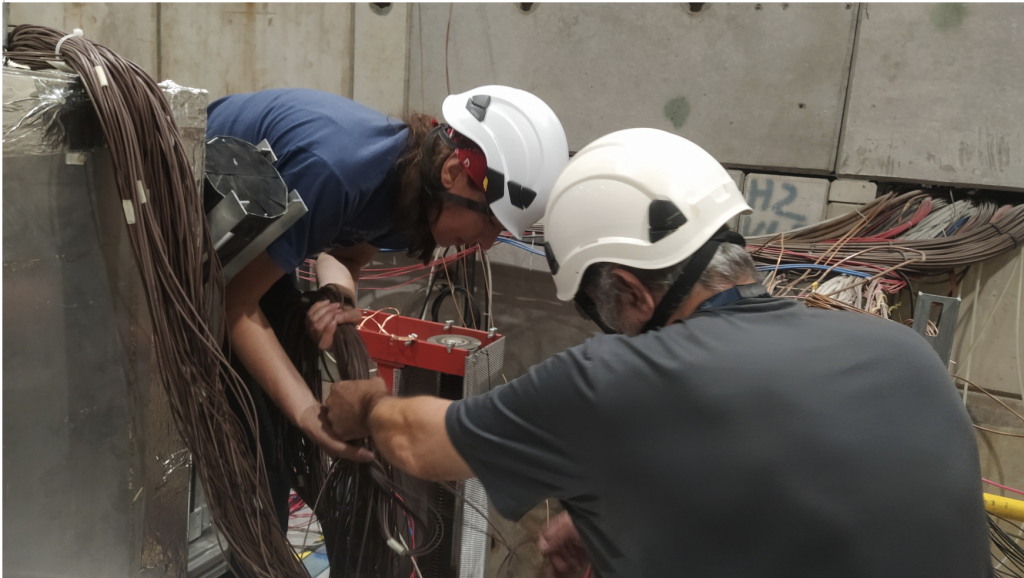
Figure 5: Scientists uncabling the prototype of the hadronic calorimeter after the beam tests. (Credit: Hector Garcia Morales | The IDEA study working group).
Without high-energy beams available in the coming years, the R&D activity and prototype optimisation will continue through laboratory tests, simulation studies, and low-energy electron beam tests at DESY.
Soon after the tests of the first prototype, a US-based team led by Christopher Madrid, a researcher at Texas Tech University, focused on testing a second prototype with advanced readout electronics capable of measuring photon arrival times with a precision of around 50 picoseconds. This timing information would let researchers determine the precise location where energy is deposited along the detector, helping separate overlapping particle showers and improving jet reconstruction.
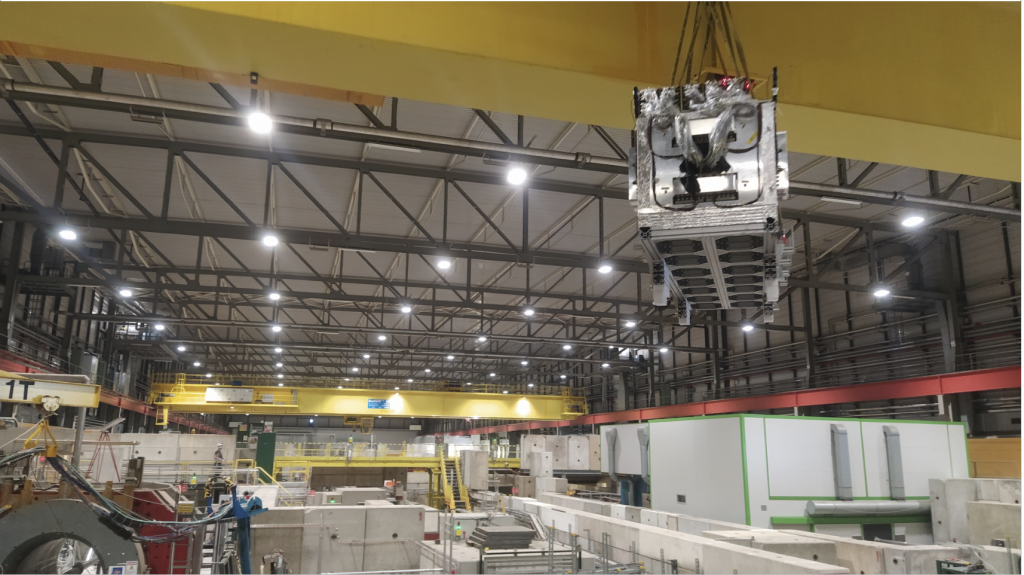
Figure 6: HiDRa calorimeter flying away after the beam tests carried out at the CERN North Area. (Credit: Hector Garcia Morales | The IDEA study working group)
R&D years ahead
These beam tests were the culmination of decades of detector research and development and show that progress in the FCC does not only happen through simulations or concept schemes, but it has also taken the shape of real prototypes for many years. “It is much easier to get the project approved when your technology is already mature enough than when you have to do everything from scratch,” explains Paolo Giacomelli, senior researcher at INFN Bologna and responsible for the IDEA detector concept. In five or six years, Giacomelli expects to have a full description of the technology required for the FCC-ee IDEA muon detector, including its size and the number of layers and channels, as well as the type of electronics. “We have years of intense R&D ahead,” concludes Giacomelli.
References
IDEA detector concept: https://arxiv.org/abs/2502.21223 (Submitted to Nuclear Instruments and Methods).
For more information and news on the FCC-PED activities, you can follow the official website: https://fcc-ped.web.cern.ch/
Notes:
1. The cluster counting (CC) technique takes advantage of the Poissonian nature of the primary ionisation and offers a more statistically significant way to infer mass information. The method consists of singling out, in every recorded detector signal, the isolated structures related to the arrival at the anode wire of the electrons belonging to a single ionisation event. (Source: https://arxiv.org/pdf/2105.07064)
2. HiDRa aims to develop a highly granular, longitudinally unsegmented dual-readout calorimeter capable of delivering the hadronic energy resolution required for experiments at FCC-ee.