
From Run 3 to the next generation: following the transformation of the LHC experiments
by Panos Charitos (CERN)
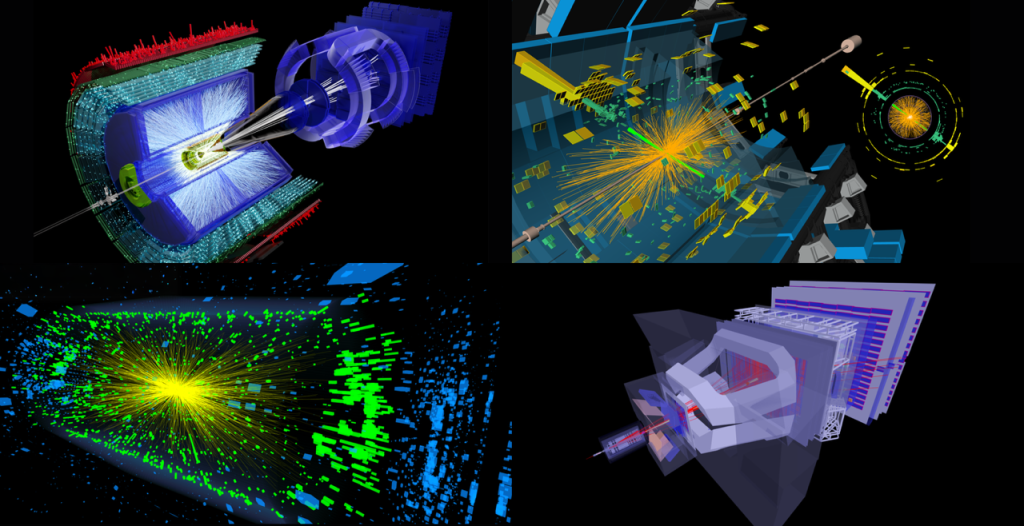
With Run 3 complete, the LHC experiments are entering a period in which two major undertakings will advance together: extracting physics from an exceptional volume of collision data and preparing the detectors for their next phase of operation. For the EP community, Long Shutdown 3 (LS3) offers an opportunity to follow the work behind this transition, beginning with the careful removal of equipment that has supported years of discovery.
In this issue, the EP Newsletter presents two feature stories on the first decommissioning activities at ATLAS and CMS. These articles open a series of reports that will follow progress throughout the shutdown, with forthcoming features on LHCb and ALICE bringing the activities of all four major experiments into focus.
An exceptional dataset—and continuing physics
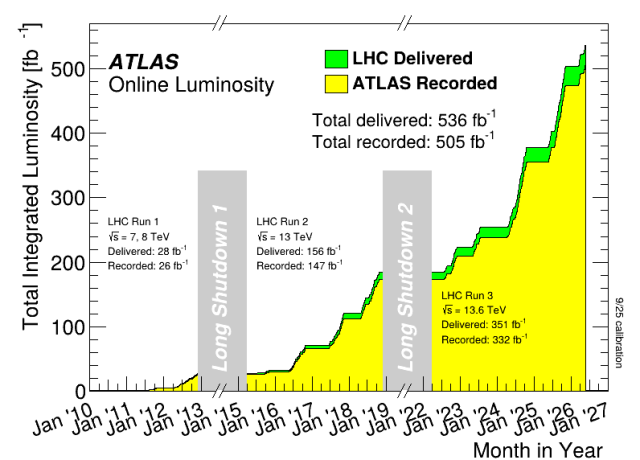
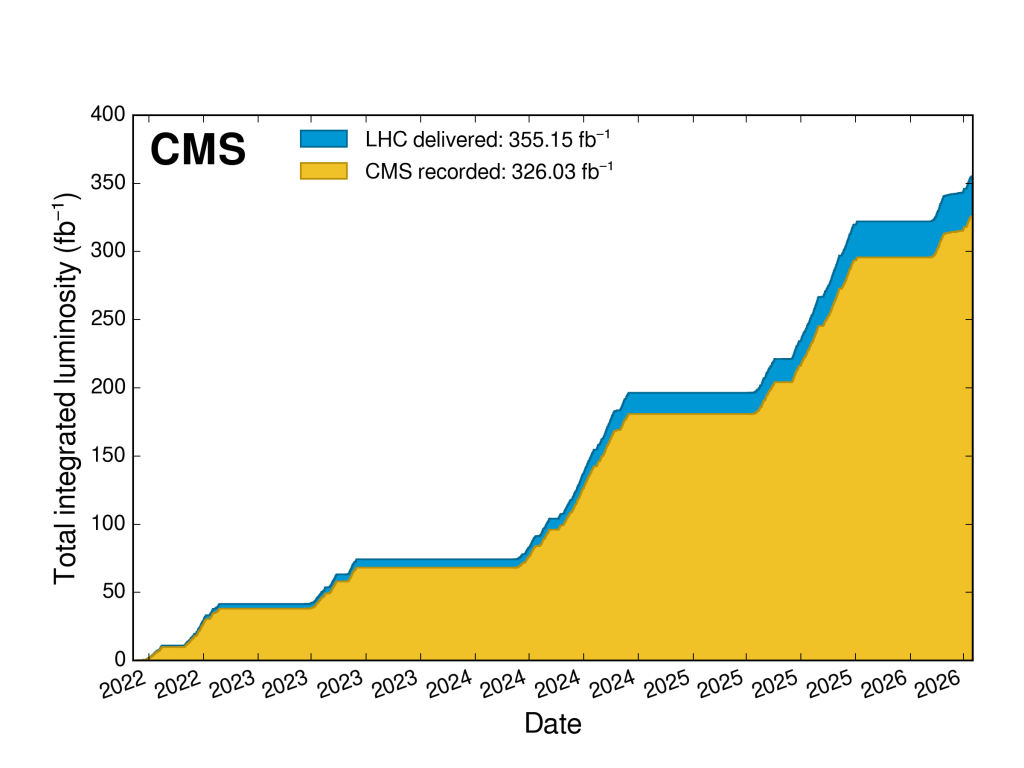
The scale of the data collected during Run 3 helps explain what is at stake. ATLAS recorded 332 inverse femtobarns of proton–proton collision data during this period, bringing its lifetime recorded total to 505 inverse femtobarns. CMS reports 355 inverse femtobarns delivered during Run 3, with a recording efficiency of 92%. These samples will sustain a substantial programme of analysis while the detectors undergo their transformation. ATLAS, CMS.
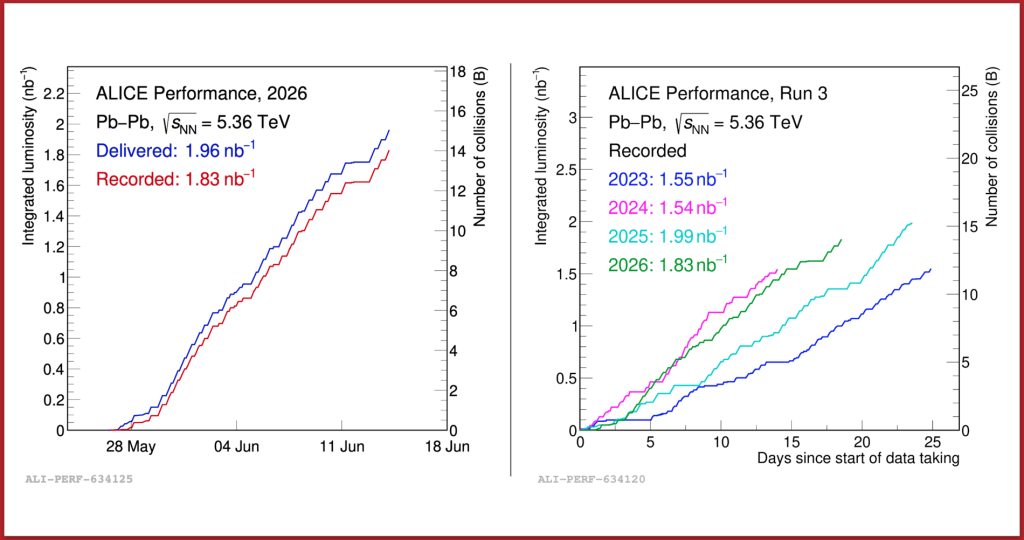
ALICE also enters the shutdown with an unprecedented sample: approximately 53 billion lead–lead collisions recorded through continuous readout, corresponding to an integrated luminosity of 6.9 inverse nanobarns. Alongside its proton–proton data, this sample provides the basis for increasingly detailed studies of the quark–gluon plasma and the behaviour of strongly interacting matter. ALICE.
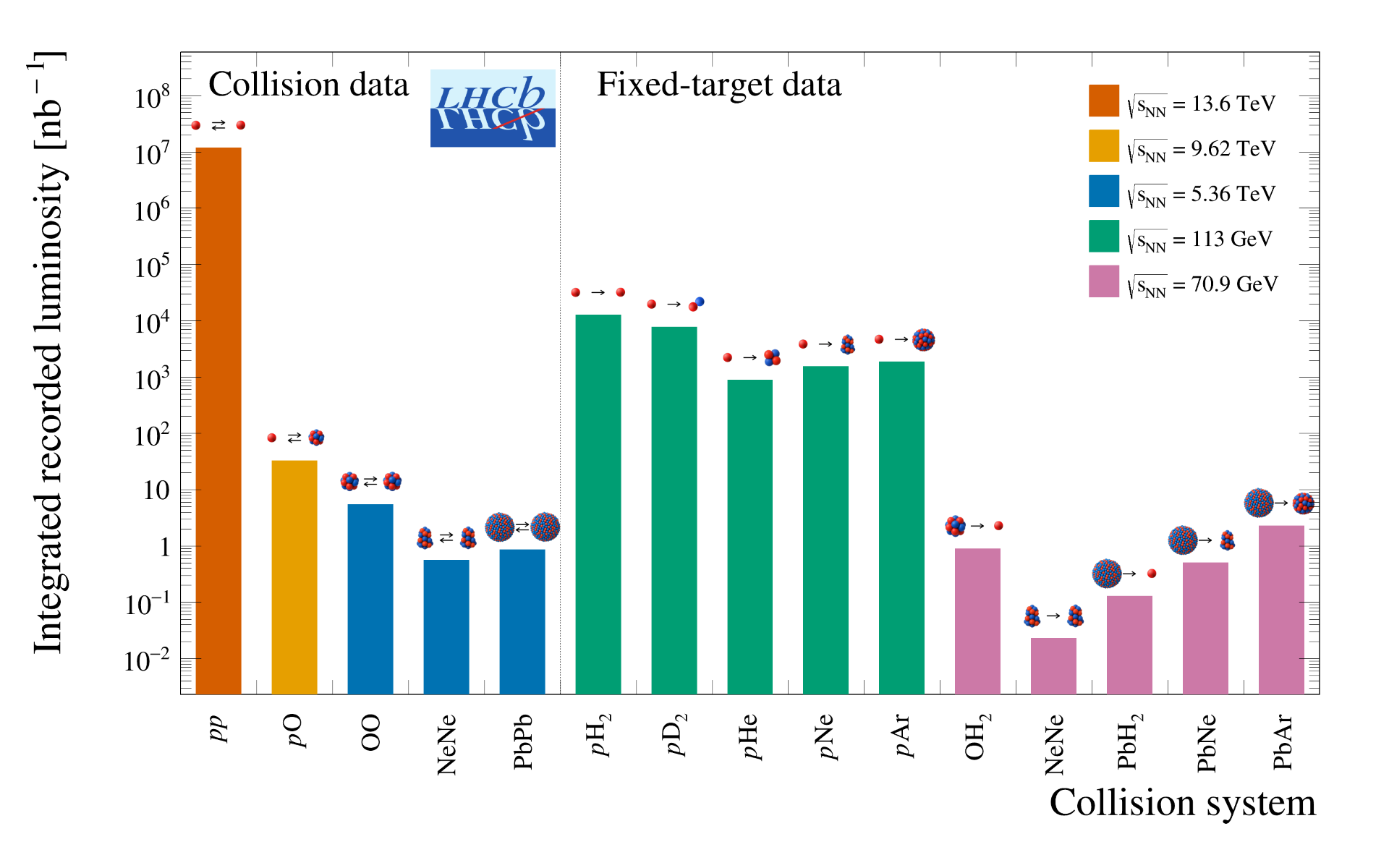
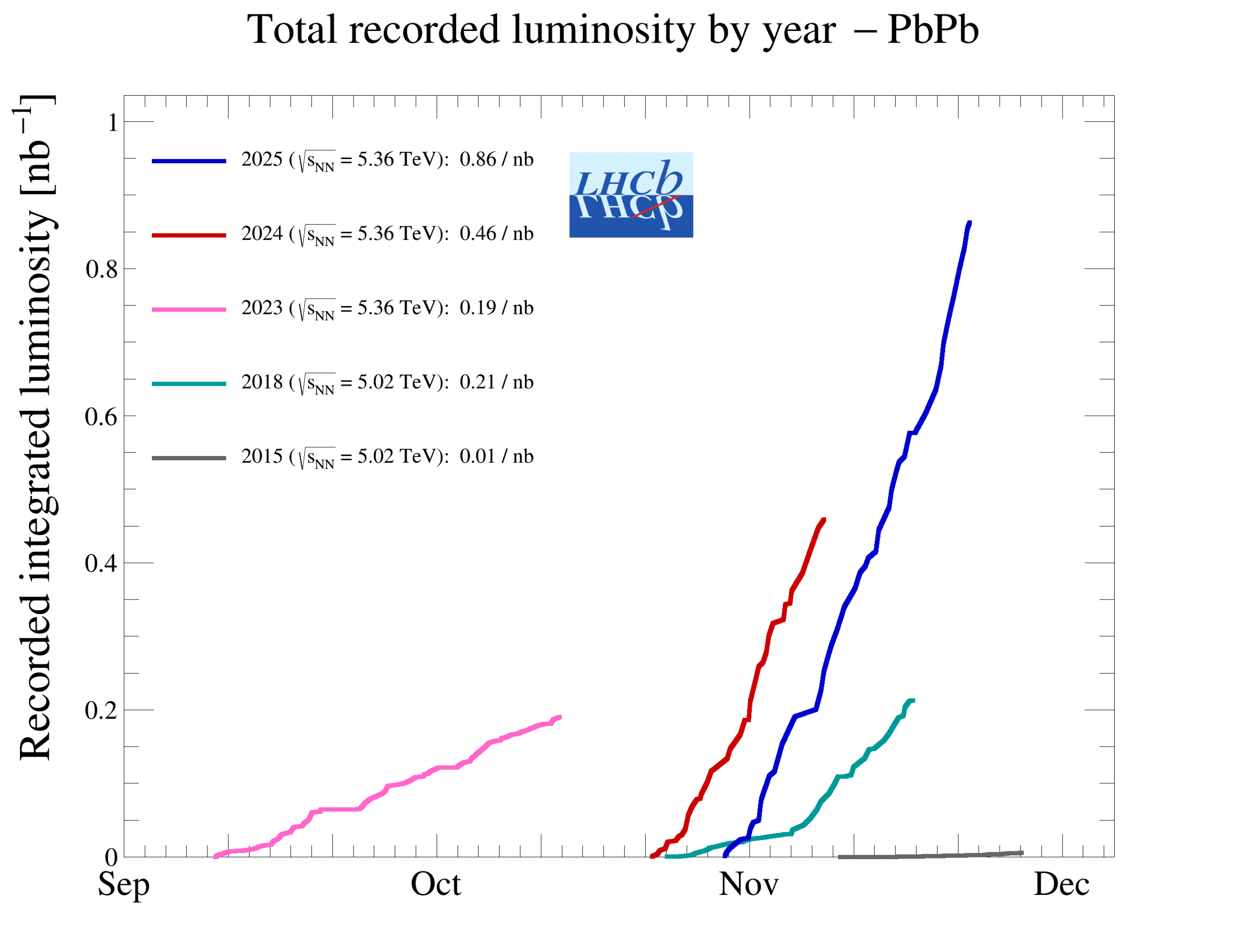
LHCb also demonstrated the capabilities of its Upgrade I detector during Run 3. In 2025 alone, the experiment collected 11.8 fb⁻¹ of high-quality proton–proton data and 0.86 nb⁻¹ of lead–lead data, the latter almost doubling the sample collected in the previous year. Its fixed-target programme expanded too, with the first lead–hydrogen sample and additional lead–neon and lead–argon data collected using SMOG2. Building on these achievements, the LS3 programme includes enhancements to the RICH detectors, electromagnetic calorimeter and online system, while the larger Upgrade II is planned for LS4. These developments will provide further opportunities to follow the interplay between detector improvements and an increasingly diverse physics programme. LHCb’s review of the 2025 run
Making room for new capabilities
The next phase brings another demanding set of requirements. At ATLAS, around 200 proton–proton interactions are expected per bunch crossing in the High-Luminosity LHC era. New tracking and timing detectors, upgraded electronics and more powerful event-selection systems will help distinguish overlapping interactions and preserve sensitivity to rare processes. Their installation also requires extensive changes to cabling, cooling and services. ATLAS
Decommissioning is the first physical step towards accommodating these new capabilities. Existing systems must be disconnected, dismantled and transported through constrained spaces, while equipment that remains in service must be protected. The order of operations matters: removing one component opens access to another, and the preparation of services and infrastructure determines when installation can begin.
The ATLAS and CMS features in this issue examine this work at its starting point. They highlight the technical decisions, coordination and expertise required to translate years of upgrade planning into operations inside the experimental caverns.
Following the work through the shutdown
Beyond the detector upgrades, LS3 will bring an extensive programme of upgrades and renovation across CERN’s accelerator complex and experimental facilities. For the Experimental Physics Department, this work extends from the major LHC detector upgrades to the evolving needs of small and medium-sized experiments, including those served by the North Area and ISOLDE. Across this diverse programme, the expertise of the Electronics Systems for Experiments (ESE), Detector Technologies (DT) and Software and Computing for Experiments (SFT) groups helps connect detector development and integration with the electronics, software and computing needed to operate experiments and analyse their data. Future issues of the EP Newsletter will also follow these supporting activities and the work of smaller experimental collaborations, highlighting the shared expertise and infrastructure that sustain the breadth of the CERN physics programme.
We will return regularly to these activities in future issues, following milestones, challenges and lessons as the work progresses from decommissioning to installation and commissioning. Two forthcoming feature stories will examine decommissioning activities at LHCb and ALICE, giving space to the distinct requirements and plans of each experiment.
Together, this coverage will document a significant period in the life of the LHC experiments—and the contributions of the engineers, technicians, physicists and collaborating institutes making their next physics programmes possible.