
Tag: ATLAS
-
Deep Neural Networks for particle reconstruction in high-granularity calorimeters
Deep Neural Networks for particle reconstruction in high-granularity calorimeters Precision measurements in high energy physics as well as an increasing amount of searches for new phenomena rely on a precise reconstruction of the event that caused a particular signature in the detector. Particle flow algorithms [1, 2, 3, 4] aim to identify individual particles before
-
AMVA4NewPhysics legacy in searches for new physics
AMVA4NewPhysics legacy in searches for new physics A couple of months ago, the four-year life cycle of AMVA4NewPhysics, a Horizon2020-funded Marie Skłodowska-Curie Innovative Training Network (ITN), in which CERN participated as one of the member institutions, was completed. With the ultimate objective of searching ways which would improve the measurement and search sensitivity of the
-
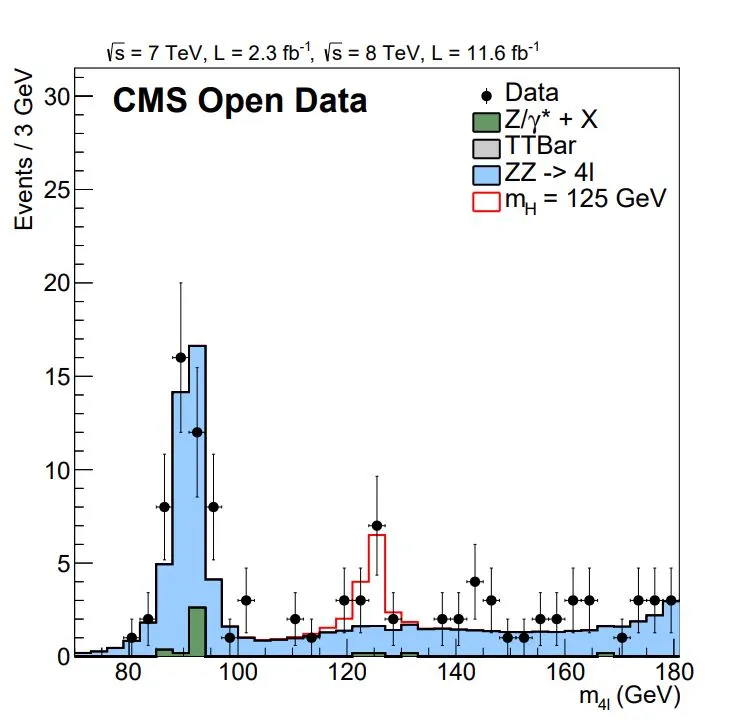
Re-discovering the Higgs boson in the Cloud
Re-discovering the Higgs boson in the Cloud It’s hard to believe that it has already been more than seven years since the discovery of the Higgs boson. Since then, numerous papers have been published by the ATLAS and CMS collaborations measuring the long-awaited particle’s properties in detail. Have you ever wondered whether one could repeat
-
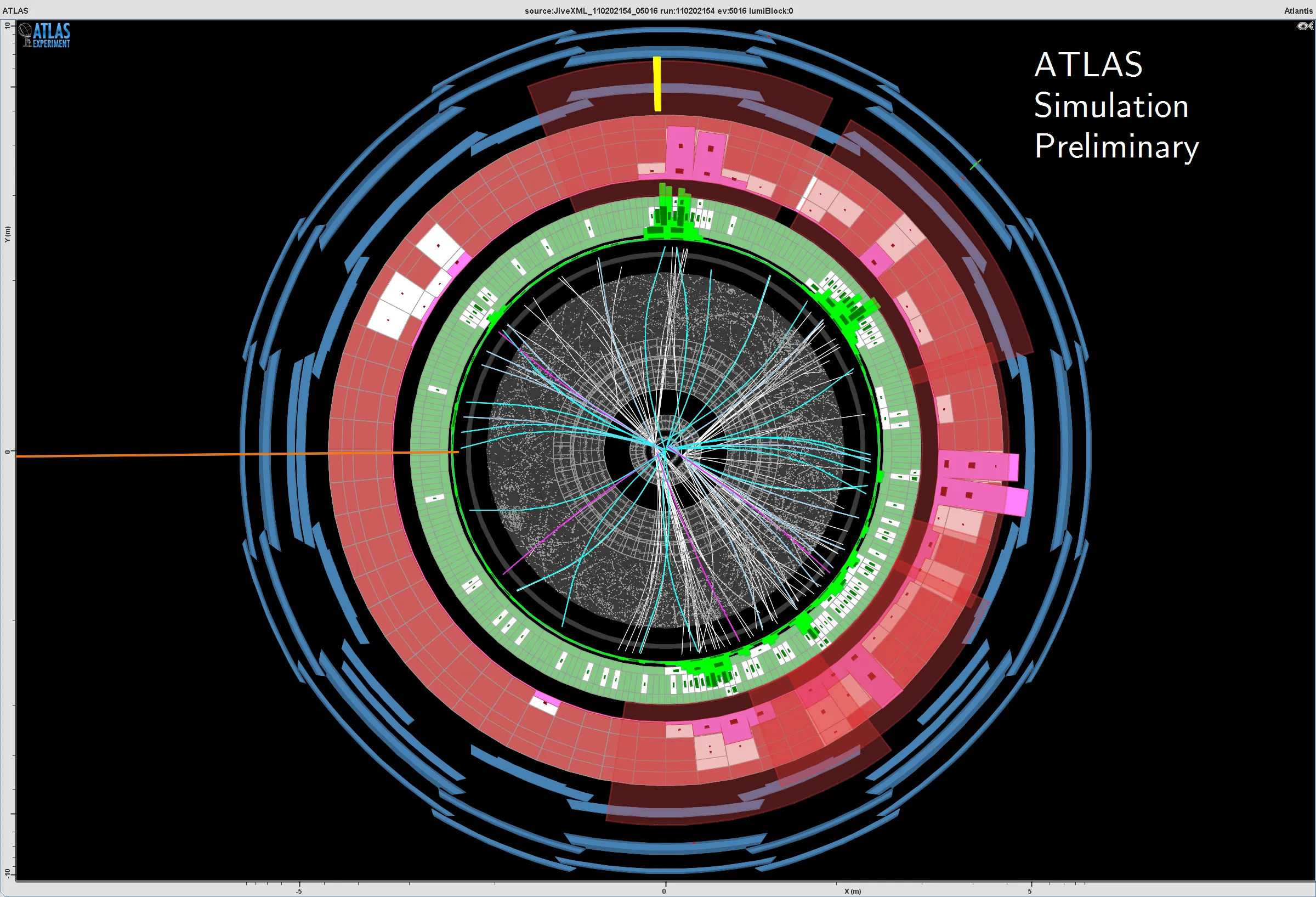
Exploring the Lifetime Frontier at the LHC and Beyond
Exploring the Lifetime Frontier at the LHC and Beyond By any reasonable measure, the first ten years of the LHC have been an unmitigated success. But are we exploring everywhere in our data? The overwhelming majority of the searches for particles beyond the Standard Model (BSM) conducted at ATLAS and CMS, for example, assume that
-
Scientific data management with Rucio
Scientific data management with Rucio Today's scientific experiments are manifold and diverse in their objectives, size, and workflows. However, one commonality uniting most, if not all, scientific experiments is the creation and analysis of data. Managing these scientific datasets is becoming an increasingly complex and complicated challenge. We have evolved from storing data in single
-
RECAST: A framework for reinterpreting physics searches at the LHC
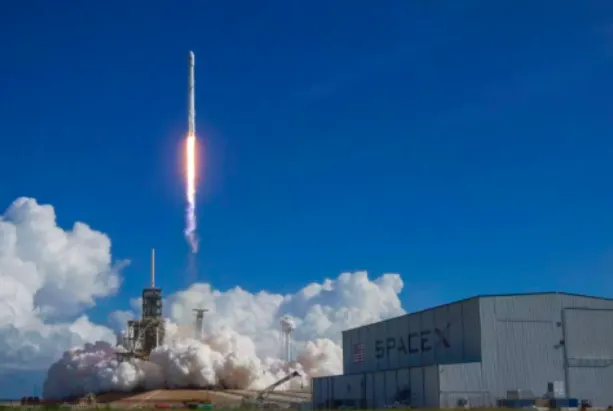
RECAST: A framework for reinterpreting physics searches at the LHC On 22 of December 2015 a SpaceX rocket launched towards space delivering satellites to low Earth orbit and then, instead of being lost to the depths of the ocean, the rocket’s first stage — the most expensive component of a rocket — returned back to
-
Latest results from the Higgs boson couplings to second-generation fermions
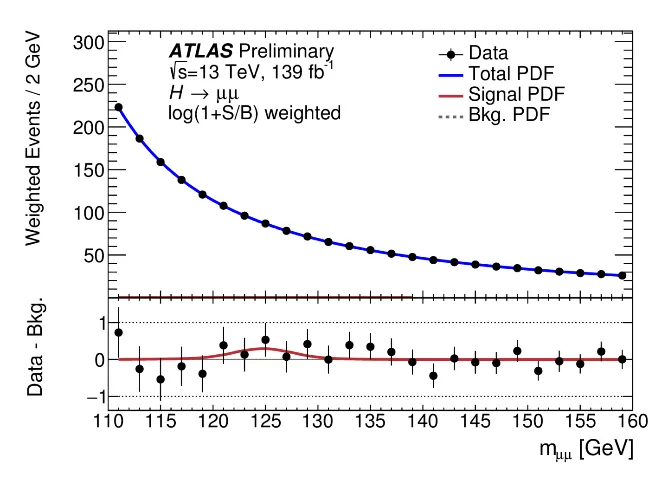
Latest results from the Higgs boson couplings to second-generation fermions The discovery of the Higgs boson completes the Standard Model, a very successful theory describing particles of visible matter and their interactions. However, there are still big missing pieces in our fundamental understanding of matter, while certain experimental phenomena point to the existence of new
-
ATLAS NSW Upgrade: preparing installation and commission of its first sector
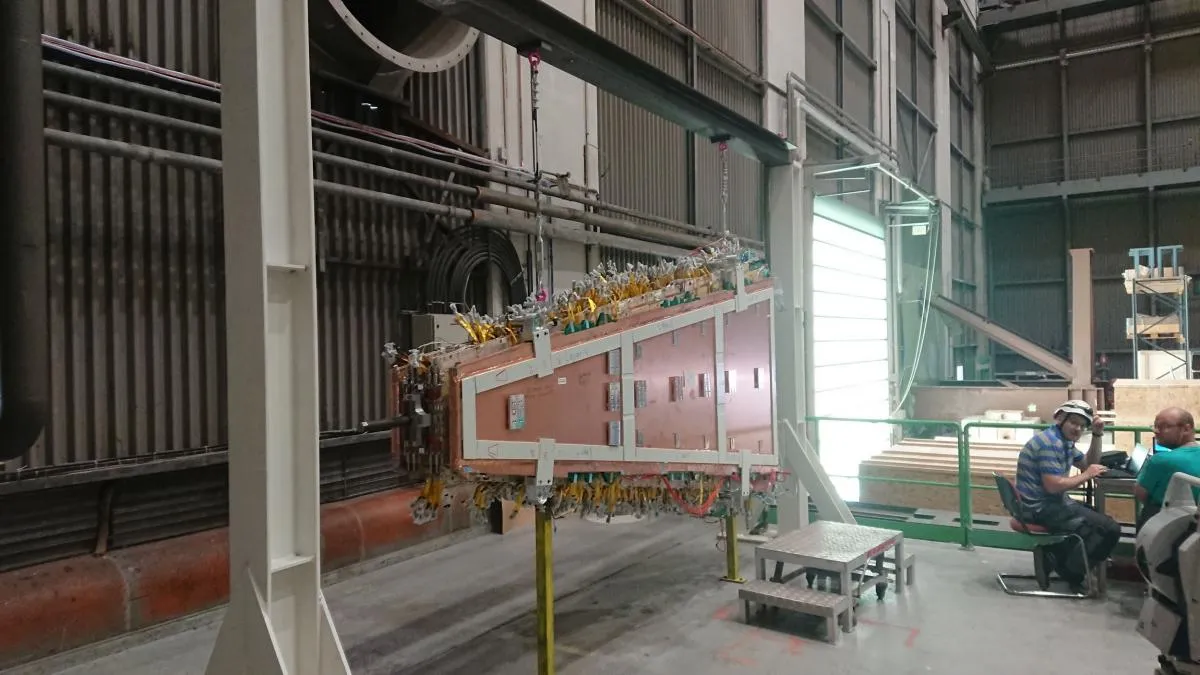
ATLAS NSW Upgrade: preparing installation and commission of its first sector The New Small Wheel (NSW) Upgrade it the most complex and challenging Phase-1 Upgrade project of ATLAS. As all the other upgrade projects for the LHC experiments, the goal is to meet the challenges of the High-Luminosity LHC era and to cope with the
-
The Higgs boson as a probe for new physics
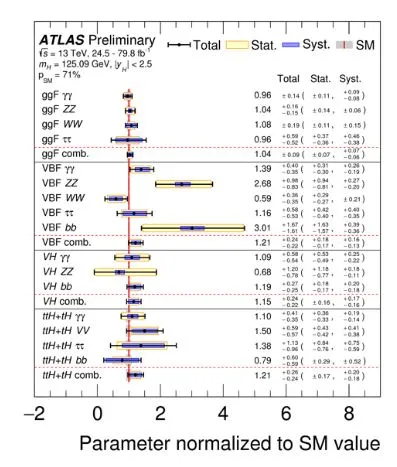
The Higgs boson as a probe for new physics The discovery of the Higgs boson has ushered in a new era of exploration at the Large Hadron Collider (LHC). Persistent tensions in the Standard Model (SM) of particle physics compel us to seek out physics beyond the SM (BSM) at the TeV scale, and the
-
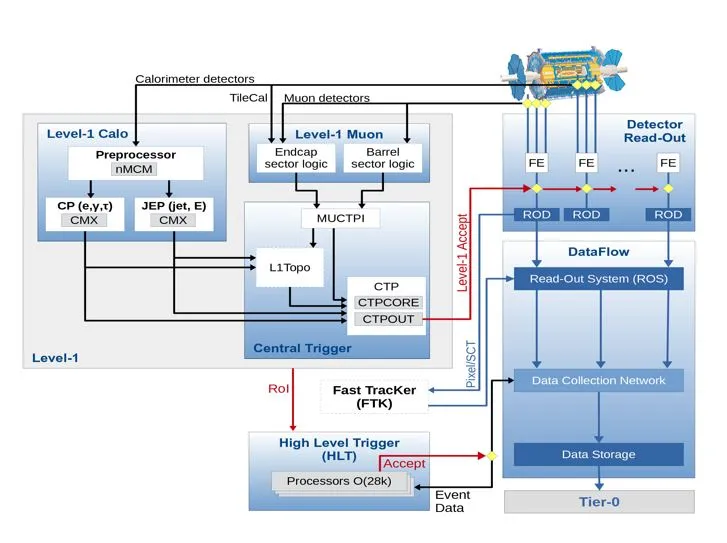
ATLAS trigger system meets the challenges of Run 2
ATLAS trigger system meets the challenges of Run 2 The trigger system is an essential component of any collider experiment as it is responsible for deciding whether or not to keep an event from a given bunch-crossing interaction for later study. During Run 2 (2015 to 2018) of the Large Hadron Collider (LHC), the trigger