
Tag: DT
-
SPS shutdown sends test beam research to DESY
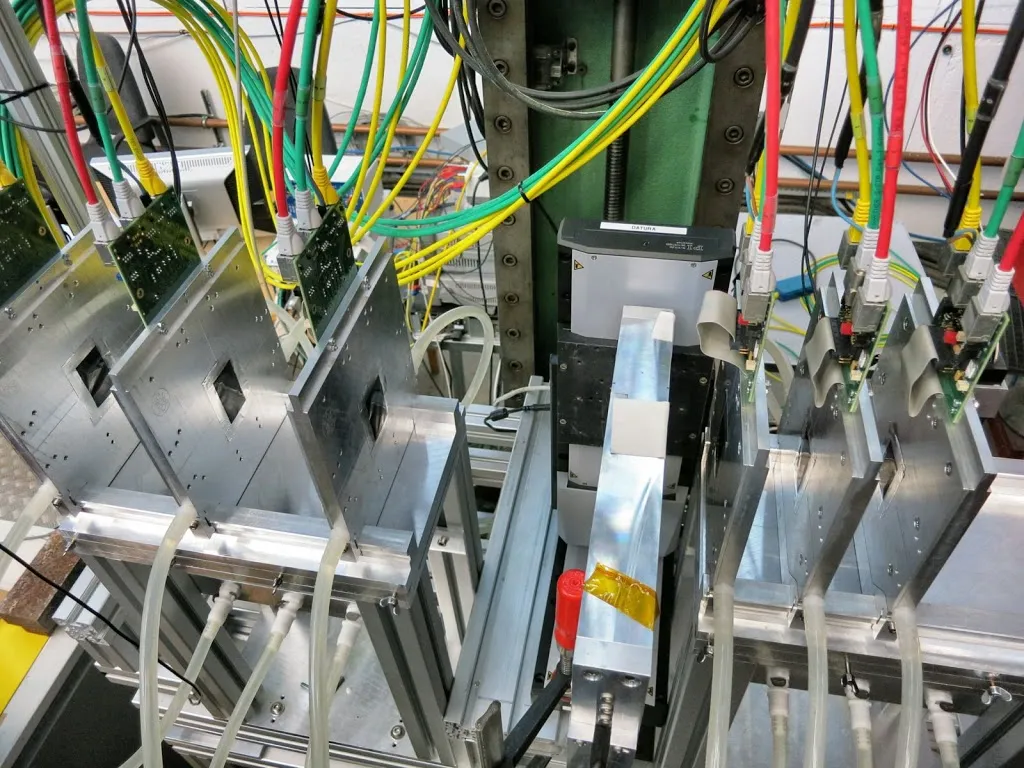
SPS shutdown sends test beam research to DESY Last week, four members of the CERN LCD group traveled to DESY, Hamburg, to test data acquisition methods for a Timepix pixel detector. It's unusual for CERN groups to have to travel to perform a test beam, but with the PS and SPS out of action for
-
The RD51 Collaboration: Development of Micro-Pattern Gas Detectors Technologies
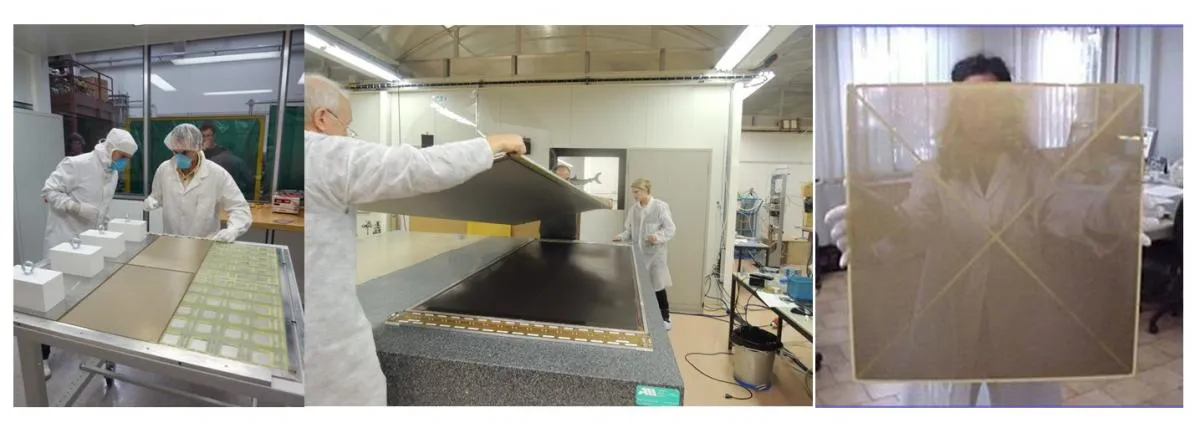
The RD51 Collaboration: Development of Micro-Pattern Gas Detectors Technologies Advances in photo-lithography and micro processing techniques during the past decade triggered a major transition from wire chambers to micro-pattern gas amplification devices such as GEM and MicroMegas. Micro-Pattern Gaseous Detectors offer unprecedented spatial resolution, high rate capability, large sensitive area, operational stability and radiation hardness.
-
PH-DT activities in 2012
PH-DT activities in 2012 The PH Detector Technology (DT) group is a central part of the CERN Physics Department. DT comprises about 75 staff members, ~30 fellows and students and a FSU team of 14 people. The group makes major contributions to the development, construction, qualification and operation of particle detector systems for CERN experiments,
-
RD50 and RD51 research projects on silicon and gaseous detector developments
RD50 and RD51 research projects on silicon and gaseous detector developments Common Research and Development consortia provide CERN and CERN member institutions with many benefits. For many detector developments significant R&D is needed in order to bring new detector concepts to a state where they are mature enough to be proposed as part of a
-
The RD50 Collaboration – Radiation tolerant silicon detectors
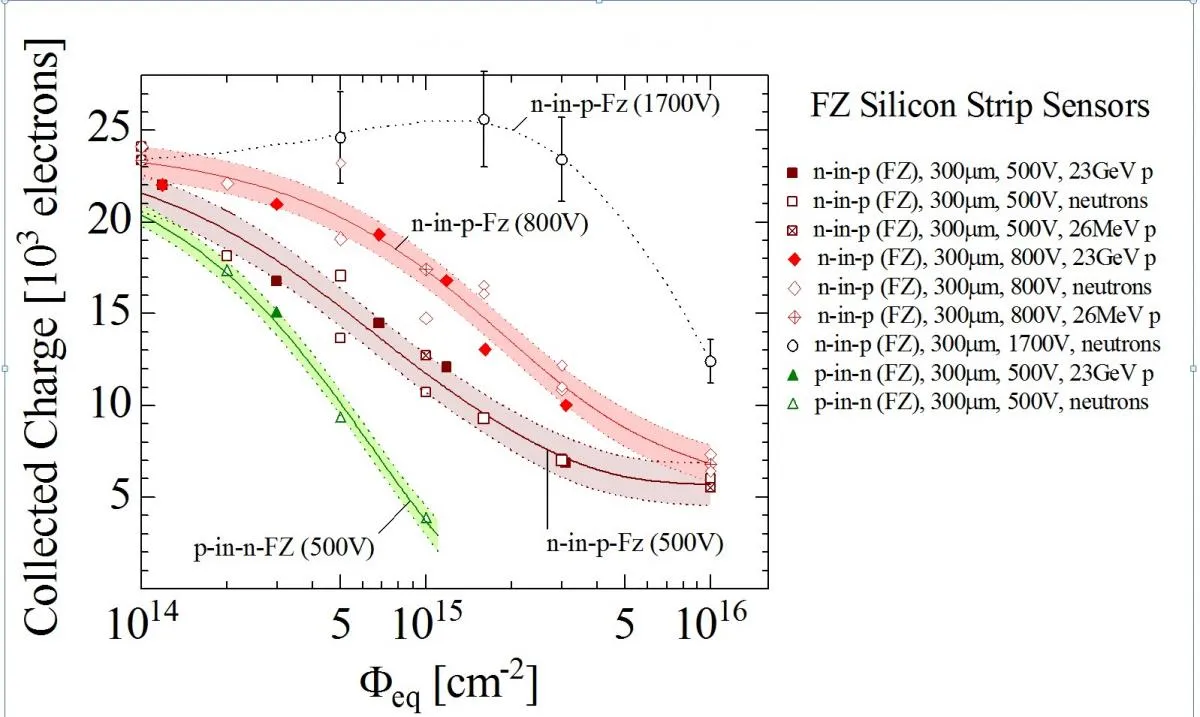
The RD50 Collaboration – Radiation tolerant silicon detectors In 2001 the RD50 Collaboration “Radiation hard semiconductor devices for high luminosity colliders” was formed in view of the first luminosity upgrade scenarios for the LHC. It was obvious that the LHC tracking detectors would not survive the radiation damage arising from a foreseen luminosity upgrade and
-
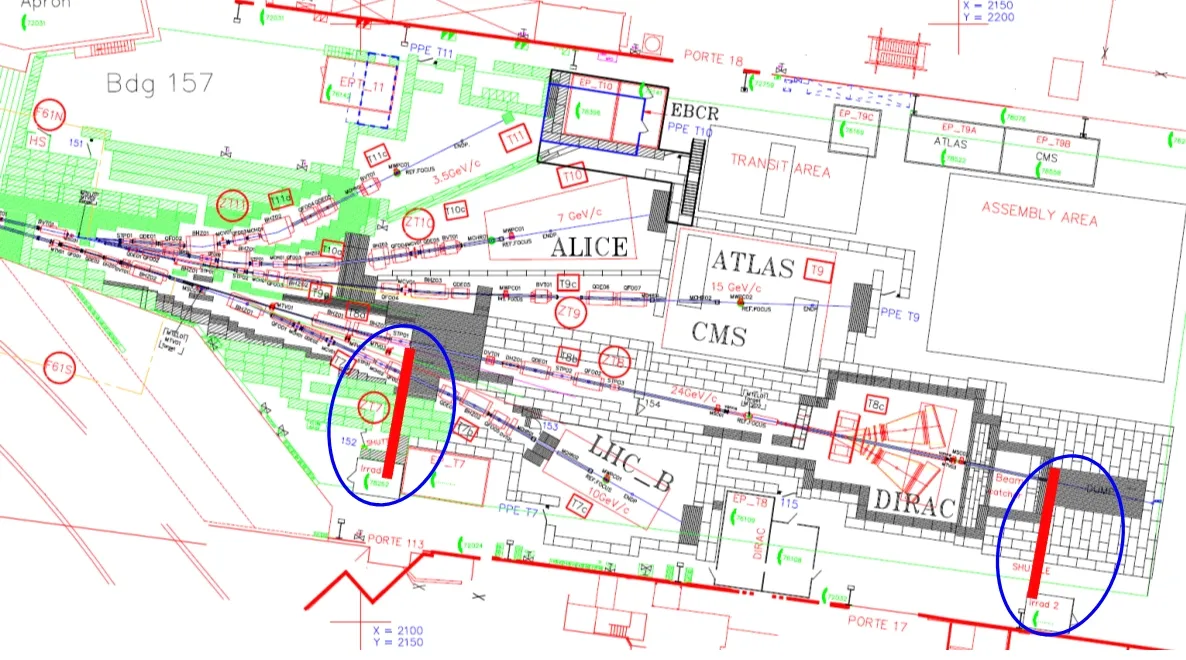
The new proton & mixed-field Irradiation facility at CERN PS
The new proton & mixed-field Irradiation facility at CERN PS Irradiation is the process by which an object is exposed to radiation. Although this term is fairly generic, the performing of irradiation experiments has a very important meaning for the PH department. In fact, the PH department is deeply involved in radiation tolerance testing since
-
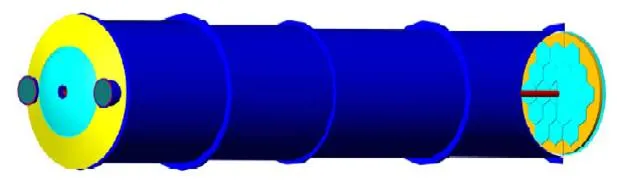
The RICH detector of the NA62 experiment
The RICH detector of the NA62 experiment The NA62 experiment is focused on precision tests of the Standard Model by studies of rare decays of charged kaons since only for few kaon decays there is a precise theoretical prediction. One of these exceptions is the very rare decay K+→π+ν ν, which has a branching ratio
-
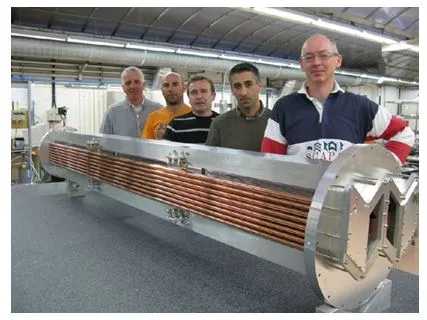
The PH Detector Technology (PH DT) group
The PH Detector Technology (PH DT) group PH‐DT is one of the three technical support groups in the physics department. Our main mandate is to develop, construct, operate and maintain detectors components for physics experiments at CERN. Our competencies span over a very wide spectrum from classical mechanics and composite materials over thin films and