
Tag: DT
-
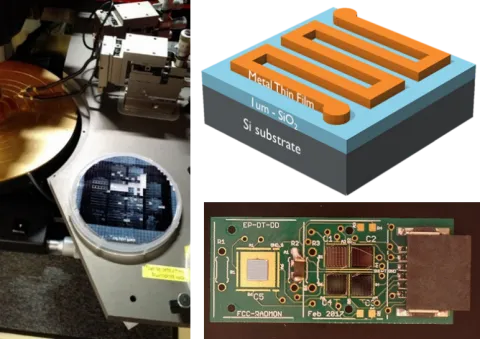
DT group: A year in review
DT group: A year in review In the beginning of June, the EP-DT group has published its Annual Report summarizing its yearly activities and offering an overview of major achievements and future collaborative plans. The Detector Technologies (DT) group comprises expertise in many key domains for advanced detector systems and engages in several detector projects
-
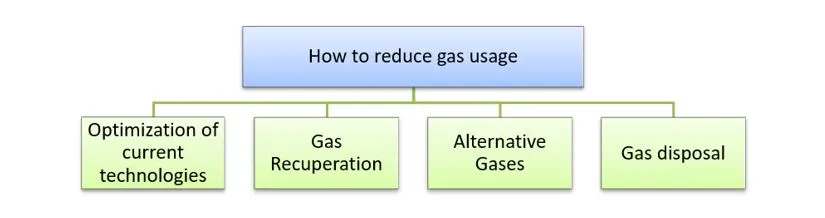
R&D on gas usage in the LHC particle detection systems
R&D on gas usage in the LHC particle detection systems A wide range of gas mixtures is used for the operation of different gaseous detectors for particle physics research. Among them are gases like C2H2F4 (R134a), CF4 (R14), C4F10 (R610) and SF6, which are used because they allow to achieve specific detector performance that are
-
15th Vienna Conference on Instrumentation
15th Vienna Conference on Instrumentation Studying the most microscopic elements of nature rely on the parallel progress of detector concepts and associated technologies. Experimental observations and open theoretical questions point to new paths for exploration in all fronts including fixed-target, collider and astrophysical experiments that put new requirements for future detectors. The 15th Vienna Conference
-
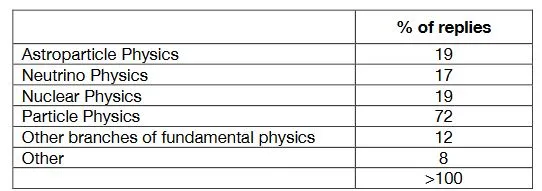
Investing in detector technologies
Investing in detector technologies Detector technologies are a vital component in the exploration of the fundamental laws of nature and the search for new physics that will answer some of the questions that the Standard Model leaves unanswered. Recognizing the importance of further R&D on detector technologies that could boost their performance and allow to
-
A bright year for the EP-DT irradiation facilities
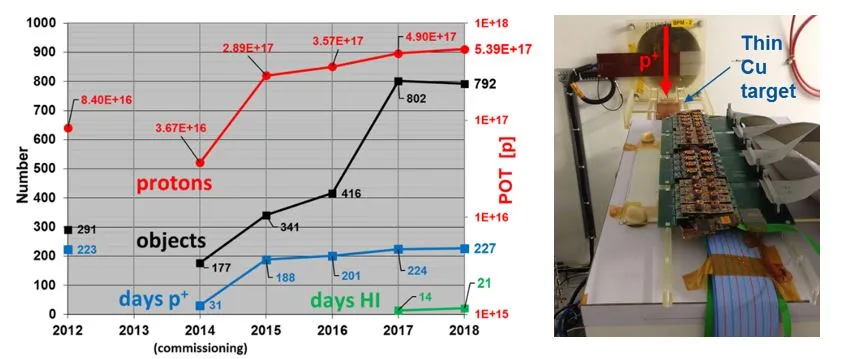
A bright year for the EP-DT irradiation facilities The CERN proton irradiation facility (IRRAD – www.cern.ch/ps-irrad) at the PS East Area and the new gamma irradiation facility (GIF++ – www.cern.ch/gif-irrad) at the SPS North Area have been designed and built during LS1 to cope with the increasing need for irradiation experiments of the EP experimental
-
Setting a roadmap for future detector technologies
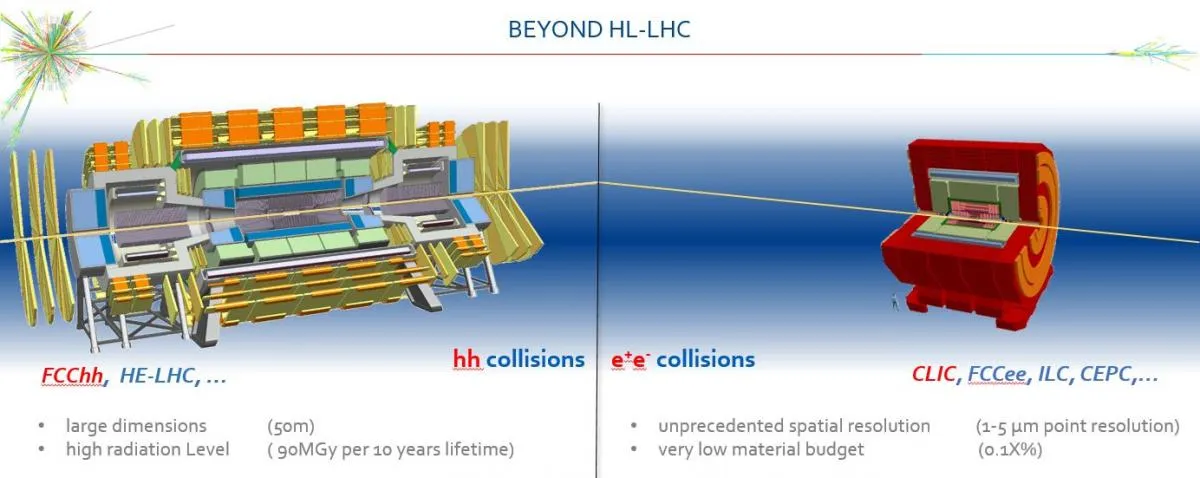
Setting a roadmap for future detector technologies The effort to address the remaining open questions of the Standard Model lies at the core of the HL-LHC physics programme and informs current design studies for post-LHC colliders (CLIC, FCC-ee, FCC-hh) as well as new fixed target experiments explored under the Physics Beyond Collider initiative. To meet
-
Meeting the challenges of tracking detector mechanics
Meeting the challenges of tracking detector mechanics Designing detectors to meet the physics requirements of future high-energy experiments calls for a strong R&D program on new detector-systems. This includes sensors technologies, fast and efficient electronics, mechanics and cooling techniques that could cope with the environment offered in high-energy and high-intensity colliders planned for the post-LHC
-
Cloud(y) climate studies at CERN
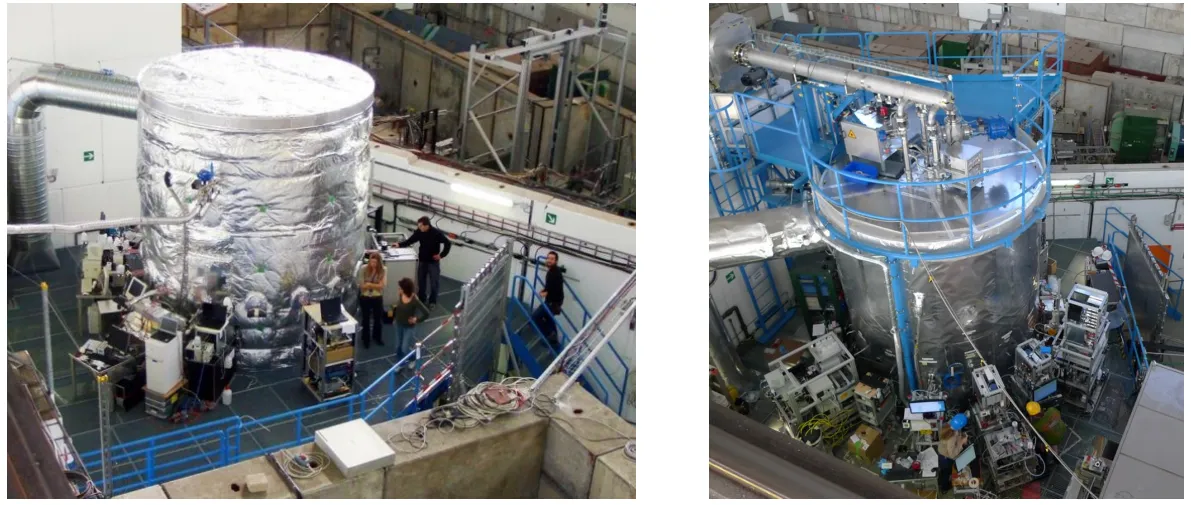
Cloud(y) climate studies at CERN Continuous improvements to the CLOUD facility as well as to the instruments combined with the state of the art know-how available at CERN have enabled a steady increase in the measurement capabilities and resulted in numerous high impact publications. This combination reflects CLOUD's world leading role in experimental laboratory studies
-
Precise timing detectors for the LHC experiments
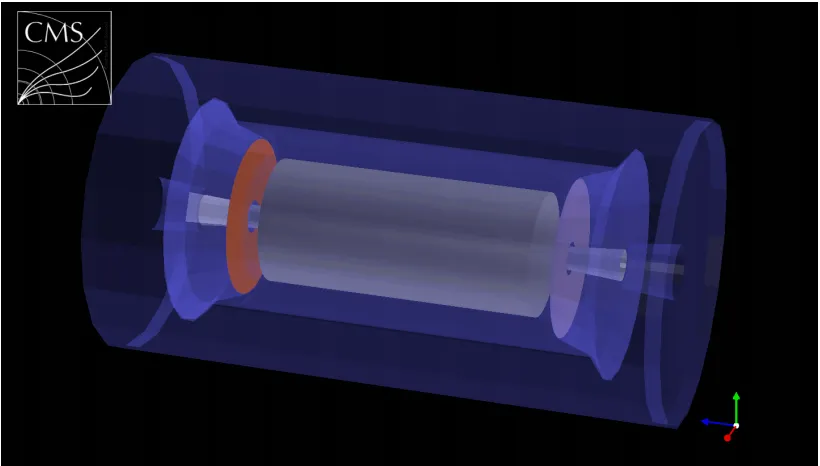
Precise timing detectors for the LHC experiments The ATLAS and CMS experiments physics programme at the HL-LHC will target a very wide range of measurements, including in-depth studies of the Higgs boson properties and direct searches for physics beyond the standard model (BSM). Timing detectors will help improve vertex identification, acceptance extension for isolated objects,
-
RD53: Making the challenging pixel detector chips for the Phase-II upgrades of ATLAS and CMS
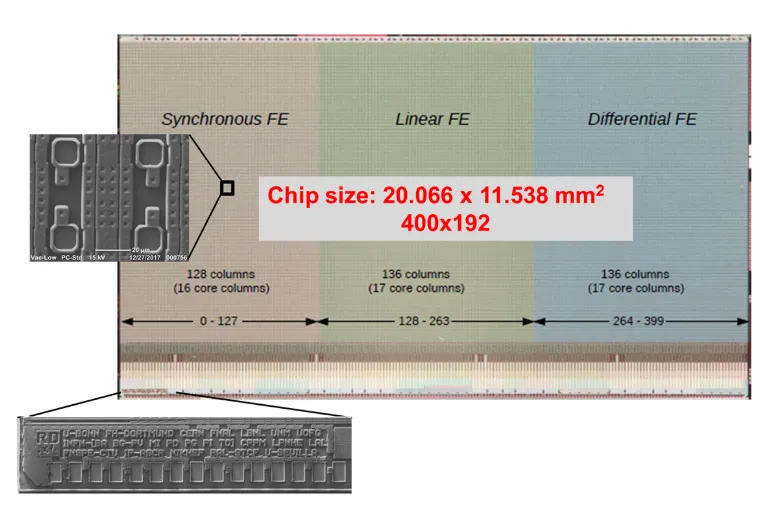
RD53: Making the challenging pixel detector chips for the Phase-II upgrades of ATLAS and CMS The RD53 collaboration has developed over the last five years the foundations to make the extremely challenging pixel detector chips for the Phase-II pixel upgrades of ATLAS and CMS. A large-scale demonstrator chip, called RD53A, was produced last year and