
Tag: ATLAS
-
New Staff Members and Fellows
New Staff Members and Fellows Maximilian Babeluk Hi, I’m Max. I recently joined the ALICE ITS3 team, where I work on sensor testing, functional verification, and in the future also chip design – particularly on MOSAIX. My main activities include testing and yield assessment across multiple integration levels (wafer probing to system tests), including data
-
Probing flavour violations of the Standard Model with ATLAS
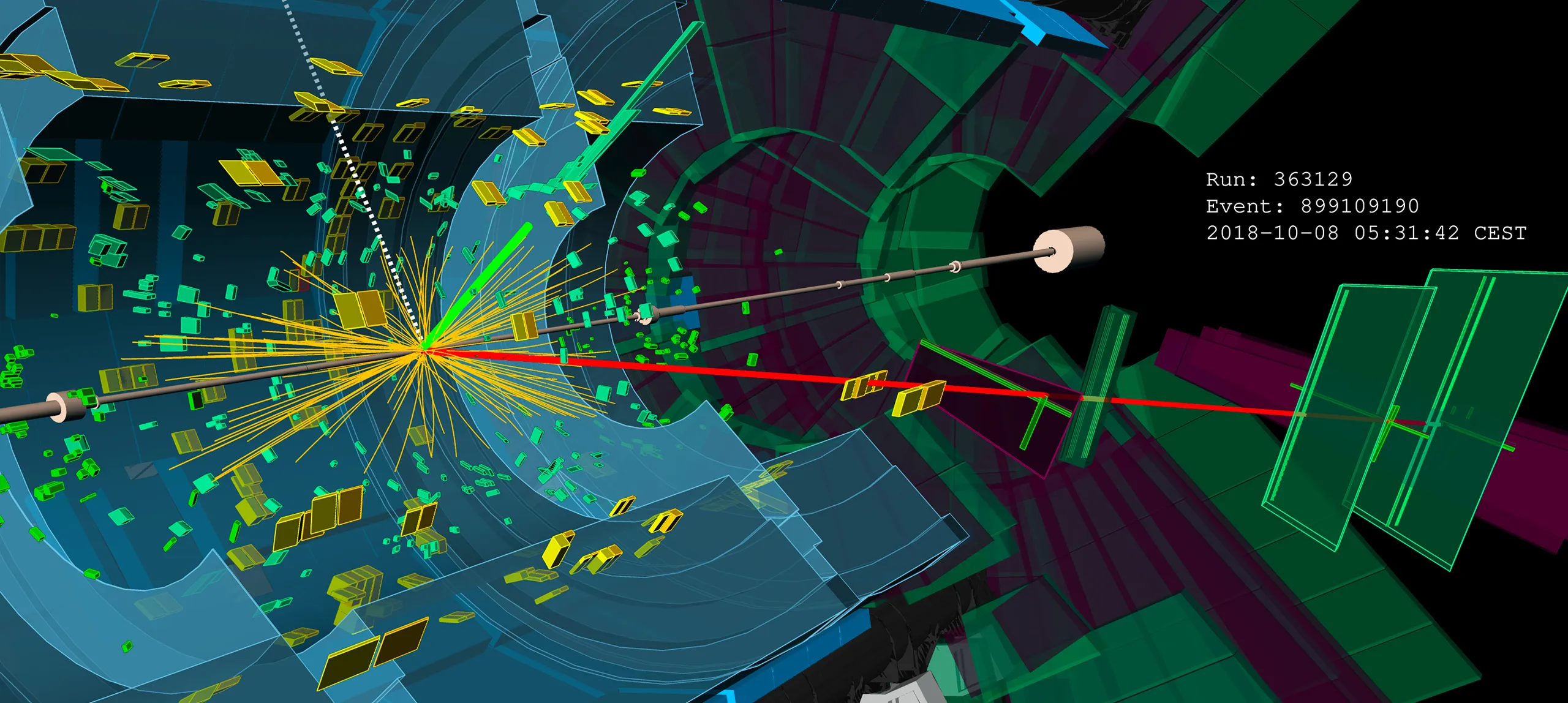
Probing flavour violations of the Standard Model with ATLAS Every aspect of our world – from atomic nuclei and molecular chemistry to biology and astrophysics – emerges from the interactions of particles so small they are considered point-like. While some particles, like the electron, were discovered over a century ago, most remained hidden until the
-
Dark Showers at the LHC: from benchmarks to Run-3 readiness
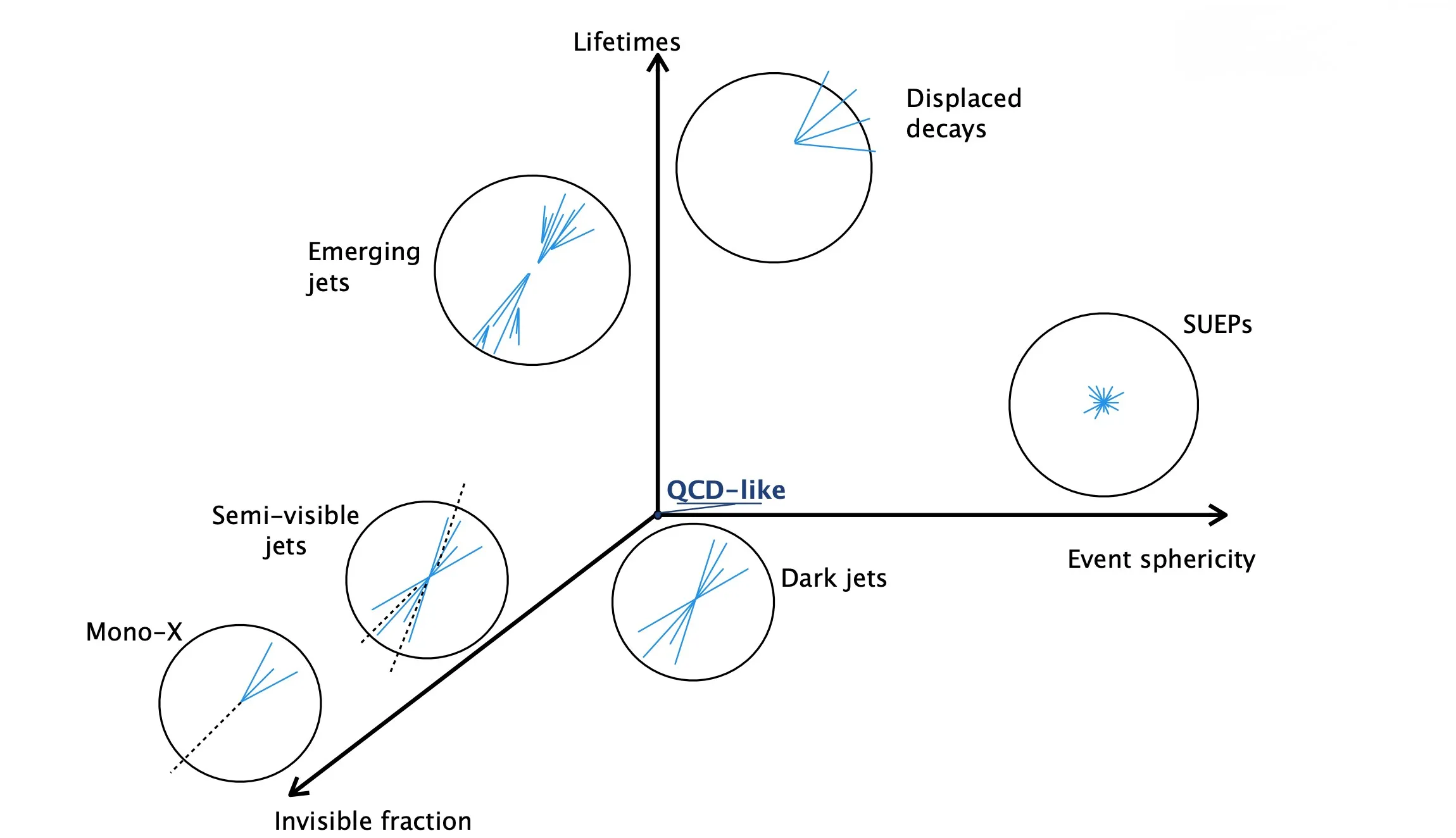
Dark Showers at the LHC: from benchmarks to Run-3 readiness The search for new physics at the LHC increasingly pushes beyond traditional signatures. Among the most intriguing possibilities are dark showers—complex cascades of particles emerging from dark-sector dynamics, capable of producing rich, unconventional final states. These scenarios naturally arise in models where dark matter interacts
-
Triple Higgs Frontiers: Mapping the Higgs self-couplings at the 2025 HHH workshop
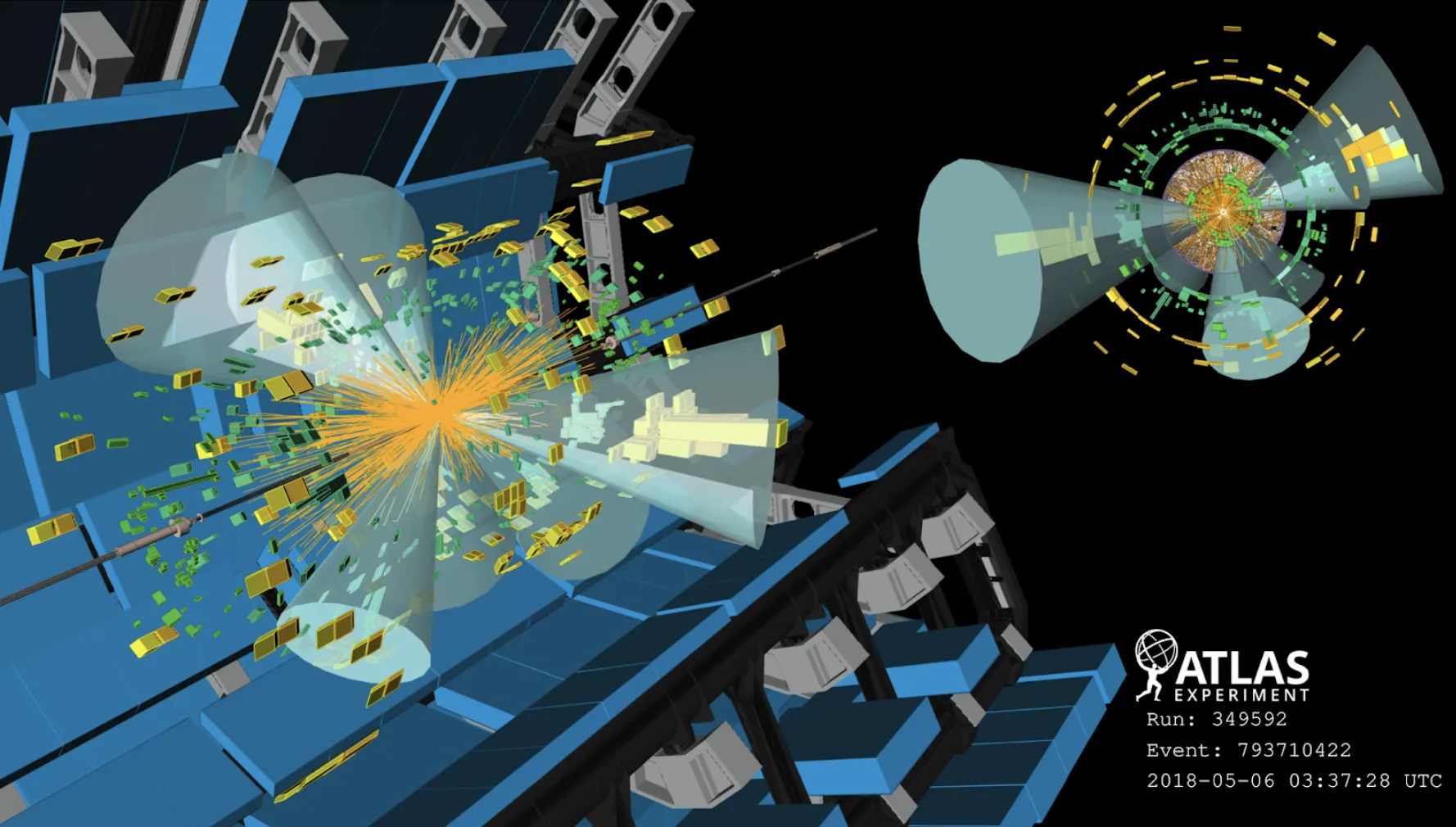
Triple Higgs Frontiers: Mapping the Higgs self-couplings at the 2025 HHH workshop More than a decade after the discovery of the Higgs boson, attention is shifting from finding the Higgs to mapping its self-interactions. These self-couplings determine the shape of the Higgs potential, and with it the stability of our vacuum and the early Universe.
-
Highlights from the 2nd NGT Technical Workshop
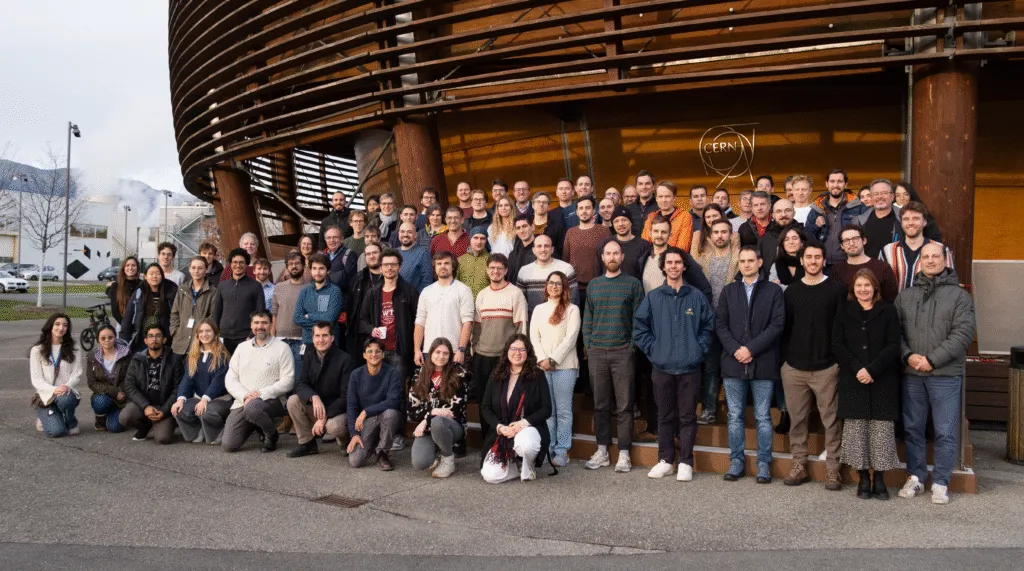
Highlights from the 2nd NGT Technical Workshop Participants of the 2nd Next Generation Triggers Technical Workshop at the Globe of Science and Innovation. Picture: Mariana Velho From 19 to 21 November 2025, the Next Generation Triggers (NGT) project held its 2nd Technical Workshop at CERN’s Globe of Science and Innovation, welcoming more than one hundred
-
Light ions at the LHC: first results from oxygen–oxygen and neon–neon collisions
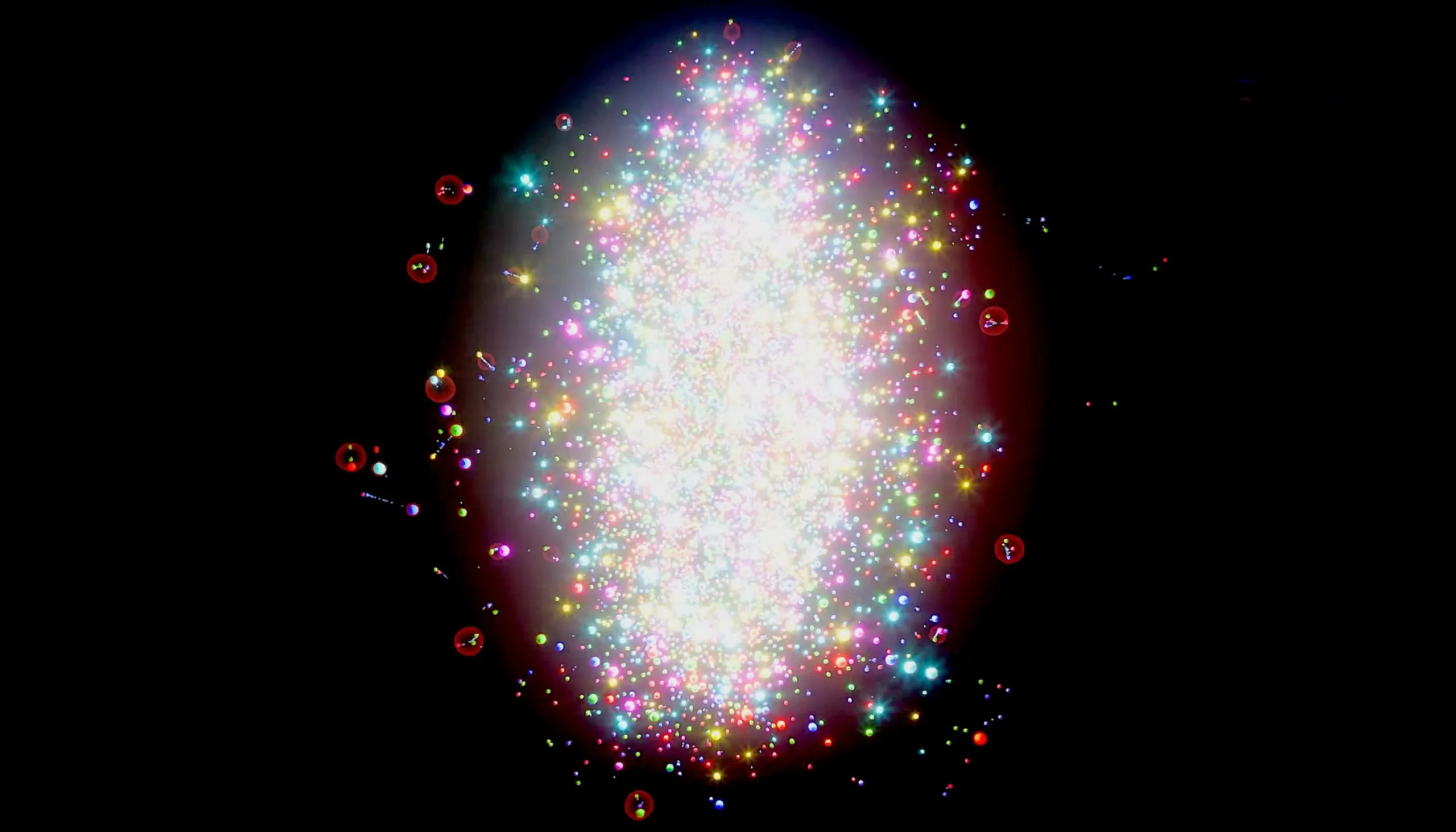
Light ions at the LHC: first results from oxygen–oxygen and neon–neon collisions This summer, the Large Hadron Collider (LHC) delivered its first-ever collisions between light ions, opening a new chapter in the study of nuclear structure and the quark–gluon plasma (QGP) – the extreme state of matter that existed in the first instants of the
-
ATLAS explores the quark–gluon plasma with light-ion collisions
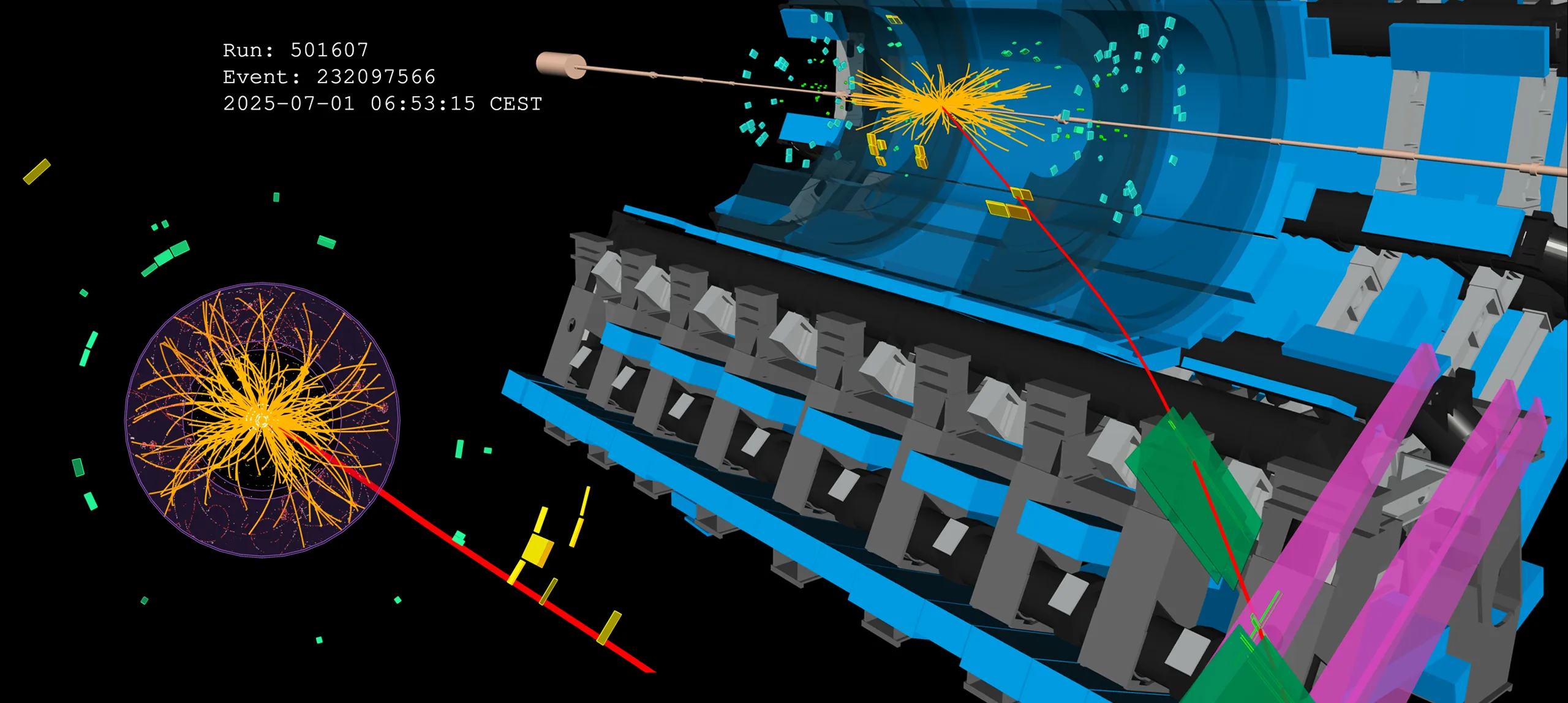
ATLAS explores the quark–gluon plasma with light-ion collisions In July 2025, ATLAS recorded the first-ever collisions of light ions at the LHC — oxygen–oxygen (O–O) and neon–neon (Ne–Ne) — marking a new phase in the study of strongly interacting matter. These short, intense runs provided a unique opportunity to explore the transition between conventional hadronic
-
ATLAS explores the quark–gluon plasma with light-ion collisions
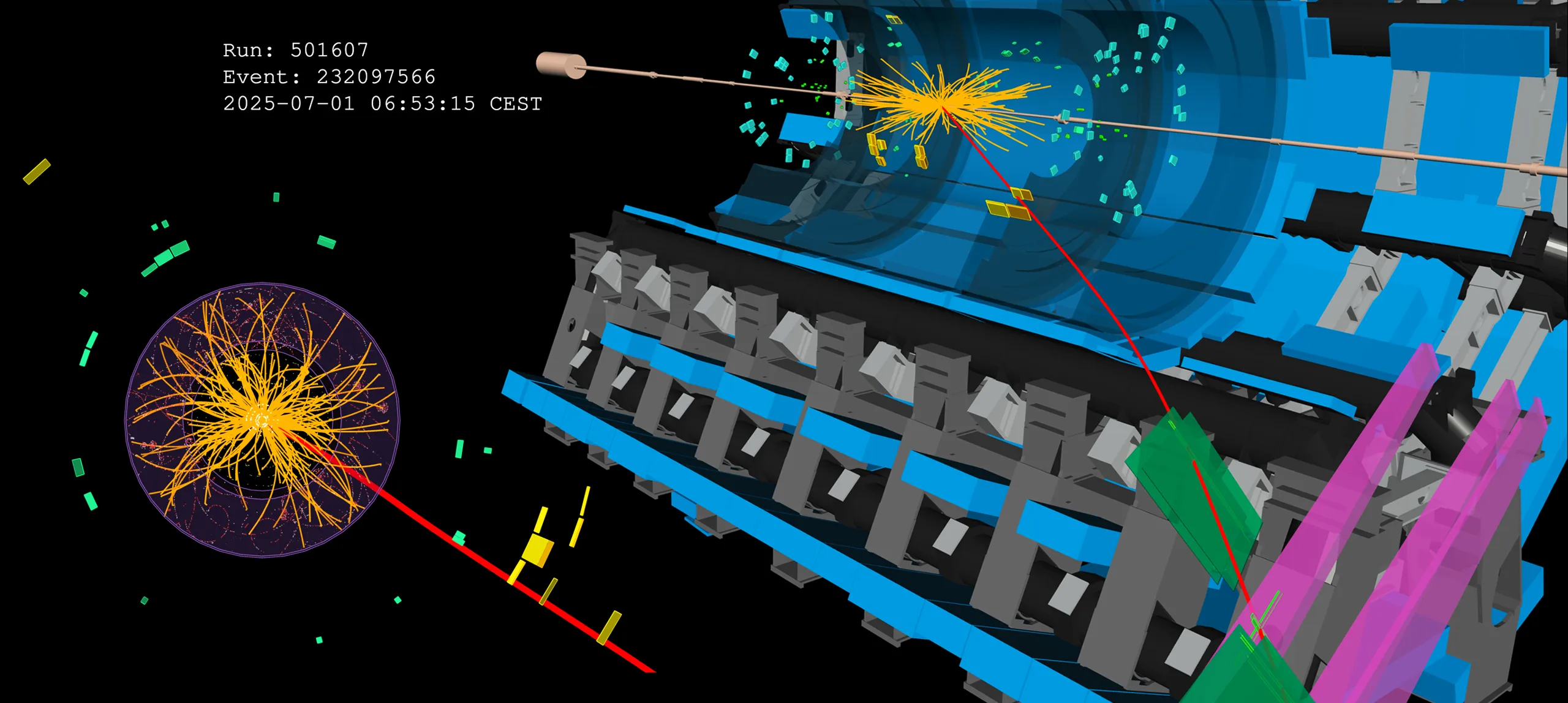
ATLAS explores the quark–gluon plasma with light-ion collisions In July 2025, ATLAS recorded the first-ever collisions of light ions at the LHC — oxygen–oxygen (O–O) and neon–neon (Ne–Ne) — marking a new phase in the study of strongly interacting matter. These short, intense runs provided a unique opportunity to explore the transition between conventional hadronic
-
The ATLAS High Granularity Timing Detector
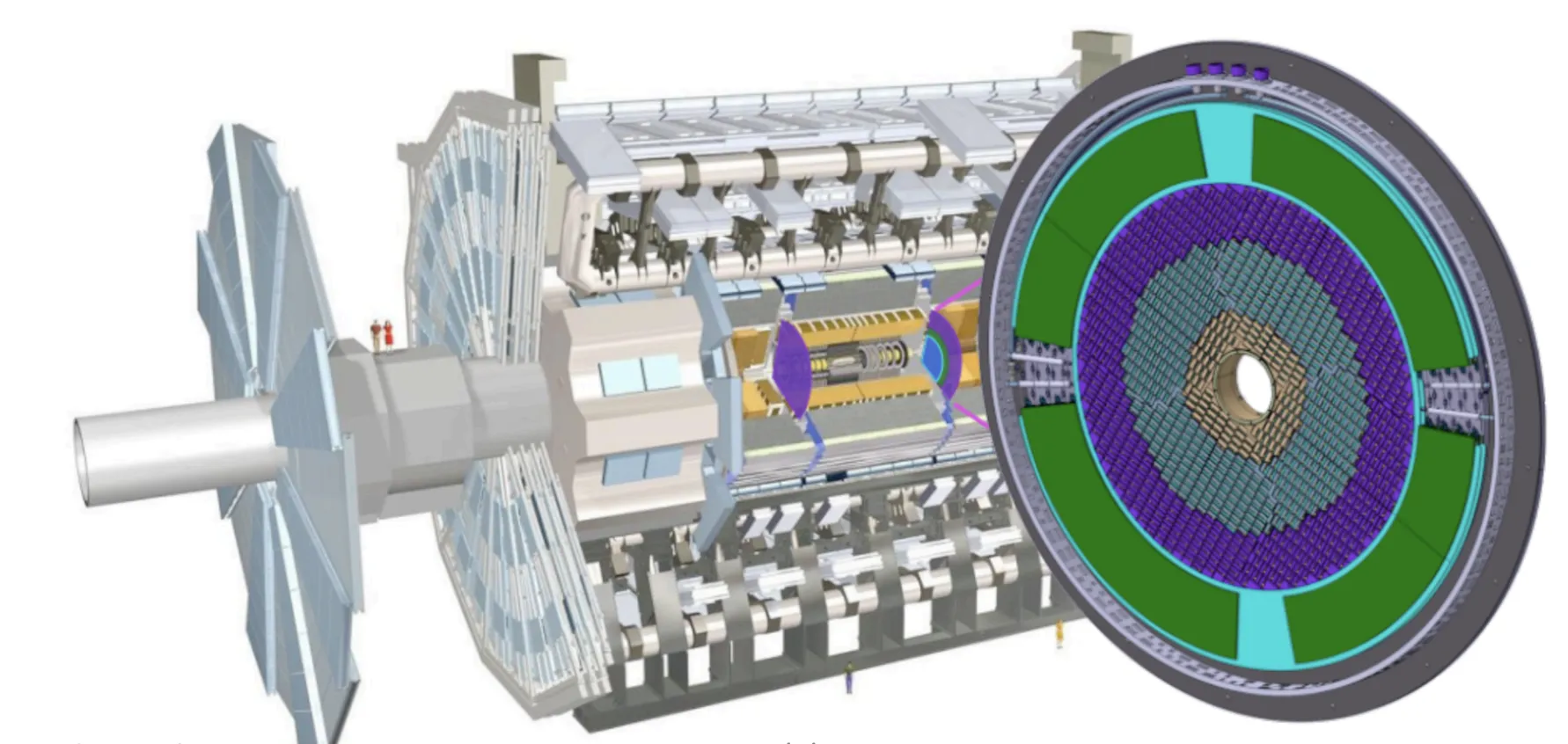
The ATLAS High Granularity Timing Detector Introduction Given the challenging conditions posed by the HL-LHC, ATLAS is currently in the process of constructing a novel precision-timing silicon detector, the High-Granularity Timing Detector (HGTD), which provides a time resolution of 30 to 50 ps for charged particles [ATLAS-TDR-31]. The detector covers a pseudorapidity range of 2.4
-
Bound state, found state – ATLAS ties the knot on top quark pair production at threshold
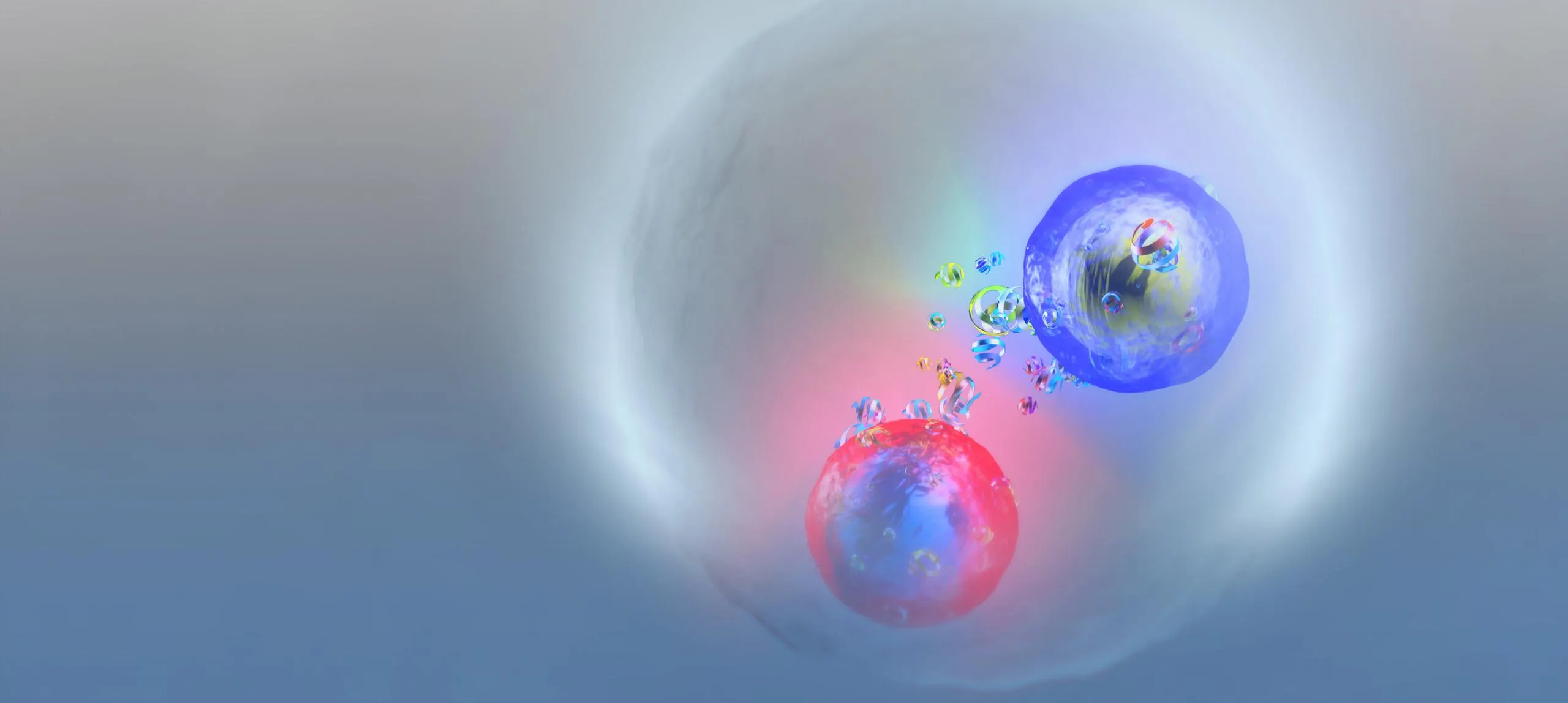
Bound state, found state – ATLAS ties the knot on top quark pair production at threshold Physics at the LHC often advances by pushing into regimes once thought unreachable. One such frontier is the precise study of top-anti-top quark pairs (tt̄) near the production threshold, where subtle quantum effects may leave their imprint. A few