
Tag: ATLAS
-
Next-Generation CO₂ Cooling Systems Powering the Future of ATLAS and CMS
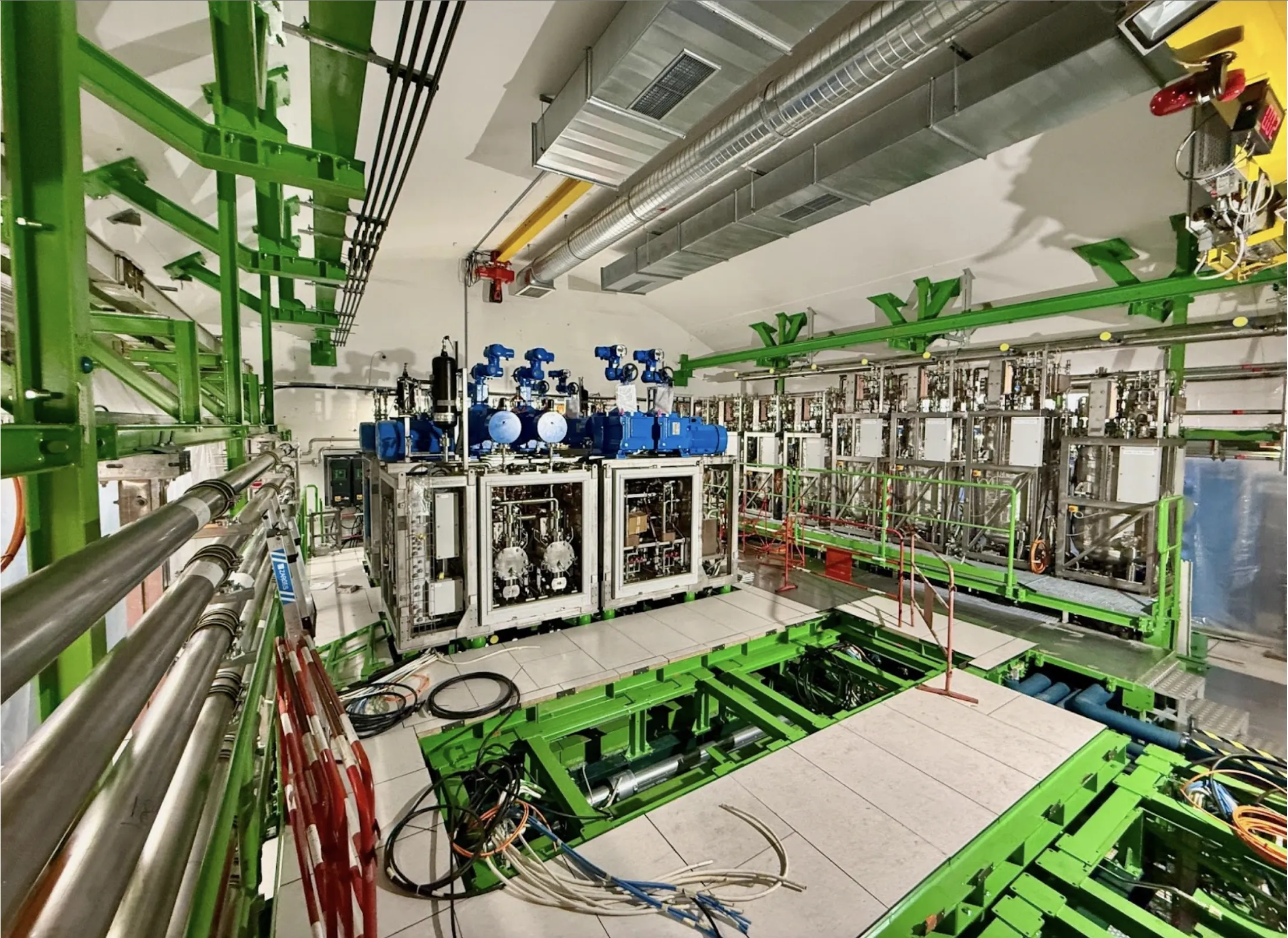
Next-Generation CO₂ Cooling Systems Powering the Future of ATLAS and CMS Four CO2 cooling plants and accumulators in the service cavern of CMS in May 2025. (Photo by Jérôme Daguin) During recent shutdown periods, CERN engineers and technicians — in collaboration with the ATLAS and CMS teams — began installing the first units of next-generation
-
The ATLAS Inner Tracker Integration at CERN
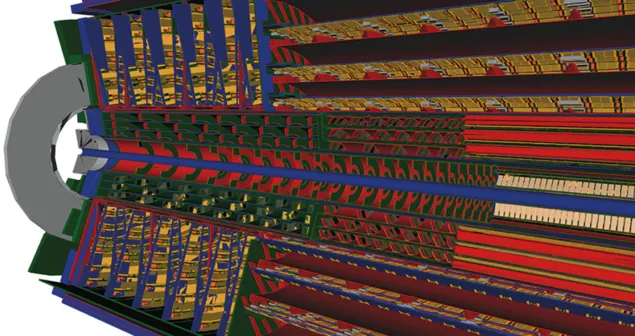
The ATLAS Inner Tracker Integration at CERN Introduction The ATLAS ITk (Inner TracKer) is a new all-silicon tracker that will replace the existing ATLAS Inner Detector (ID) to meet the requirements imposed by the high-radiation and high-hit occupancy environments of the HL-LHC (High-Luminosity LHC). The ITk consists of multiple layers of silicon detectors arranged into
-
ATLAS Approaching a Breakthrough in Diboson Polarization with Run-3 Data
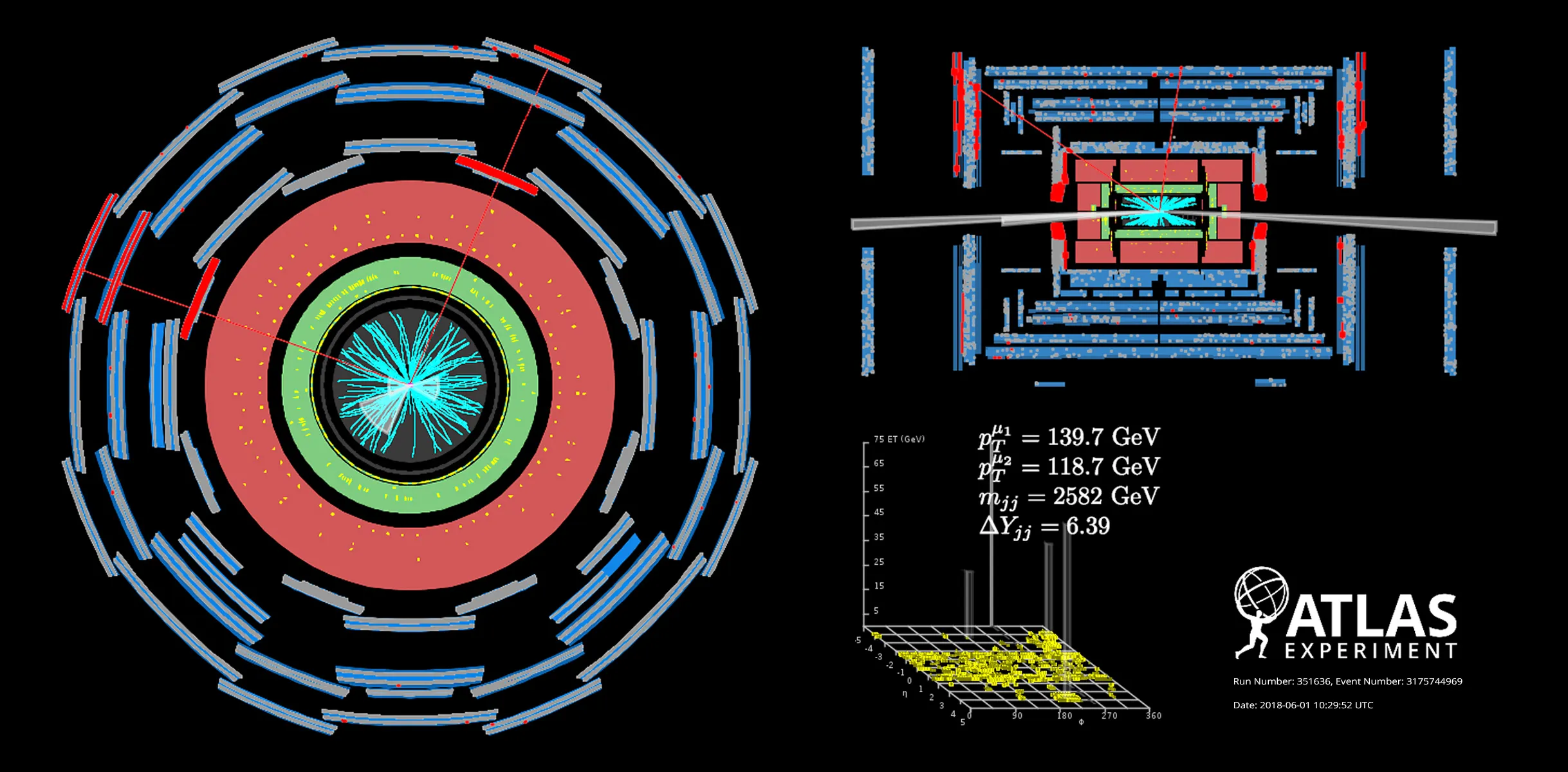
ATLAS Approaching a Breakthrough in Diboson Polarization with Run-3 Data The study of the polarisation of vector boson scattering (VBS) processes provides a unique test of the Higgs mechanism’s role in taming high-energy electroweak interactions, making it indispensable for fundamental physics for the last decades. As the LHC enters its Run-3 phase, this study is
-

Tracing the Path to Precision: The Historical Evolution of Electroweak Physics at the LHC
Tracing the Path to Precision: The Historical Evolution of Electroweak Physics at the LHC The unification of the electromagnetic and weak-nuclear forces into an electroweak theory was one of the major breakthroughs of 20th century particle physics. In the 1960s, Steven Weinberg, Sheldon Glashow, and Abdus Salam proposed that these two forces, which appear at
-
ATLAS hones in on Higgs-Boson Couplings to Heavy Flavour Quarks
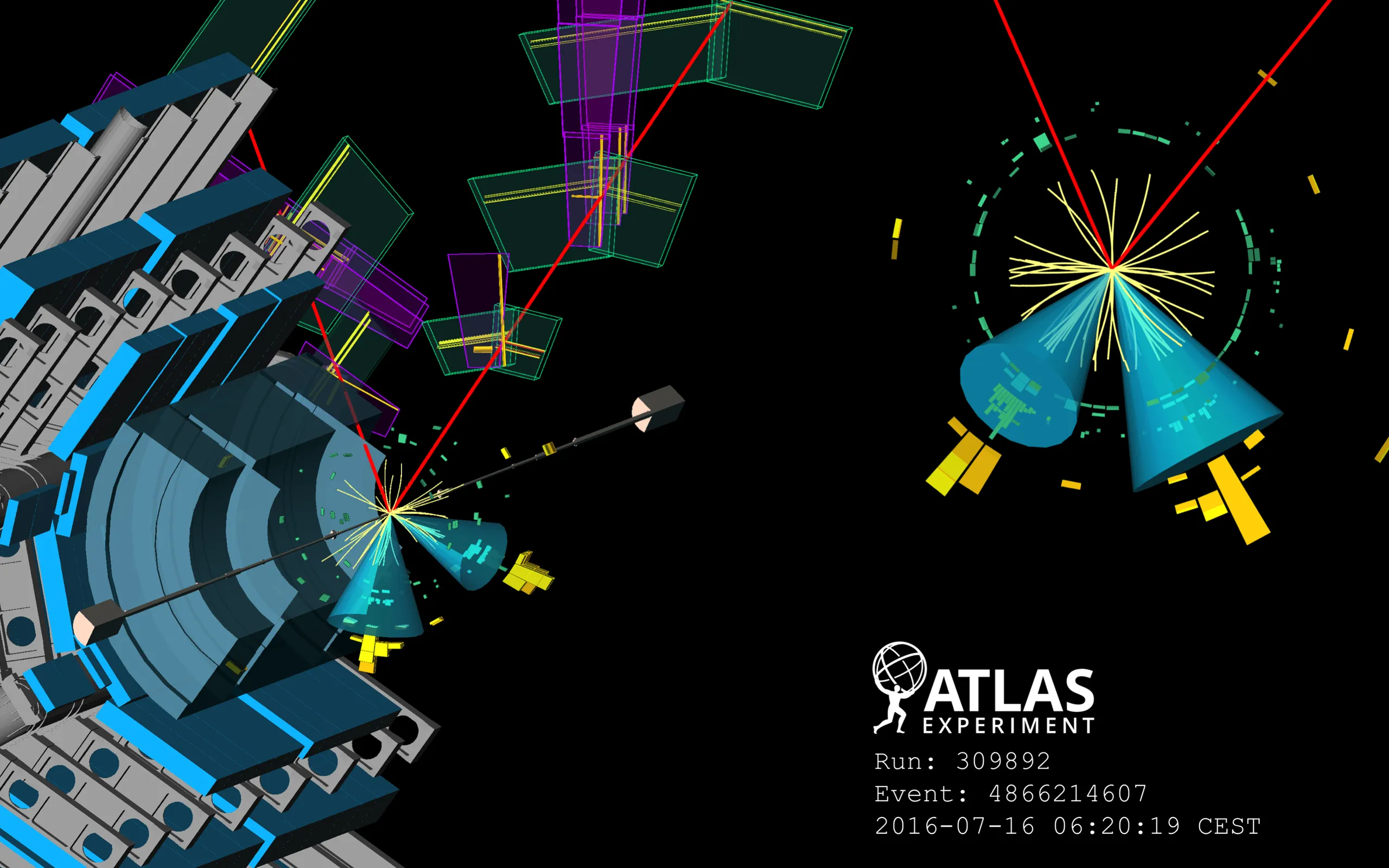
ATLAS hones in on Higgs-Boson Couplings to Heavy Flavour Quarks Candidate event for the ZH → μμ cc process, where a Z boson and a Higgs boson decay to two muons (red tracks) and two charm-tagged jets (blue cones). (Image: ATLAS collaboration) In the summer of 2024, the ATLAS collaboration released two new publications that
-

Extended Scalar Sectors are considered from all angles at CERN
Extended Scalar Sectors are considered from all angles at CERN It has been more than ten years since the discovery of the first scalar particle at the electroweak scale. This particle was discovered at the LHC in 2012, and it was quickly found to be a scalar that is compatible with the Higgs boson predicted
-
LHC Run 3: A Marathon of Progress and Perseverance
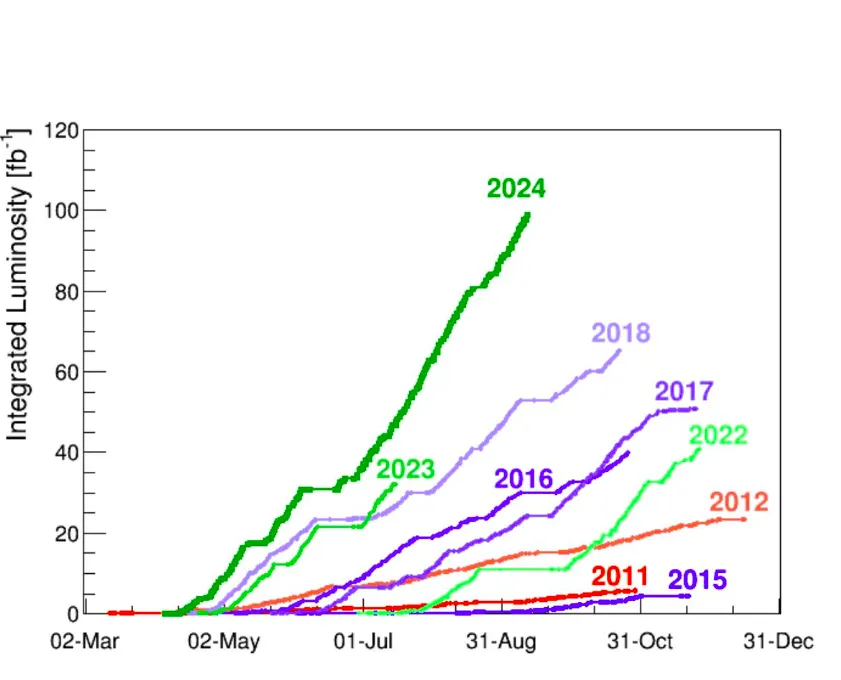
LHC Run 3: A Marathon of Progress and Perseverance Earlier this month, the Large Hadron Collider reached an unprecedented milestone of 100 inverse femtobarns – equivalent to 10 million billion collisions – delivered to the ATLAS and CMS experiments in 2024, with 28 days of proton-proton collisions remaining. This marks a historic first in a
-
ATLAS Operations: Progress and Highlights from 2023/2024
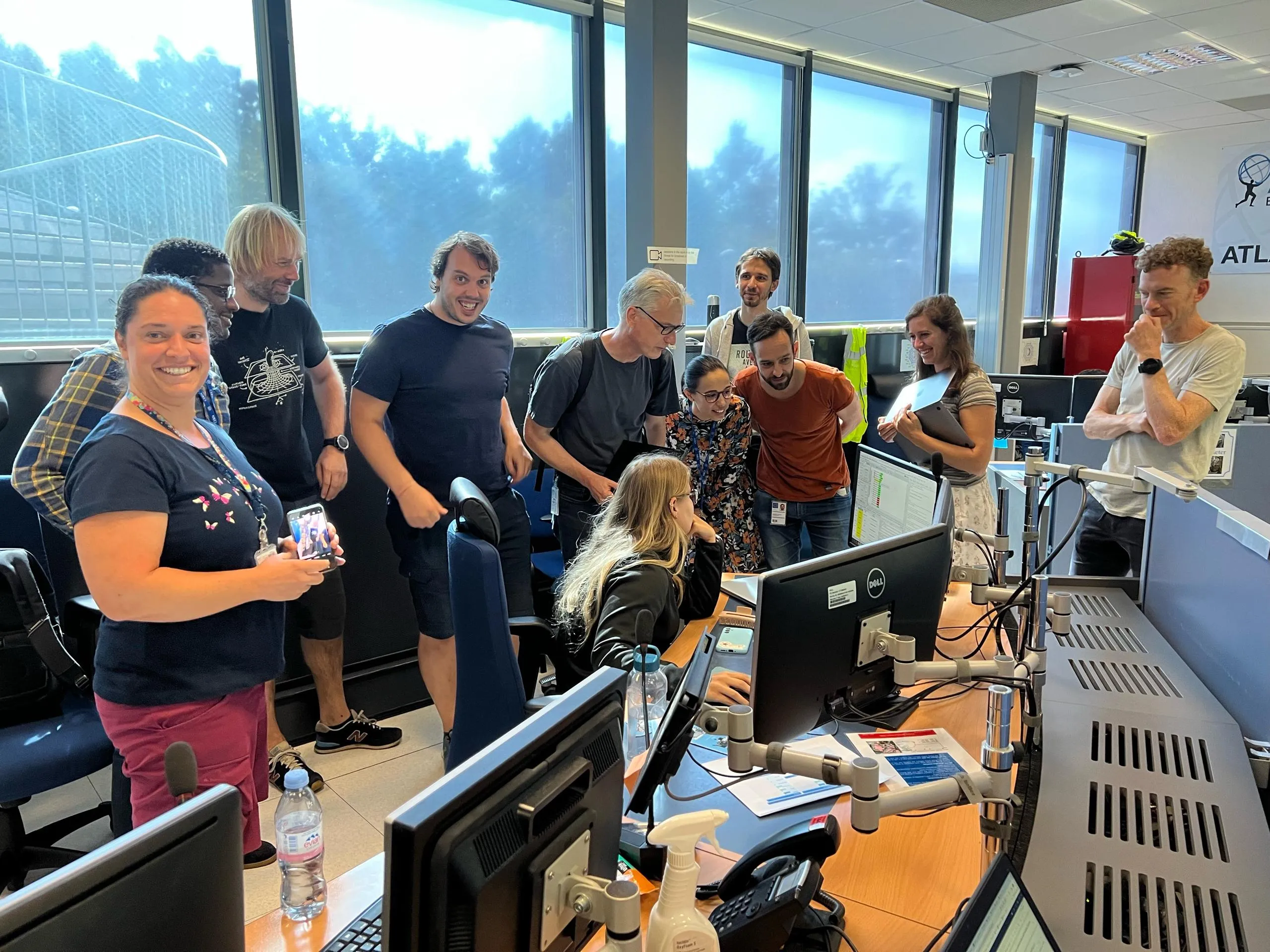
ATLAS Operations: Progress and Highlights from 2023/2024 Great progress has been made in the ATLAS operation since the last EP news article. There we presented the fantastic Phase-I upgrades of the ATLAS detector installed during LS2, described the steps towards their commissioning, and summarized the experience of the first data-taking year of Run 3. What
-
ATLAS releases 2015 and 2016 proton–proton datasets for public research use
ATLAS releases 2015 and 2016 proton–proton datasets for public research use The ATLAS Collaboration has announced the release of 7 billion proton–proton collision events, alongside 2 billion simulated events, in the collaboration’s first release of open data for scientific research. The open data, available through CERN’s Open Data portal, comprise the entire 2015 and 2016
-
ATLAS Open Data: Ushering in Transparency and Collaboration in Particle Physics Research
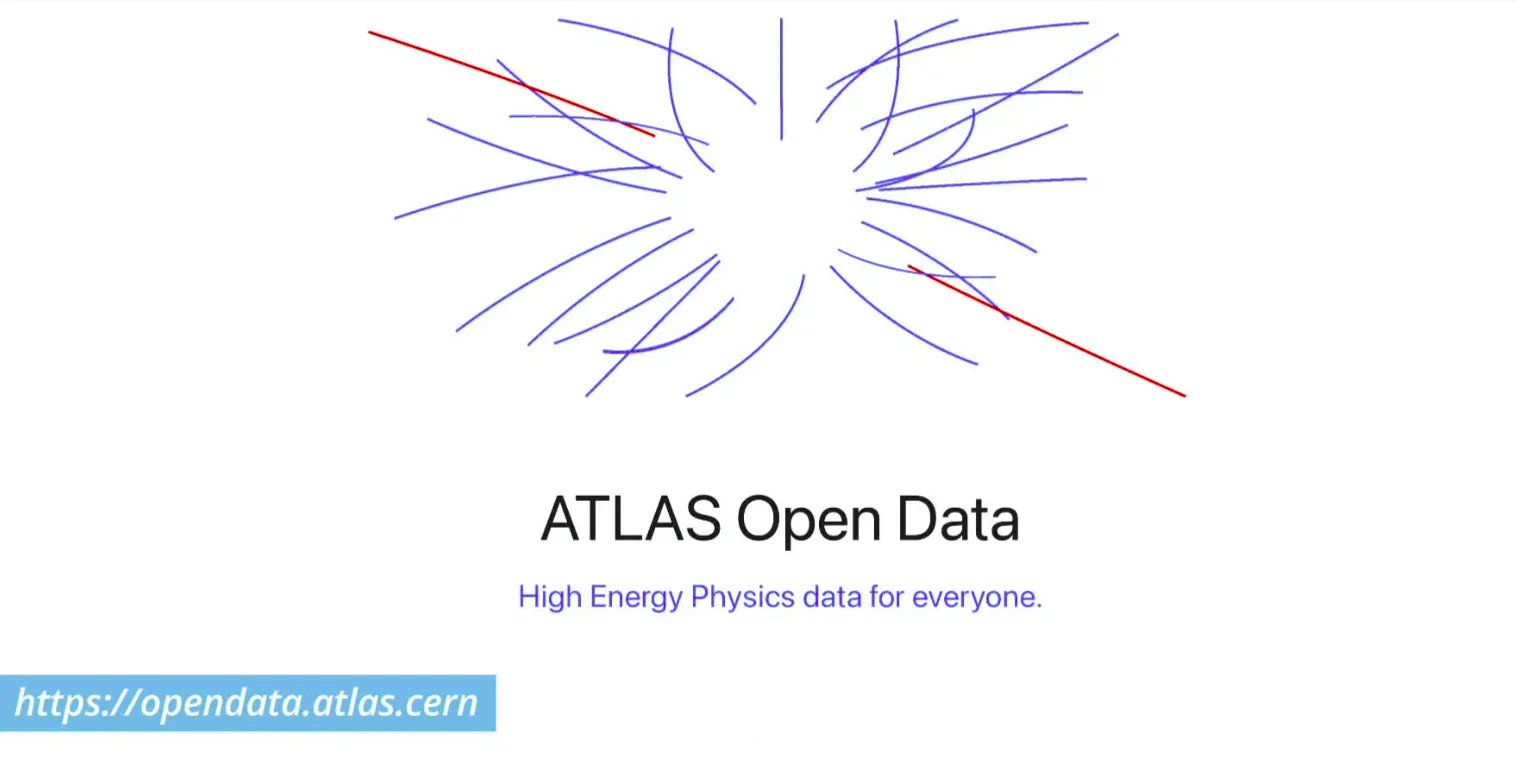
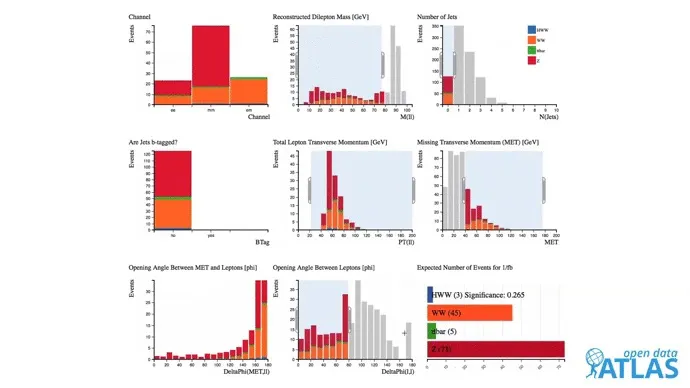
ATLAS Open Data: Ushering in Transparency and Collaboration in Particle Physics Research The ATLAS Collaboration at CERN,has been leading efforts to promote transparency and accessibility through its comprehensive open data initiatives. These efforts are designed to benefit researchers, educators, and the public, enhancing both scientific discovery and educational outreach. The sheer volume and complexity of