
Category: Newsletter
-

A word from the EP Deputy Department Head – June 2021
A word from the EP Deputy Department Head – June 2021 Dear colleagues in EP, Welcome to the summer edition of the EP newsletter, which is packed with material related to the work in our department, that we hope you will find interesting. Despite the ongoing pandemic there has been remarkable progress on the experimental
-

How different are electrons and muons after all? Discovering lepton flavour universality violating new physics
How different are electrons and muons after all? Discovering lepton flavour universality violating new physics Introduction The discovery of the electron in 1897 by Thomson, Wiechert and Kaufmann might be considered the starting date of elementary particle physics, as still today the electron is considered to be a fundamental particle. From there on it took
-
Anomalous measurements: recent LHCb results deepen flavour puzzle
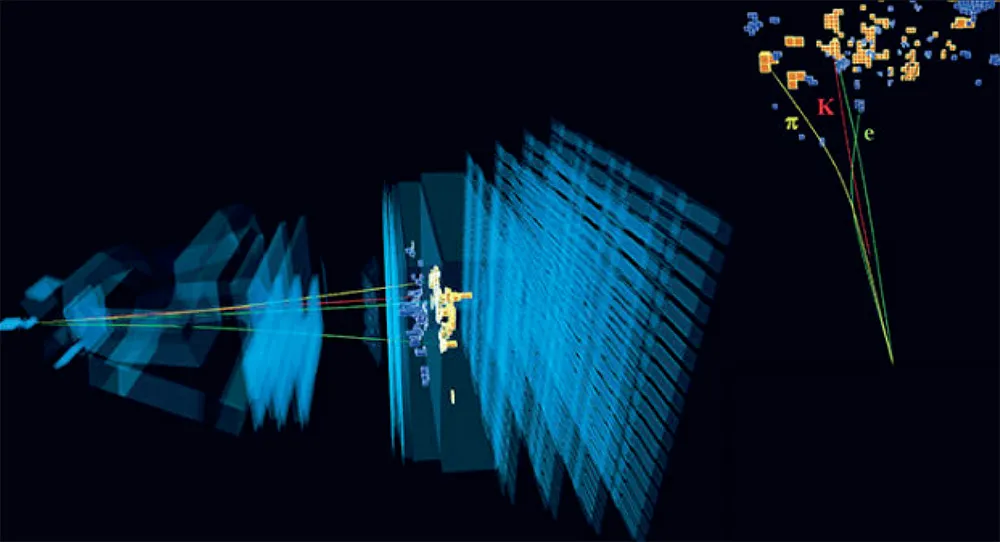
Anomalous measurements: recent LHCb results deepen flavour puzzle The crown jewel of particle physics, the Standard Model (SM), has withstood numerous experimental trials. However, there are still some observations it cannot explain. Examples such as dark matter and the matter-antimatter imbalance in the Universe come to mind. The SM may be extended, by including additional
-

New pathways in axion searches
New pathways in axion searches Peering through telescopes we have found a deluge of evidence for dark matter. Given the speed that galaxies rotate, as well as theoretical calculations about the evolution of large-scale structure in the Universe, dark matter should make up 85% of the matter in the Universe. Despite considerable evidence in support
-
Setting a roadmap for R&D on Detector Technologies
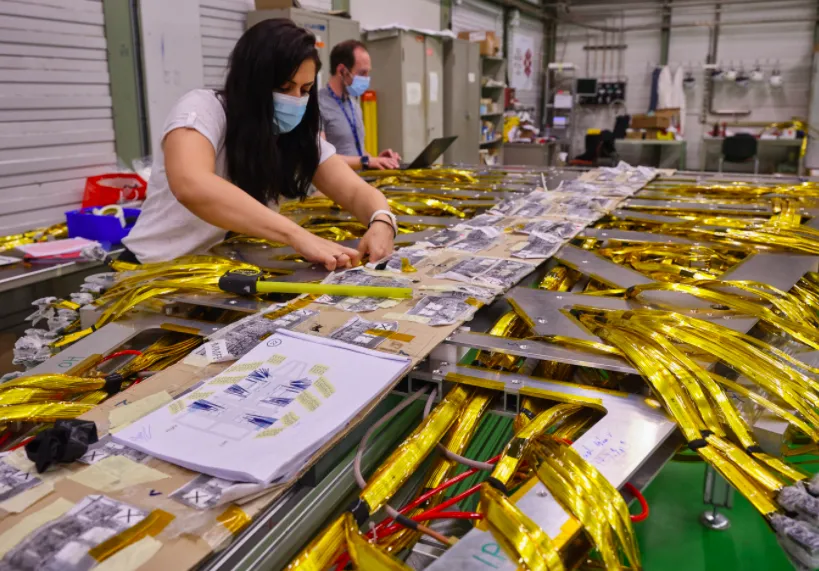
Setting a roadmap for R&D on Detector Technologies Research is a global game, yet to be successful requires coordination at regional, national and international level. The success of the LHC programme highlights the role of open-door policies and diverse bottom-up community initiatives in technological R&D for the efficient construction and operation of the accelerator and
-
Designing gas transport parameters for future HEP experiments
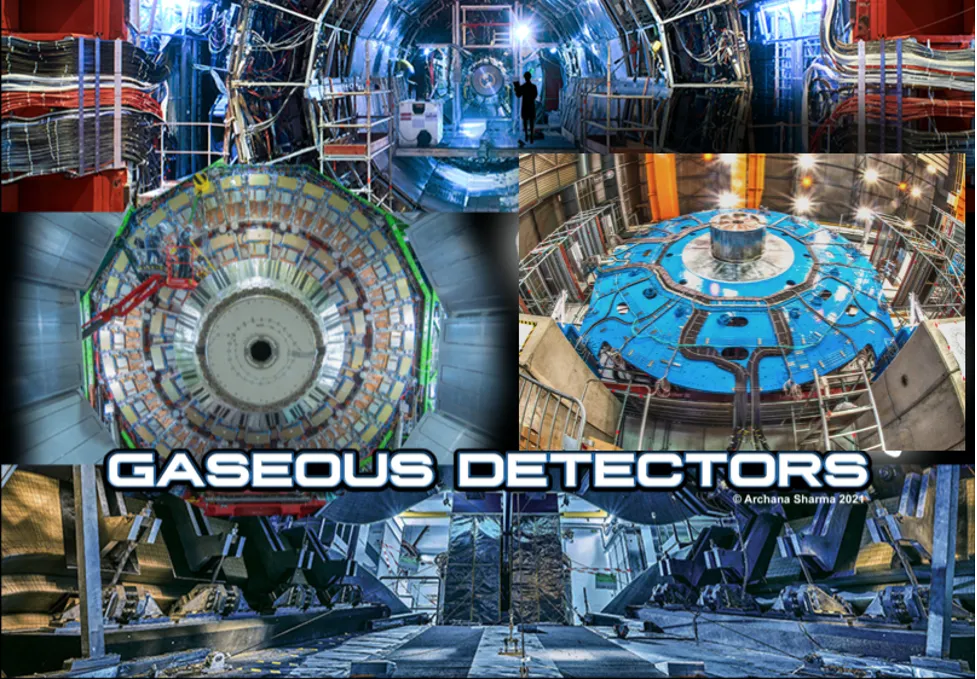
Designing gas transport parameters for future HEP experiments Fig. 1 Large experimental systems at LHC, comprising various gaseous detectors covering thousands of m2, providing tracking and triggering for muons. Given their large areas and cost effectiveness, particle physics experiments rely heavily on the detection of charged and neutral radiation with gaseous detectors. The operational gas
-
Mighty magnets for particle detectors
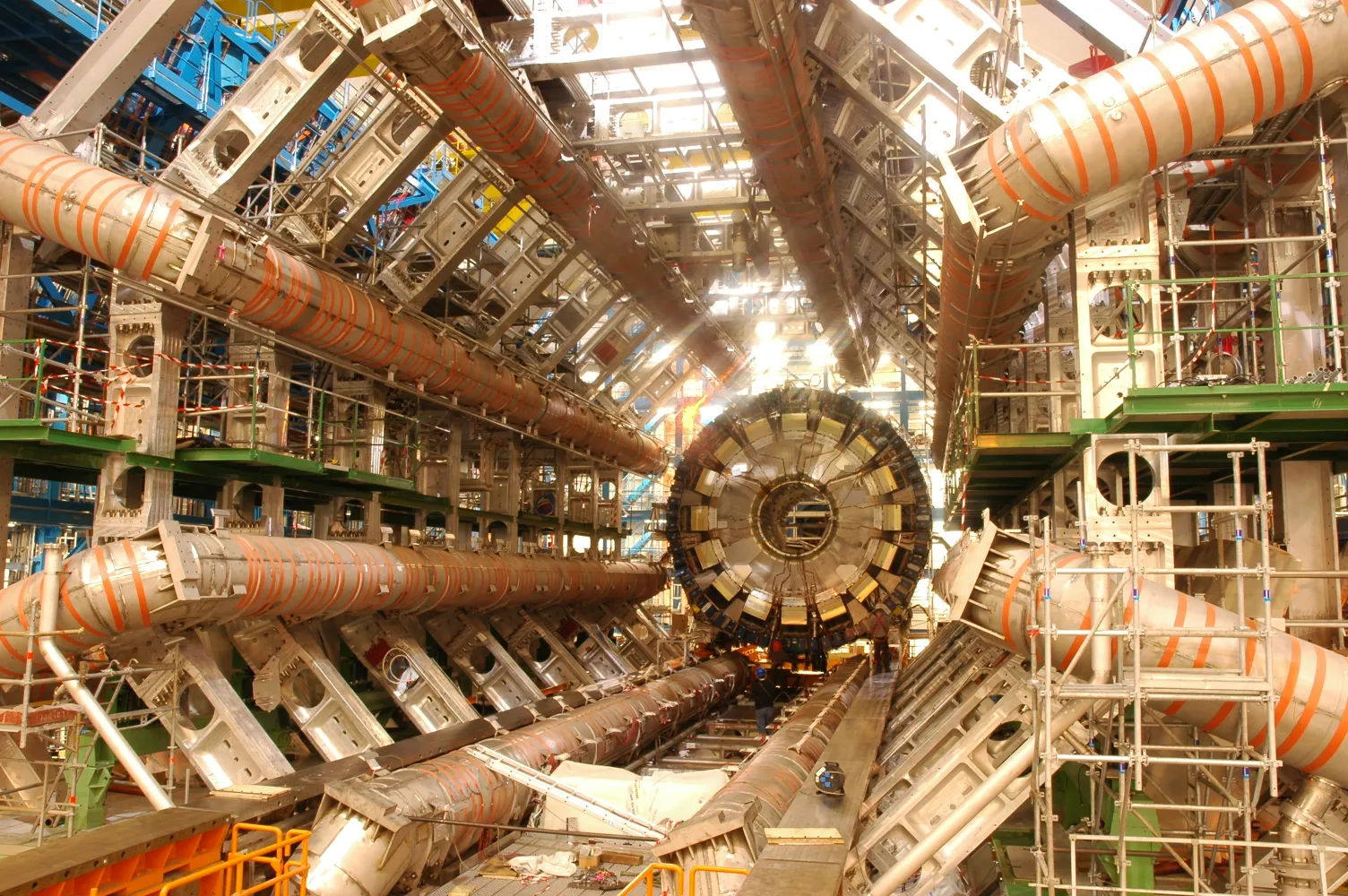
Mighty magnets for particle detectors The ATLAS Magnet Team, part of the EP-ADO-SO section, has the principal responsibility for the maintenance and operation of the ATLAS Superconducting Magnets. This effort is supported by a large number of colleagues, in particular from EP-DT, TE-CRG, EP-ADO, SY-EPC, EN-CV, EN-EL, and the institutes IHEP-Protvino (arranged by TE-MPE) and
-
FASER Detector Installation
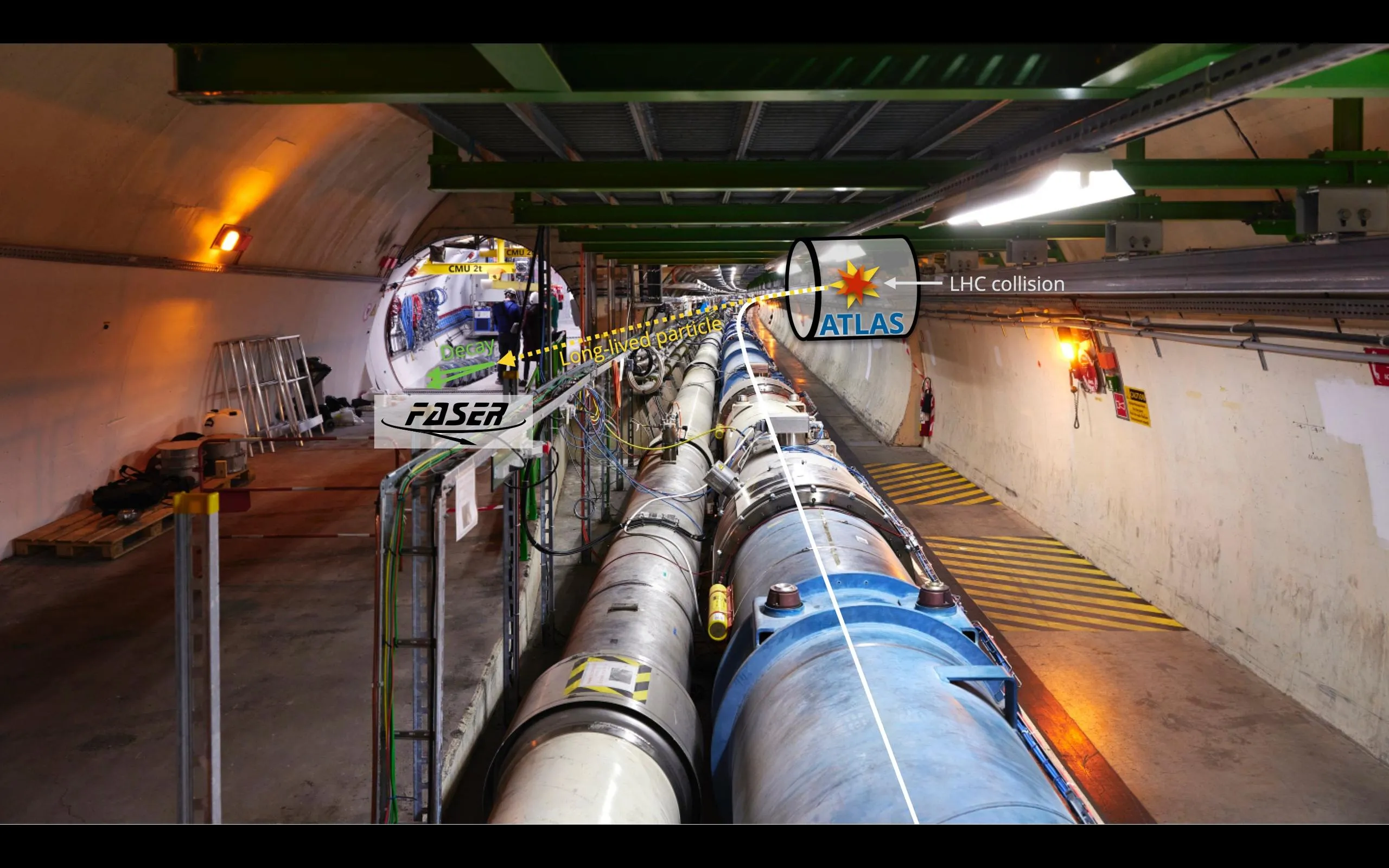
FASER Detector Installation During March the FASER detector was successfully installed into the LHC complex. FASER, a new small LHC experiment, designed to search for light, weakly interacting new particles in the LHC collisions was proposed in 2017, and after review by the LHCC, approved by CERN in March 2019. Since then, the FASER team
-
The commissioning and installation of the new ALICE ITS
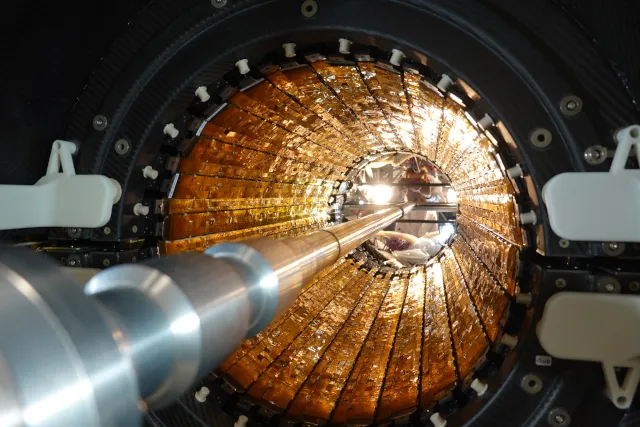
The commissioning and installation of the new ALICE ITS The Inner Tracking System (ITS) is the innermost detector of the ALICE central barrel. It consists of seven cylindrical layers all equipped with Monolithic Active Pixel Sensors (MAPS) named ALPIDE (ALice PIxel DEtector). The ITS allows track ing charged particles of very low transverse momentum at
-

Pinning down the muon (g-2) anomaly at the CERN SPS
Pinning down the muon (g-2) anomaly at the CERN SPS The Dirac equation predicts the muon gyromagnetic ratio g=2. Loop effects from quantum field theory lead to a small deviation from this value, parameterized by the so called anomalous magnetic moment which is defined as aμ=(g-2)/2. The difference between the theoretical prediction and the experimental