
Category: Newsletter
-
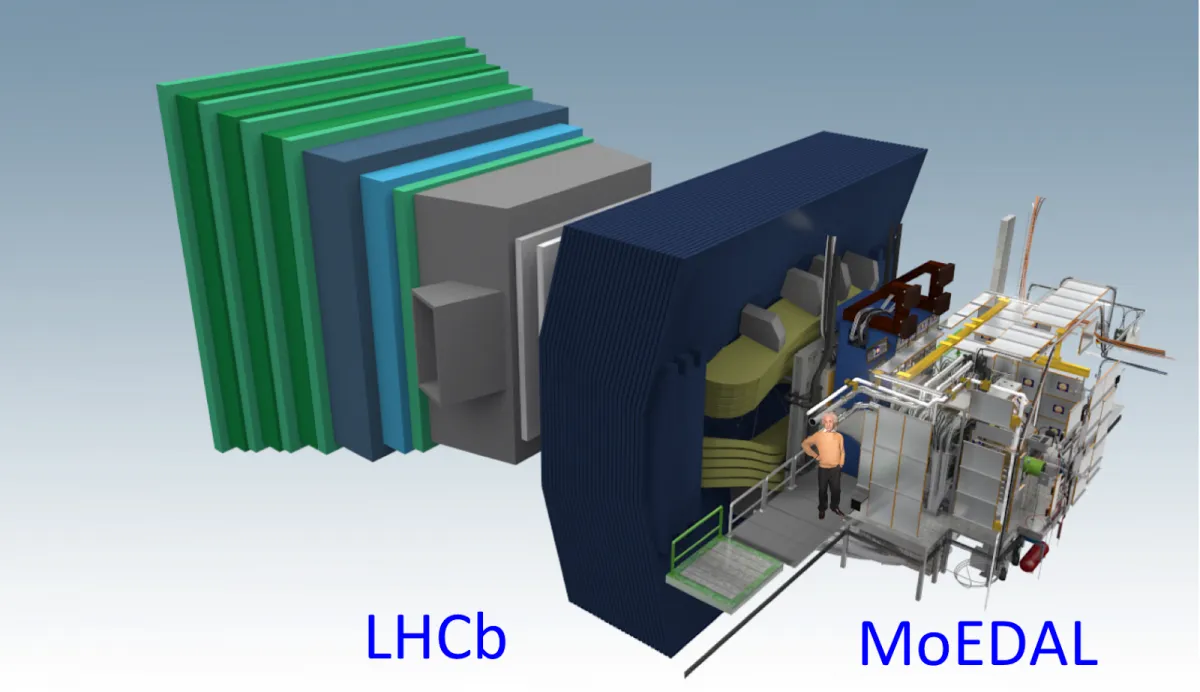
MOEDAL first results at the LHC’s discovery frontier
MOEDAL first results at the LHC’s discovery frontier In 2010 the MoEDAL experiment at the Large Hadron Collider (LHC) was approved, as the LHC’s newest experiment, to start data taking in 2015. MoEDAL is a pioneering experiment designed to search for highly ionizing avatars of new physics such as magnetic monopoles or massive (pseudo-)stable charged
-
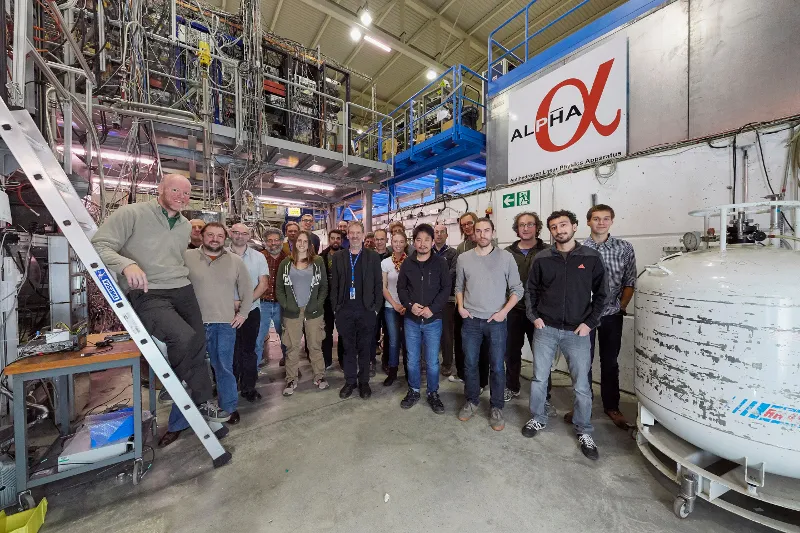
First measurements of the antihydrogen spectrum
First measurements of the antihydrogen spectrum For many years, atomic spectroscopy allowed the determination of the composition of an element by its electromagnetic spectrum. Every chemical element has a unique `signature' which can be revealed by analyzing the light it gives off. Measuring how elements emit or absorb light allows scientists to characterize atoms and
-
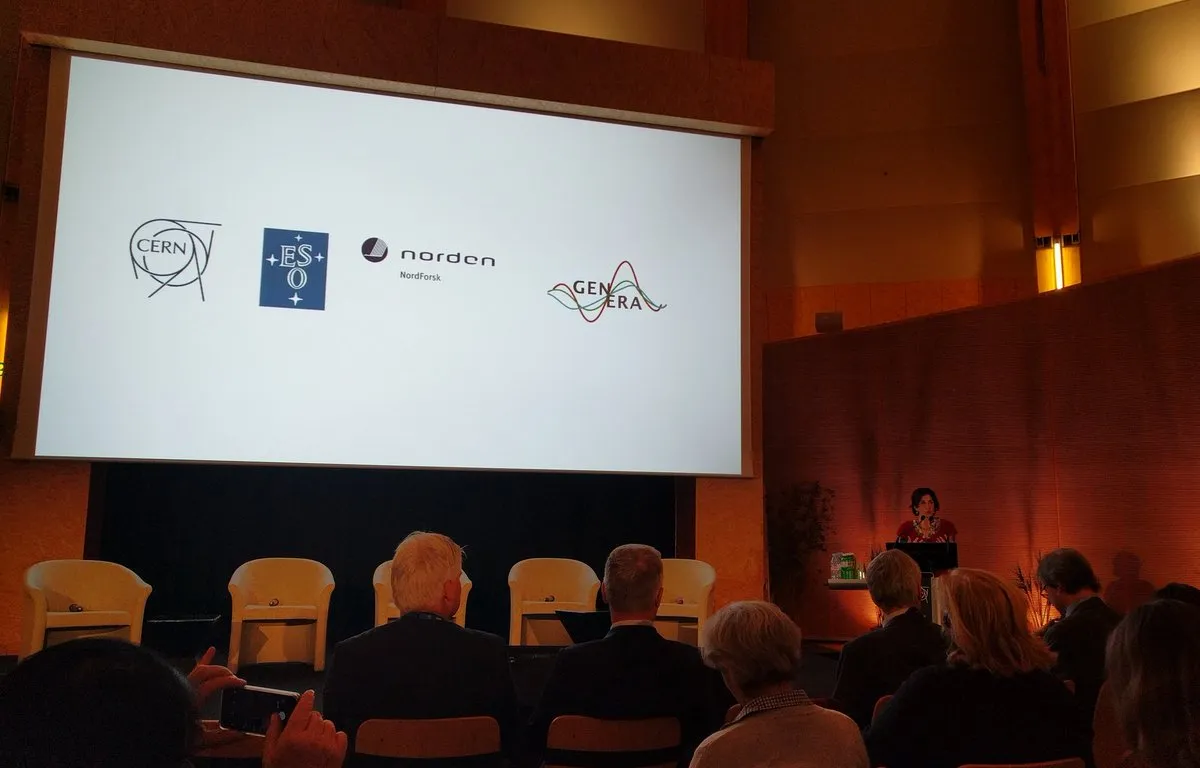
Gender in Physics Day
Gender in Physics Day BROKEN IMAGE NOT MOVED (drupal url : https://ep-news.web.cern.ch//content/gender-physics-day) The fourth Gender in Physics Day (GiPD) conference was hosted by ESO, NordForsk and CERN on Friday 27 January 2017 at the Globe of Science and Innovation, CERN. The GiPD, organised in the framework of the GENERA Project (Gender Equality Network in the
-
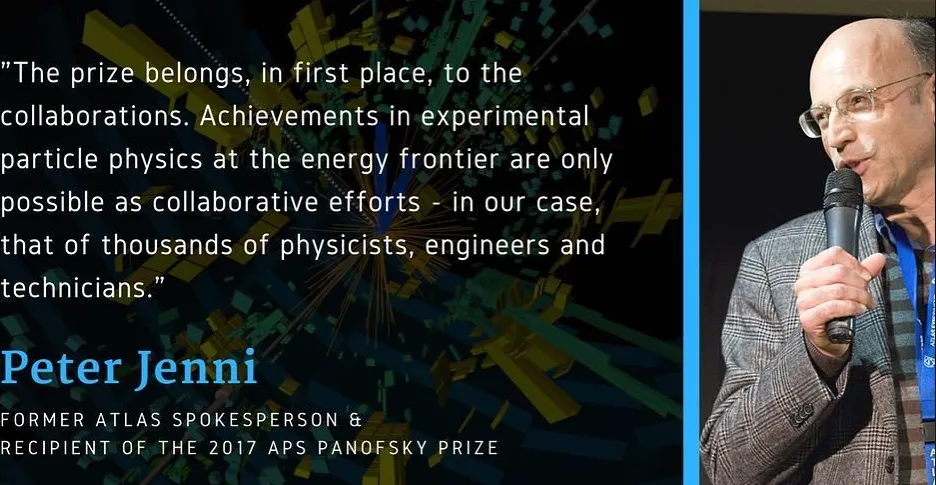
ATLAS and CMS physicists awarded 2017 Panofsky Prize
ATLAS and CMS physicists awarded 2017 Panofsky Prize BROKEN IMAGE NOT MOVED (drupal url : https://ep-news.web.cern.ch//content/atlas-and-cms-physicists-awarded-2017-panofsky-prize) On Tuesday, 11 October 2016, the American Physical Society (APS) announced the award of the 2017 W.K.H. Panofsky Prize in Experimental Particle Physics to Michel Della Negra (Imperial College London and, previously, CERN), Peter Jenni (Albert-Ludwigs-University Freiburg and, previously,
-
Searching for dark energy with particle colliders
Searching for dark energy with particle colliders 2 GeV. For one type of coupling this is eleven orders of magnitude more stringent than constraints obtained from cosmological and solar system tests, and excludes previously popular models that require the coupling scale to lie close to the dark energy scale, Λ ~ 10 -3 eV. These
-

Measurement of matter-antimatter differences in beauty baryon decays.
Measurement of matter-antimatter differences in beauty baryon decays. The LHCb collaboration recently published in Nature Physics the first evidence for the violation of the CP symmetry in baryon decays with statistical significance of 3.3 standard deviations (σ). CP violation has been observed in K and B meson decays, but not yet in any baryon decay.
-

Xmas wishes FCC
Xmas wishes FCC Dear Colleagues, Dear Friends, 2016 has been an exciting year that in many respects exceeded our expectations. Significant progress has been made since the FCC kick-off meeting, held in Geneva in 2014. Today’s outstanding questions in fundamental physics can only be successfully addressed through the variety of approaches the field has developed
-
LHC Report: far beyond expectations
LHC Report: far beyond expectations BROKEN IMAGE NOT MOVED (drupal url : https://ep-news.web.cern.ch//content/lhc-report-far-beyond-expectations) On 5 December, the 2016 LHC run came to a close, marking the end of the first full year of data-taking at a beam energy of 6.5 TeV. Over the past year, the machine delivered peak proton–proton luminosity well above design levels
-
Where is Supersymmetry?
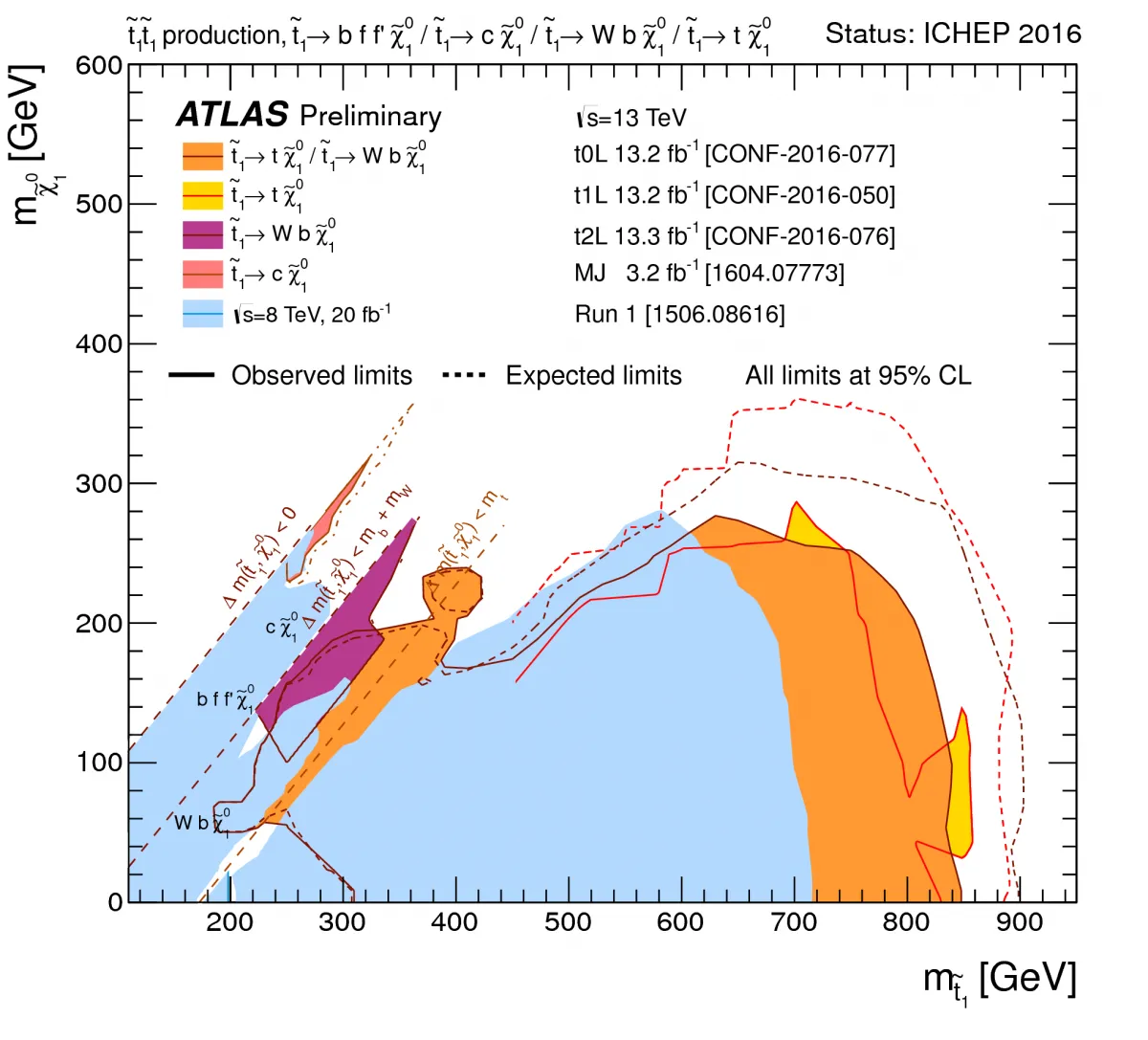
Where is Supersymmetry? The original ideas The original ideas for introducing supersymmetry dates back in the 1960s when, in the context of hadron physics that was found to be approximately spin-flavour independent, a symmetry between mesons and baryons was proposed. These ideas, largely ignored at the time, found their way through mathematical investigations related to
-

New measurement of the W boson mass by the ATLAS collaboration
New measurement of the W boson mass by the ATLAS collaboration The W electroweak gauge boson was discovered in 1983 at the CERN SPS collider. Although the properties of the W boson have been studied for more than 30 years, precise measurement of its mass remains a major challenge. BROKEN IMAGE NOT MOVED (drupal url