
Category: Newsletter
-
RD53: a large scale demonstrator pixel chip for the phase 2 upgrades of ATLAS and CMS
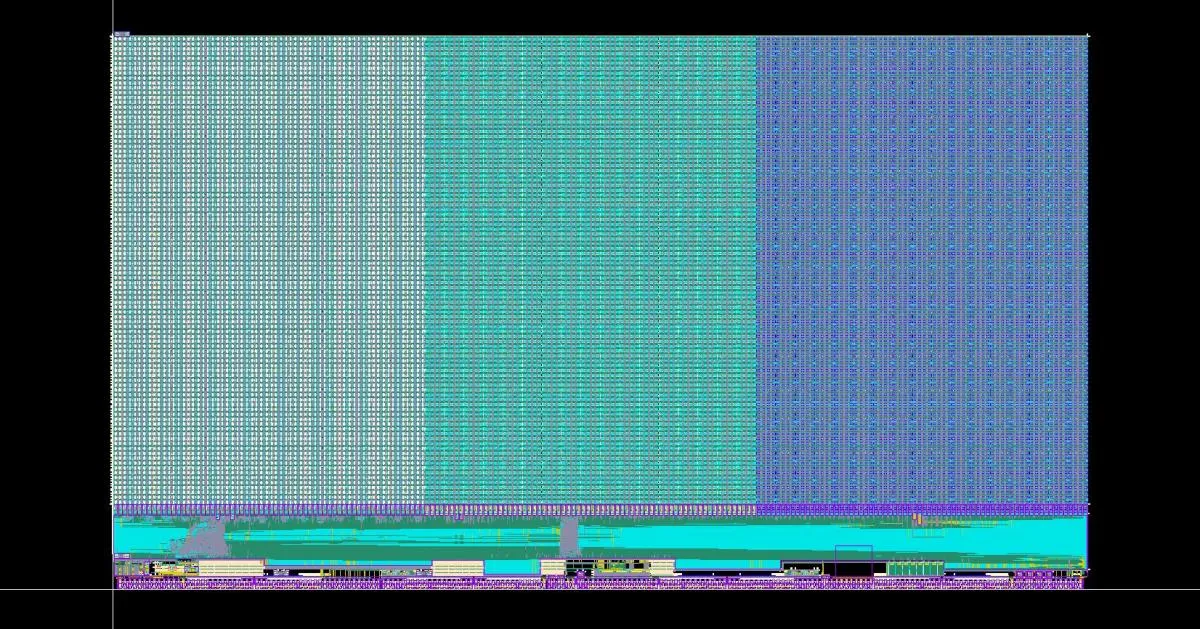
RD53: a large scale demonstrator pixel chip for the phase 2 upgrades of ATLAS and CMS The RD53 collaboration presented the RD53A large scale pixel chip demonstrator in 65nm CMOS technology as a vital milestone to make viable pixel detectors for the ATLAS and CMS phase 2 upgrades. The RD53 collaboration has during the last
-
Strangess enhancement observed in proton collisions
Strangess enhancement observed in proton collisions In a paper published last month in Nature Physics, the ALICE collaboration reports that proton collisions sometimes present similar patterns to those observed in the collisions of heavy nuclei. This behaviour was spotted through observation of strange hadrons in certain proton collisions in which a large number of particles
-
Developing radiation hardness electronics for future detectors
Developing radiation hardness electronics for future detectors Particle colliders generate an extremely large amount of high-energy interactions in order to produce and detect very rare events that can be used to improve our understanding of the underlying physical laws. In doing so, a significant background is generated, which in turn degrades the performance of the
-
Exploring the dark sector with NA64
Exploring the dark sector with NA64 The field of dark matter (DM) particle physics is at an interesting stage, as key discoveries are anticipated. However, despite the intensive direct, indirect and LHC searches, the experiments have not yet yielded unambiguous Dark Matter (DM) signals. Though stringent constraints obtained on DM coupling to Standard Model (SM)
-
LHCb finds new hints of possible deviations from the Standard Model
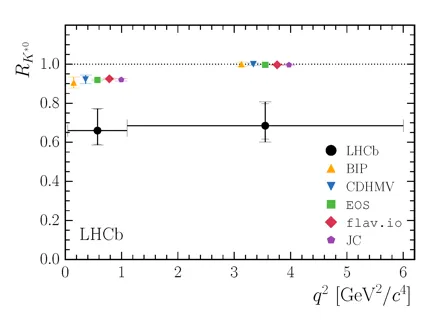
LHCb finds new hints of possible deviations from the Standard Model Last month, the LHCb collaboration presented results on the measurement of RK*0, which is the ratio of the probabilities that a B0 meson decays to an excited kaon and muons (K*0μ+μ–) or electrons (K*0e+e–). By isolating and counting these decays, the LHCb experiment has
-

007 reasons for physics beyond the Standard Model
007 reasons for physics beyond the Standard Model The 5th of July marks the fifth anniversary since the discovery of a Higgs boson at the LHC. Summarizing notes for a recent set of lectures at the Asia-Europe-Pacific School of High-Energy Physics, John Ellis reviews events leading to the discovery of the Higgs boson and what
-
HIE-ISOLDE is tuning up for the new physics season
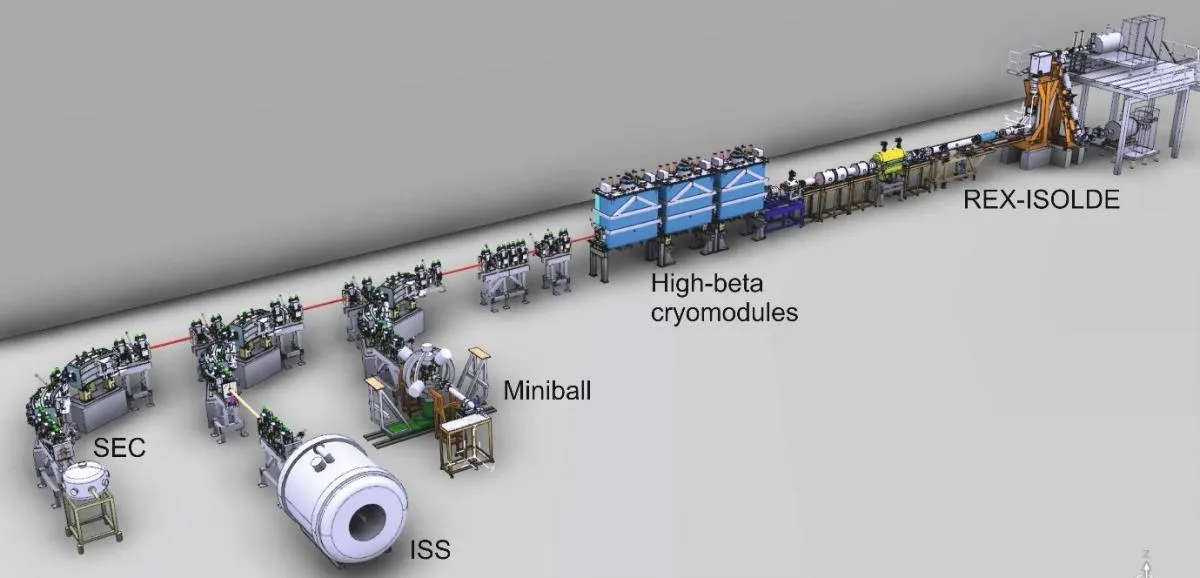
HIE-ISOLDE is tuning up for the new physics season This year has been a busy one for HIE-ISOLDE, the high energy and intensity upgrade project at ISOLDE. In January 2017, another milestone was reached with the addition of the third cryomodule to the HIE-ISOLDE linear post-accelerator, increasing the energy of radioactive ion beams from 5.5
-
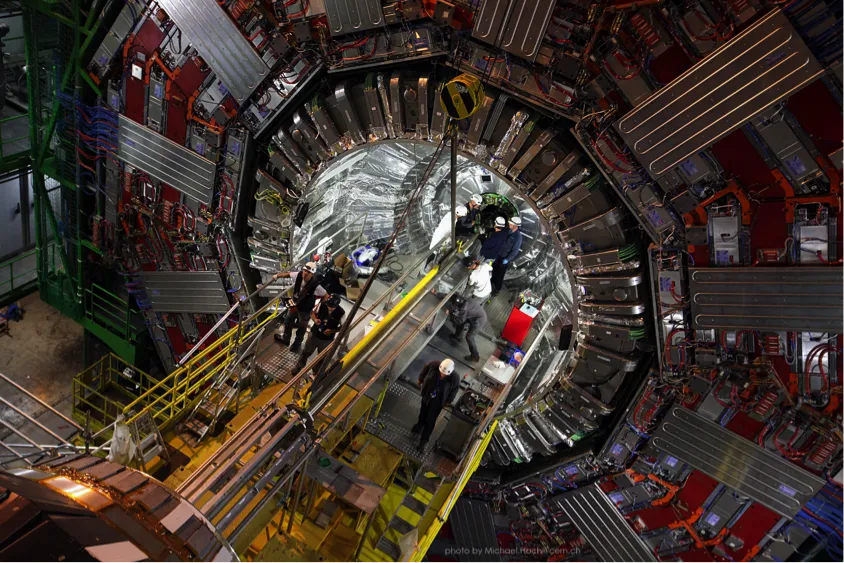
CMS pixel upgrade: a truly global endeavor
CMS pixel upgrade: a truly global endeavor A new and upgraded pixel detector has just been installed in the heart of CMS in this extended year end technical stop (EYETS 2016-17), marking the end of a five year long construction project. The CMS pixel detector that was replaced was performing very well. However, the upgrade
-
ICARUS flies to Fermilab
ICARUS flies to Fermilab The ICARUS T600 detectors are ready to start their journey to Fermilab. At the time of writing this note, the two detectors are parked at CERN, close to building 185 where 43 years ago neutral currents were discovered by the Gargamelle experiment. During the last two years, in a large clean
-
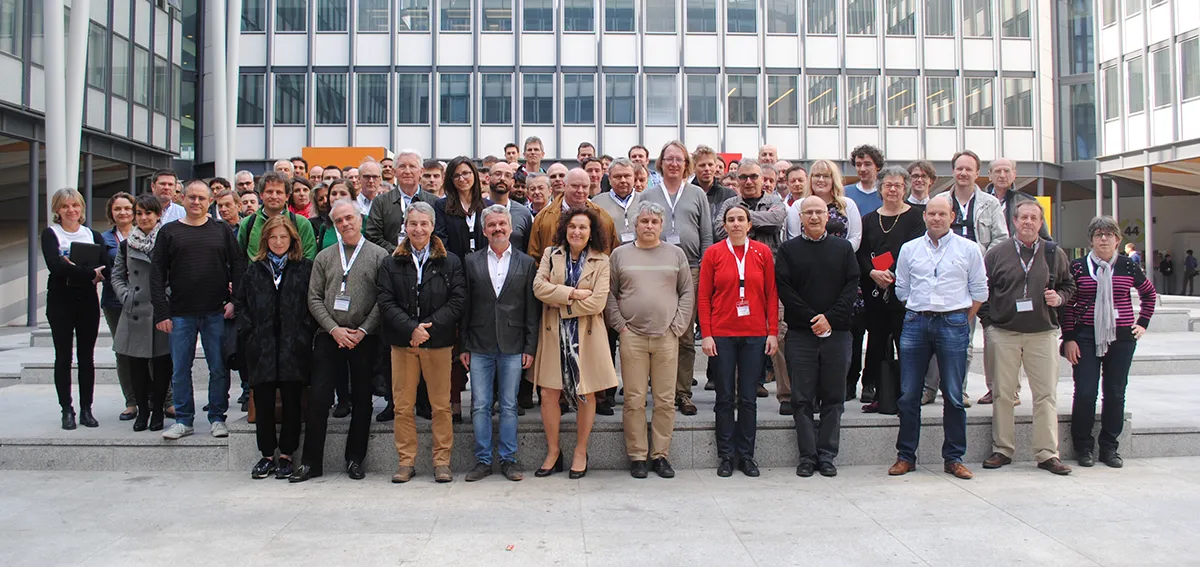
AIDA-2020 spearheads European detector R&D
AIDA-2020 spearheads European detector R&D Detectors are what makes particle physics an experimental science. Pushing detector technologies and facilities beyond the frontiers of scientific innovation is critical in advancing high-energy physics. As such, current detectors must be improved and upgraded, whilst new technology, concepts and applications for future detectors need to be developed. The AIDA-2020