
Category: Newsletter
-

Editorial – June 2015
Editorial – June 2015 Dear Colleagues, Run 2 of the LHC is now officially underway, with first collisions recorded at the record energy of 13 TeV on 3rd June. I would like to congratulate everyone on the hard work throughout the long shutdown, which has brought the experiments and accelerator back to physics operation in
-
Data Quality Monitoring: An important step towards new physics
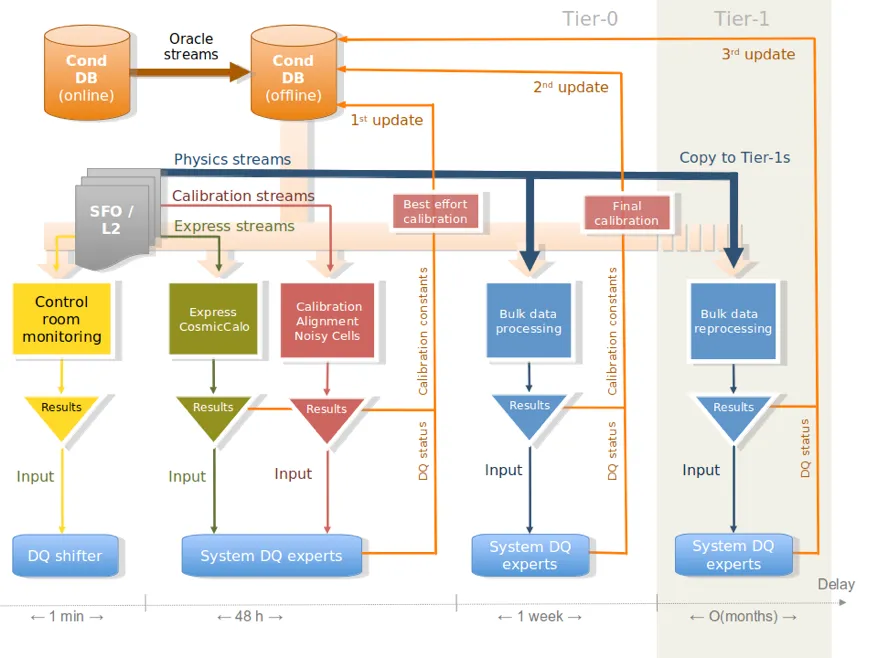
Data Quality Monitoring: An important step towards new physics Data Quality Monitoring (DQM) is an important aspect of every high-energy physics experiment. In the era of LHC, when the detectors are extremely sophisticated devices, an online feedback on the quality of the data recorded is needed to avoid taking low quality data and to guarantee
-
TDCpix: a high rate pixel detector ASIC with built-in ultra-precise stopwatches
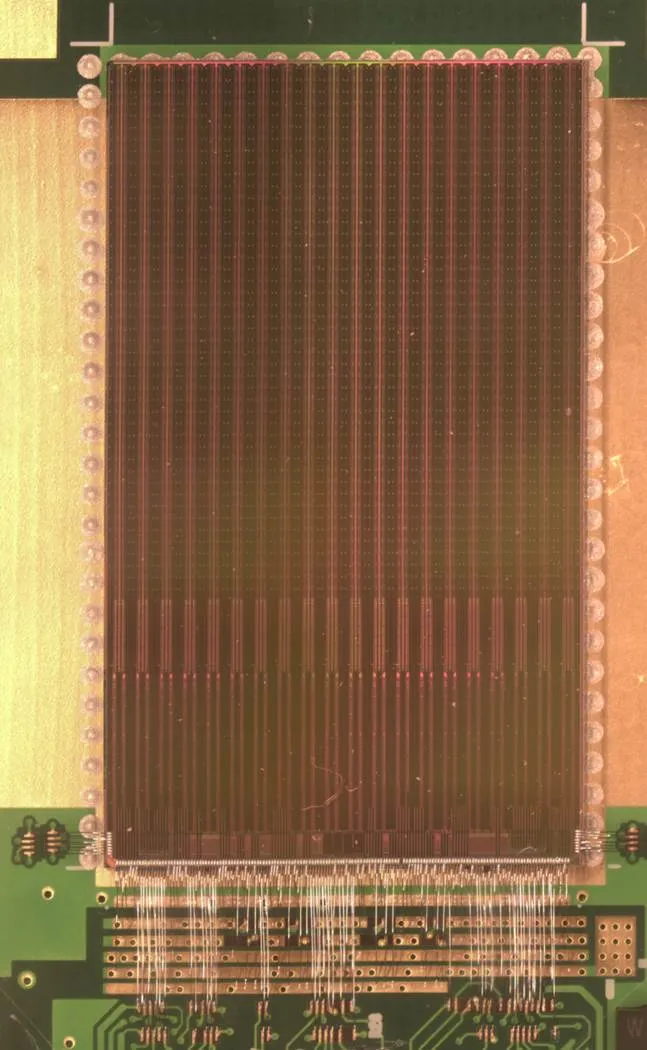
TDCpix: a high rate pixel detector ASIC with built-in ultra-precise stopwatches The TDCpix, which stands for Time-to-Digital Converter Pixel ASIC, measures the position and arrival time of incident beam particles in the Gigatracker detector of the NA62 experiment. Its design architecture stems from experience with silicon pixel detectors and time measuring devices gained during the
-

LHC experiment release data in CERN’s Open Data Portal
LHC experiment release data in CERN's Open Data Portal On 20 November 2014, CERN launched the Open Data Portal, making data from real collision events at the LHC experiments available for the first time to the general public. This project is part of the Organisation's policy of openness, which is enshrined in its founding convention
-

New Human Resources Advisor for PH
New Human Resources Advisor for PH The PH department welcomes a new Human Resources Advisor, Michel Sebastian Guye-Bergeret. The HRA acts as an interface between the HR department and the department assigned to him or her, advising and supporting managers and other staff members on all HR matters. All discussions with your HRA are confidential.
-
First public release of the Virtual Atom Smasher
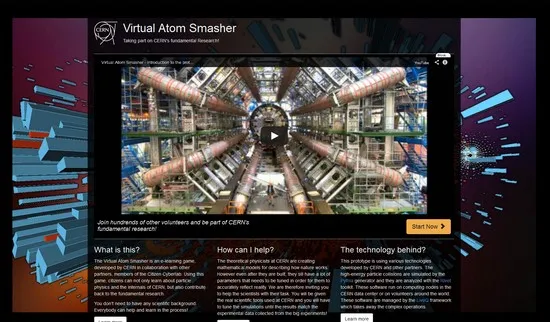
First public release of the Virtual Atom Smasher In May 2015, the first public release was made of Virtual Atom Smasher, an educational game platform that was developed by a partnership between CERN and Citizen Cyberlab. During the Challenge, more than 19 billion particle collisions in the LHC and other CERN accelerators were simulated by
-

EPS announces the 2015 prizes in the field of high energy physics.
EPS announces the 2015 prizes in the field of high energy physics. Last month, the High Energy and Particle Physics division of the European Physical Society announced the 2015 prizes for outstanding contributions in the field of high energy physics. The 2015 Young Experimental Physicist Prize was awarded to Jan Fiete Grosse-Oetringhaus and Giovanni Petrucciani,
-
In memory of Bruno Zumino: an arcitect of supersymmetry
In memory of Bruno Zumino: an arcitect of supersymmetry BROKEN IMAGE NOT MOVED (drupal url : https://ep-news.web.cern.ch//content/memory-bruno-zumino-arcitect-supersymmetry) April 28th would have marked the 92nd birthday of Bruno Zumino, who died last year. The Theory Group organized a meeting around this date to honour his memory and to discuss his legacy. The presentations with slides and
-

CERN participates in the 2015 Google Summer of Code
CERN participates in the 2015 Google Summer of Code The CERN PH/SFT group is participating for the fifth year in the 2015 Google Summer of Code programme. The Google Summer of Code is a global programme funded by Google that offers post-secondary student developers a three month stipend to write code for open source software
-

CHEP 2015: Discussing future challenges in HEP computing
CHEP 2015: Discussing future challenges in HEP computing The HEP software and computing communities organise a conference every 18 months with the location rotating between the US, Europe and Asia. This year's conference, CHEP2015, took place from 13-17 April and was organised by our Japanese colleagues on the pacific island of Okinawa, at the Okinawa