
Category: Newsletter
-
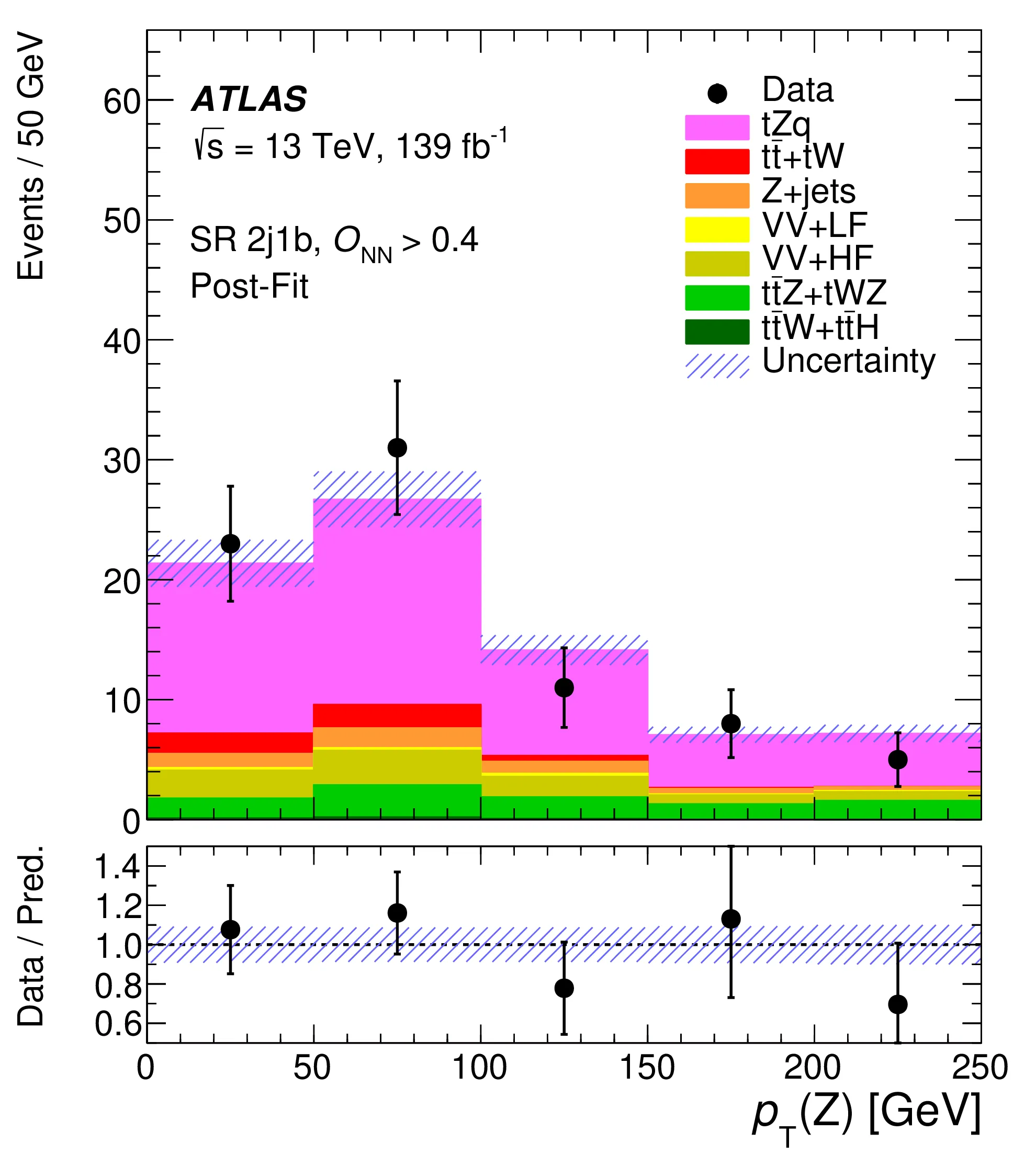
Artificial neural networks shed light on rare SM processes.
Artificial neural networks shed light on rare SM processes. In a new paper released last month, the ATLAS Collaboration reported the observation of a single top quark produced in association with a Z boson (tZq) using the full Run-2 dataset, thereby confirming earlier results by ATLAS and CMS using smaller datasets. As reported in an
-
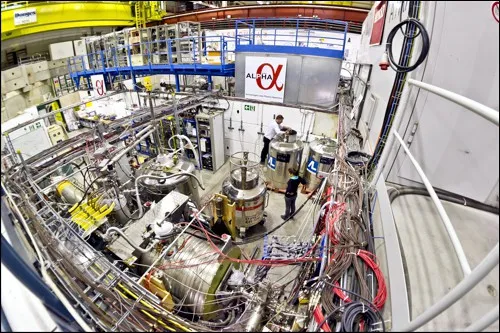
ALPHA publishes first measurements of quantum effects in antimatter
ALPHA publishes first measurements of quantum effects in antimatter The ALPHA collaboration at CERN has reported the first measurements of fine structure effects and Lamb shift in the energy structure of antihydrogen that provide another test of comparison between antimatter and ordinary matter. The results, described in a paper published in Nature, show that these
-

ISOLDE dives deeper in the mystery of the odd-even staggering effect
ISOLDE dives deeper in the mystery of the odd-even staggering effect In a recent paper, to appear in Nature Physics in the next weeks (arXiv:1911.08765v3), the CRIS collaboration, located at the ISOLDE facility in CERN, presents measurements of charge radii of exotic copper isotopes that shed further light on one of the most pertinent open
-
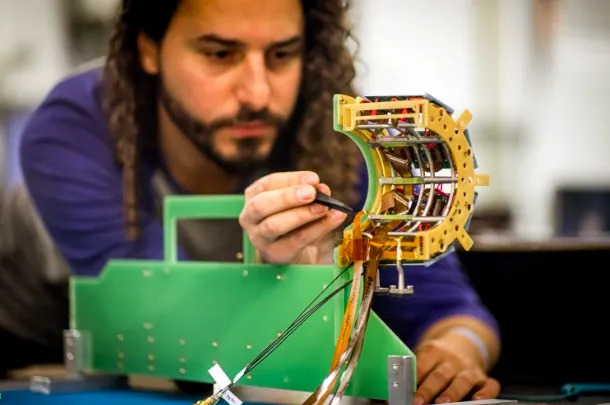
Towards high-precision luminosity for CMS in Run 3 and beyond
Towards high-precision luminosity for CMS in Run 3 and beyond Luminosity is a key parameter for any collider-based high energy physics experiment as it links the interaction rates observed in an experiment to the cross sections of physics processes. Therefore, it is a key ingredient to most major analyses performed at an experiment and the
-
FCC software workshops and hands-on tutorials
FCC software workshops and hands-on tutorials In October 2019, the first FCC Software Workshop and Hands-on Tutorial was held at CERN by the EP-SFT group in collaboration with the FCC study coordination group. Following its success a second edition was held during the last FCC physics workshop (January 2020). The purpose of these events is
-
EP launches new R&D programme on Detector Technologies
EP launches new R&D programme on Detector Technologies Progress in fundamental physics calls for pushing the current state-of-the-art for detectors, and developing new technologies that would boost the efficiency while reducing the cost and the environmental impact of future experiments. For future experiment to continue playing their important role in scientific inquiry a solid programme
-
Heterogeneous computing efforts for high-energy physics experiments
Heterogeneous computing efforts for high-energy physics experiments Substantial improvements to the current experiments at the LHC are underway, and new experiments are being proposed or discussed at future energy-frontier accelerators to answer fundamental questions in particle physics. At future hadron colliders, complex silicon vertex trackers (3D and 4D) and highly granular calorimeters must operate in
-
POLAR-2 project enters final design stage
POLAR-2 project enters final design stage The POLAR-2 project is a follow-up of the POLAR mission that was launched in 2016, mounted on the exterior of the Chinese Spacelab Tiangong-2. Following its application to the Recognized Experiment Committee earlier this year, it has been recommended to be granted CERN Recognized Experiment status. The POLAR instrument
-
MUonE experiment gears up to chase whiff of new physics
MUonE experiment gears up to chase whiff of new physics A new proposed project, MUonE, was described on the EP Newsletter few months ago [2]. It is an experiment aiming at helping in understanding the long-standing discrepancy between the experimental value and the Standard Model (SM) prediction of the anomalous magnetic moment of the muon,
-
A voice from Early-Career Researchers
A voice from Early-Career Researchers Any post-LHC collider, starting operations around late 2030s, would be an inter-generational project and thus it is vital to include the voices of young researchers in the decision making process. Studies planning for a next-generation collider strive to create a global vision for a "sustainable, innovative and diverse" research infrastructure,