
Category: Newsletter
-

First measurement of a long-lived meson-meson atom lifetime
First measurement of a long-lived meson-meson atom lifetime In addition to the ordinary atoms, abnormal or exotic atoms serve as tools to study in detail the structure of atoms and their interactions. Different exotic atoms, consisting of other building blocks than electrons, protons and neutrons, have been observed and investigated. The DIRAC collaboration at CERN
-

A word from the Deputy Head of the EP department – March 2019
A word from the Deputy Head of the EP department – March 2019 Dear Colleagues, dear Members of the EP Department and CERN Users, Welcome to the first EP newsletter of 2019. Following the completion of Run 2 at the end of last year we are now well established in the second long shutdown of
-
ATLAS trigger system meets the challenges of Run 2
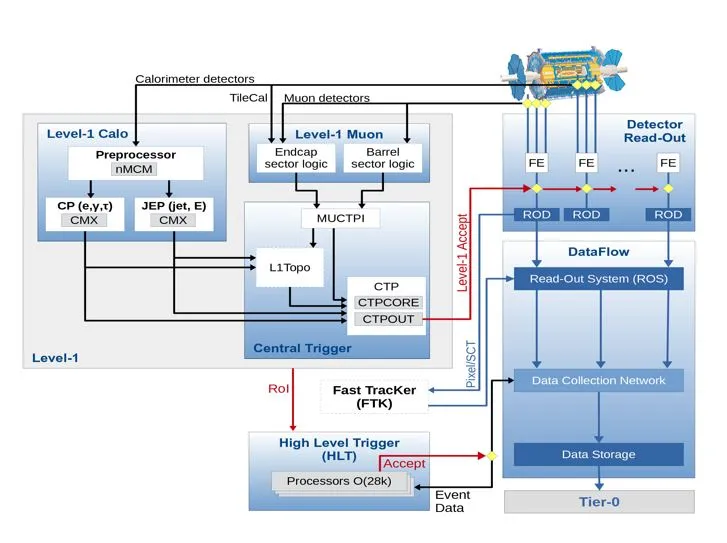
ATLAS trigger system meets the challenges of Run 2 The trigger system is an essential component of any collider experiment as it is responsible for deciding whether or not to keep an event from a given bunch-crossing interaction for later study. During Run 2 (2015 to 2018) of the Large Hadron Collider (LHC), the trigger
-
ALICE trigger system: Present and Future
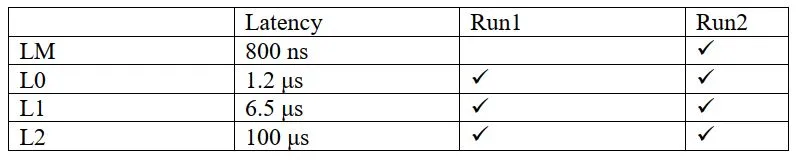
ALICE trigger system: Present and Future The purpose of any trigger system is to select an event sample strongly enriched in physics processes of interest, while rejecting those not of interest, and to do so in such a way as to make efficient use of the available detectors. The prime objective of the ALICE experiment
-
Trigger strategies for the LHCb experiment
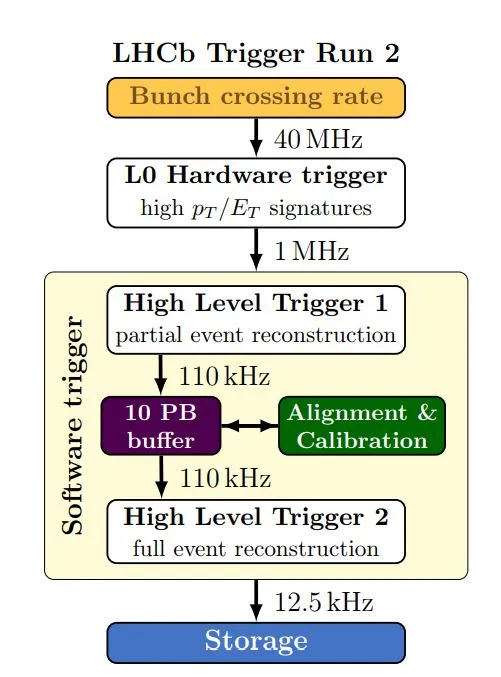
Trigger strategies for the LHCb experiment The LHCb experiment has finished a very successful data taking period in Run 2, collecting an additional 6 inverse femtobarns of proton-proton collisions. A significant modification to the Reconstruction and Trigger system of LHCb was implemented during the first LHC long shutdown period that both enhanced the physics goals
-
CMS Trigger: Lessons from LHC Run 2
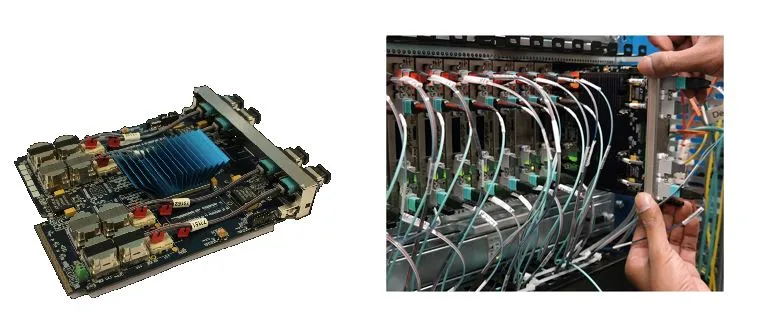
CMS Trigger: Lessons from LHC Run 2 The CMS experiment has a two-level trigger system [1], to reduce the number of events stored from the LHC bunch crossing rate of 40 MHz to around 1 kHz. The first level (the Level-1) uses custom electronics to reduce the rate of events to 100 kHz, and the
-
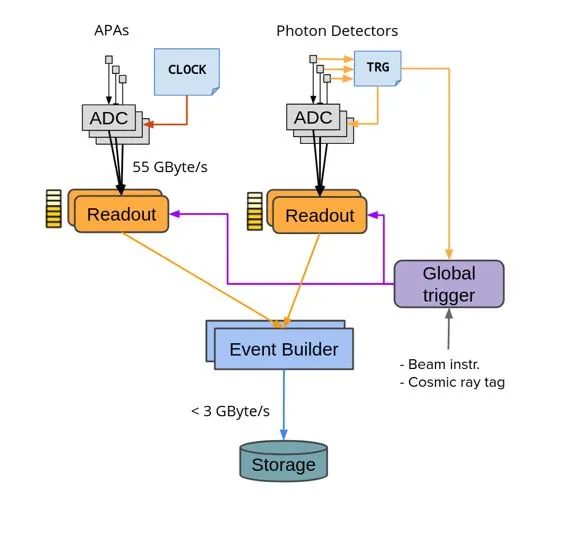
Data acquisition challenges for the ProtoDUNE-SP experiment at CERN
Data acquisition challenges for the ProtoDUNE-SP experiment at CERN The ProtoDUNE Single-Phase (SP) experiment at the Neutrino Platform at CERN (read more) is taking data after about two years of construction and commissioning. Its primary goal is to validate the design principles, construction procedures, detector technologies, and long term stability in view of DUNE (Deep
-
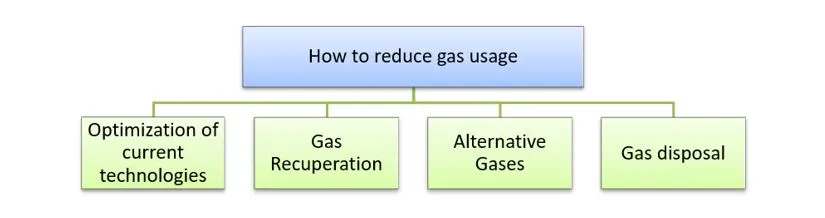
R&D on gas usage in the LHC particle detection systems
R&D on gas usage in the LHC particle detection systems A wide range of gas mixtures is used for the operation of different gaseous detectors for particle physics research. Among them are gases like C2H2F4 (R134a), CF4 (R14), C4F10 (R610) and SF6, which are used because they allow to achieve specific detector performance that are
-
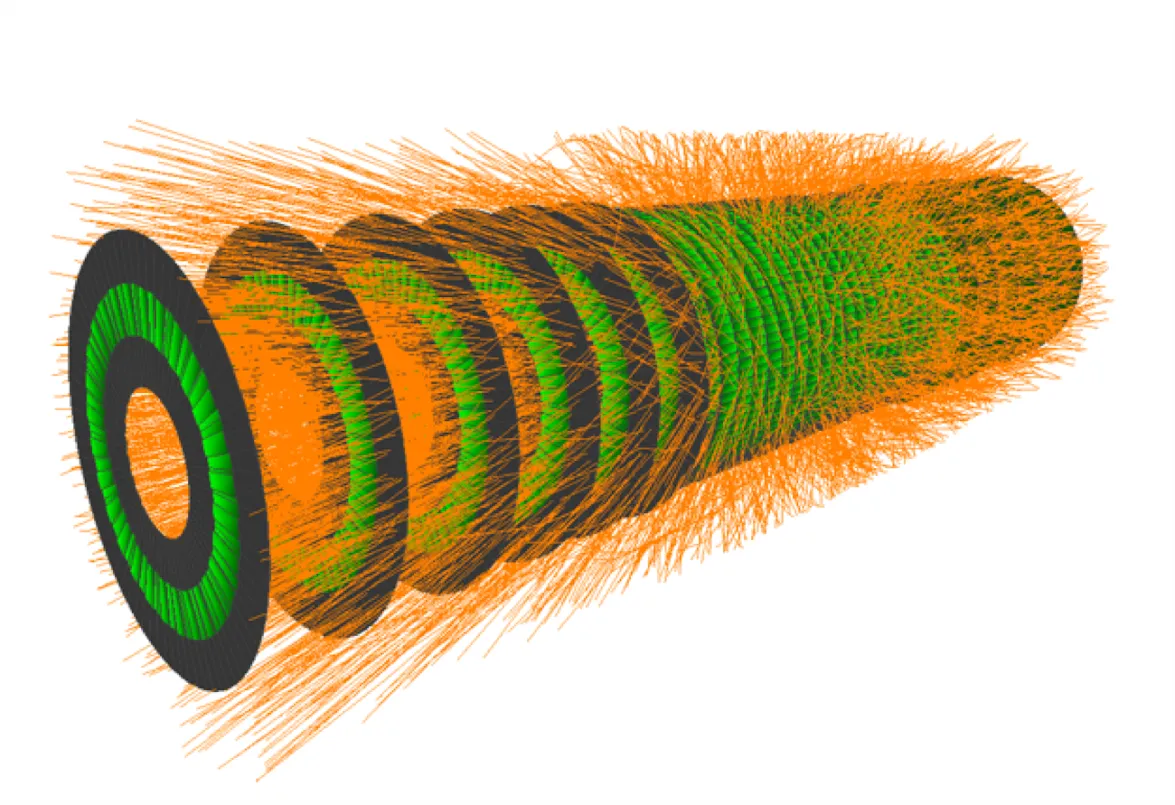
Can AI help us to find tracks?
Can AI help us to find tracks? Data science (DS) and machine learning (ML) are amongst the fastest growing sectors in science and technology, not at least due to their strong rooting in industrial and commercial applications. Global players such as Google, Facebook and Amazon have surpassed HEP in both, computing complexity and data volume.
-
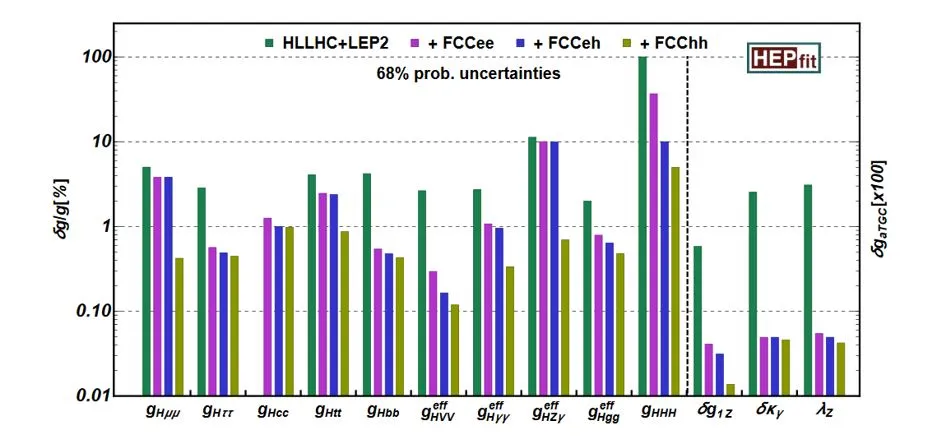
Physics at the Future Circular Collider
Physics at the Future Circular Collider “Progress in knowledge has no price” with these words, Alain Blondel concluded the FCC Physics workshop at CERN. Over two days, the meeting reviewed the results of the FCC Conceptual Design Report and discussed a reliable implementation plan to meet the ambitious physics targets of this project. BROKEN IMAGE