
Category: Newsletter
-
A New Small Wheel for ATLAS is taking shape
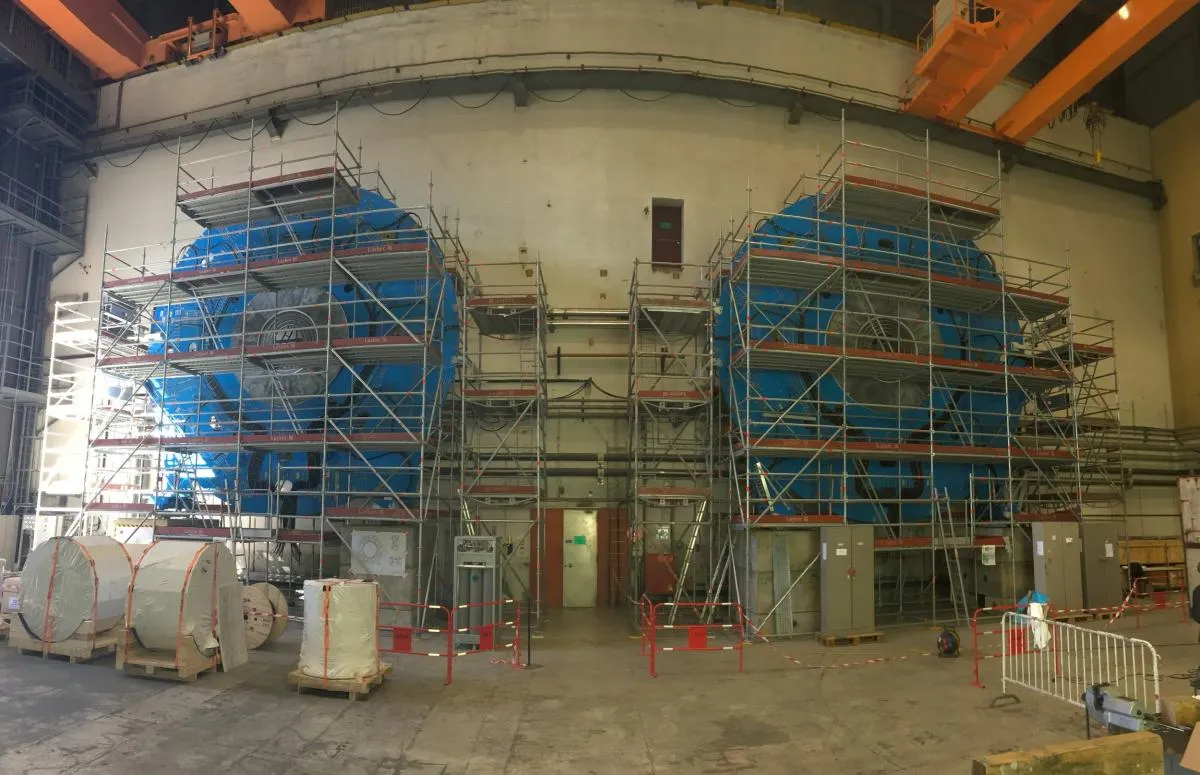
A New Small Wheel for ATLAS is taking shape In order to fully exploit the HL-LHC luminosities, the innermost stations, the so called Small Wheels (SW), of the ATLAS Muon Spectrometer need to be replaced, by two new detector assemblies called New Small Wheels (NSW). This upgrade is schedule to take place in LS2 (at
-

A word from the Head of the EP department – December 2018
A word from the Head of the EP department – December 2018 Dear Colleagues, dear Members of the EP Department and CERN Users, Welcome to the last EP newsletter of 2018. This year has been another great year for CERN. The LHC run has broken again all records, both for the proton-proton run, as well
-
A bright year for the EP-DT irradiation facilities
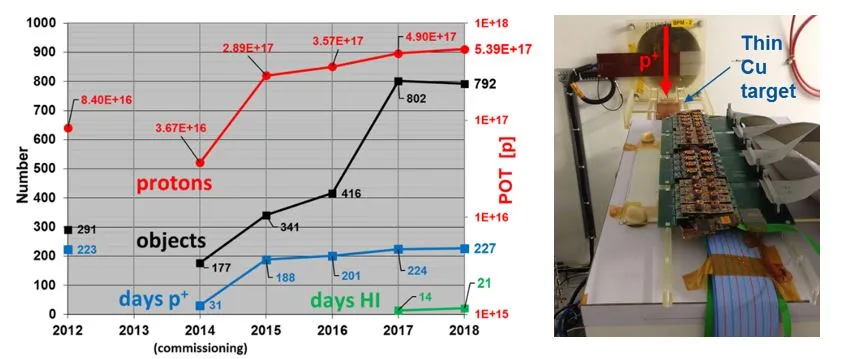
A bright year for the EP-DT irradiation facilities The CERN proton irradiation facility (IRRAD – www.cern.ch/ps-irrad) at the PS East Area and the new gamma irradiation facility (GIF++ – www.cern.ch/gif-irrad) at the SPS North Area have been designed and built during LS1 to cope with the increasing need for irradiation experiments of the EP experimental
-
INSIGHTS: A new network of statistics for HEP and beyond
INSIGHTS: A new network of statistics for HEP and beyond Following the success of the AMVA4NewPhysics network, a new 4-year Innovative Training Network funded by the Horizon 2020 program of the European Commission will develop new statistical methods and boost the use of machine learning (ML) to solve some of the most challenging problems in
-
Setting a roadmap for future detector technologies
Setting a roadmap for future detector technologies The effort to address the remaining open questions of the Standard Model lies at the core of the HL-LHC physics programme and informs current design studies for post-LHC colliders (CLIC, FCC-ee, FCC-hh) as well as new fixed target experiments explored under the Physics Beyond Collider initiative. To meet
-
The MoEDAL Experiment at the Discovery Frontier
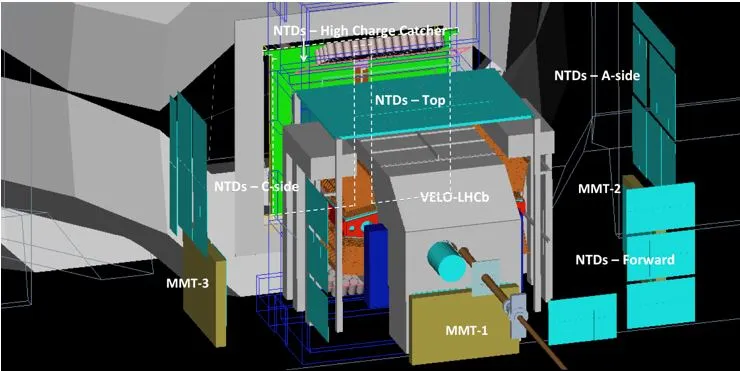
The MoEDAL Experiment at the Discovery Frontier MoEDAL, the LHC’s newest experiment [1], that started official data taking in 2015, is different to other collider detectors. It is currently comprised of passive tracking, using plastic Nuclear Track Detectors (NTDs) and trapping sub-detectors that are capable of retaining a permanent direct record of discovery and even
-
CMS upgrade plans for LS2
CMS upgrade plans for LS2 To achieve the full benefit of the HL-LHC, CMS must continue to be able to reconstruct at the much higher luminosity all the standard physics analysis objects with high efficiency, low fake rate, and high resolution. Excellent electron, photon, and muon reconstruction is needed for Higgs decays to γγ, ZZ*
-
The LS2 period for the ATLAS detector
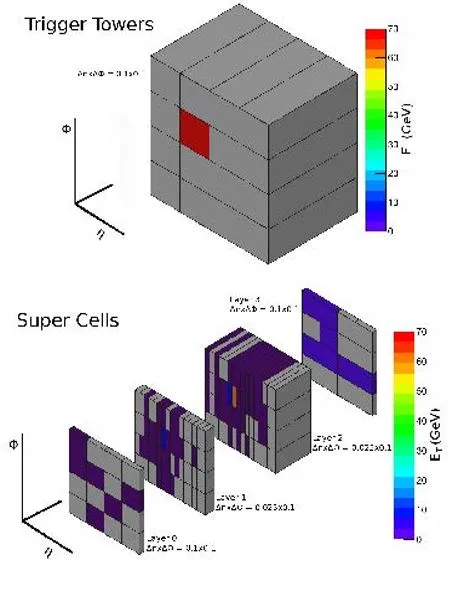
The LS2 period for the ATLAS detector The main upgrade activities are all aimed at enhancing the capability of the detector to trigger more efficiently on leptonic and hadronic signatures. In particular it is essential to preserve the ability to trigger efficiently on electron and muons with transverse momentum of ~20 GeV. With the instantaneous
-
LHCb plans for major upgrade during LS2
LHCb plans for major upgrade during LS2 During the previous LHC runs, the LHCb experiment collected 10 fb-1 and performed many important measurement in the heavy flavour sector. However, many crucial measurements are statistically limited, with experimental precision not directly comparable to the uncertainty of the theoretical predictions. In order to significantly increase the statistical
-
“New” ALICE coming to life during LS2
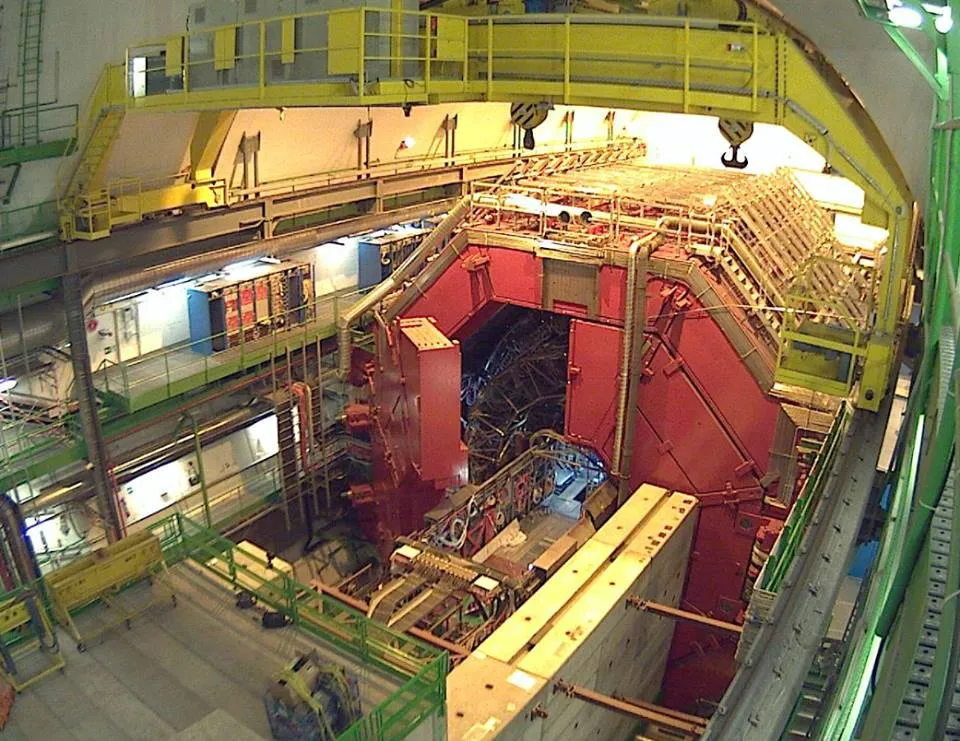
"New" ALICE coming to life during LS2 The ALICE solenoid re-opens its door as the collaboration prepares for the detector upgrade planned for LS2. At 6 a.m. on December 3, 2018, the LHC expert team switched off the engine of the biggest particle accelerator in the world, which will rest for the next two years