
Category: Newsletter
-

OSQAR experiment sheds light on a hidden sector of CERN’s scientific heritage
OSQAR experiment sheds light on a hidden sector of CERN’s scientific heritage Particle physics is not only confined to the high energy frontier. There are unexplored territories at ultra-low energies, of sub-eV to eV, which are also very promising, such as for example in dark matter (DM) searches. The emblematic particle of this physics is
-
Higgs boson observed decaying to bottom quarks
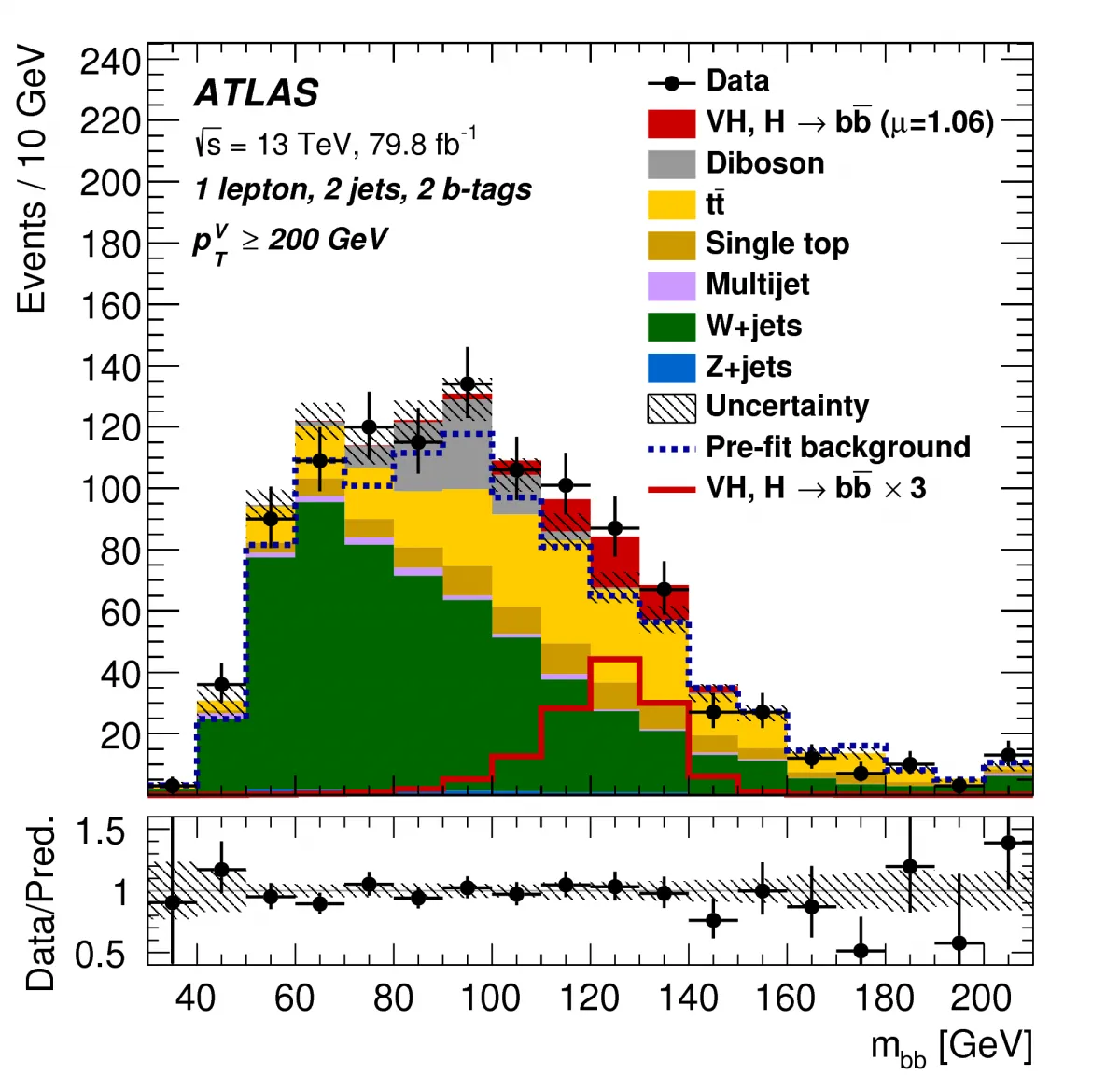
Higgs boson observed decaying to bottom quarks Last month, the ATLAS and CMS collaborations jointly announced the discovery of the Higgs boson decaying into a matter-antimatter pair of bottom quarks. Previously, the Higgs boson has been observed decaying to photons, tau-leptons, and W and Z bosons. However, these impressive achievements represent only 30 percent of
-
The rise of the axions!
The rise of the axions! Roberto Peccei and Helen Quinn worked together in developing what is today known as the Peccei-Quinn symmetry; a mechanism that addresses the strong CP-violation that consequently led to the invention of axions and inspired an intense experimental and theoretical programme for more than three decades. In this special issue dedicated
-
A word from the Deputy Head of the EP department – September 2018
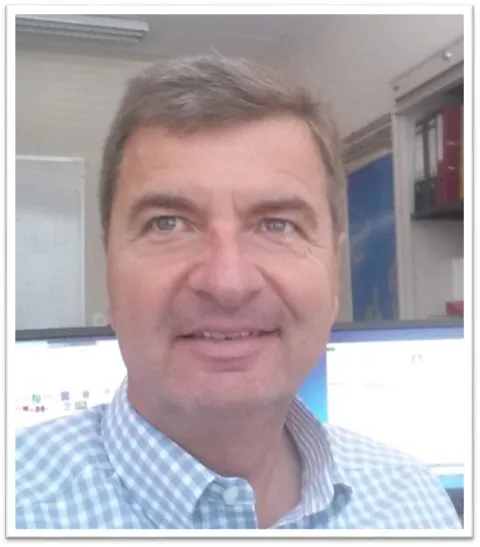
A word from the Deputy Head of the EP department – September 2018 Welcome to the autumn issue of the EP newsletter! It has been a busy and exciting summer with a wealth of new results presented by the LHC experiments at international conferences. The first observation of Higgs boson coupling with top and bottom
-
Searching for axions: old and new ideas
Searching for axions: old and new ideas QCD, the theory of strong interactions allows the violation of CP symmetry that would result in a non-zero value for the neutron electric dipole moment. Current measurements constrain the neutron EDM to be one trillionth of the size predicted by QCD (because of CP violation). This means that
-
Developing new electronics for the CMS tracking system
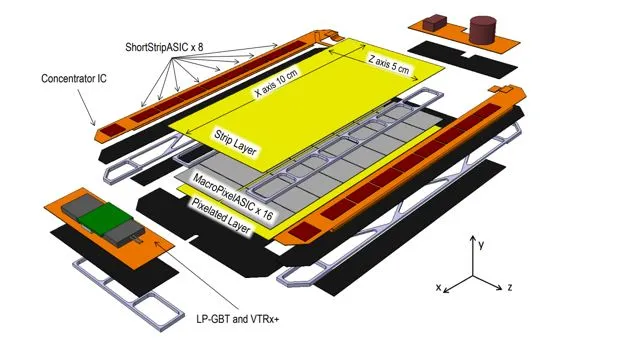
Developing new electronics for the CMS tracking system The High Luminosity Large Hadron Collider (HL-LHC) entails a substantial upgrade of the CMS tracking system, to cope with much more demanding requirements and to implement additional functionalities. One of the main challenges for the experiments is the increased number of pile up events which for an
-
A glimpse on CERN’s 2018 summer students programme
A glimpse on CERN's 2018 summer students programme BROKEN IMAGE NOT MOVED (drupal url : https://ep-news.web.cern.ch//content/glimpse-cerns-2018-summer-students-programme) This year CERN welcomed more than 250 students from all over the world as part of its summer student’s programme (Credits: Julien Ordan, CERN) Each summer CERN welcomes undergraduate students from all over the world to pursue research projects
-
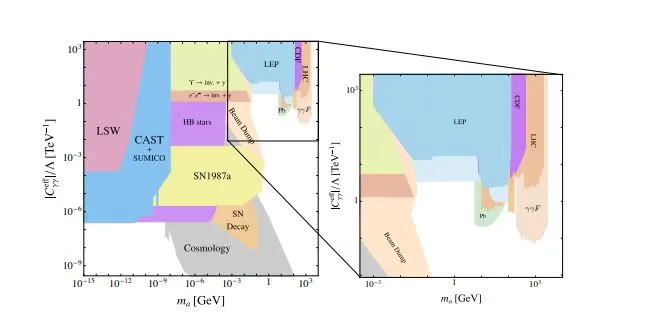
Axion-like particle searches at the LHC
Axion-like particle searches at the LHC The Standard Model (SM) of Particle Physics is plagued by some longstanding conceptual and practical questions, and we have to go beyond the Standard Model to address them. A guiding principle of the Standard Model is that we should expect to see all processes which are consistent with its
-

CERN – HEP Software Foundation participates in Google’s Summer of Code 2018
CERN – HEP Software Foundation participates in Google's Summer of Code 2018 Google Summer of Code (GSoC) allows students to contribute to development of open-source projects, mentored by participating organizations. CERN-SFT participates in GSoC since 2011. In 2017, the programme expanded to involve the whole high-energy physics community, in particular by creating a GSoC umbrella
-
Anti-nuclei in the cosmos and at the LHC
Anti-nuclei in the cosmos and at the LHC The ALICE collaboration has recently released several measurements on the production of anti-deuterons and anti-3He in proton-proton and Pb-Pb collisions at LHC energies. These results are not only interesting for the study of the hot QCD medium produced in heavy- ion collisions, but they also provide crucial