
Category: Newsletter
-
VeloPix, a new hybrid pixel readout ASIC for the upgrade of the VELO detector of LHCb.
VeloPix, a new hybrid pixel readout ASIC for the upgrade of the VELO detector of LHCb. The LHCb-VELO group, which is composed of several institutes from the UK, Spain, Netherlands, Russia, Brazil and CERN are constructing an upgraded version of the VErtex LOcator (VELO) to be installed and commissioned during the long shutdown LS2 in
-

DT’s 2018 annual report
DT's 2018 annual report The EP-DT group has published its Annual Report where key activities throughout 2017 are summarized and a description is given of how the group is organized and interacts with the detector physics community. The Detector Technologies group participates in the development, construction, operation and maintenance of particle detectors for experiments at
-
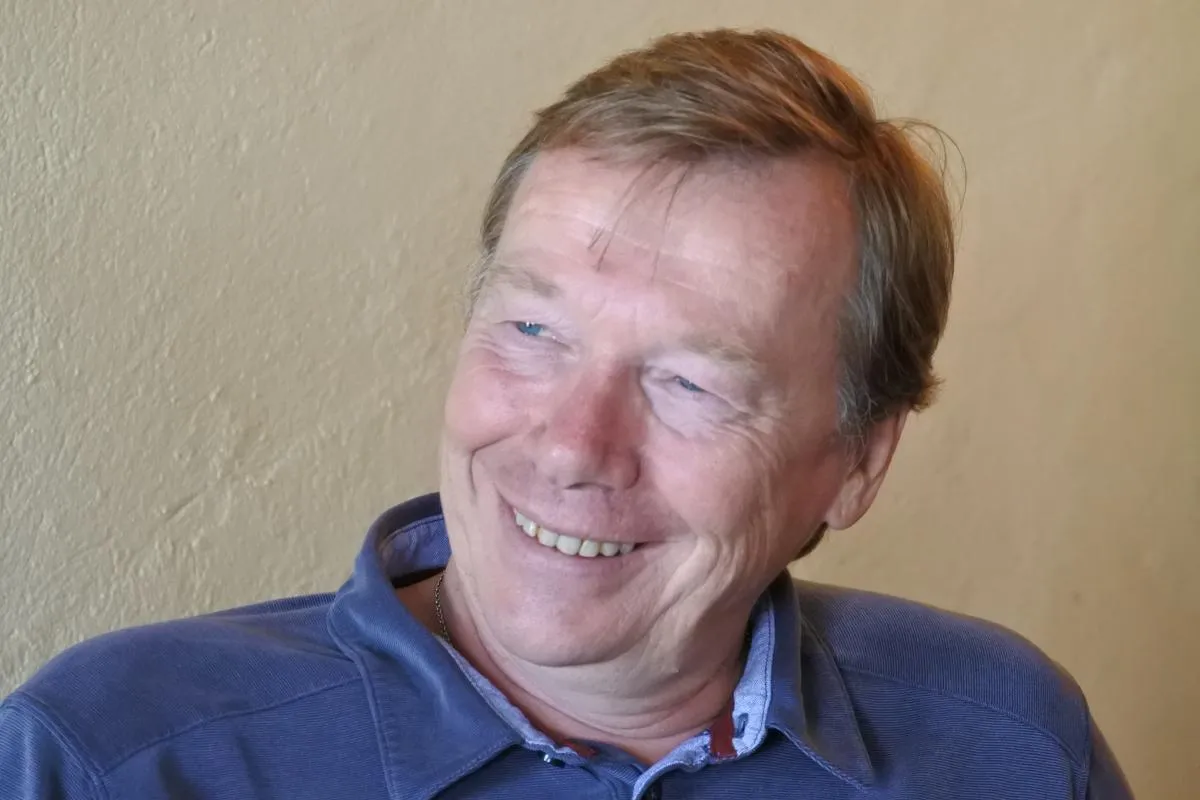
Ferdinand Hahn 1959-2018
Ferdinand Hahn 1959-2018 It was with great sadness that we learned that Ferdi Hahn passed away on 4 March 2018: an enthusiastic and highly skilled colleague, and an openhearted friend. Ferdi first came to CERN in 1987 as technical student of the University of Wuppertal, when he joined the EF division and the DELPHI Barrel
-
ALPHA new results: pushing the limits in antimatter research
ALPHA new results: pushing the limits in antimatter research In a paper published this week in Nature, the ALPHA collaboration reports the most precise direct measurement of antimatter ever made, revealing the spectral structure of the antihydrogen atom in unprecedented accuracy. The result marks a new era of high precision tests between matter and antimatter
-
A word from the Head of the EP department – April 2018
A word from the Head of the EP department – April 2018 Dear Colleagues in EP, The year 2018 started with a big shock for us. The tragic death of Ferdi Hahn has concerned us deeply. Ferdi was Deputy Department Head of EP, a close colleague and good friend for many of us. Please see
-
Stephen Hawking, Force of Nature
Stephen Hawking, Force of Nature I always thought that Stephen Hawking would outlive me. I broke into tears when I heard on Wednesday that he had not. He died at his home in Cambridge, England, at 76, after more than half a century of living with amyotrophic lateral sclerosis. BROKEN IMAGE NOT MOVED (drupal url
-
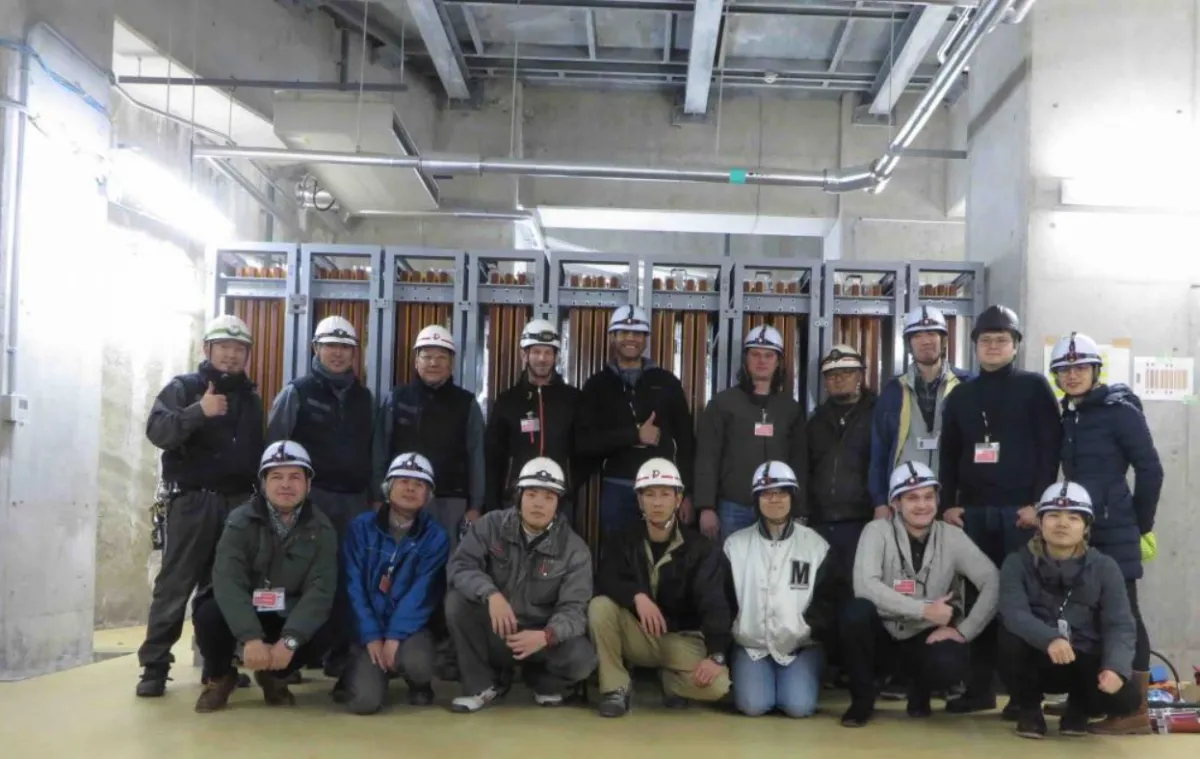
BabyMIND records first muon tracks
BabyMIND records first muon tracks Assembled as part of project NP05 at the CERN Neutrino Platform, the Baby MIND muon spectrometer has been recording its first muon tracks from neutrino interactions at J-PARC since 10th March. Baby MIND is designed to determine the momentum and charge of muons that are the product of neutrino interactions
-
Setting a roadmap for future experimental technologies
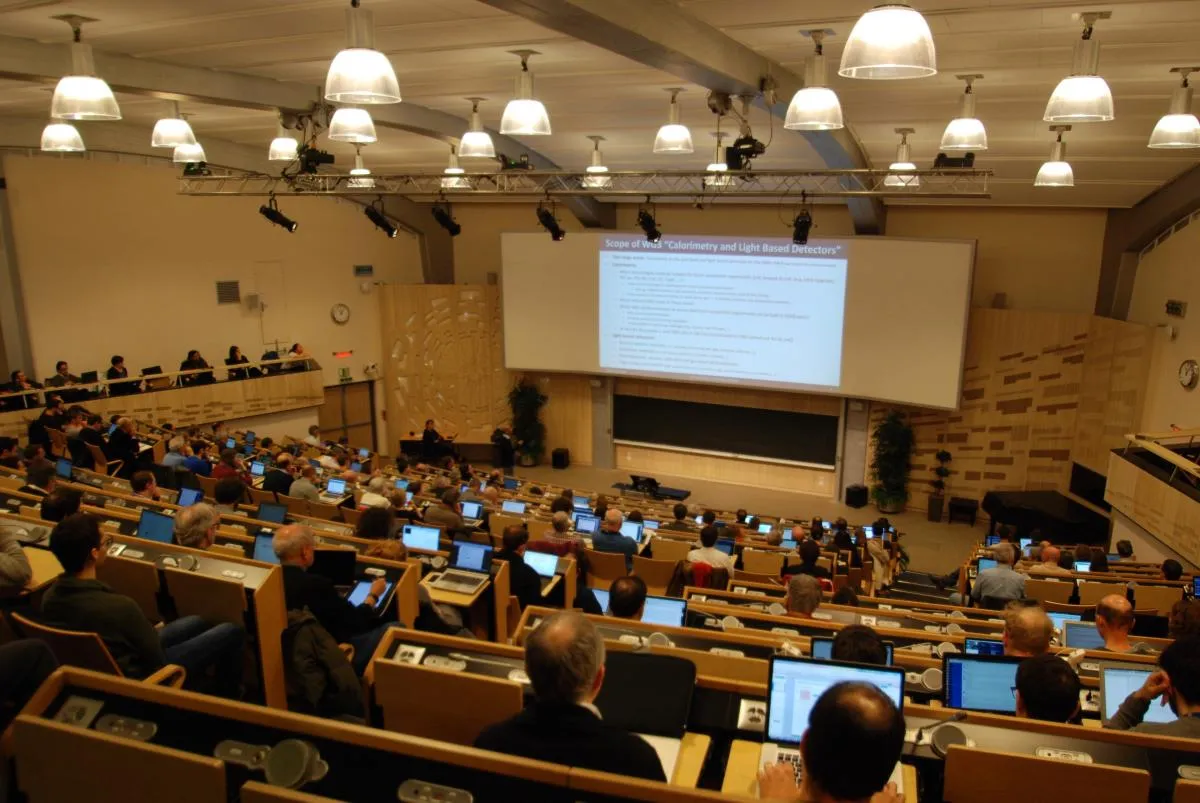
Setting a roadmap for future experimental technologies In elementary-particle physics as in most fields of science, advances in understanding are closely coupled to advances in technology. Machines of higher luminosity open opportunities for the observation of rare and unexpected processes while higher-energy accelerators are needed to cross thresholds for suspected new phenomena. Advances in accelerator
-
Report from CLIC Week 2018
Report from CLIC Week 2018 The Compact Linear Collider (CLIC) workshop is the main annual gathering of the CLIC accelerator and detector communities. This year it attracted more than 220 participants to CERN, 22-26 January. CLIC is a proposed electron-positron linear collider, envisaged for the era beyond the High-Luminosity LHC (HL-LHC), that would operate a
-

Theory goes forward to meet the FCC-ee strong experimental demands.
Theory goes forward to meet the FCC-ee strong experimental demands. The remarkable precision of LEP and other lepton colliders in the past has been instrumental in testing and understanding the Standard Model. In particular it was able to predict, by their effect on quantum corrections (a.k.a. ’loops’), the masses of the top quark and Higgs