
Category: Newsletter
-
LHC experiments present results in Moriond Conference
LHC experiments present results in Moriond Conference This year saw the 53rd meeting in the series “Les Rencontres de Moriond”. ATLAS and CMS presented impressive results (see pictures) of searches for new phenomena, setting boundaries to where the new physics can still exist. These limits severely constrain models for physics beyond the Standard Model including
-
Weighing up the LHC’s future
Weighing up the LHC’s future As the LHC’s 2017 run drew to a close late last year, CERN hosted a workshop addressing future physics opportunities at the flagship collider. The first workshop on the physics of High-Luminosity LHC (HL-LHC) and perspectives at High-Energy LHC (HE-LHC) took place from 30 October to 1 November, attracting around
-
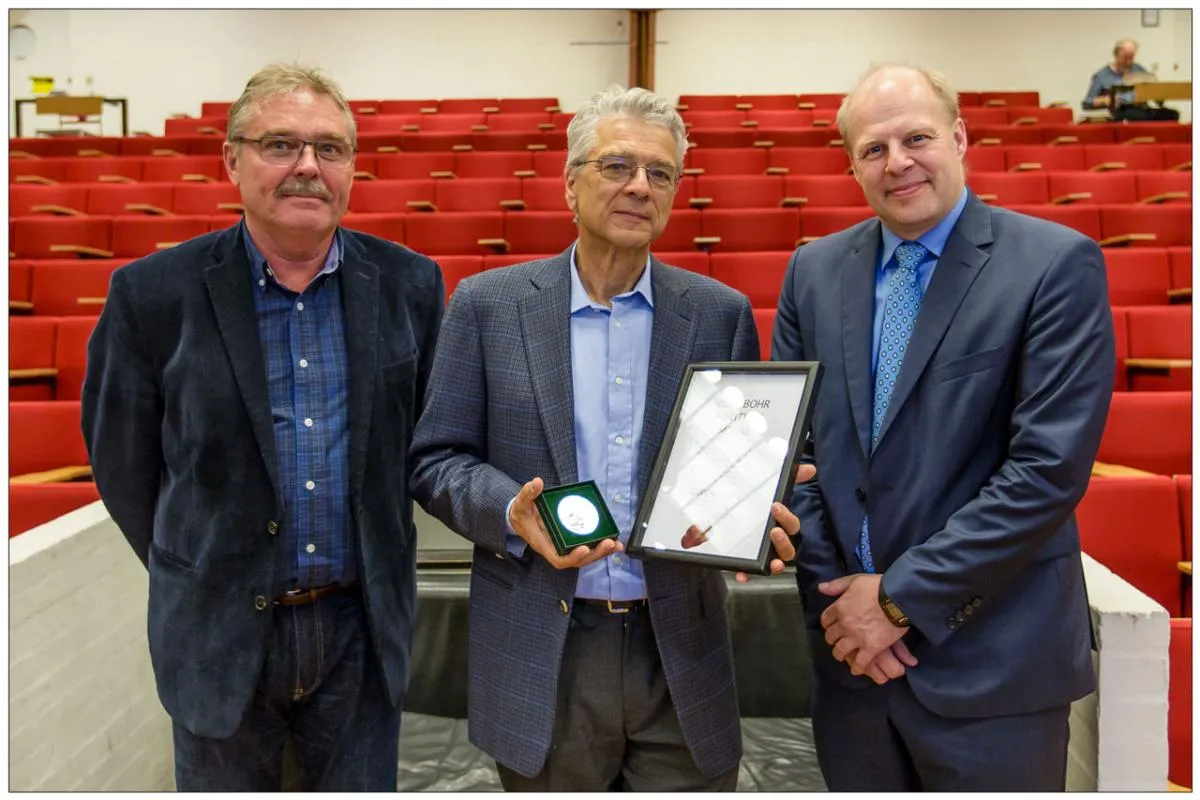
Jürgen Schukraft receives the Niels Bohr Institute Medal of Honour
Jürgen Schukraft receives the Niels Bohr Institute Medal of Honour Former ALICE spokesperson Jürgen Schukraft has been recently awarded the Niels Bohr Institute’s Honorary Medal, an honour for his outstanding career in heavy-ion physics and his role as leader of the ALICE experiment. Established in 2010 as a tribute to excellent physicists who have also
-
A new database of irradiation facilities
A new database of irradiation facilities Detector and accelerator developers need irradiation facilities to test their components under conditions that are as close as possible to real applications, as well as to predict and prevent failures in materials. The foreseen high-luminosity upgrade of the LHC (HL-LHC) and future accelerator projects like the Future Circular Collider
-
Interview with Pascal Lamy
Interview with Pascal Lamy The European Commission is working on a proposal for the framework programme that will succeed Horizon 2020. This is done on the basis of various building blocks including the interim evaluation of Horizon 2020 and the Lab-Fab-App report (informally known as the Lamy report). We met Pascal Lamy, Chairman of the
-
CernVM turns ten!
CernVM turns ten! BROKEN IMAGE NOT MOVED (drupal url : https://ep-news.web.cern.ch//content/cernvm-turns-ten) The 3rd CernVM users workshop took place at CERN from 30 January to 1 February 2018. The workshop aims to bring together users, developers and industry speakers to discuss the current status of the CernVM ecosystem and the future directions, with a fresh look
-
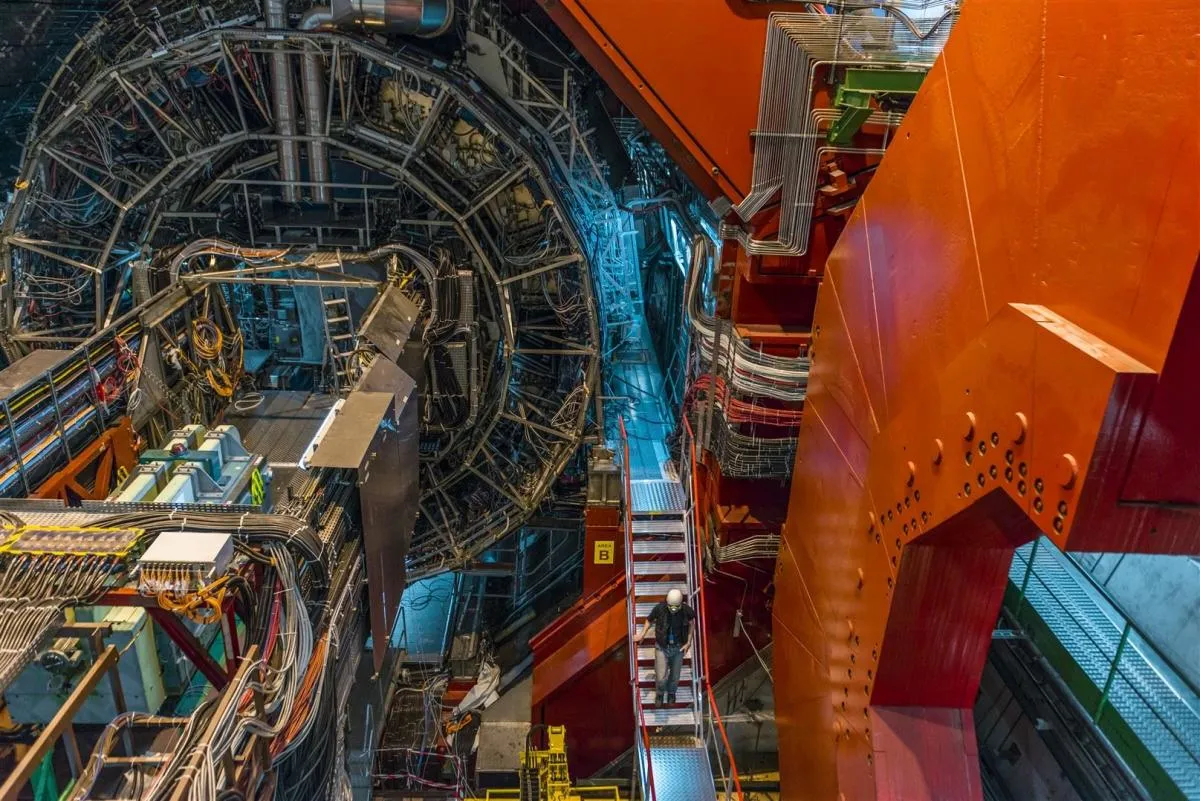
ALICE upgrade plans
ALICE upgrade plans The ALICE experiment prepares upgrades of several subsystems and the online–offline system for data acquisition and processing during the Long Shutdown 2 (LS2) of the Large Hadron Collider (LHC). This will enable the experiment to do high precision measurements of rare probes from high to very low transverse momentum while also searching
-
ATLAS further investigates the width of top quark
ATLAS further investigates the width of top quark The top quark is the heaviest known elementary particle and completes the quark sector of the standard model (SM). Like other fermions in the standard model (SM), it decays through the electroweak interaction. But unlike b and c quarks, which form long-lived hadrons, the top quark has
-
AMS looks at Cosmic Galactic Rays
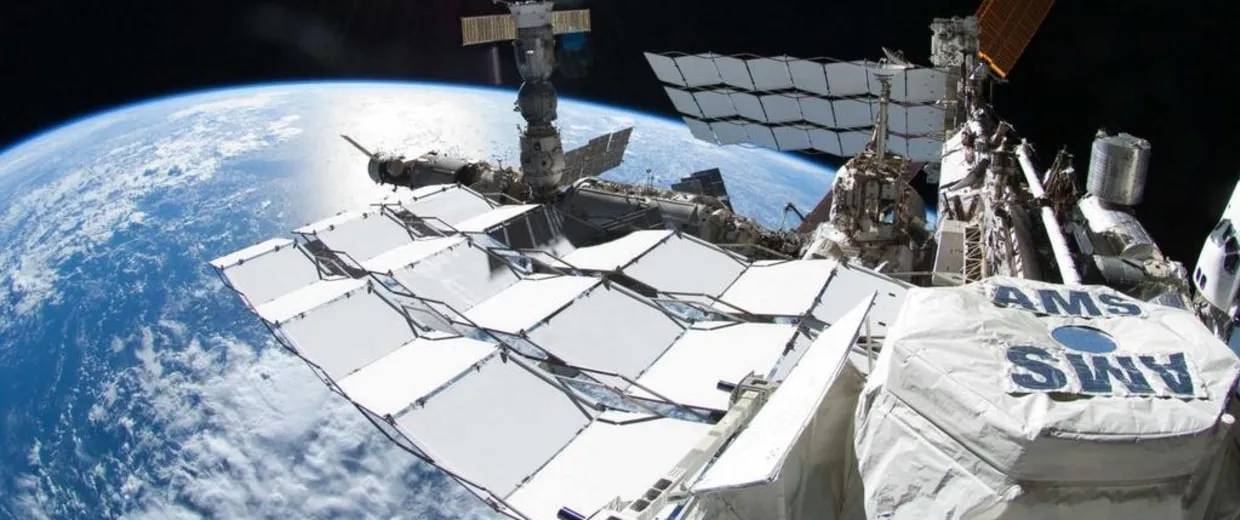
AMS looks at Cosmic Galactic Rays The Alpha Magnetic Spectrometer (AMS) is a state-of-the-art particle physics experiment operating on the International Space Station (ISS) since May 2011. In the first 6 years of missions, AMS has detected over 100 billion cosmic ray (CR) particles. Recently, it has released new results on proton, antiproton, lepton, and
-
CERN History Days – 1 February 2018
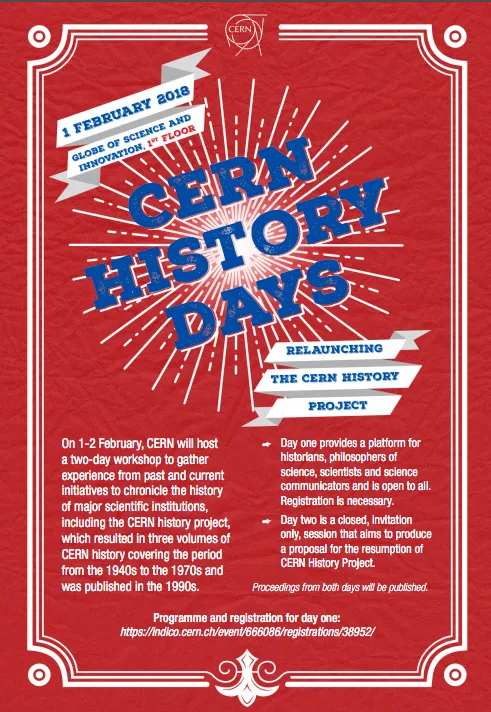
CERN History Days – 1 February 2018 It has been over 20 years since the original CERN History Project concluded. That initiative produced three excellent volumes of CERN history spanning the period from the 1940s to the end of the 1970s. CERN History Days is a new initiative in order to relaunch the Project. Τhe