
Category: Newsletter
-
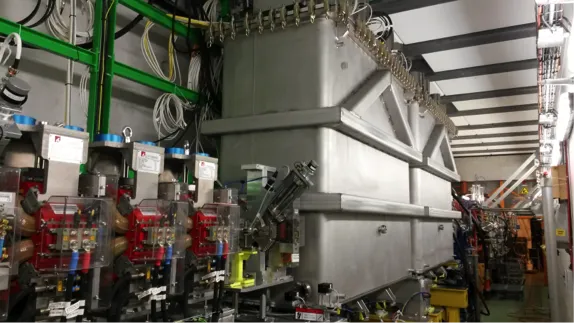
HIE-ISOLDE: Stage 1 fully installed
HIE-ISOLDE: Stage 1 fully installed ISOLDE is CERN’s radioactive beam facility that produces low energy and post-accelerated beams. The high energy and intensity, average intensity of 2 μA, of the proton beam from the PS booster on different thick targets produces high quality intense beams of rare nuclei. The ISOLDE facility at CERN offers the
-
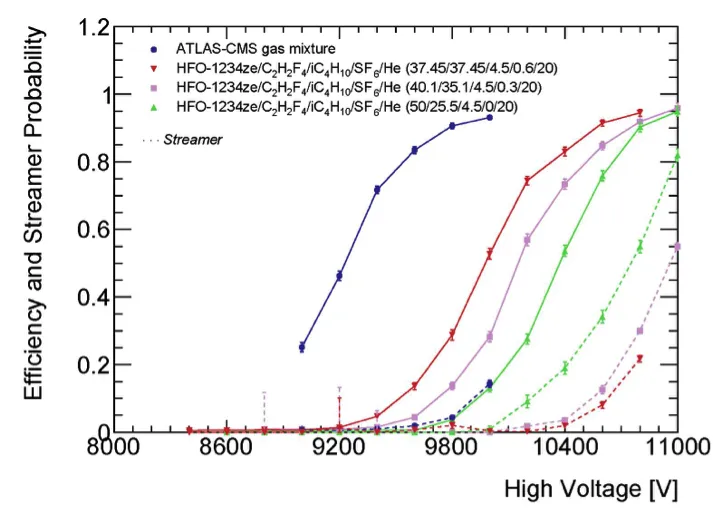
LHC experiments go greener: Strategies for reduction of greenhouse gas emissions in the detector systems
LHC experiments go greener: Strategies for reduction of greenhouse gas emissions in the detector systems At the LHC experiments a wide range of gas mixtures is used for the operation of different gaseous detectors. Some of these gases, such as C2H2F4, CF4 and SF6, are indicated as greenhouse gases (GHG) due to their high Global
-
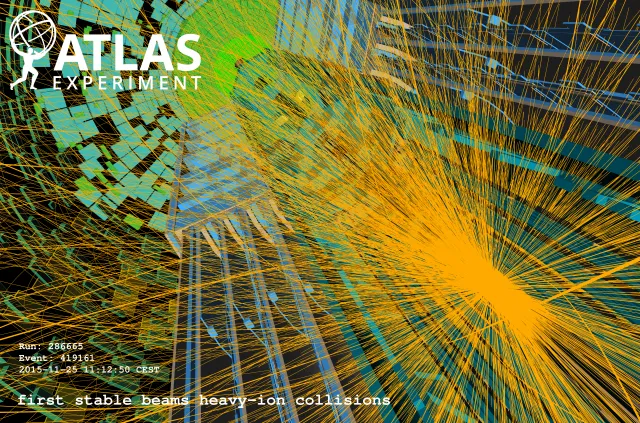
LHC Restart 2016
LHC Restart 2016 The Large Hadron Collider (LHC) and its experiments are back in action, now taking physics data at 13TeV. The goal is to improve our understanding of fundamental physics which ulitmately in decades to come can drive innovation and inventions by researchers in other fields. The Higgs was the last piece of the
-
CMS releases new data
CMS releases new data Rediscover the Standard Model of particle physics and much more with open data from the Large Hadron Collider Today, the CMS Collaboration at CERN has released more than 300 terabytes (TB) of high-quality open data. These include over 100 TB, or 2.5 inverse femtobarns (fb−1), of data from proton collisions at
-

MoEDAL releases new mass limits for the production of monopoles
MoEDAL releases new mass limits for the production of monopoles In April, the MoEDAL collaboration submitted its first physics-research publication on the search for magnetic monopoles utilising a 160 kg prototype MoEDAL trapping detector exposed to 0.75 fb–1 of 8 TeV pp collisions, which was subsequently removed and monitored by a SQUID magnetometer located at
-
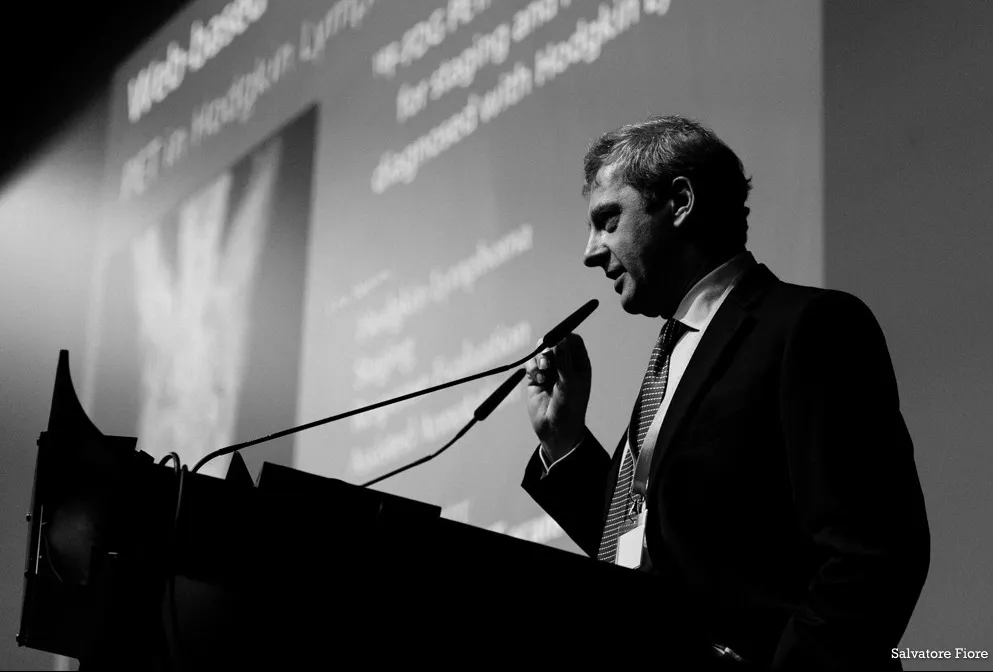
Box Example
Box Example Start-up corner at the ICTR-PHE 2016 Industrial Exhibition by David Manzur ICTR-PHE 2016 welcomed 16 exhibitors and sponsors as part of its industrial exhibition, including major member states companies in the field of particle therapy. A special start-up corner was foreseen in the industrial exhibition, where small stands were offered for a modest
-
Personal identifier for use of CERN vehicles
Personal identifier for use of CERN vehicles BROKEN IMAGE NOT MOVED (drupal url : https://ep-news.web.cern.ch//content/personal-identifier-use-cern-vehicles) Dear EP Department colleagues and users, We would like to inform you that: · All CERN vehicles (with or without a logo) are progressively equipped with a GPS. Today nearly 120 EP vehicles are already equipped; · Every driver of
-
Science: a model for collaboration?
Science: a model for collaboration? This opinion piece was originally published in the January-February issue of the CERN Courier. Today, science, technology and innovation are among the most powerful forces driving social change and development. However, what is the actual role that a fundamental science laboratory like CERN can have when it comes to designing
-
Interview with James Peebles
Interview with James Peebles An interview with Jim Peebles, one of the world’s foremost cosmologists and an emeritus professor at Princeton University, where since 1984 he was the Albert Einstein Professor of Science. Together with Robert Dicke (who was originally his supervisor) and others they predicted the existence of the cosmic background radiation while his
-
ATLAS and ALICE PhD Awards
ATLAS and ALICE PhD Awards Two of the LHC experiments, ATLAS and ALICE, recently announced winners of the “ATLAS PhD Grant” and “ALICE Thesis Award” schemes. The prizes aim to foster healthy competition between young members of the two collaborators and acknowledge the hard efforts of the winners but also of those who were considered
