
Category: Newsletter
-
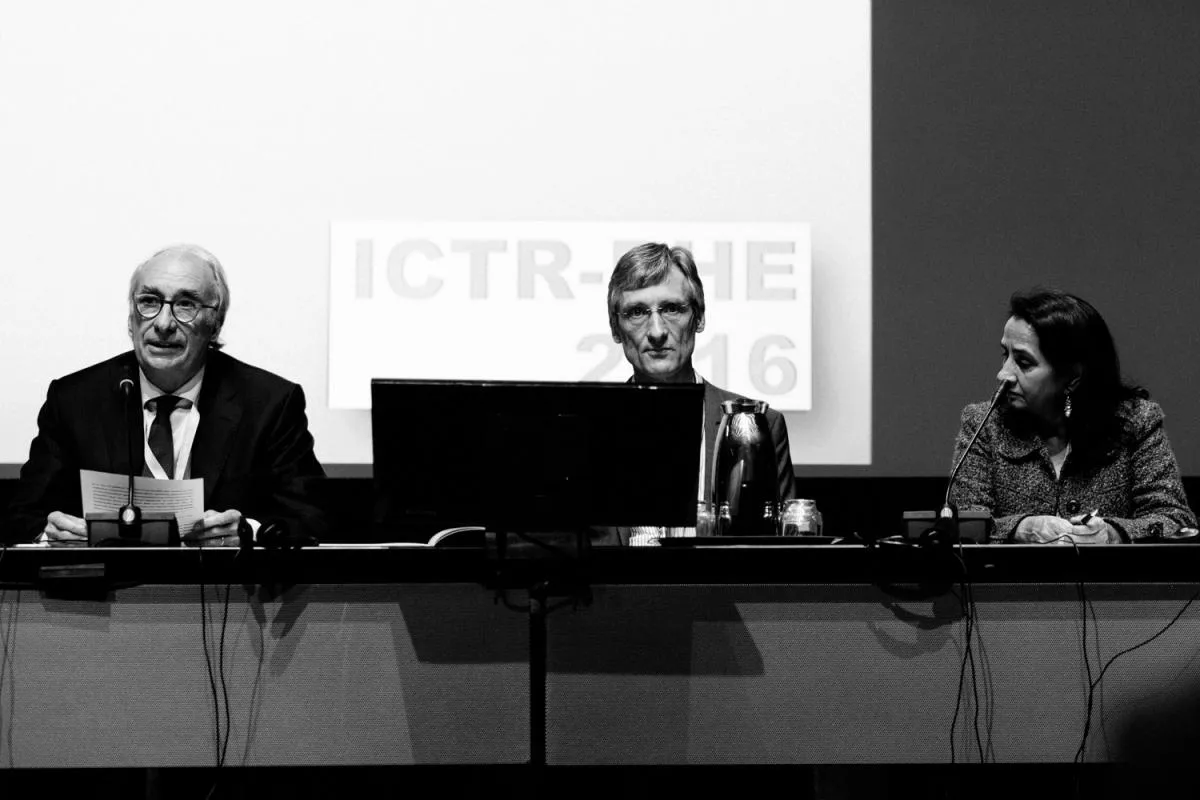
ICTR-PHE 2016: Uniting physics, biology and medicine
ICTR-PHE 2016: Uniting physics, biology and medicine The third edition of the ICTR-PHE conference (see here), held in Geneva from 15 to 19 February, was again a unique place where multidisciplinary scientists met to share knowledge and to bridge gaps between all disciplines. More than 440 participants from all over the world met during five
-
ICTR-PHE 2016: An Overview
ICTR-PHE 2016: An Overview Along the five days of the ICTR-PHE 2016 Conference, a copious group of scientists coming from different research fields, spanning physics, engineering, radiobiology, and medicine, shared the results of their work and brought proposals for the future development of radiation oncology. Very hot topics were discussed between plenary sessions, parallel workshops,
-
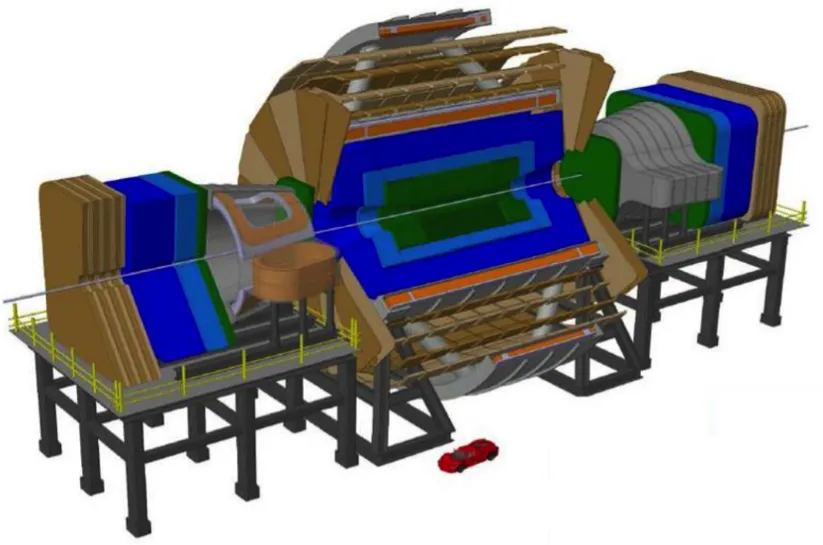
Design of Twin Solenoid & Dipoles Detector Magnet System for the Future Circular Collider
Design of Twin Solenoid & Dipoles Detector Magnet System for the Future Circular Collider The Future Circular Collider study for hadron-hadron collisions/collider (FCC-hh) foresees a collision energy of 100 TeV, which is about 7 times higher than the LHC. For the detectors this means that in order to determine the properties of the particles the
-
In theory: Welcome to the Theory Department
In theory: Welcome to the Theory Department After almost ten years under the umbrella of the PH department, TH becomes again a department. In 2005, it was incorporated into the CERN Physics Department as the "Theory Unit". In 2016 it once again became an independent department, the "Theoretical Physics Department" To this end, CERN-TH aims
-

ISOLDE sheds light to the nature of the proposed magic number N = 32
ISOLDE sheds light to the nature of the proposed magic number N = 32 The most intuitive properties of the nucleus are its mass and size. Both properties can be precisely studied with dedicated experiments at ISOLDE. Most of the nuclei are deformed, i.e. shaped like a rugby ball or like a pancake, only a
-
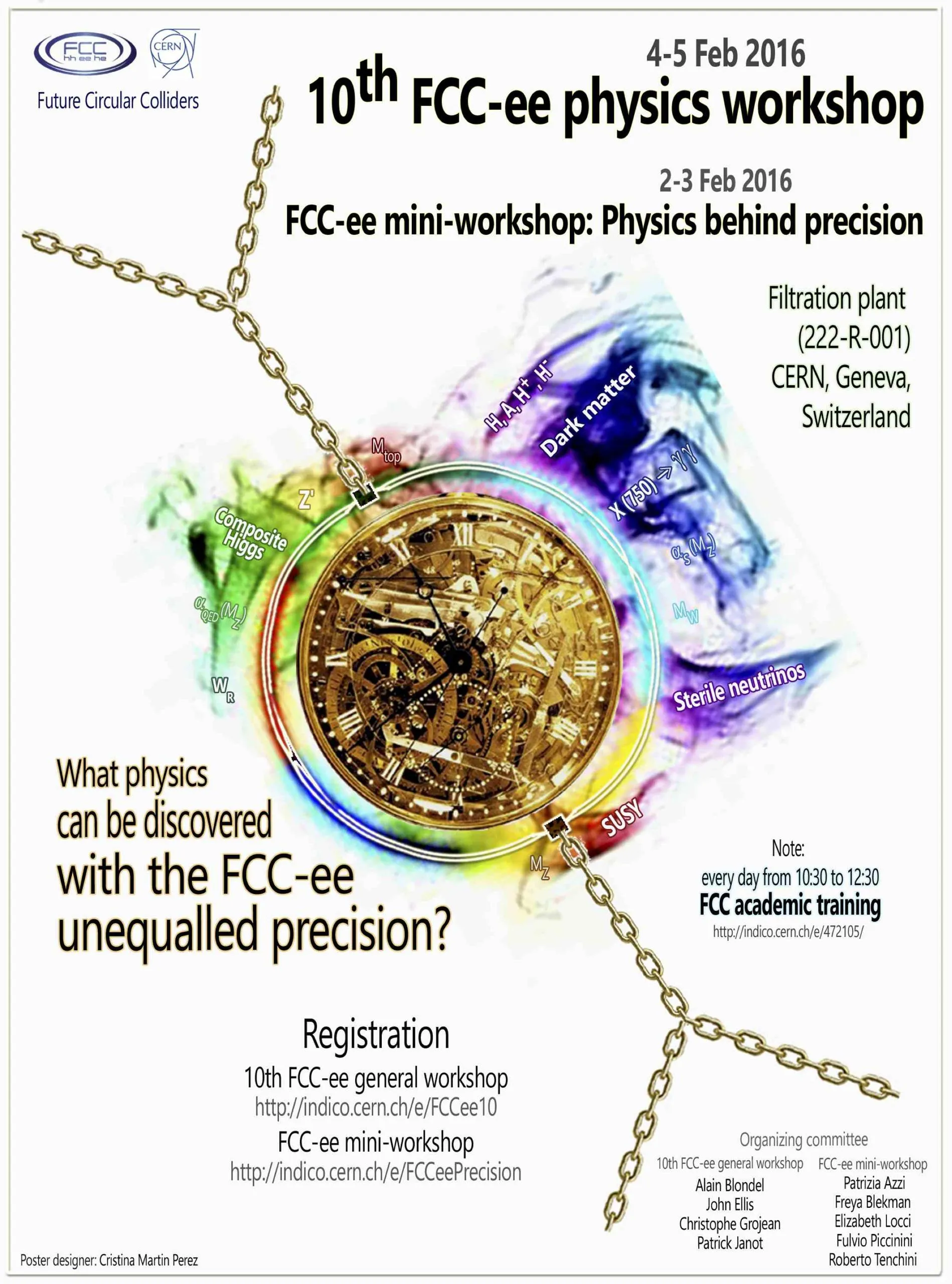
FCC-ee physics workshops at CERN
FCC-ee physics workshops at CERN The design study of the Future Circular Colliders (FCC) was initiated at the beginning of 2014, to identify post-LHC accelerator projects at CERN. The study has an emphasis on proton-proton (FCC-hh) and electron-positron (FCC-ee) colliders, and includes the design and optimization of detectors that would comply with the physics programme
-
Successful commissioning of the new PH-DT safety and control system for the refurbished COMPASS Solenoid.
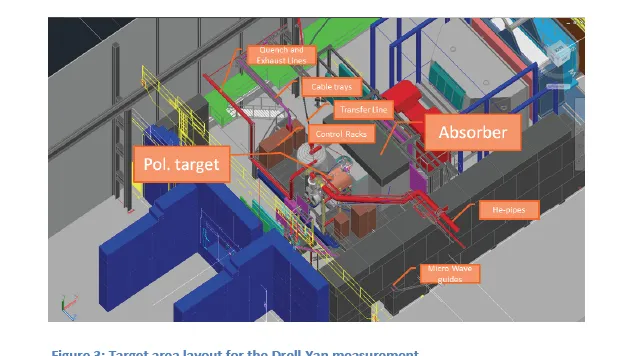
Successful commissioning of the new PH-DT safety and control system for the refurbished COMPASS Solenoid. From left to right, L.Deront, S.Ravat and A.Kehrli in front of the Safety and Control system racks developed and manufactured in PH-DT for the COMPASS solenoid. The PH-DT Instrumentation and Controls team has being developing a new safety system for
-
CAST in Time – The Quest for Axions and Chameleons
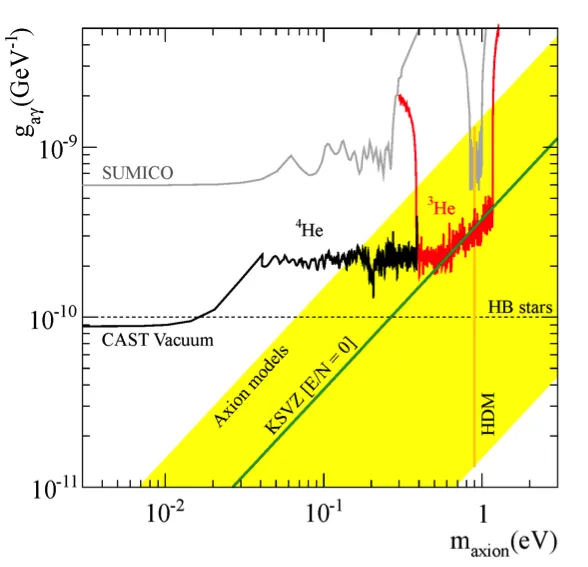
CAST in Time – The Quest for Axions and Chameleons Dark Matter makes up a quarter of the universe and is five times more abundant than normal matter such as neutrons, protons, electrons and neutrinos. Without it, galaxies would fall apart, and stars would spin off into space. Yet we have not identified what dark
-
AWAKE, an accelerator R&D experiment.
AWAKE, an accelerator R&D experiment. BROKEN IMAGE NOT MOVED (drupal url : https://ep-news.web.cern.ch//content/awake-accelerator-rd-experiment) AWAKE is an accelerator R&D experiment. In the coming years the AWAKE experiment should pave the way to understanding the physics and potential of proton-driven plasma wakefield acceleration for future accelerators. Over the last fifty years, accelerators of ever increasing energy have
-
A highlight from the CLIC annual workshop: an update to the baselining strategy
A highlight from the CLIC annual workshop: an update to the baselining strategy The Compact Linear Collider (CLIC) is a proposed e+e– collider to be built at CERN in order to serve the needs of the particle physics community beyond the high-luminosity LHC. The accelerator is foreseen to be built in several stages, allowing lower-energy
