
Category: Newsletter
-
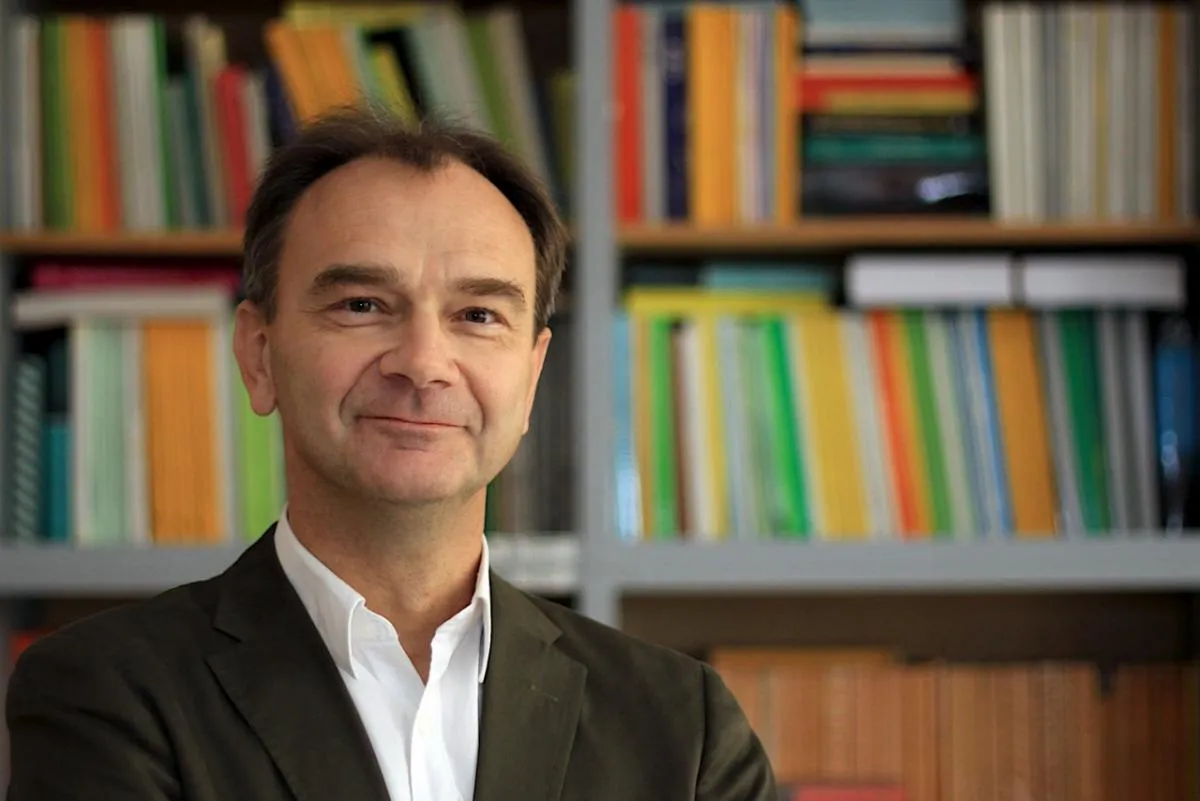
A word from the Head of the EP department – July 2016
A word from the Head of the EP department – July 2016 Dear Colleagues, Members of the EP Department and CERN Users, We are in the middle of a fantastic year for CERN. After a difficult start, with some negative interference from the creatures in the Pays de Gex, the LHC is running like a
-
Spotlight On: ALBA Synchrotron
Spotlight On: ALBA Synchrotron About us. ALBA is a 3rd Generation Synchrotron Light facility located in Cerdanyola del Vallès, Barcelona, and it is the newest source in the Mediterranean Area. ALBA has been identified as a “Singular Technological and Scientific Infrastructure” within the Spanish scientific infrastructures. It is networked with other Synchrotron Light Sources from
-
Chronicles of the ATLAS data taking in 2015
Chronicles of the ATLAS data taking in 2015 2015 has been extraordinary: after 2 years of shutdown (LS-1) the LHC and its experiments have come back into operation for a new exciting running period (Run-2) to push the research about the infinitely small structure of matter, related to the origin of the universe, into a
-
A successful year for the LHCb collaboration
A successful year for the LHCb collaboration After the Long Shutdown of 2013 and 2014, LHCb started to take data this year and collected during this year 320 pb-1 of proton-proton collisions at the center of mass energy of 13 TeV. The detector was almost identical to the one used during Run 1, apart from
-
Thank You!
Thank You! Over seven years, the thank-yous add up, and I’d like to start by thanking the CERN Council for entrusting me with the best job in the world of particle physics and for providing constant support throughout my mandate. The Council and the Management do not always agree, and that is how it should
-
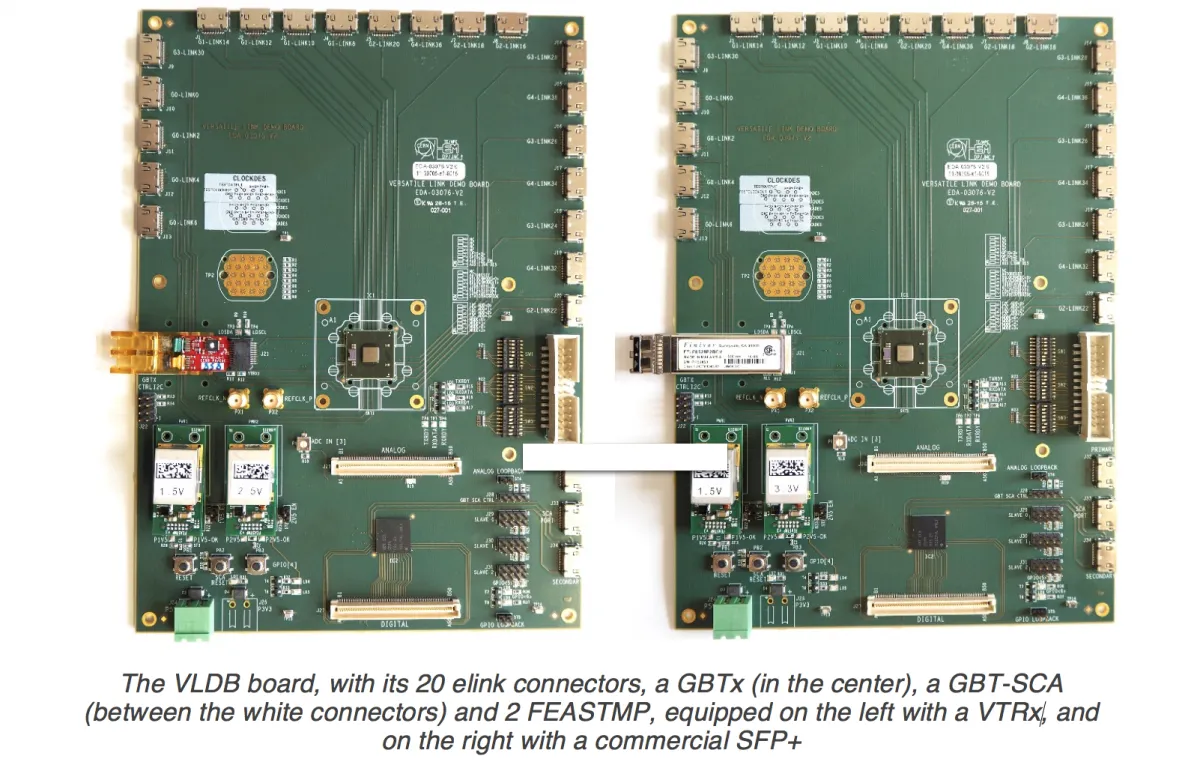
The Versatile Link Demonstrator Board (VLDB): an evaluation kit for the GBT ecosystem
The Versatile Link Demonstrator Board (VLDB): an evaluation kit for the GBT ecosystem One of PH/ESE’s flagship projects is the Radiation Hard Optical Link project for LHC, a common development for all LHC experiments and other interested collaborations. The objective of the project is to supply experiments with a radiation hard, magnetic field tolerant 4.8
-
CMS 2015 – taking data under difficult conditions
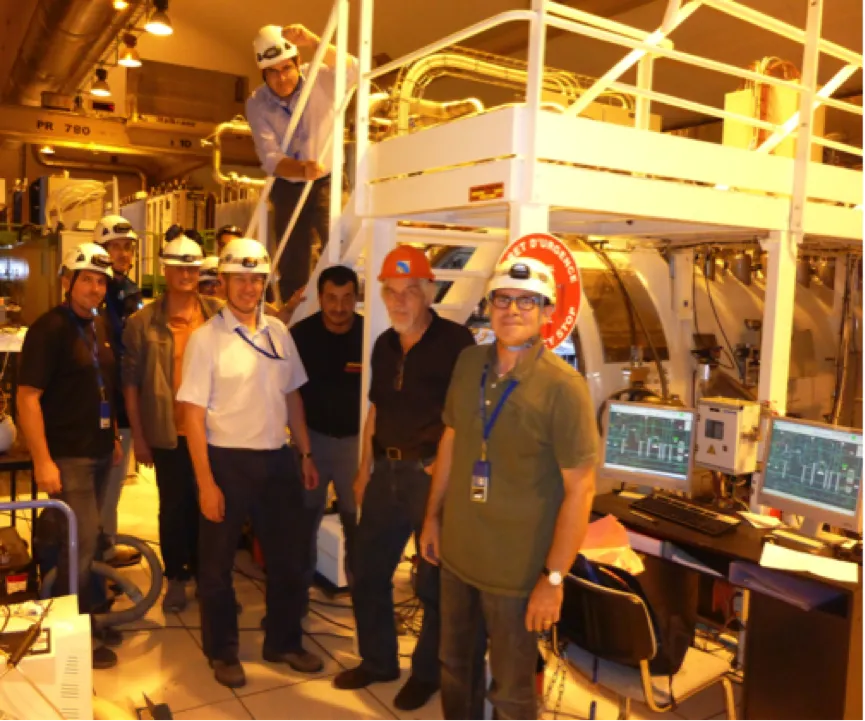
CMS 2015 – taking data under difficult conditions The last edition of this letter ended with the optimistic remark that CMS after the end of LS1 would be perfectly prepared for the exciting times ahead of us. And indeed the final steps of LS1 went smoothly with CMS ready for the first beams. In April
-
NA62 exploits the first high intensity kaon beam of 2015
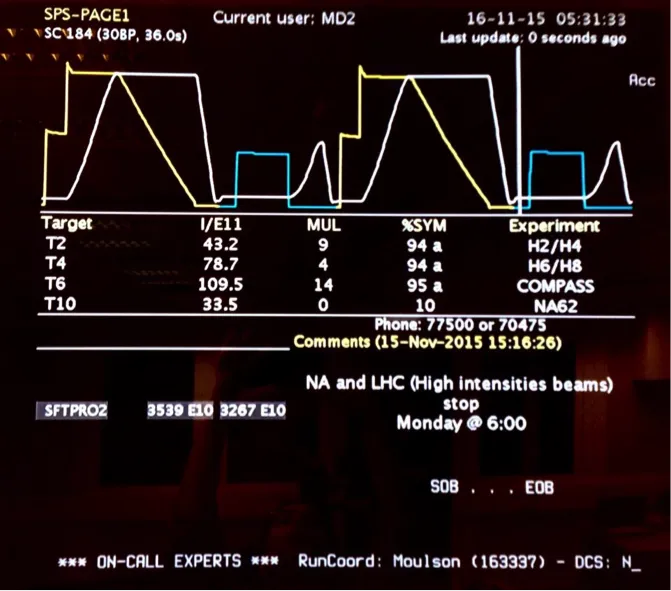
NA62 exploits the first high intensity kaon beam of 2015 Last May, the newsletter reported about the two-month pilot run of 2014 and how NA62 was preparing for the 2015 data taking: this became reality for five months between mid-June and mid-November, an exciting but exhausting period for our operation team! As you may remember,
-
MOEDAL – A New Light on LHC Physics
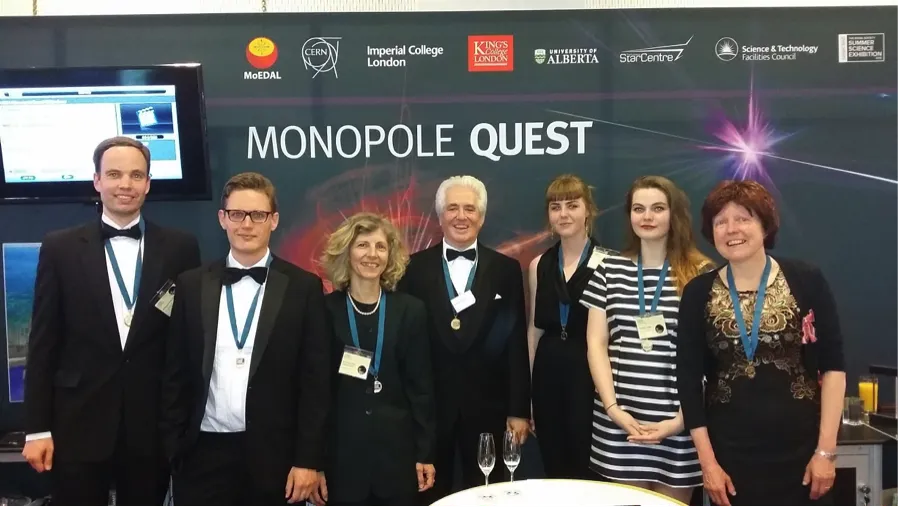
MOEDAL – A New Light on LHC Physics MoEDAL is a pioneering experiment designed to search for highly ionizing avatars of new physics such as magnetic monopoles or massive (pseudo-)stable charged particles. Its physics program defines over 34 scenarios that yield potentially revolutionary insights into such foundational questions as: are there extra dimensions or new
-
First Pb beam in NA61/SHINE
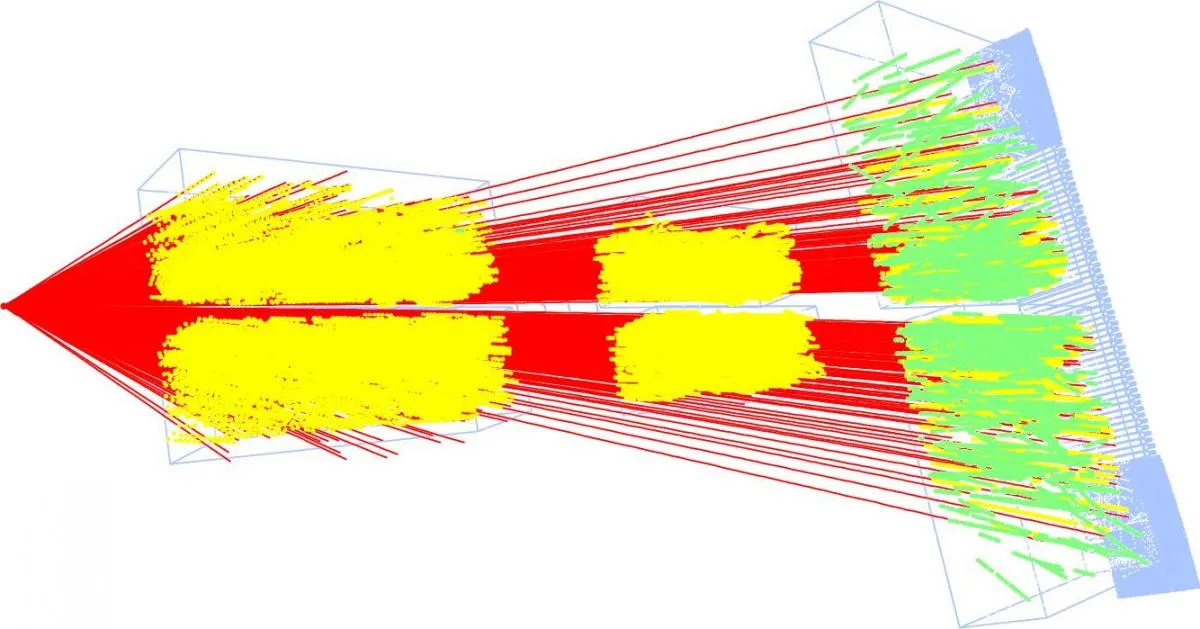
First Pb beam in NA61/SHINE December 1st ended a two-week test period with Pb beam in the NA61/SHINE fixed-target experiment [1]. Pb ions at momentum of 30A GeV/c were delivered from the CERN SPS to the experiment for the first time. The beam time was used to perform numerous test and calibration measurements. They are