
Category: Newsletter
-
“Grand Unification” of data taking for the LHCb experiment
“Grand Unification” of data taking for the LHCb experiment The 2017 data taking period for LHCb ended at the end of November. Towards the end of the 2017 run at the centre-of-mass energy of 13 TeV, the LHC provided collisions at a reduced energy of 5 TeV to produce reference data for proton-lead and lead-lead
-
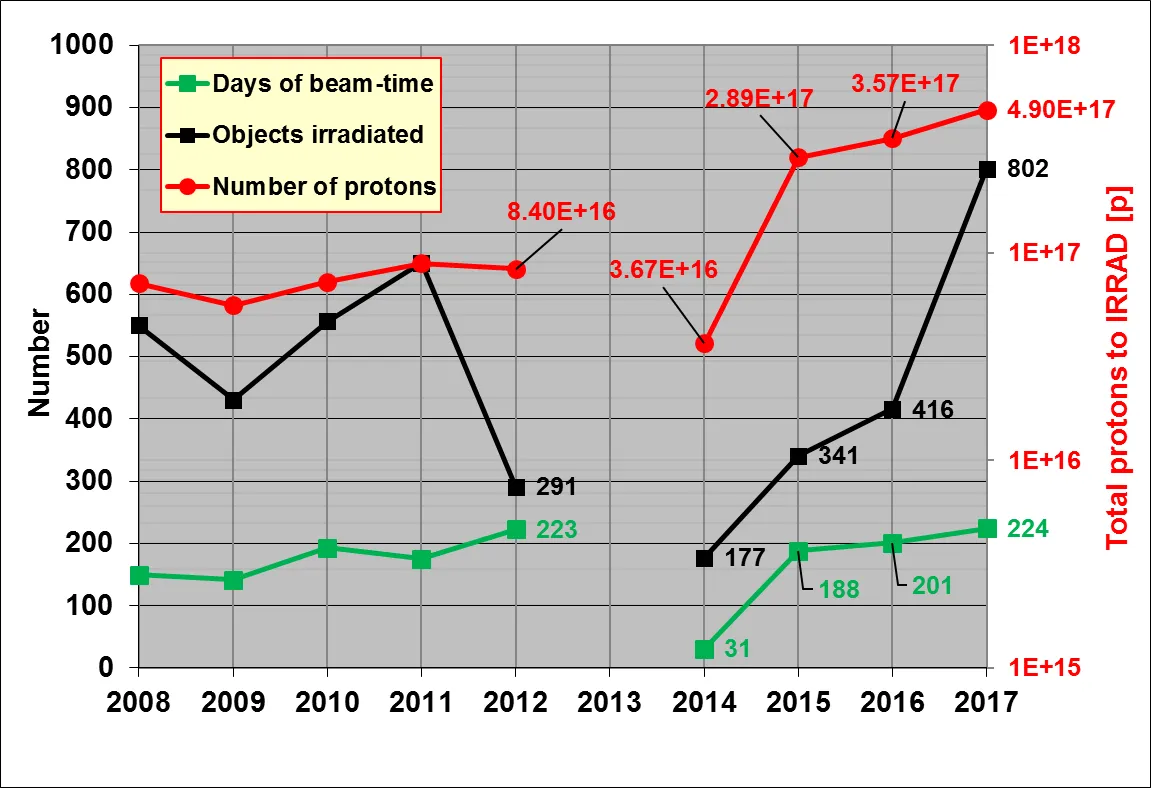
An exceptional year for the EP-DT proton irradiation facility IRRAD
An exceptional year for the EP-DT proton irradiation facility IRRAD The CERN proton irradiation facility (IRRAD) at the PS East Area has been designed and built during LS1 to cope with the increasing need for irradiation experiments of the EP experimental community, working for the High-Luminosity upgrade of the LHC and beyond. This new facility
-

A special Xenon run for NA61/SHINE
A special Xenon run for NA61/SHINE Earlier in October, the Large Hadron Collider had a special test run of colliding xenon nuclei; a new flavour compared to the standard proton and lead collisions foreseen in the LHC experimental programme. Xenon collisions were requested by NA61, a fixed target experiment at the SPS and Xenon ions
-
LHCb prepares for the major upgrade in LS2
LHCb prepares for the major upgrade in LS2 Following the excellent performance of the LHC machine and after a very successful year for LHCb with a recorded luminosity of 1.7 fb-1 over the year 2017 LHCb goes now into the Years-End-Technical-Stop YETS. The experiment has taken data very efficiently with a detector operating smoothly over
-
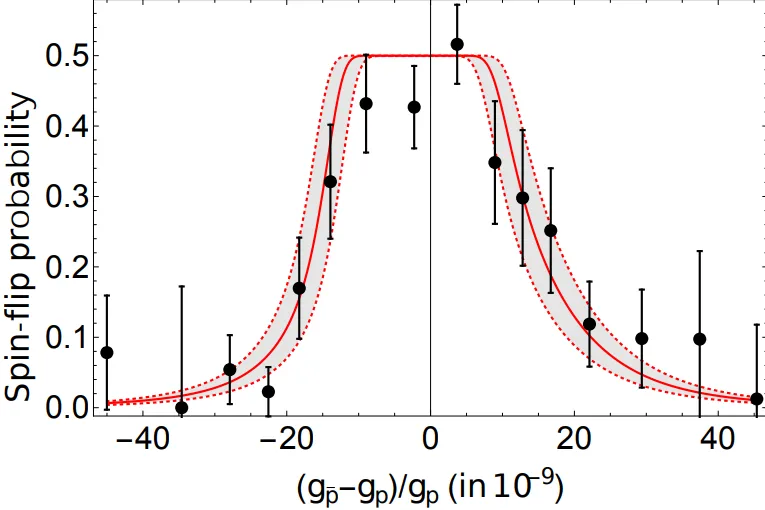
Another milestone for the BASE collaboration
Another milestone for the BASE collaboration In a recent publication in the Nature magazine, the BASE collaboration reports on the first high-precision measurement of the antiproton magnetic moment with parts per billion uncertainty (see https://www.nature.com/articles/nature24048). The antiproton magnetic moment is now determined with 350-fold improved precision to be -2.792 847 344 1(42) times the nuclear
-
RADECS 2017 meeting in Geneva
RADECS 2017 meeting in Geneva RADECS (RADiation Effects on Components and Systems) is the yearly European conference gathering world-class scientists in the field of radiation effects in electronics devices and systems. This year the conference has been organised by the partnership between CERN and CNES, the French Space Agency, and has taken place on October
-
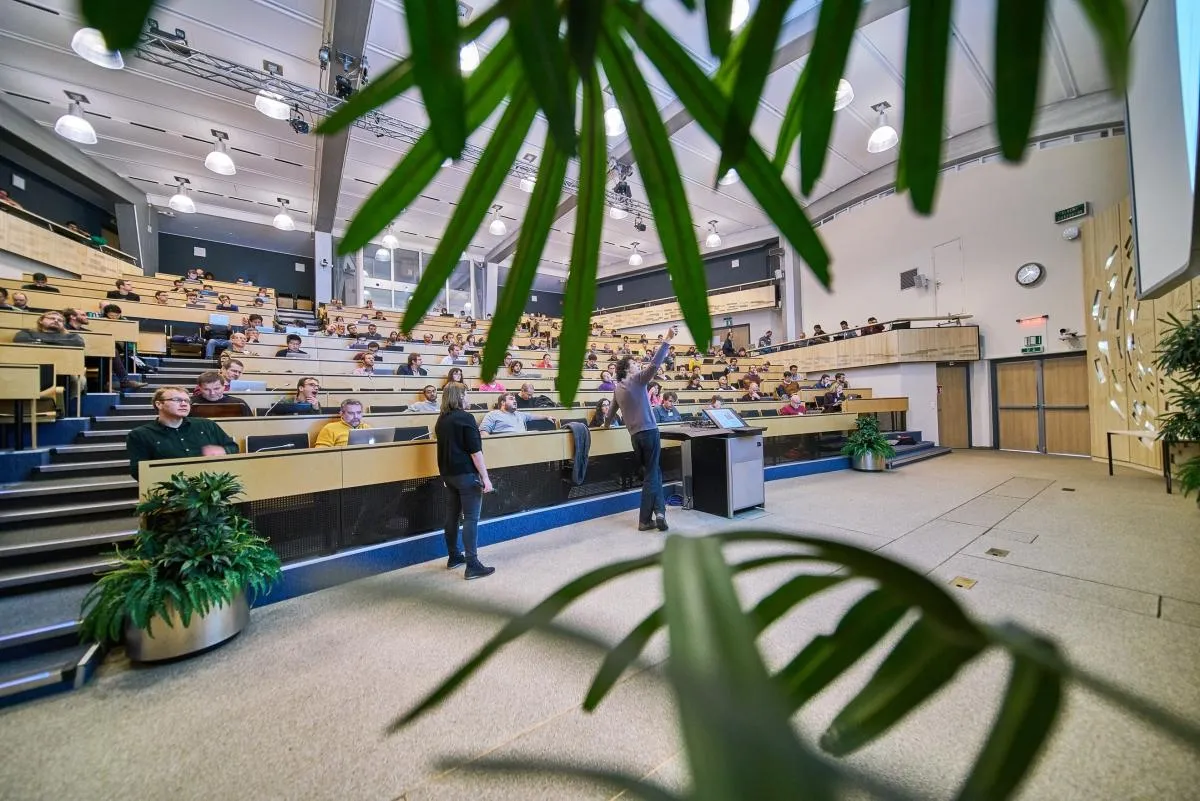
LHCb collaboration meets to discuss recent results and future prospects
LHCb collaboration meets to discuss recent results and future prospects A record number of over three hundred physicists from the LHCb collaboration and the theory community got together on 8-10 November at CERN for the seventh edition of the workshop on the “Implications of LHCb measurements and future prospects”. The very accurate results obtained by
-
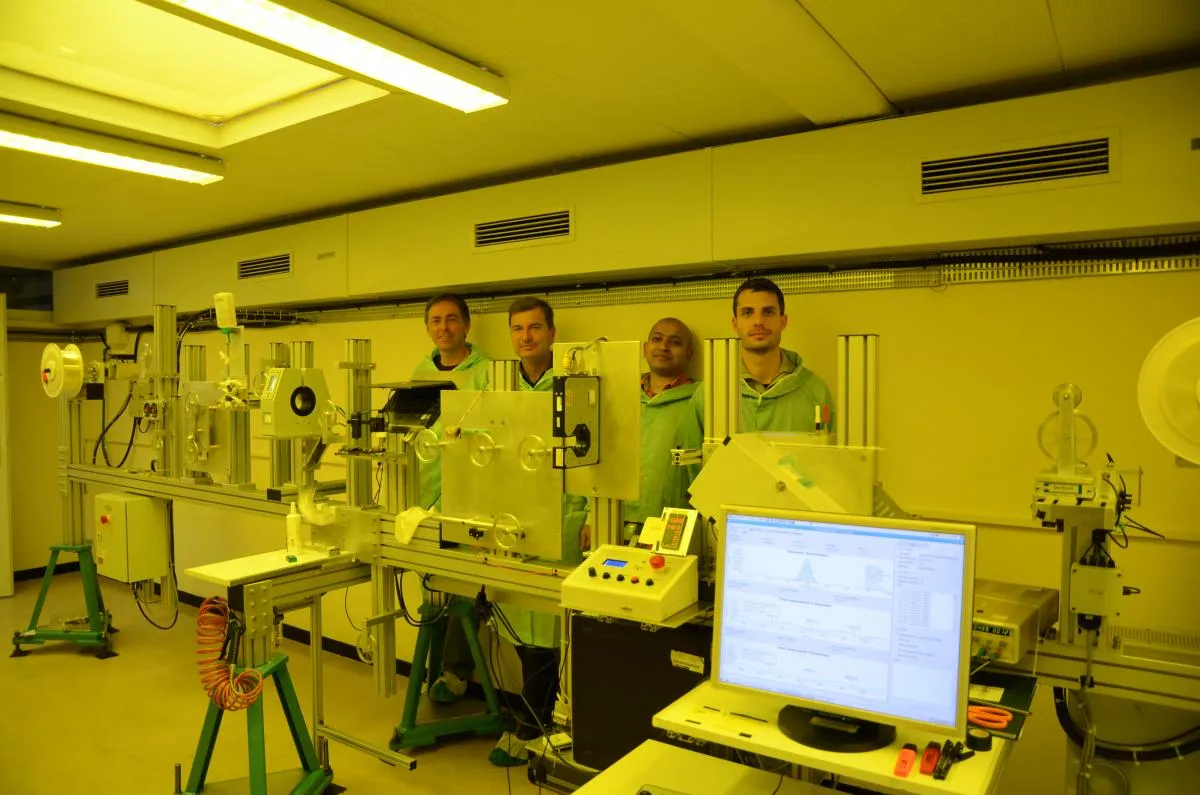
Scintillation light at the end of the tunnel
Scintillation light at the end of the tunnel The LHC Long Shutdown 2 (LS2) is approaching in giant steps and with it the date for the installation of the LHCb upgrade detectors. A large SciFi tracker will replace the current downstream trackers SciFi stands for scintillating fibre and means that the fibres will produce tiny
-
ATLAS observes Higgs boson produced in association with top quarks
ATLAS observes Higgs boson produced in association with top quarks The ATLAS collaboration presented the first evidence of “ttH production”, a rare process where a pair of top quarks emits a Higgs boson. Observing this process would provide new insight into the Higgs mechanism and allow for new studies of how unknown physics might (or
-
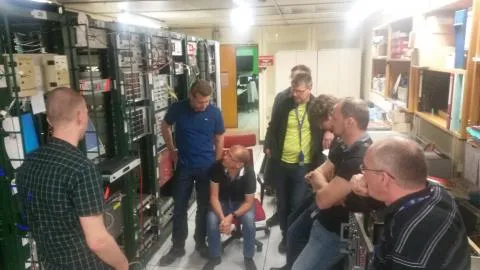
Upgrade of the Magnet Safety System for Experimental Magnets
Upgrade of the Magnet Safety System for Experimental Magnets The Magnet Safety System (MSS) is a critical system that ensures the safety of experimental magnets, both warm and superconducting. It was developed within EP-DT for the LHC experiments, starting at the end of the 90’s, in the framework of the overall Magnets Control Project (MCP).
